


 Buffett Apprentice
Bank of America 24Q1: Performance exceeded expectations, but the market remains pessimistic

Before the market opened on April 16, 2024, Beijing time, Bank of America released its first-quarter 2024 earnings report. Although both revenue and profit exceeded Wall Street analysts' market expectations, the company's stock price still fell by more than 3% after the opening. Investors voted with their feet, expressing disappointment with Bank of America's performance.
The announcement showed that Bank of America achieved revenue of $25.98 billion in the first quarter of 2024, a year-on-year decrease of 1.8%, but higher than analysts' expectations of $25.46 billion. The company reported a net profit of $6.7 billion, with earnings per share of 76 cents, down 18% year-on-year. Excluding the $700 million FDIC special assessment fee, adjusted earnings per share of 83 cents were higher than analysts' expectations of 76 cents.
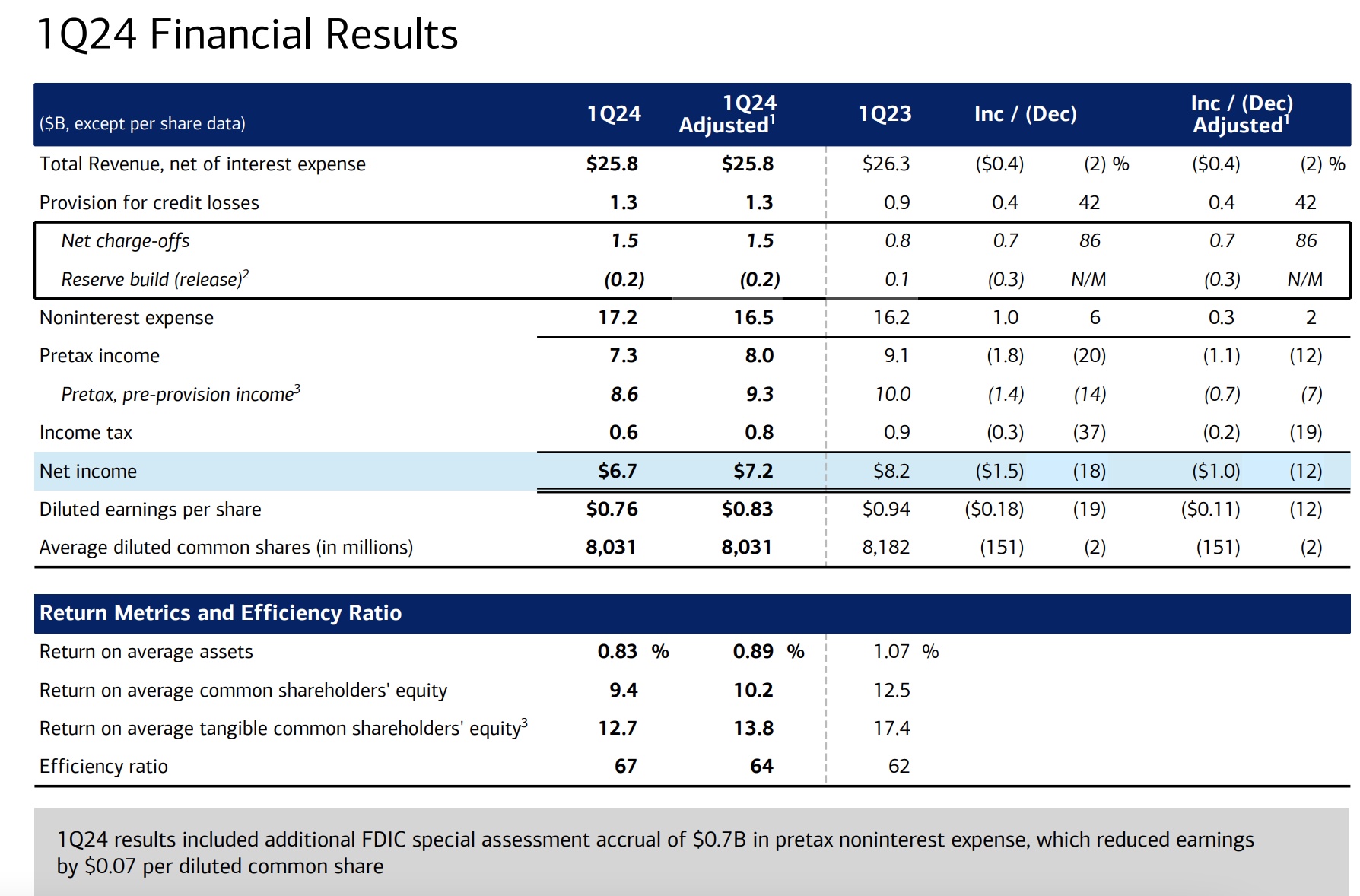
Like Wells Fargo and JPMorgan Chase, which previously released earnings reports, Bank of America was also affected by rising interest rates, with the company's net interest margin declining significantly. The announcement showed that as funding costs climbed with rising interest rates, Bank of America's net interest income trended downward, decreasing by $400 million to $14.19 billion. The decline in NII was the main reason for the significant drop in Bank of America's profits this quarter.
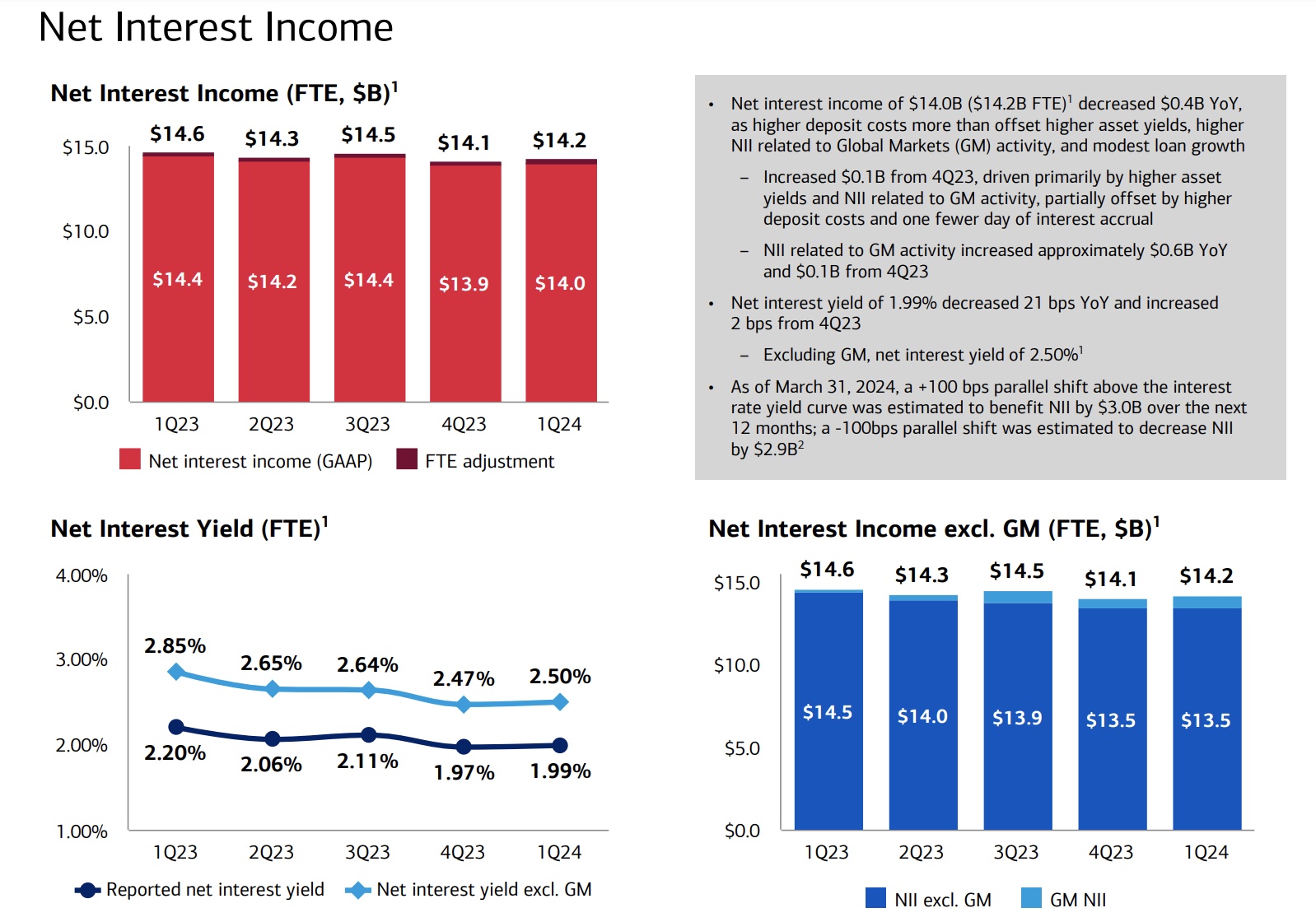
Since 2023, the Federal Reserve's guidance rate has remained high, leading to increased deposit pressure on banks and remaining elevated. From the current situation in 2024, the likelihood of the Federal Reserve cutting rates before June is relatively small, and some analysts believe that the first rate cut may not occur until September at the earliest, with the most pessimistic forecast being only one rate cut this year.
This means that U.S. banks will have to endure one or two more quarters of low interest margins, which is undoubtedly a challenge to their profitability.
However, this is unavoidable. On one hand, strong employment data has alleviated the Federal Reserve's concerns, and on the other hand, CPI data exceeding market expectations has given the Federal Reserve further reason to maintain the current high interest rates.
For Bank of America, being able to achieve a slow decline in revenue and profits is already quite an accomplishment.
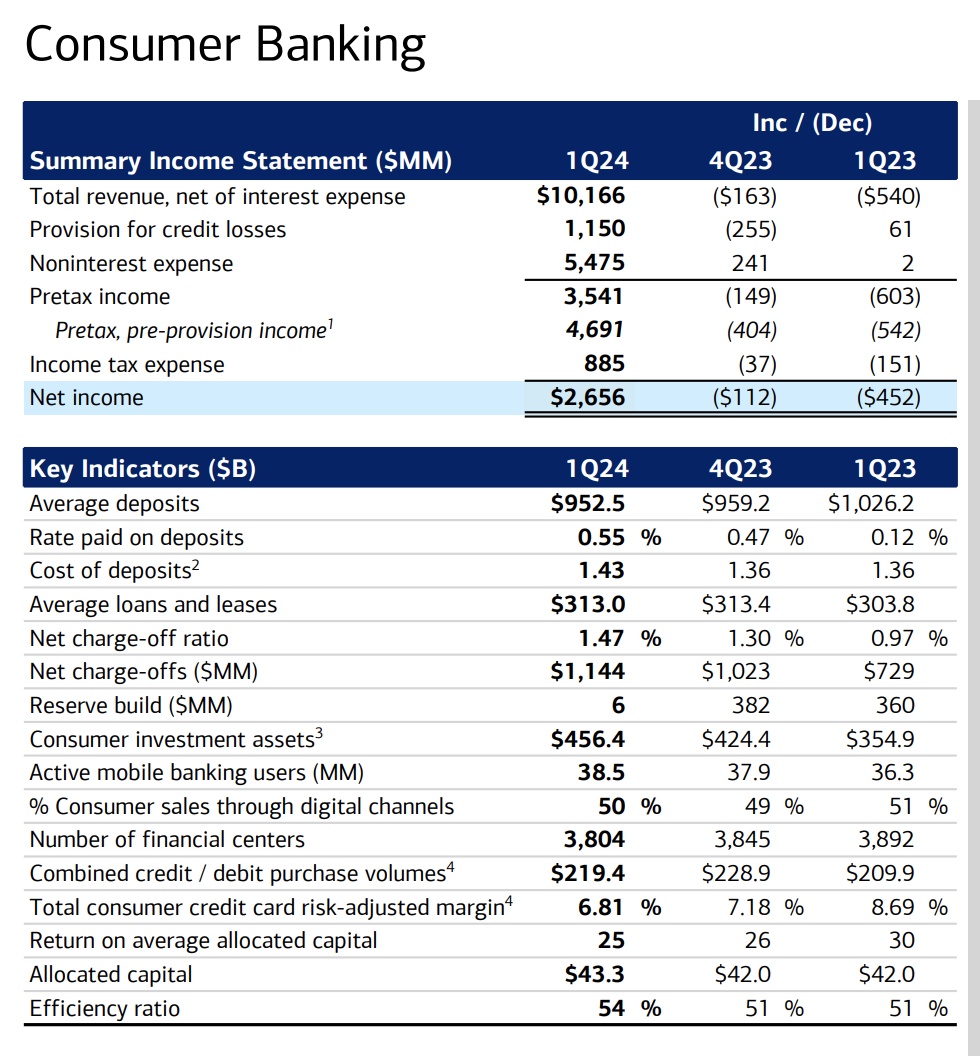
By segment, Bank of America's Consumer Banking division reported revenue of $10.166 billion in the first quarter of 2024; Global Wealth & Investment Management revenue was $5.59 billion, marking 21 consecutive quarters of growth; Global Banking and Markets revenue was $5.98 billion and $5.88 billion, respectively, with investment banking revenue up 35% year-on-year to $1.6 billion.
Amid high interest rates, Bank of America also needs to increase its provision for loan losses to prepare for contingencies. In the first quarter of 2024, Bank of America wrote off $1.498 billion in bad loans, a significant increase compared to $1.192 billion in the fourth quarter of 2023 and $807 million in the first quarter of 2023. Additionally, Bank of America's provision for loan losses in the first quarter of 2024 was $1.3 billion, higher than $1.104 billion in the fourth quarter of 2023 and $931 million in the first quarter of 2023.
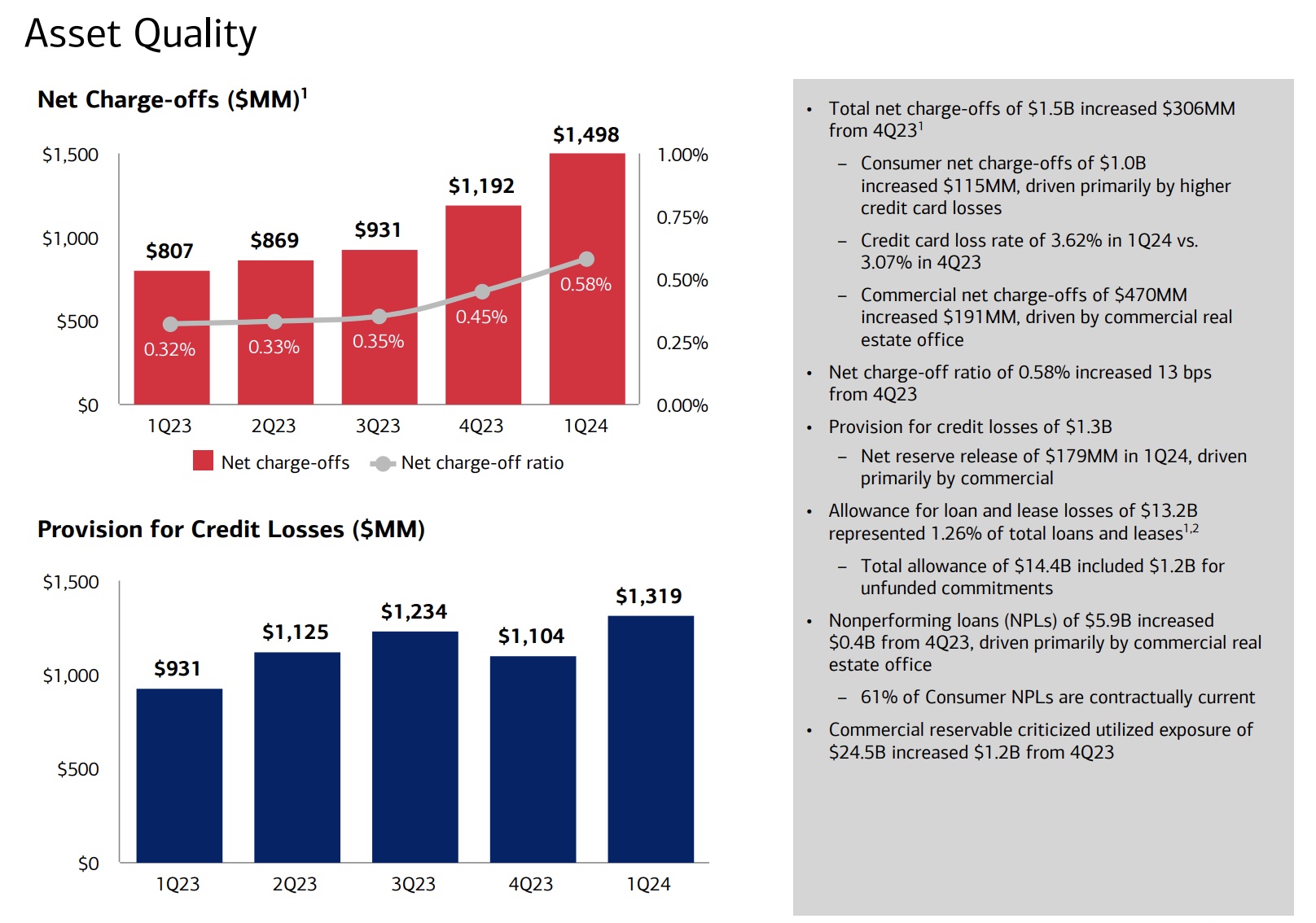
In terms of the categories of bad loan write-offs, credit card write-offs accounted for a relatively large proportion. Despite the improvement in employment rates, the problems brought by previous economic downturns have not been fully resolved in the context of inflation and high interest rates.
Bad loans related to real estate have also increased significantly, which may not be a good signal for economic recovery.
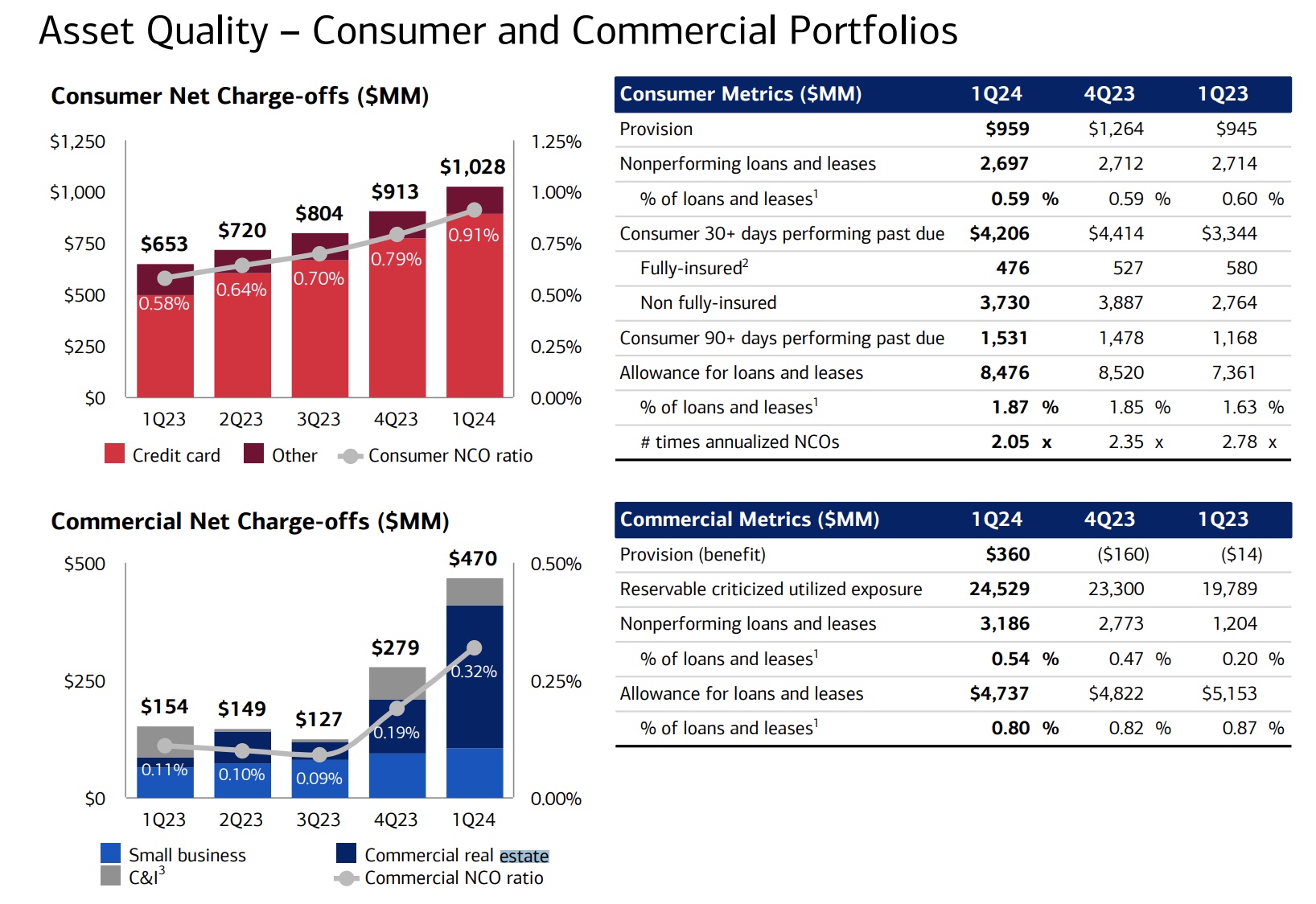
The market is concerned that if interest rates remain high for an extended period, credit cards and real estate may face greater pressure, potentially exposing more of Bank of America's assets to risk in the future.$Bank of America(BAC.US)
The copyright of this article belongs to the original author/organization.
The views expressed herein are solely those of the author and do not reflect the stance of the platform. The content is intended for investment reference purposes only and shall not be considered as investment advice. Please contact us if you have any questions or suggestions regarding the content services provided by the platform.
