


 Likes Received
US real estate ETF, changes in the US real estate cycle in 2024


I. Basic Elements:$iShares US Real Estate ETF(IYR.US) U.S. Real Estate Index ETF (IYR.US, 3x long DRN/short DRV), China public fund products: ① GF U.S. Real Estate Index (Class A 000179/Class C 016278), ② Penghua U.S. Real Estate (206011), ③ Harvest Global Real Estate (070031), etc.
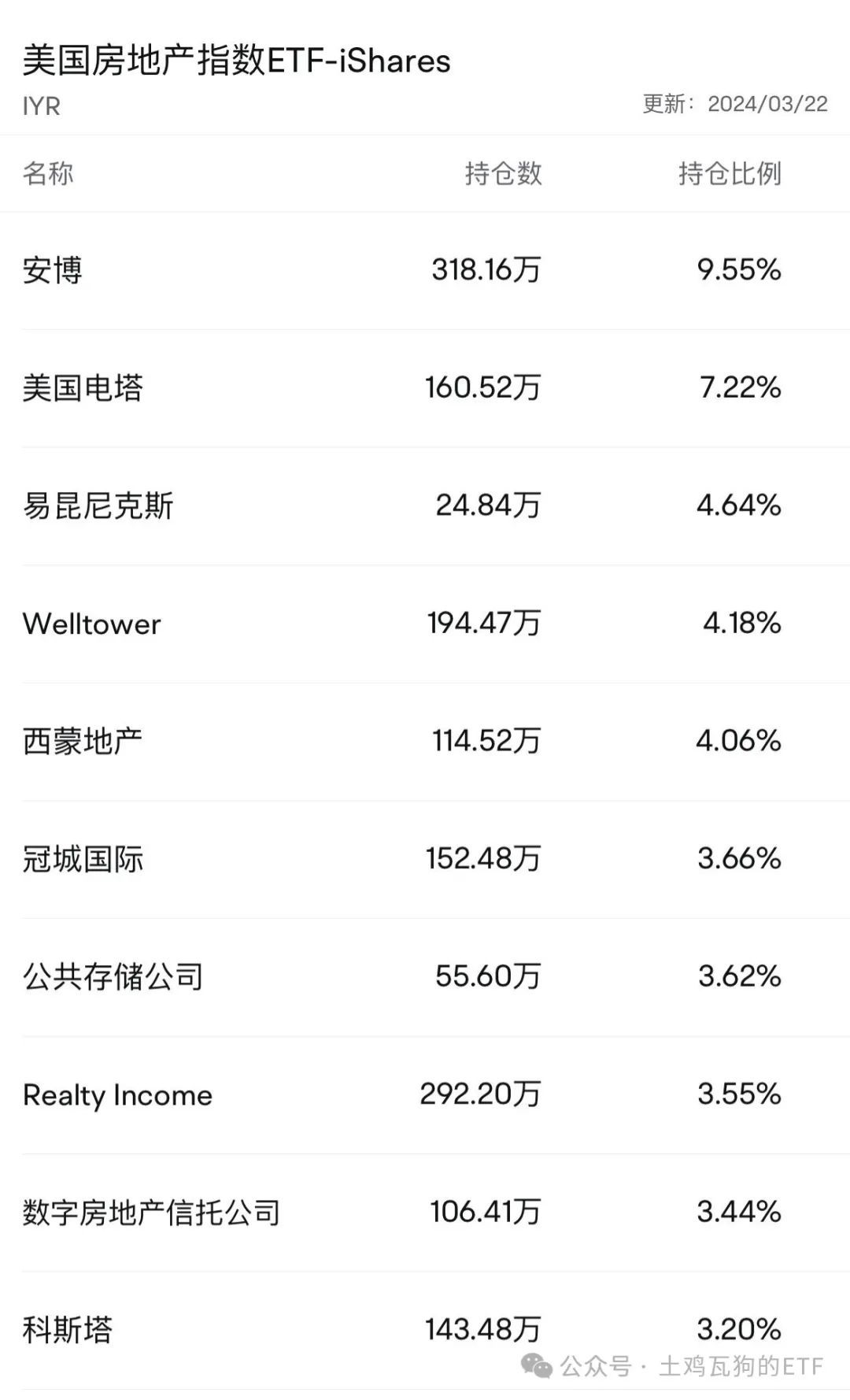
Data source: Futu, crappy ETFs, as of 20240322
II. Investment Logic
Since November 2023, the fundamentals of the U.S. real estate market have continued to improve, serving as a strong forward-looking indicator for the U.S. economy and Federal Reserve decisions, requiring ongoing attention:
1. The U.S. housing market's recovery continues, benefiting from marginal improvements in financial conditions and tight supply-demand dynamics. According to the NAHB's Housing Market Index, sentiment has improved for four consecutive months since November due to easing expectations. The index for expected home sales over the next six months has risen more sharply than the current sales index, indicating relatively optimistic market expectations for the future;
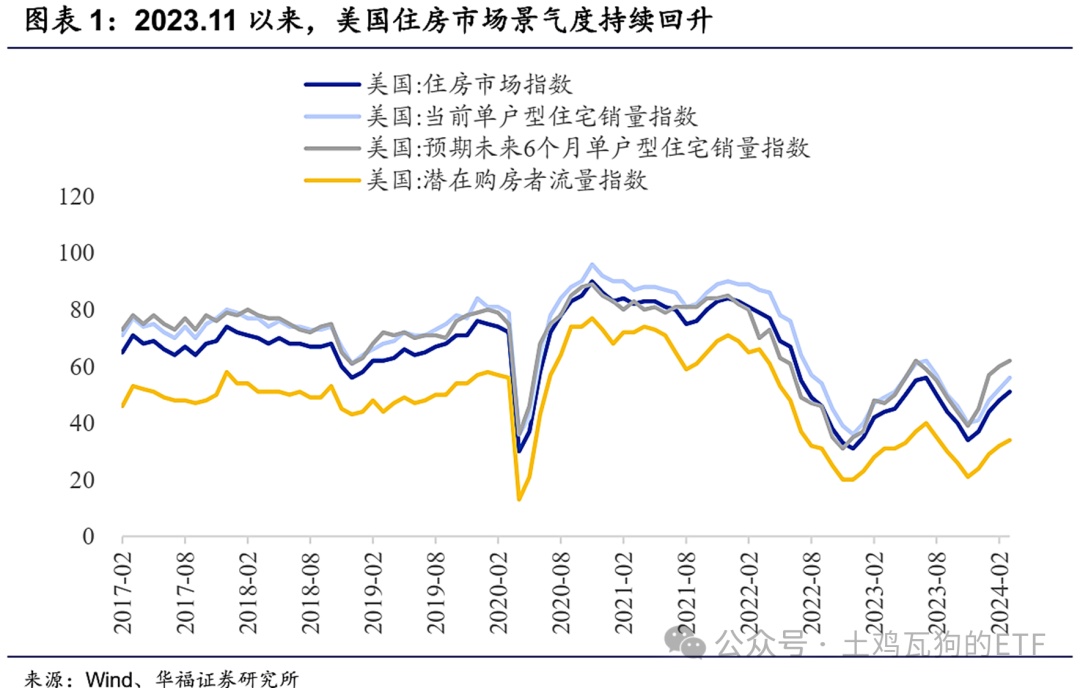
Data source: Huafu Securities Research Institute, crappy ETFs
2. From the demand perspective, the year-on-year decline in U.S. home sales has narrowed continuously since 2023, with new home sales outperforming existing homes. As of February 2024, the decline in existing home sales improved from -35.8% in January 2023 (the lowest growth rate since 2010) to -3.3%. New home sales saw a significant drop in H2 2023, falling to around 1.8% by January 2024;
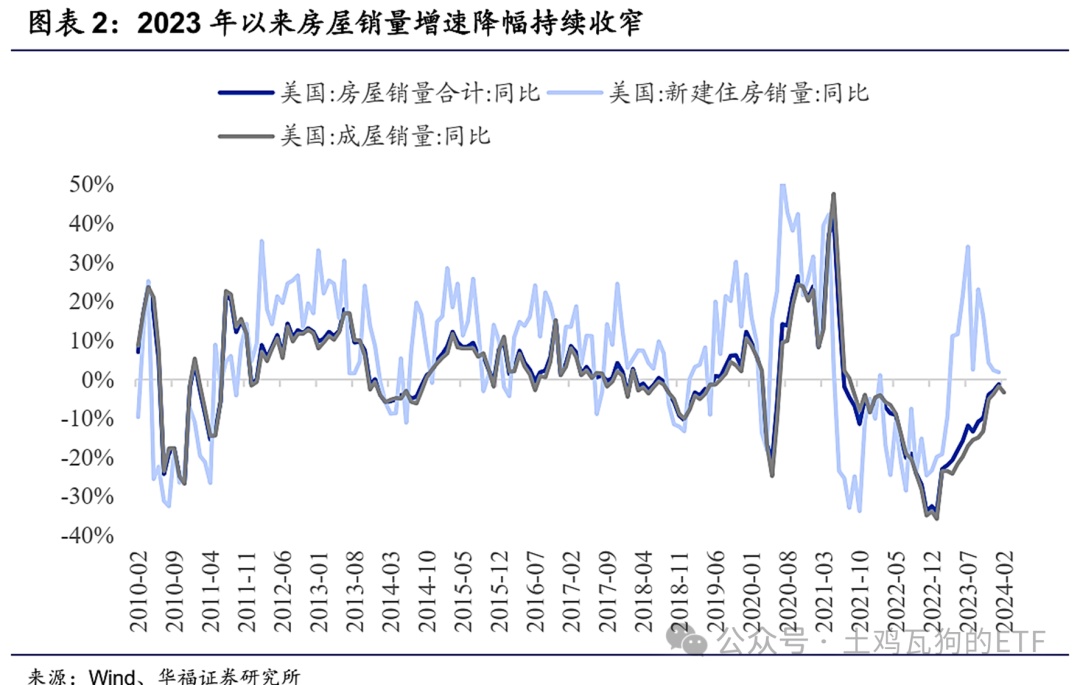
Data source: Huafu Securities Research Institute, crappy ETFs
3. From the supply perspective, existing home inventory remains low, while new home inventory is relatively high. As of February 2024, U.S. existing home inventory stood at approximately 1.07 million units, an extremely low level since 2000. With existing home inventory at such low levels, more buyers are turning to the new home market. Reflected in inventory, new home inventory has risen significantly since 2021 and remains at relatively high levels;
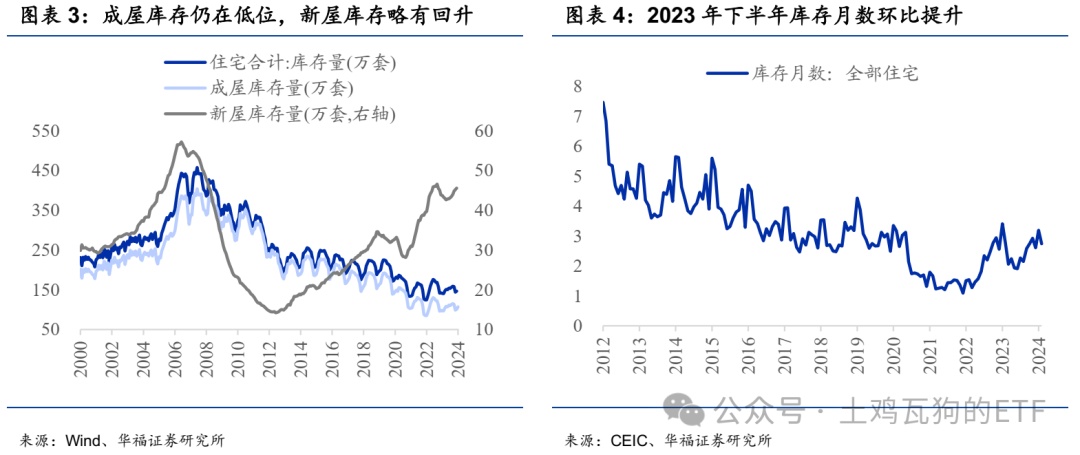
Data source: Huafu Securities Research Institute, crappy ETFs
4. Outlook: Looking ahead, U.S. real estate fundamentals remain relatively stable. Tight supply-demand dynamics, potential benefits from Fed rate cuts, and continued growth in the primary homebuyer population suggest that the U.S. real estate market may continue to recover in 2024. However, high interest rates remain a short-term constraint, and we must be vigilant against potential shocks from real estate recovery → secondary inflation risks → delayed or reduced rate cuts.
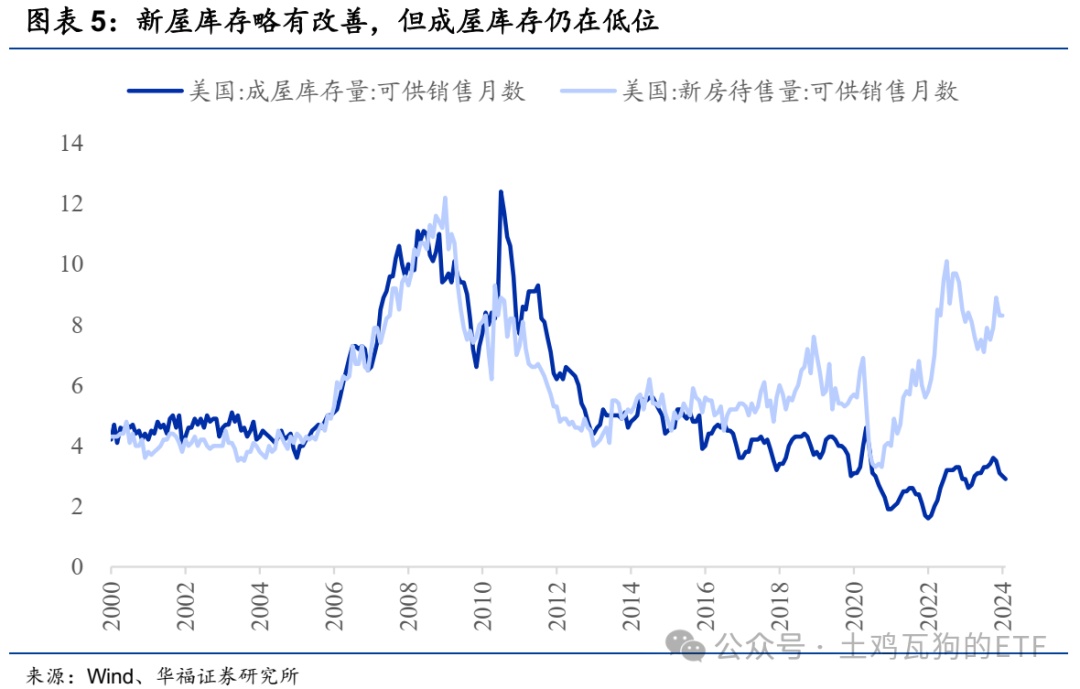
Data source: Huafu Securities Research Institute, crappy ETFs
III. Investment Observations
1. The Fed's stance is "hawkish-dovish"; monitor macro indicators: inflation, non-farm payrolls, unemployment, wages, job openings, etc.FOMC rate cut observation indicators; 2. The pace of U.S. rate cuts—whether "fast or slow"—depends on the magnitude and intensity of cuts, Wall Street traders' swap rate futures pricing, etc.; 3. Whether financial risk events occur, such as unexpected "black swan" events.
The copyright of this article belongs to the original author/organization.
The views expressed herein are solely those of the author and do not reflect the stance of the platform. The content is intended for investment reference purposes only and shall not be considered as investment advice. Please contact us if you have any questions or suggestions regarding the content services provided by the platform.
