


 Likes Received
German ETF, the 'strongest' broad-based index in continental Europe.

$ISHRS MSCI Germany(EWG.US)
1. Basic Elements: Germany ETF(513030.SH, US ETF: EWG), tracking the Germany DAX Index(GDAXI.GI), covering Financial Services(19.52%), Industrial(18.90%), Technology(17.68%), Cyclical Consumption(15.27%), Healthcare(7.68%), Basic Materials(7.37%), Telecommunications(5.30%), Utilities(3.56%), Defensive Consumption(2.44%), Real Estate and other industries(2.28%), totaling 30 blue-chip stocks, T+0 trading, with an average daily trading volume of 64.51 million since listing(as of 20240328).
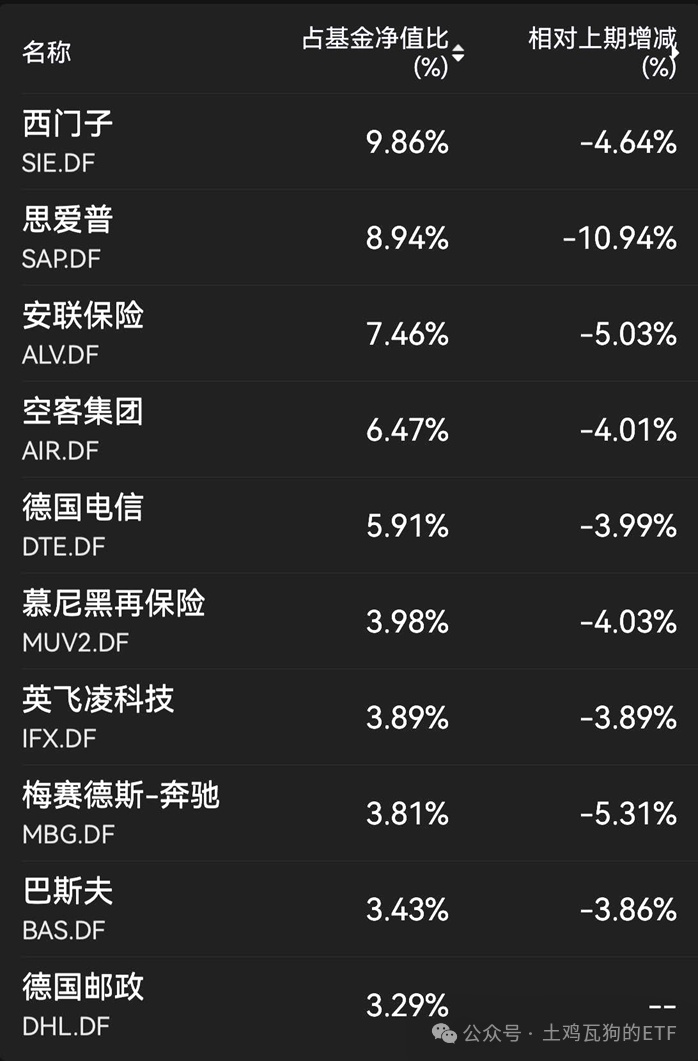
Data source: HuaAn Fund 2023 Annual Report, a crappy ETF
2. Investment Logic
1. GDP:Germany is not only the largest economy in Europe but also a core member and leading force in the Eurozone, making significant contributions to the EU budget and wielding substantial influence in European economic policy-making.Germany's per capita GDP is $48,200 (approximately €40,000). According to the latest forecast by the International Monetary Fund (IMF), Germany's nominal GDP in 2023 surpassed Japan's, making it the world's3rdlargest economy.
2. Industries and Companies
1) Automotive Manufacturing:Germany is a global powerhouse in automotive manufacturing, boasting a first-class automotive industry cluster, includingVolkswagen (VW),BMW,Daimler (Mercedes-Benz), and other renowned brands. Germany leads the world in luxury cars, high-performance engine technology, electric vehicles, and autonomous driving.
2) Engineering and Machinery Manufacturing:Germany is a global leader in engineering and precision machinery manufacturing, covering fields such as chemical equipment, power generation equipment, construction machinery, and industrial automation systems. It is home to internationally renowned companies likeSiemens,Bosch,MAN, andBASF.
3) Chemicals and Pharmaceuticals:Germany's chemical and pharmaceutical industry holds a significant position in the global market, with major multinational corporations such asBayer,Merck KGaA, andBASF, involved in basic chemicals, specialty chemicals, pharmaceutical R&D, and production.
In addition, Germany has strong industries in renewable energy, electronics and information technology, aerospace, and services.
3. Key Factors Influencing Investment in Germany:
1) Macroeconomic Environment:Germany's macroeconomic stability and growth provide a solid foundation for its investment environment. The government's fiscal policies and economic regulatory framework offer predictability and confidence to investors.
2) Legal and Institutional Framework:Germany has a robust legal system and clear property rights protection, providing security for investors. Additionally, its regulatory policies and regional economic policies encourage corporate investment and innovation.
3) Infrastructure:Germany's high-quality and extensive transportation, communication, and energy infrastructure provide efficient operational conditions for business activities.
4) Human Capital:Germany's dual education system and higher education institutions cultivate a large pool of highly skilled professionals, meeting corporate demand for specialized talent.
5) R&D and Innovation:Research institutions like the Fraunhofer Society and Max Planck Society provide cutting-edge research and technology transfer, driving innovation and product development.
6) Financial Markets:Germany's financial system offers stable financing channels, including bank loans and capital markets, supporting corporate investment activities.
7) Industrial Clusters and Supply Chains:Germany's small and medium-sized enterprises (Mittelstand) and hidden champion companies form strong industrial clusters, enhancing overall competitiveness through close collaboration and supply chain synergy.
8) International Competitiveness:German-made products are renowned for their high quality and innovative technology, making them competitive in global markets and attracting foreign direct investment.
9) Policy Support and Incentives:The German government provides various tax incentives, subsidies, and financial support measures to encourage corporate R&D and international expansion.
10) Social and Cultural Factors:Germany's social stability and cultural values, such as an emphasis on quality, rigorous work ethic, and teamwork, create a favorable soft environment for investment.
These factors collectively form the key elements that attract and sustain investment in Germany.
3. Investment Observations
1. Germany's monetary policy, fiscal policy, and international trade relations; 2.Macro indicators: GDP, industrial production index, manufacturing orders, unemployment rate, retail sales, HICP (Harmonized CPI), sentiment indices, industrial confidence index, retail confidence index, Sentix investment confidence index, composite PMI,manufacturing PMI, etc.;3. Geopolitical risks and global economic and political events. For example, global interest rate changes, international trade agreements, geopolitical tensions, and economic growth in other countries may impact the DAX30 Index; 4. Performance of key constituent stocks such as Siemens, SAP, Allianz, Airbus Group, and Deutsche Telekom.
The copyright of this article belongs to the original author/organization.
The views expressed herein are solely those of the author and do not reflect the stance of the platform. The content is intended for investment reference purposes only and shall not be considered as investment advice. Please contact us if you have any questions or suggestions regarding the content services provided by the platform.
