


 Likes Received
 Posts
PostsThoughts after NVIDIA's 10% plunge!

NVIDIA$NVIDIA(NVDA.US) is one of the largest companies in the world, and its drastic stock price fluctuations will definitely affect other assets.
NVIDIA connects America's wealth with its monetary policy. Its importance lies in the fact that, under the current global economic conditions, artificial intelligence is the only option that can help the world economy escape high debt, high development, high inflation, high trade barriers, and geopolitical conflicts.
On Friday night, NVIDIA's stock price plummeted by 10%, leading to two possibilities:
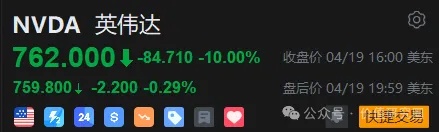
The first possibility is that NVIDIA's stock price drop is a normal correction after overvaluation.
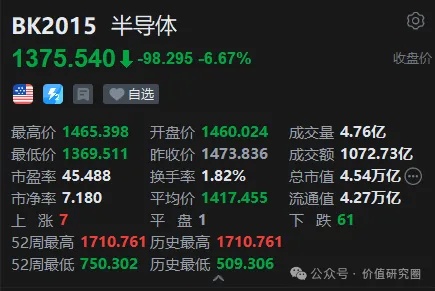
On Friday night, companies like AMD$AMD(AMD.US), TSMC$Taiwan Semiconductor(TSM.US), and others also saw significant drops, with the entire semiconductor sector falling by 6.7%.
The development of AI is something everyone welcomes. As AI advances, human productivity will greatly improve, and the economy will experience significant growth.
Similarly, under NVIDIA's leadership, AI-related stocks continue to rise, and domestic markets have also reaped substantial benefits from this AI wave.
The second possibility is that NVIDIA's stock price drop signals the bursting of a bubble.
The high stock prices may be due to AI applications not keeping up or developing too slowly. If profits aren't realized, the market could collapse.
If no money is made, the market will crash.
A sharp drop in overvalued stocks could quickly drag down overseas indices, leading to asset price collapses and a shift in economic expectations, accelerating the Fed's move toward looser monetary policy.
Domestic companies face similar challenges. Capital is again favoring sectors with stronger long-term logic, and China must rely on other efforts to solve its current difficulties.
........
Currently, most hope for the first scenario, but the second cannot be entirely ruled out.
The second possibility is increasingly likely.
The core reason is that AI applications aren't advancing fast enough, and China holds over 50% of the global semiconductor market. U.S. sanctions have left domestic demand unmet, slowing profit realization for upstream companies.
Another clear point is that if AI truly develops, the U.S. stands to benefit the most, as it monopolizes foundational technologies like chip computing power. Early AI advancements are controlled by big companies, leaving small firms with little short-term gain and many job losses.
Many compare AI's rise to the 2000 dot-com bubble.
There's a reason for this: AI applications are the industry's core, but their global impact isn't as fast or vast as imagined. If downstream customers won't pay, progress will be slow.
Given current conditions, I believe we must remain highly vigilant against worsening global risks.
Long-term, U.S.-China competition is evenly matched. If one weakens, the other strengthens. Given time, we may not fall behind and could even make greater strides. Perhaps we're on a unique development path that, for now, boosts productivity.
Short- to mid-term, if U.S. AI progress falls short, it might not be bad for China's capital markets, which are strained by real estate pressures. Overseas monetary policy shifts could grant us more autonomy.
The copyright of this article belongs to the original author/organization.
The views expressed herein are solely those of the author and do not reflect the stance of the platform. The content is intended for investment reference purposes only and shall not be considered as investment advice. Please contact us if you have any questions or suggestions regarding the content services provided by the platform.
