



Defying the rules! A-share computing power leasing leader faces heavy penalties for illegal share reduction

130,000 retail investors are left in tears.
After rumors circulated online for days, Hongbo Co., Ltd. (002229.SZ), the so-called leader in A-share computing power leasing, officially announced the dismissal of Vice President Zhou Weiwei, who will no longer hold any position in the listed company.
Some lamented, "A few months ago, she was the sweetheart; now she’s just the ex?" In reality, this is just the final act of a well-orchestrated scheme.
Female Journalist Handles a 300 Million Yuan Mega Project
Since 2022, Hongbo Co., Ltd. has been the talk of the town. The explosive popularity of ChatGPT triggered a surge in domestic computing power demand, and this company, which started with lottery ticket printing, successfully pivoted to ride the AI wave, becoming the center of attention.
Zhou Weiwei, a high-ranking executive with Australian citizenship, was the mastermind behind this plan.

According to reports, Zhou holds a Bachelor's in Finance from the University of Adelaide and a Master's in Communication from the University of Sydney. She previously served as a reporter for Phoenix TV’s Australian bureau, Executive Director of Ausvision Media, and Vice President of 36Kr.
In June 2022, Hongbo Co., Ltd. decided to establish Inboke Technology to venture into AI computing power. Just two months later, Zhou Weiwei was appointed as General Manager and brought over the Beijing AI Innovation Empowerment Center project, which she had been negotiating with NVIDIA during her time at 36Kr, to Inboke Technology.
Under the agreement, Inboke Technology became the operating entity for the Beijing AI Innovation Empowerment Center, with the condition of investing no less than 300 million yuan in construction and operation funds over three years.
To reward her contributions, in November 2022, just three months after Zhou joined, Hongbo Co., Ltd. announced a stock incentive plan, granting her 850,000 shares at a price of only 3.68 yuan per share.
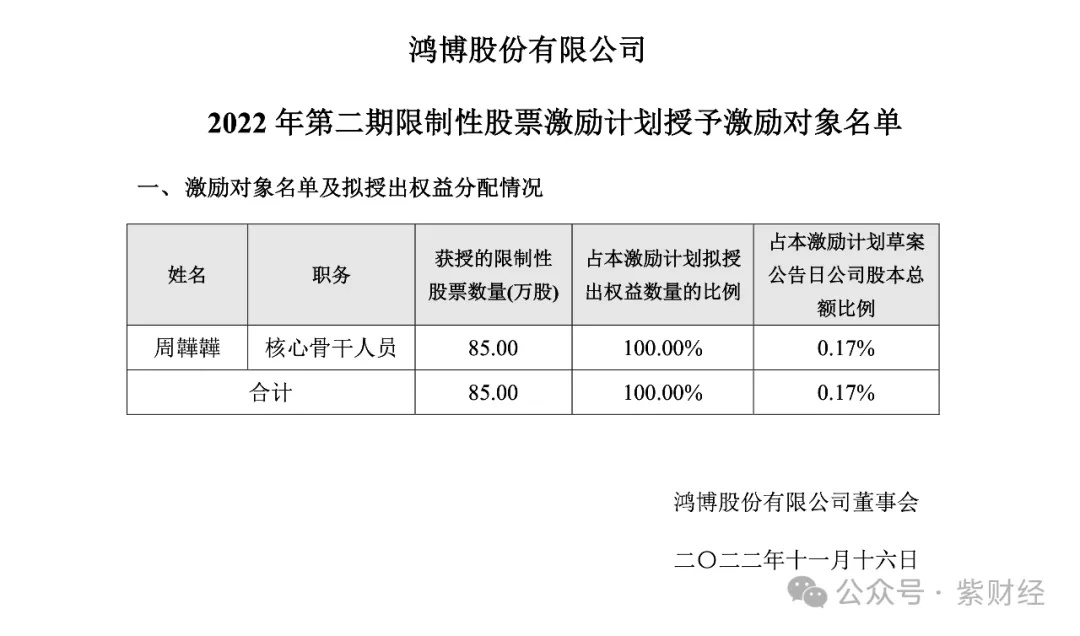
At that time, Hongbo’s stock price was around 7.50 yuan, giving Zhou a paper profit of over 3.2 million yuan.
This raised eyebrows from regulators, and the Shenzhen Stock Exchange quickly issued a letter of concern, demanding detailed explanations about the incentive recipients' roles, responsibilities, tenure, performance, and contributions, as well as whether there was any improper benefit transfer.
In April 2023, Zhou was promoted to Vice President of Hongbo Co., Ltd. By June, the company included her in another stock incentive plan, offering 1 million shares at 18.92 yuan per share. The Shenzhen Stock Exchange again issued a letter of concern.
If all had gone smoothly, Zhou would have earned nearly 20 million yuan from stock incentives alone in less than a year, on top of her regular salary. During her time at 36Kr, she wasn’t even a high-ranking executive with disclosed compensation, likely earning less than a million yuan annually. In other words, her pay jumped over 20-fold after switching companies.
Due to various reasons, this stock incentive plan was terminated by the end of September that year. Nevertheless, Hongbo’s favoritism toward Zhou was evident, and she proved that hiring a media PR professional as an executive was worth every penny.
From Lottery Printer to Computing Power Leasing Leader
In September 2022, less than two months after becoming General Manager of Inboke Technology, Zhou Weiwei twice represented Hongbo Co., Ltd. in meetings with dozens of institutions, including Huatai Securities, Industrial Securities, Haitong Securities, Huatai-PineBridge Fund, CITIC Trust, and China Merchants Securities, vigorously promoting the Beijing AI Innovation Empowerment Center and hyping collaborations with NVIDIA and its global ecosystem partners.
Starting last year, Zhou frequently appeared at major forums as CEO of Inboke Technology and gave numerous media interviews.
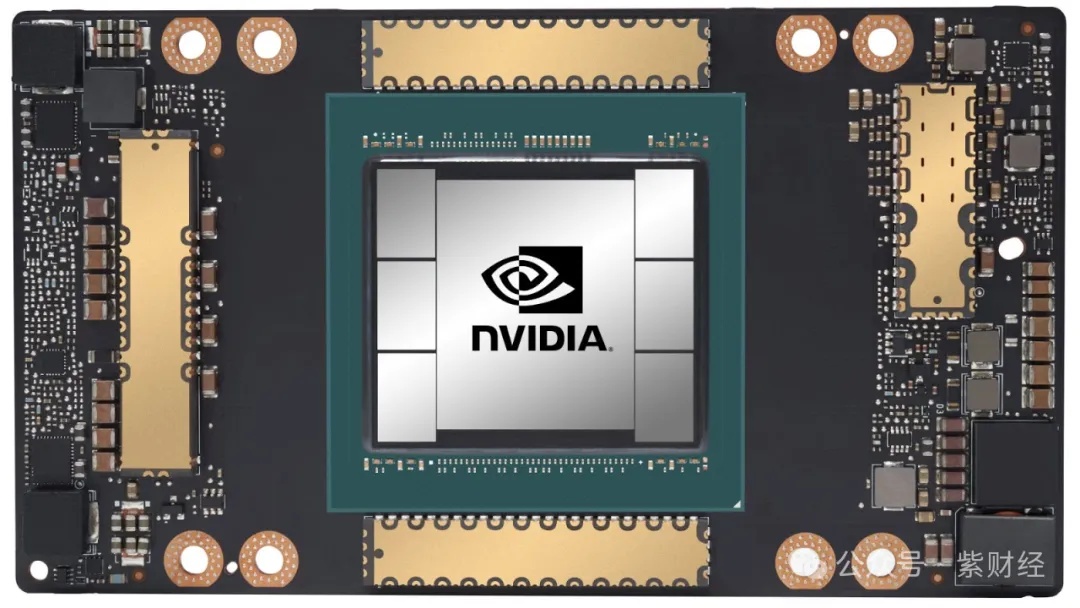
Through these efforts, despite over 90% of Hongbo’s revenue in the first half of the year coming from printing and less than 10% from other businesses, the company was seen as the hottest A-share computing power leasing concept stock. Its stock price skyrocketed from a low of 4.51 yuan at the end of 2022 to a peak of 45.29 yuan, with its market cap ballooning from just over 2 billion to 22 billion yuan.
Before Hongbo entered the computing power leasing industry, it had fewer than 30,000 shareholders. By September last year, that number had grown to 131,100.
Zhou Weiwei played a pivotal role—but perhaps only up to this point.
On January 10, 2024, Hongbo eagerly released its 2023 annual performance forecast, projecting a net profit of 37.4-56.1 million yuan, a year-on-year increase of 149.8%-174.7%.
Normally, any long-term-focused listed company would gradually release positive news to maintain investor interest rather than dumping all good news at once. However, since entering the computing power sector, Hongbo seemed desperate to share every bit of real or fabricated good news with shareholders, puzzling many. In hindsight, this was clearly intentional by major shareholders.
Dumping the Company on Retail Investors?
Regulators have strict rules about share reductions by major shareholders holding over 5% of shares, yet Hongbo’s actual controller quietly executed a covert operation during the stock’s meteoric rise.
In June 2019, Henan native Mao Wei went to great lengths to take control of Hongbo from its founding You family. He held 8.03% of shares through Henan Huiyi Trading Co., Ltd. and indirectly controlled another 14.3% through Henan Yutai Holdings Co., Ltd., a subsidiary of Huiyi Trading.
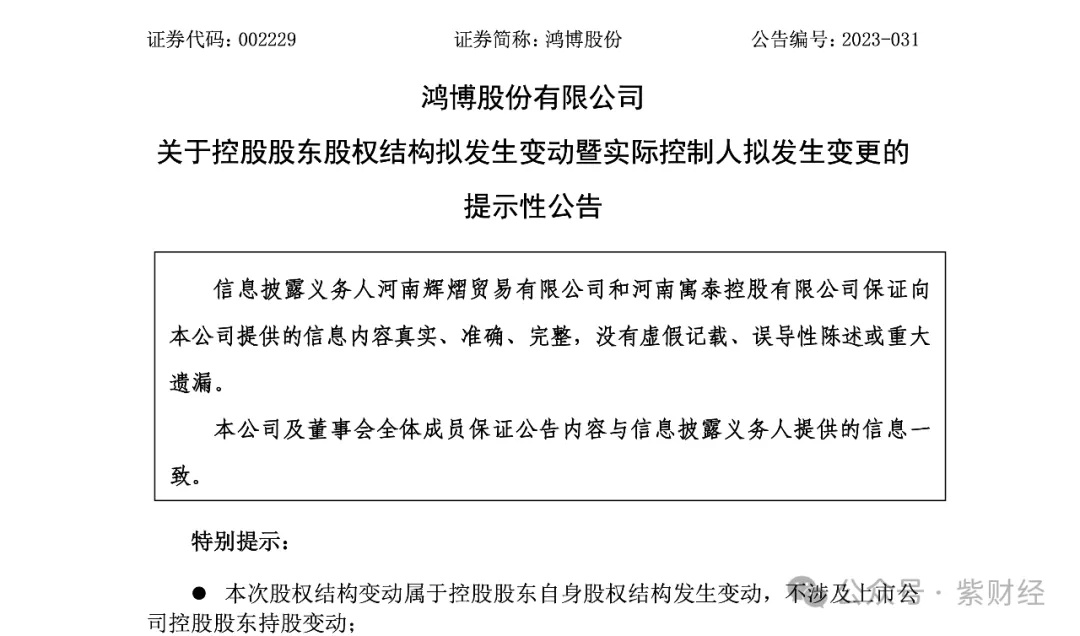
In April 2023, Hongbo suddenly announced that Huiyi Trading had transferred 94.2% of its stake in Yutai Holdings to individual Li Xiaolin, while Mao Wei transferred his 100% stake in Huiyi Trading to individual Yang Kai.
At the time, Yutai Holdings and Huiyi Trading delegated all voting rights for their shares to Mao Wei to ensure no change in actual control. The two financiers also pledged not to reduce their Hongbo holdings for 18 months.
In reality, this was just a beautiful lie.
From January 8 to February 28 this year, Huiyi Trading and Yutai Holdings repeatedly engaged in so-called "passive reductions" through judicial transfers due to contract disputes. After the reductions in late February, Hongbo’s controlling shareholder shifted from Yutai Holdings and Huiyi Trading to having no controlling shareholder.
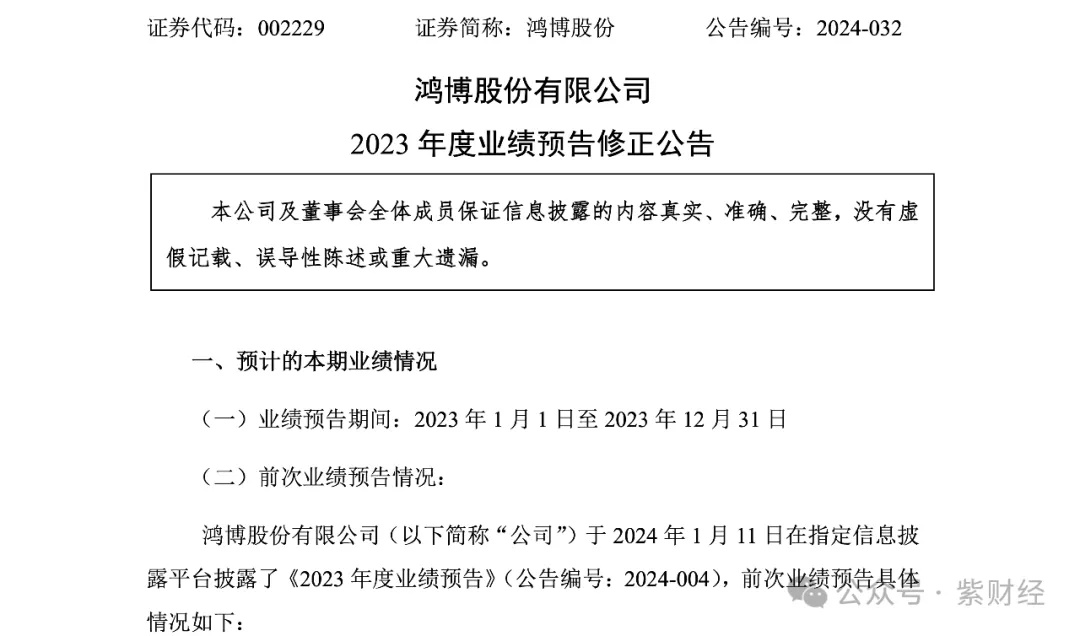
On April 12, Hongbo issued a revised performance forecast, changing its earlier projection of a 37.4-56.1 million yuan profit to a 50-58 million yuan loss. The bad news triggered two consecutive days of limit-down drops in the stock price.
The timing was impeccable—Hongbo perfectly facilitated Yutai Holdings and Huiyi Trading’s "passive reductions," helping Mao Wei quietly offload the company at a peak to retail investors.
Zhou Weiwei’s dismissal is just the finale of this grand scheme. With the actual controller already cashed out, is there any need to keep up the act?
In truth, there were signs. The year Mao Wei took control of Hongbo, he treated the company as a personal ATM. The auditing firm’s 2019 annual report included a "qualified opinion with an emphasis of matter," explicitly noting that Yutai Holdings had misused 60 million yuan of Hongbo’s funds. Would someone like this seriously run a listed company?
Now, 130,000 retail investors face an awkward dilemma.
Zhou Weiwei was the liaison with NVIDIA. With her gone, the project faces uncertainty. If it fails to meet deadlines, Hongbo could face a 350 million yuan penalty. More importantly, without this facade, how can the "A-share computing power leasing leader" narrative continue? Hongbo’s stock will likely fall back below 6 yuan.
The new head of the China Securities Regulatory Commission has emphasized cracking down on illegal share reductions and protecting investor interests. Yet Hongbo blatantly cashed out under regulators’ noses. Shouldn’t the authorities take action?
The copyright of this article belongs to the original author/organization.
The views expressed herein are solely those of the author and do not reflect the stance of the platform. The content is intended for investment reference purposes only and shall not be considered as investment advice. Please contact us if you have any questions or suggestions regarding the content services provided by the platform.
