

Xtep, which made a public apology, placed 'value integrity' at the end of its ESG report.


The case of Xtep has exposed a common problem among domestic companies regarding ESG: they view ESG merely as a tool to enhance brand recognition, without truly understanding its essence.
The "Three Blacks Urging He Jie" incident has turned Xtep into a joke in the history of Chinese marathon events.
On April 14th, when He Jie won the Beijing Half Marathon championship with the urging of three black athletes, not only the live audience and online netizens but even the commentators on CCTV's live broadcast were left speechless.
"It was as if the three black athletes were about to carry He Jie across the finish line in a sedan chair," commented one netizen.
He Jie is a contracted athlete of Xtep, and the three black athletes were also wearing Xtep running shoes. It was obvious to everyone that this was a "rigged" race.

After days of escalating public outrage, the event sponsor—Xtep—issued an apology statement, attributing the incident to "mistakes by relevant staff during the registration process," but failed to disclose any internal investigation or disciplinary results.
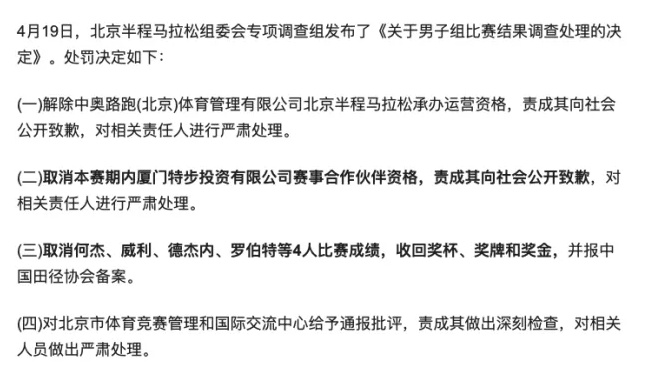
The event organizers imposed stricter penalties, revoking Xtep's qualification as a season partner, demanding a public apology, and disqualifying He Jie and the other three athletes.
Ironically, on April 10th, Xtep released its 2023 ESG report for the eighth consecutive year, with the theme of "Business Ethics and Integrity" placed at the very end.
This is noteworthy because ESG reports, as PR-driven documents, often follow a logic where the most impressive content is placed at the beginning, while less important or overlooked sections are relegated to the end.
Perhaps, in hindsight, this ESG report had already foreshadowed Xtep's current predicament.
01 The Green Label
If we evaluate Xtep solely from the "E" (Environmental) perspective, the company has indeed made significant efforts in low-carbon initiatives, at least based on its ESG report disclosures.
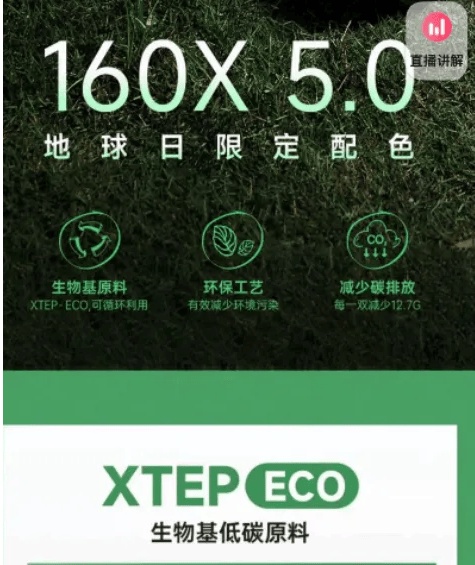
Looking back at its past ESG reports, as early as 2020, Xtep launched the XTEP-ECO platform, focusing on biodegradable materials and integrating eco-friendly practices across sourcing, production, and usage to create more sustainable sportswear.
For example, the 160X5.0 model in Xtep's flagship store uses over 20% bio-based materials, reducing carbon emissions by 12.7g per pair. Similarly, Saucony, a brand under Xtep, released the TRIUMPH RFG eco-friendly running shoe last year, featuring a plant-dyed cotton upper and a midsole made of 55% corn-based materials. Both shoes boast an over 80% carbon reduction rate but come with hefty price tags of 939 yuan and 858 yuan, respectively.
However, beyond the surface, Xtep's embrace of the green label boils down to two reasons:
First, under China's dual-carbon policy, apparel manufacturers face stricter carbon emission quotas.
The footwear and apparel industry is highly polluting.
According to McKinsey's "2022 Fashion Industry White Paper," the apparel sector accounts for a quarter of carbon emissions among China's major consumer industries, with 40% of energy consumption. Seventy percent of these emissions come from energy-intensive upstream processes like fabric production and processing.
To comply with regulations, Xtep had to adopt eco-friendly practices, starting with its core product: running shoes.
Yet, on Pinduoduo, Xtep's best-selling running shoes are not its low-carbon models—they aren't even remotely eco-friendly.
Second, it's a way to justify the high prices.
Whether sponsoring marathons or championing low-carbon initiatives, Xtep aims to showcase its ethical stance publicly, fostering a positive brand image.
02 The Implication of Burying "Business Integrity" at the End
While Xtep might be a decent performer in the "E" domain, its credibility in the "S" (Social) dimension has been widely questioned after this scandal.
As mentioned earlier, placing "Business Ethics and Integrity" at the end of its ESG report could be unintentional or an attempt to avoid highlighting its shortcomings. Either way, the public is now asking: Was this Xtep's first time?
According to Xtep's latest ESG report, since 2007, the company has sponsored over 1,000 marathons, making it the most prolific sponsor in China.
In 2023 alone, Xtep sponsored 24 marathons, including the Xiamen Marathon, a World Athletics Platinum Label event it has backed for 16 years.
Ding Shuibo, Chairman and CEO of Xtep Group, claimed that in 2023, Xtep running shoes were the most worn by elite runners (including sub-3-hour finishers) in China's major marathons, ranking first among both international and domestic brands.
At the 2024 Xiamen Marathon, Xtep maintained its lead, with 41.8% of all runners and 43.8% of sub-3-hour finishers wearing its shoes.
In the running community, brands often "buy feet"—sponsoring top athletes to boost influence—which is a common practice.
But competitive sports are unpredictable; even the best athletes can underperform. No one can guarantee a 100% win rate.

So, instead of gambling on athletes, why not just pay to secure a win? This might align better with some brands' interests.
On page 53 of Xtep's ESG report, it states:
"Maintaining high standards of business integrity and transparency is crucial for building stakeholder trust and safeguarding our reputation. The Group has established policies and measures to uphold the highest ethical standards.
We conduct business ethics training for all employees, reinforcing anti-fraud principles and fostering a culture of integrity. Recent internal cases demonstrate how ethical dilemmas can arise and be properly resolved."
Let’s hope this is Xtep's first and last scandal of this kind.
03 "Greenwashing" and Misconceptions About Business Ethics
Xtep's case highlights a widespread issue in domestic ESG practices: companies treat ESG as a superficial tool for brand enhancement or risk management, missing its deeper purpose.
This isn't unique to China. Globally, ESG reports often selectively highlight favorable information while downplaying risks.
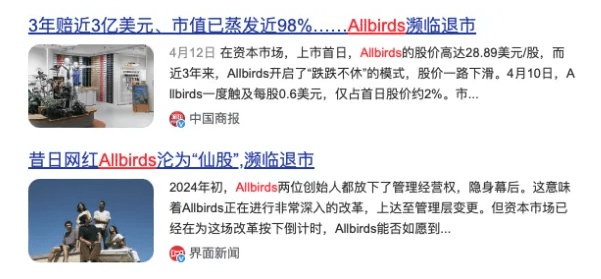
Take Allbirds, a U.S. sustainable sportswear brand that mentioned "sustainability" over 100 times in its IPO filing. Its market value has since plummeted, and it faces lawsuits alleging that its eco-friendly marketing is "false, deceptive, and misleading."
Critics argue that Allbirds' "carbon footprint" claims exclude manufacturing impacts and rely on biased calculations.
In other words, the higher the hype, the harder the fall.
Today's consumers care not just about product functionality but also about production ethics, brand integrity, and social responsibility.
Every decision and action is under a microscope, and even minor missteps can be magnified exponentially in the digital age, causing irreversible damage. (Source: Alpha Factory ESG)
$XTEP INT'L(01368.HK)
The copyright of this article belongs to the original author/organization.
The views expressed herein are solely those of the author and do not reflect the stance of the platform. The content is intended for investment reference purposes only and shall not be considered as investment advice. Please contact us if you have any questions or suggestions regarding the content services provided by the platform.
