


 Likes Received
Tesla's TSLA 2024 Q1 earnings report was poor, but the stock price surged?

$Tesla(TSLA.US)
1. Tesla TSLA this morning(Beijing Time) released its 2024 Q1 earnings report,with key financial metrics below market expectations.
①Revenue: Down 9% YoY to $21.3B, below the expected $22.3B. The main reason is the decline in global EV demand, with TSLA facing competition from new energy vehicles in China (Amazing, my country!). We previously expressed bearish views on TSLA in our article(Overseas Tech LOF, Investing in "Cathie Wood" Big Ideas) and remained pessimistic about TSLA in Q1 (see screenshot below).②Net profit: Down 55% YoY to $1.13B, below the expected $1.9B.③EPS: $0.45, below analyst expectations of $0.52.
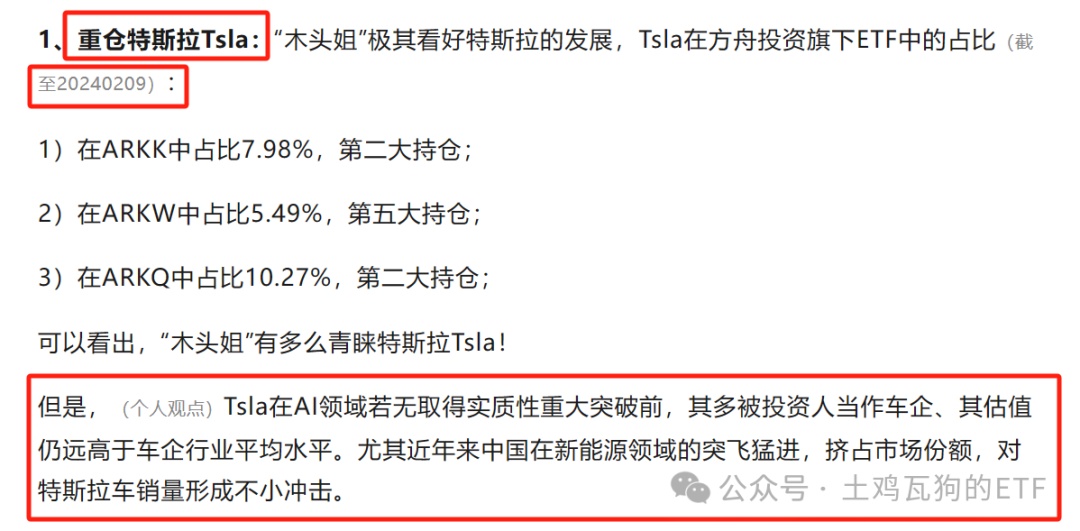
However, TSLA's ④Capital expenditures: increased to $2.77B, up 34% YoY, mainly due to expanded production capacity and R&D investments. ⑤Free cash flow: -$2.5B, attributed to AI infrastructure spending.
2. Despite poor earnings, why did TSLA surge over 10% instead of falling?
1) Why didn’t it drop?
Those following U.S. stocks would notice TSLA has consistently ranked among the top 3 most-traded stocks, with Q1 trends often diverging from the "Magnificent 7." In Q1 2024, going long NVDA and shorting TSLA became Wall Street’s consensus. TSLA fell ~30% in Q1 and 40% YTD, so the earnings miss was alreadypriced in, making the weak report unsurprising—"no room left to fall."
2) Then why the rally?
①The key was strong "guidance."Guidance outweighs earnings—earnings reflect the past, guidance reflects the future. TSLA’s call mentioned "more affordable models and a dedicated Robotaxi product," countering recent media reports about canceling Model 2. Analysts now expect the next-gen model by late 2025, earlier than anticipated. The call also emphasized TSLA’s autonomous driving and AI capabilities.
②The S&P 500 (S&P 500 (.SPX) Investment Logic) rebounded from a 5% "deep correction," further supporting TSLA’s rally.
In macro trends, earnings are secondary—they can even inversely correlate with stock moves. For example: Strong earnings may trigger a sell-off ("buy the rumor, sell the news"), while weak earnings could spark a rally ("bad news is good news").
As I’ve noted in our community, U.S. macro data and Fed dynamics help identify trends. Short-term timing is hard, but mid-to-long-term trends improve accuracy. Last weekend’s post (NVDA Drops 10%, S&P 500 (.SPX) Corrects 5%—Time to Cut Losses or Buy?) discussed adding positions.
3. Are there cross-border ETFs/LOFs heavily invested in TSLA?
Examples: S&P Consumer ETF (159529.SZ), Overseas Tech LOF (501312.SH).
The copyright of this article belongs to the original author/organization.
The views expressed herein are solely those of the author and do not reflect the stance of the platform. The content is intended for investment reference purposes only and shall not be considered as investment advice. Please contact us if you have any questions or suggestions regarding the content services provided by the platform.
