


 Likes Received
 Posts
PostsPlunged 71%, Sichuan's 'Lithium King' lost 44 billion yuan!

Everything in the world is cyclical.
After the new energy boom, the performance of lithium mining giants at the upstream end of the industrial chain was the first to collapse. In the first quarter of 2024, Tianqi Lithium $TIANQI LITHIUM(09696.HK) delivered a financial report that was nothing short of a bomb.
On April 23, Tianqi Lithium released its Q1 earnings forecast, stating that the company is expected to report a net loss of 3.6 billion to 4.3 billion yuan, a sharp reversal from a profit of 4.875 billion yuan in the same period last year.
In response to the massive loss, Tianqi Lithium explained that due to fluctuations in the lithium product market, the selling prices of its lithium products have dropped significantly year-on-year, leading to a sharp decline in gross margins. Additionally, the company's important associate, SQM, is expected to report a substantial year-on-year decline in Q1 earnings, resulting in a significant drop in Tianqi Lithium's investment income from SQM during the reporting period.
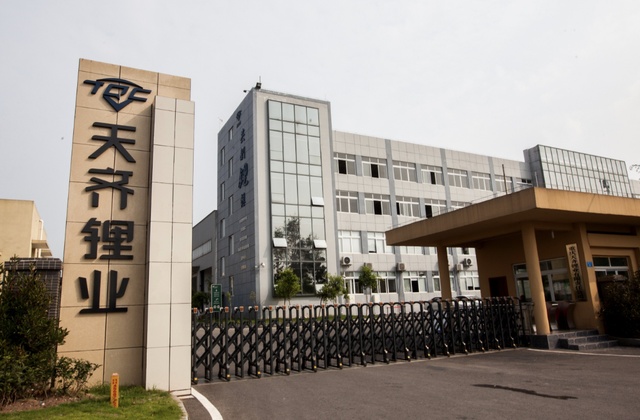
As a result, Tianqi Lithium's A-share price hit the daily limit-down on April 24.
Over the past two years, the cliff-like drop in lithium carbonate prices has continuously weakened the profitability of lithium mining giants. While Tianqi Lithium's net profit plummeted into losses in Q1, its stock price also failed to hold up, with a cumulative decline of over 71% from its peak.
Calculated based on shareholding ratios, the wealth of Jiang Weiping, founder and chairman of Tianqi Lithium, has evaporated by more than 44 billion yuan since the stock's peak. Similarly, Li Liangbin, founder and chairman of Ganfeng Lithium, has also suffered. Due to the drop in lithium prices, Li lost his title as the richest person in Jiangxi to Li Xiande, the actual controller of JinkoSolar.
Currently, the lithium battery industry is entering a brutal elimination phase in the second half. The industry is now facing severe overcapacity nationwide, and a new round of consolidation has begun. According to incomplete statistics, nearly 20 listed companies have already announced failures in their lithium ventures, either withdrawing investments to focus on their core businesses or halting production and declaring bankruptcy.
Tianqi Lithium's Q1 performance has already signaled this trend, indicating that competition in the industry will likely intensify this year.
Sichuan's "Lithium King" Loses 44 Billion
As the new energy boom fades and automakers face overcapacity, the price of lithium carbonate has plummeted over the past year. As a leading player in the industry, Tianqi Lithium has been hit hard by both its financial performance and stock price.
According to public information, Tianqi Lithium is primarily engaged in the development of lithium resources, the processing and sales of lithium concentrate, and the production and sales of lithium chemical products. The sharp decline in lithium carbonate prices has directly impacted the company's revenue.
In terms of financial performance, after reporting an astonishing net profit of 24.125 billion yuan in 2022, Tianqi Lithium's net profit plunged to 7.297 billion yuan in 2023. This year's Q1 saw an even more dramatic loss, highlighting the immense operational pressure the company faces as the industry enters a downturn.
Notably, the price of battery-grade lithium carbonate once reached 630,000 yuan per ton in 2022 but fell below 100,000 yuan per ton earlier this year, a cumulative drop of over 80%.
Some institutions predict that the price of battery-grade lithium carbonate will remain around 100,000 yuan per ton for the next two years.
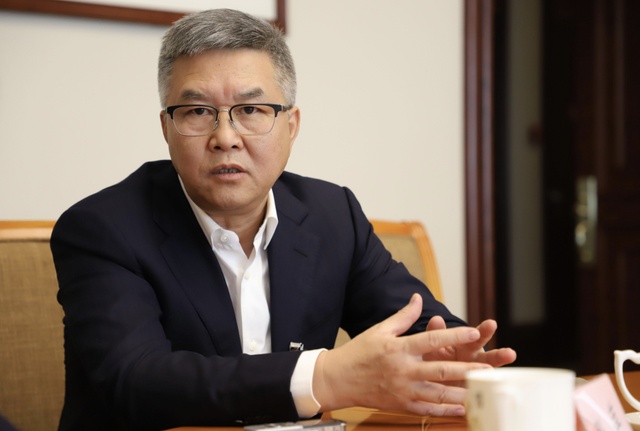
Amid the collapse in earnings, the company's stock price has also suffered. From its peak, Tianqi Lithium's share price has fallen by over 71%, wiping out more than 170 billion yuan in market value.
Based on shareholding calculations, Jiang Weiping, founder and chairman of Tianqi Lithium (whose holding company, Tianqi Industrial, owns 25.37% of the company), has seen his wealth shrink by over 44 billion yuan during the stock's decline.
Earlier, Hurun Research released its 2024 Global Rich List, ranking Jiang Weiping, Sichuan's "Lithium King," 745th with a net worth of 32.5 billion yuan. According to the 2022 Hurun China Rich List, Jiang's net worth was 58 billion yuan, placing him 73rd nationally. This means his wealth has evaporated by at least 25.5 billion yuan in two years.
At a recent earnings briefing, Tianqi Lithium stated that lithium price trends depend on the overall supply-demand dynamics of the industry, market changes, and economic conditions. Currently, they are also influenced by futures market trading,博弈 among market participants, expectations, and other factors.
Tianqi Lithium added that it is closely monitoring lithium price movements and developments in the lithium carbonate futures market.
Tianqi Lithium at the Peak
When discussing Tianqi Lithium, Jiang Weiping is an unavoidable figure.
In 1981, Jiang graduated from Chengdu Agricultural Machinery Institute and was assigned to work at Chengdu Machinery Factory as a technician during the era of job allocations.
After four years of experience, Jiang moved to the Jiusan Society in Sichuan Province in 1985, taking on administrative management roles.
With grassroots and management experience, the seeds of entrepreneurship quietly took root in Jiang's mind during China's reform and opening-up era.
In 1986, Jiang joined China Agricultural Machinery Southwest Company as a sales engineer. He spent several years in this role, accumulating extensive connections and resources—including those with Sichuan Shehong Lithium Salt Factory, which later changed his fate.
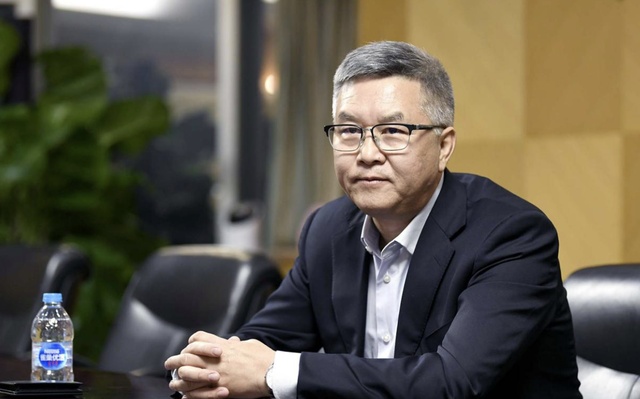
In 1997, Jiang seized the opportunity to start his own business, focusing on mineral import and export. Through this, he deepened his ties with Sichuan Shehong Lithium Salt Factory and recognized the value of lithium among various minerals. Soon after, he began importing lithium ore for extraction.
In 2003, Jiang founded Tianqi Group. At the time, Sichuan Shehong Lithium Salt Factory was struggling with continuous losses and was on the verge of bankruptcy. By 2004, when Tianqi Lithium acquired it, the factory was already insolvent.
Seizing this opportunity, Jiang purchased the state-owned enterprise the following year, transforming it from a state-owned to a privately held company.
Under Tianqi Group's management, the factory's productivity improved significantly. By 2005, it achieved stable and continuous production, and by 2006, it was profitable. In 2007, amid a booming domestic capital market and numerous wealth creation stories, Jiang began preparing Tianqi Lithium for an IPO. The same year, the company underwent a shareholding reform.
In 2010, Jiang led Tianqi Lithium to list on the Shenzhen Stock Exchange. Its competitor, Ganfeng Lithium, also went public on the Shenzhen SME Board the same year, with stock codes just five digits apart.
In 2012, mining giant Albemarle-controlled Rockwood announced plans to acquire Talison. Jiang seized the moment and launched a counter-acquisition. By 2013, Tianqi Lithium emerged victorious, raising 4 billion yuan through a private placement to acquire a 51% stake in Talison for 3.041 billion yuan.
Through this "snake swallowing elephant" financial maneuver, Jiang propelled Tianqi Lithium to new heights.
Emboldened by this success, Jiang grew bolder. In May 2018, Tianqi Lithium announced plans to acquire a 23.77% stake in SQM's Class A shares from Nutrien Group at $65 per share, totaling $4.066 billion. At the end of 2017, Tianqi Lithium had only 5.524 billion yuan in cash on its books.
To finance the acquisition, Tianqi Lithium secured $3.5 billion in loans from financial institutions and completed the payment by the end of 2018.
Little did Jiang know that this acquisition would nearly push Tianqi Lithium into the abyss—and the fallout continues to this day.
SQM's Troubles
In 2024, the lithium battery industry officially entered the elimination phase of its second half.
Currently, the industry is grappling with nationwide overcapacity, with downstream battery and material sectors facing intense "internal competition."
According to earlier projections, the price war in the industry is unlikely to end soon. Against this backdrop, Tianqi Lithium may face even greater challenges.
In its Q1 earnings forecast, Tianqi Lithium specifically mentioned its associate, SQM, stating that SQM's Q1 earnings are expected to decline significantly year-on-year, leading to a sharp drop in Tianqi Lithium's investment income from SQM during the reporting period.
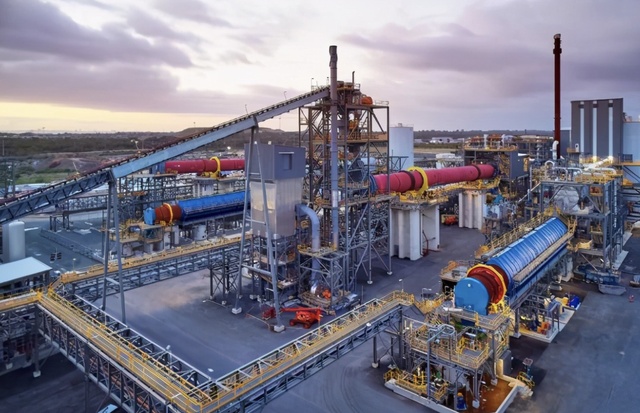
It is reported that SQM's 2023 earnings fell by about 48% year-on-year, and Tianqi Lithium's investment income from SQM also declined compared to 2022.
Notably, Tianqi Lithium's investment in SQM is facing increasing risks. According to research by Alpha Factory, as the Chilean government seeks to exert greater control over the Atacama Salt Flat (where SQM produces one-fifth of the world's lithium), the uncertainty surrounding this investment is growing.
SQM has reached a preliminary agreement with state-owned copper producer Codelco to form a joint venture. Under the December 2023 agreement, SQM's lithium business will be spun off into a JV with Codelco, which will hold a 50%-plus-one-share stake. This could dilute Tianqi Lithium's existing interests in SQM's lithium business and potentially cut off its access to premium lithium resources.
Tianqi Lithium also noted in its Q1 forecast that SQM is embroiled in a lawsuit potentially involving $1.1 billion, which could significantly impact Tianqi Lithium's profits and stock price.
After Tianqi Lithium released its earnings forecast, the Shenzhen Stock Exchange immediately issued an inquiry letter, demanding an explanation for the sharp increase in losses in Q1 2024. The company was also asked to clarify whether the litigation amount related to SQM complies with accounting standards.
The SQM-Codelco JV is expected to launch next year and will operate under SQM's contract with Chilean mining agency Corfo until 2030. After that, the JV will take over a new contract until 2060. If the deal proceeds, Tianqi Lithium's investment could spiral out of control.
The copyright of this article belongs to the original author/organization.
The views expressed herein are solely those of the author and do not reflect the stance of the platform. The content is intended for investment reference purposes only and shall not be considered as investment advice. Please contact us if you have any questions or suggestions regarding the content services provided by the platform.
