

 Likes Received
 Posts
PostsCompetition is heating up, with net profit halved in the first quarter! Can Tesla still hold on?

The elimination race in the new energy vehicle industry has officially begun.
Price cuts, discounts, and launching cheaper models have become necessary actions for automakers.
It is foreseeable that as the industry's penetration rate further increases, competition among automakers will become even more intense. Currently, "overcapacity" has become a key term in the new energy vehicle industry. As for how to break the deadlock, apart from price cuts, automakers seem unable to come up with effective solutions, as we can glimpse from Tesla's financial report.
On April 23, Tesla released its Q1 2024 financial report, showing revenue of $21.3 billion, down 9% year-over-year; net profit was $1.129 billion, down 55% year-over-year. Notably, the company's free cash flow was -$2.5 billion.
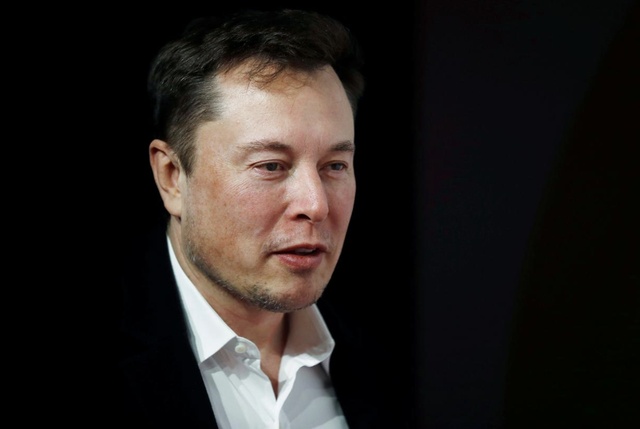
Such poor results mean Tesla is falling into the dilemma of overcapacity.
To cope with the performance decline, as early as April 15, Elon Musk sent a company-wide email announcing a global layoff of 10%, or 14,000 employees.
While laying off employees, Tesla mysteriously raised the price of the entire Model Y lineup by 5,000 yuan, but by April 21, Tesla couldn't hold on and announced a price cut of 14,000 yuan across the board.
The market had already anticipated Tesla's Q1 financial report. In early April, Tesla released its Q1 production and delivery report, showing deliveries of approximately 386,800 vehicles, down 8.5% year-over-year and 20% quarter-over-quarter.
During Tesla's earnings call, Musk clearly stated that if new models cannot be launched later this year, they may be introduced in early 2025.
Previously, some media reported that Tesla had abandoned the affordable Model 2. It was said that the car would start at less than $30,000, but Musk denied the news.
Musk also said that the new models are expected to enter production in the second half of 2025 and will not require new factories or large-scale production lines. The production platform will incorporate features from the Model 3 and Model Y platforms. Musk expects this could increase Tesla's annual production capacity to over 3 million vehicles.
Kan Jian Finance believes that since most mainstream new energy vehicles currently have unit prices above 200,000 yuan, as penetration rates rise, sales space will be further compressed.
According to previous data from the China Passenger Car Association, sales of cars priced over 300,000 yuan account for less than 15%, while the market space below 300,000 yuan remains relatively large. Therefore, developing cheaper models has become a key focus for new energy vehicle companies, but it's worth noting that the window of opportunity won't last long.
As is well known, since early 2024, some BYD models have dropped below 100,000 yuan, quickly filling the gap in the sub-100,000 yuan segment. More importantly, both BYD and Tesla have achieved economies of scale, which will be a crushing blow to new automakers that haven't yet scaled up.
Therefore, from this perspective, cost control will also become a must-learn lesson for new automakers. If costs cannot be controlled, the state of losing money on every car sold will eventually drag the company down.
Regarding Tesla's poor Q1 financial report, Musk emphasized during the earnings call that Tesla should be considered an AI or robotics company. He also said, "If someone doesn't believe Tesla will solve automation, I think they shouldn't be an investor in this company."
Additionally, Musk revealed that Tesla will operate millions of Robotaxis in the future, forming a robot taxi fleet similar to Uber's ride-hailing service. Tesla owners will also have the opportunity to rent out their cars to provide ride services. More details about Robotaxi are planned to be disclosed in August.
In summary, the new energy vehicle industry is now a red ocean. No matter how beautiful the future vision may be, the current main issue is to increase sales and establish a foothold in the market to avoid being knocked out. Therefore, we believe that as the elimination race in the new energy vehicle industry begins, niche models or companies that haven't yet scaled up should be more cautious in their product choices.
The copyright of this article belongs to the original author/organization.
The views expressed herein are solely those of the author and do not reflect the stance of the platform. The content is intended for investment reference purposes only and shall not be considered as investment advice. Please contact us if you have any questions or suggestions regarding the content services provided by the platform.
