



CHABAIDAO's IPO falls below issue price: The greatness and failure of new consumption

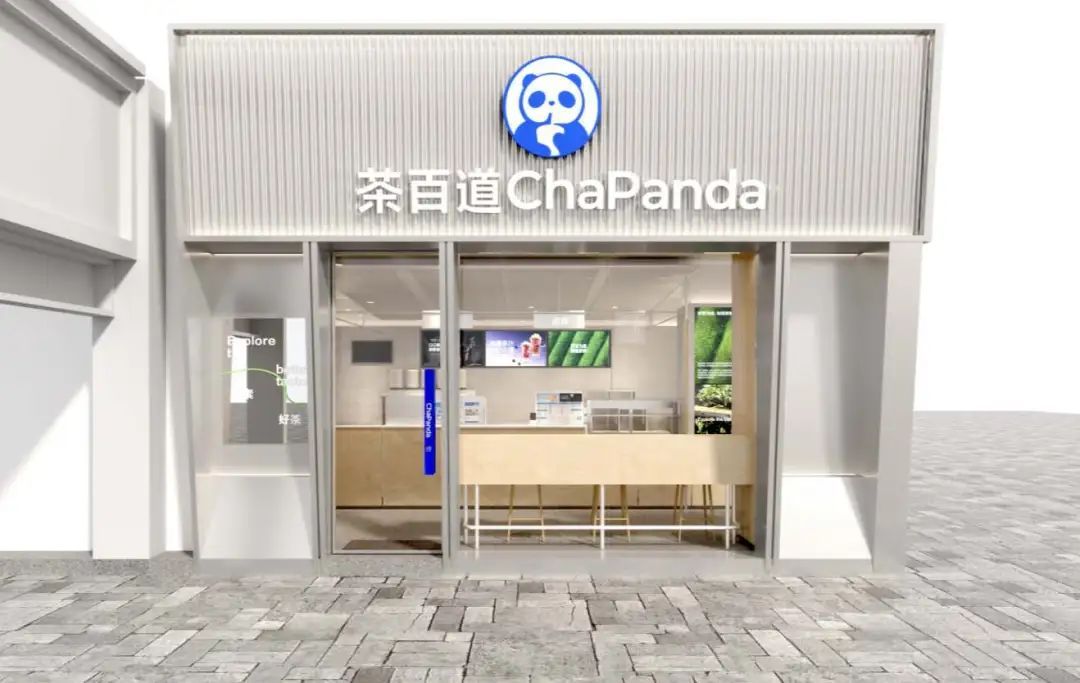
Chabaidao, the tea beverage giant originating from Sichuan, had its "big day" in April.
On April 23, 2024, Chabaidao made its debut on the main board of the Hong Kong Stock Exchange, with the stock code "2555" becoming its new identity.
Six months ago, Chabaidao submitted its prospectus to the Hong Kong Stock Exchange. Now, it has issued approximately 148 million shares at HKD 17.5 per share, aiming to raise HKD 2.59 billion, with an estimated market capitalization of HKD 25.86 billion. However, this "debut" in the capital market was not smooth sailing, as the market gave it a "rude awakening." The stock price opened below the offering price and plummeted like a roller coaster, with the intraday decline reaching as much as 38%.
This undoubtedly sent shockwaves to other beverage companies waiting in line for IPO in Hong Kong—Mixue Bingcheng, Gu Ming, Auntie Shanghai, and others—who may now reassess their listing plans.
1. Chabaidao's Journey to the Hong Kong Stock Market
In the tea beverage industry of Sichuan, Chabaidao is undoubtedly a household name.
However, on its first day of trading, Chabaidao's stock price suffered a Waterloo. It opened below the offering price and plunged more than 30% intraday. By noon, the stock had fallen 35.2% to HKD 11.34.
Despite the setback in its stock price, Chabaidao's strength should not be underestimated.
As of April 5, 2024, Chabaidao had 8,016 stores across 31 provinces and municipalities in China. According to Frost & Sullivan's report, based on 2023 retail sales, Chabaidao ranks third in China's freshly made tea beverage market, with a market share of 6.8%.
A deeper analysis of Chabaidao's stock price decline reveals that it is not solely a company-level issue. Competition in the beverage sector is intensifying, with brands emerging across all price points. Since 2022, the growth momentum of offline new consumption has shown signs of fatigue, and new tea beverages are no longer the focus of growth.
Another concern is the current state of the Hong Kong stock market. Its fundraising capacity has not yet fully recovered, and liquidity issues remain severe. This places the Hong Kong market in an awkward position between the A-share and U.S. markets. Many companies awaiting listing and venture capital firms hope the Hong Kong market can quickly overcome its challenges and regain momentum, but this will clearly take time and effort.
So why do mainland Chinese companies, especially those in the new consumption sector, still choose to list in Hong Kong?
There are deeper considerations. First, due to the incomplete liberalization of capital account convertibility for the renminbi, RMB-denominated assets have relatively limited global liquidity. Therefore, for companies that have received foreign venture capital or wish to convert some assets into foreign currency, overseas capital markets like Hong Kong and the U.S. are undoubtedly more attractive.
Second, the A-share market has stringent requirements for companies, including strict standards for establishment time, profitability, and growth, as well as restrictions on industries. The offline food and beverage industry, due to difficulties in verifying revenue authenticity, is not favored in the A-share market. Thus, companies like "Mixue Bingcheng" can only seek opportunities in markets like Hong Kong.
Additionally, compared to the U.S. market, the Hong Kong market is more closely tied to mainland China, with no time difference and a higher proportion of mainland-backed capital. The U.S. market prefers internet and high-tech industries, where Chinese consumer companies often struggle to gain mainstream attention.
Moreover, Hong Kong has a long history of hosting Chinese offline consumer companies, with examples like Helen's, Nayuki Tea, and Pop Mart being too numerous to mention.
2. Even "Jumping In" Isn't Stable
It's not just Chabaidao that's "walking on thin ice."
Nayuki Tea, the brand hailed as the "first tea beverage stock," has lost RMB 26.2 billion in three years. On March 29, 2022, Nayuki Tea released its first post-IPO financial report, showing that its total revenue for 2021 was RMB 4.3 billion(in RMB), a significant increase of 40.5% from RMB 3.057 billion in 2020. However, its adjusted net profit shifted from a profit of RMB 16.6 million in 2020 to a loss of RMB 145 million in 2021(in RMB).
Despite this, Nayuki Tea has not slowed down in product development and store expansion.
In product development: its freshly made tea beverages, baked goods, and other products accounted for 74.2%, 21.9%, and 3.9% of revenue, respectively, showing a diversified revenue structure. Meanwhile, online orders accounted for 71.8% of revenue.
In store expansion: since opening its first store in Shenzhen at the end of 2015, it has rapidly expanded to over 70 cities domestically and internationally. In 2021 alone, it added 326 stores, bringing the total to 817.
However, rapid expansion has also brought challenges. As the number of stores increases, management difficulties grow, and ensuring store quality and service levels has become a critical issue for Nayuki Tea.

Nayuki Tea has taken a series of measures: it continuously innovates, redefining the premium freshly made tea beverage industry with fresh fruits, fresh milk, and high-quality tea. The company has also increased investment in supply chain and digital technology. Its self-developed digital platform integrates online and offline operational data to support business decisions. Additionally, Nayuki Tea has enhanced consumer interaction and loyalty through membership systems, online stores, and other features.
Despite these achievements, Nayuki Tea's stock price continues to decline. The financial report shows significant reductions in losses, but the company remains unprofitable, and revenue has declined. It's clear that the market remains concerned about Nayuki's operational status and future prospects.
Similarly facing post-IPO struggles, Luckin Coffee was once an obscure brand that rose rapidly with a "burn money" strategy, setting records for corporate growth speed but also becoming a focus of attention due to staggering losses.
In 2019, when Luckin Coffee filed for an IPO with the U.S. Securities and Exchange Commission, people were shocked to discover that the company had burned through RMB 2.2 billion in just 18 months. According to its prospectus, in 2018, Luckin Coffee reported net revenue of RMB 841 million($125 million) and a net loss of RMB 1.619 billion($241 million). By Q1 2019, its total net revenue was RMB 478.5 million($71.3 million), with a net loss of RMB 551.8 million(~$82.218 million).
Luckin's strategy was simpler and more brutal: trade subsidies for market share and losses for growth. Its subsidy tactics were more like a gamble, betting that the market would quickly accept and rely on its brand, enabling future profitability. But reality is harsh: once subsidies stop, will consumers still pay? Can Luckin break out of this cash-burning cycle and truly retain users, building loyalty?
The aggressive expansion and subsidy strategy, while rapidly capturing market share, also brought significant financial risks. In 2019, Luckin Coffee went public, but in early 2020, it was exposed for financial fraud and forced to delist, with the original management team led by Charles Lu and Jenny Qian exiting. Two years later, the same group relaunched with Cotti Coffee, but that's another story.
The bigger problem now is that Luckin's moat seems shallow. Can this "post-IPO cash splash" strategy last? Unlike platform-level companies like JD.com and Meituan, which endured years of losses to build robust ecosystems in supply chain, logistics, warehousing, and IT systems, Luckin is just a coffee brand and cannot construct such a vast ecosystem.
The barrier to entry for coffee shops is relatively low, meaning any company with the will and capital can easily enter the market. This implies that competitors willing to burn money could quickly rise and challenge Luckin's position. Meanwhile, numerous tea shops like Mixue Bingcheng and Chabaidao are also competing for consumers' "coffee cravings."

Concerns also arise about Luckin's growth potential. Its store count has surged in recent years, nearing 17,000 by the end of 2023 and surpassing 20,000 in the first half of 2024. But is such 疯狂扩张可持续吗?竞争加剧和门店数量逼近平台期,是否会对公司的后续发展带来负面影响?
Despite the challenges, Luckin's performance in 2023 was commendable.
Its total sales reached an astonishing RMB 24.86 billion(~$3.45 billion), up 87.3% year-on-year. Compared to Starbucks China, Luckin narrowly outperformed in sales. Meanwhile, Luckin expanded stores at an astonishing pace, with 8,034 net new stores opened in the year, a 97.8% growth rate.
However, a closer look at Luckin's financials reveals troubling profit metrics. In Q4 2023, its operating profit was only RMB 213 million, down over a third year-on-year. The operating profit margin was a dismal 3.0%, far below previous years' levels.
3. Who Will Reign Supreme?
As we move into 2024, the battle in the tea beverage market intensifies. A new wave of IPOs is quietly emerging, with major tea brands gearing up to expand their territories with capital market support. Chagee, Gu Ming, Mixue Bingcheng, Auntie Shanghai... These names now resonate in the tea industry, all aiming for one goal—to claim the throne as the "next beverage stock."
Recently, Chagee was rumored to be planning a U.S. IPO, aiming to raise $200–300 million(~RMB 1.45–2.17 billion). This brand, known for its Chinese-style tea beverages, has rapidly risen as a dark horse in the market, with over 3,900 stores nationwide.
But Chagee isn't alone. Gu Ming, Mixue Bingcheng, and Auntie Shanghai have also submitted applications to the Hong Kong Stock Exchange, hoping to make their mark in the capital market. In this IPO race, who will come out on top?
In this fierce competition, each brand is pulling out all the stops. Mixue Bingcheng, with over 36,000 stores, sits firmly as the leader in China's freshly made beverage industry. Its core products—iced lemon water, fresh ice cream, and bubble tea—are beloved by consumers. Gu Ming, with over 9,000 stores and 1.2 billion cups sold, is a standout in the mass-market freshly made tea segment.
Auntie Shanghai is also a force to reckon with, leading China's mid-priced freshly made tea market with 7,297 stores, particularly excelling in lower-tier city penetration.
In this IPO wave, lower-tier markets may become the battleground for these brands.
Chabaidao is a prime example. While its new first-tier city presence remains dominant, its share of stores in fourth-tier and below cities has noticeably increased.
Author|Li Jiaman
Editor|Hu Zhanjia
Operations|Chen Jiahui
Produced by|LingTai LT (ID: LingTai_LT)
The copyright of this article belongs to the original author/organization.
The views expressed herein are solely those of the author and do not reflect the stance of the platform. The content is intended for investment reference purposes only and shall not be considered as investment advice. Please contact us if you have any questions or suggestions regarding the content services provided by the platform.
