



How to share the rose of time with shareholders? Beike focuses on 'certainty'.

Introduction: Compared to illusory future stories, investors will pay more attention to certain returns.
$KE(BEKE.US) has once again repurchased shares.
On April 22, 2024, KE Holdings Inc. $BEKE-W(02423.HK) spent $5 million to repurchase 380,000 ADS. Just a few days earlier, the company had been conducting repurchases worth tens of millions of dollars for several consecutive days. Looking further back, in 2023, KE Holdings Inc. used approximately $719 million to aggressively repurchase shares, all of which were canceled. The total number of shares repurchased accounted for 3.7% of the company's total issued shares before the repurchase program was launched.
In addition to continuous share repurchases, following the special cash dividend of $200 million distributed in the third quarter of last year, KE Holdings Inc. announced another final cash dividend in March 2024, with total dividends paid amounting to approximately $400 million.
As Xu Tao, Executive Director and CFO of KE Holdings Inc., stated, "We highly value shareholder returns." From share repurchases to substantial dividends, KE Holdings Inc. has consistently fulfilled its commitment to continuously rewarding shareholders and growing together with investors.
01 The 'Safe House' of Performance
Over the past two years, the real estate industry has undergone the test of transformation. Only when the tide goes out do we discover who has been swimming naked.
Yet, it is in troubled waters that heroes emerge. Some companies can forge ahead, leveraging their inherent strengths to explore and innovate unique business models, continuously creating returns for investors and becoming "outliers" in the real estate chain, building a "safe house" for investors.
KE Holdings Inc. is one such company.
In 2023, KE Holdings Inc. achieved a total transaction volume (GTV) of RMB 3.14 trillion, a year-on-year increase of 20.4%. Among this, the transaction volume of existing home business reached RMB 2.03 billion, up 28.6% year-on-year, accounting for nearly two-thirds of the total transaction volume. The transaction volume of new home business exceeded RMB 1 trillion, a year-on-year increase of 6.7%. KE Holdings Inc.'s net revenue for 2023 was RMB 77.8 billion, with a net profit of RMB 5.89 billion.
The second growth curve that KE Holdings Inc. is betting on—home renovation and furnishing business—achieved a contract value of RMB 13.3 billion last year, a year-on-year increase of 93%, with net revenue rising by 74% year-on-year. Currently, KE Holdings Inc.'s home renovation business has successfully achieved positive operating profits in 11 cities across the country.
In the view of Peng Yongdong, Co-founder, Chairman, and CEO of KE Holdings Inc., "The company's profitability and risk resistance are stronger than ever." KE Holdings Inc.'s resilience in navigating cycles has once again been validated. In the future, KE Holdings Inc. will focus on quality and efficiency, adhere to long-termism, and bring greater value to consumers and the entire residential industry.
02 Dividends as the Anchor for Measuring Stock Value
Xu Tao, Executive Director and CFO of KE Holdings Inc., once said, "Our solid cash reserves and prudent financial management enable us to deliver positive returns to shareholders." Share repurchases and dividends are precisely the two major ways KE Holdings Inc. fulfills this commitment.
Companies without money can hardly afford repurchases, let alone dividends. From KE Holdings Inc.'s interim reports over the past three years, its net cash flow from operating activities has consistently been positive, reflecting the company's stable cash-generating ability from its core business. In recent years, the company has not raised funds through methods like additional share issuances.
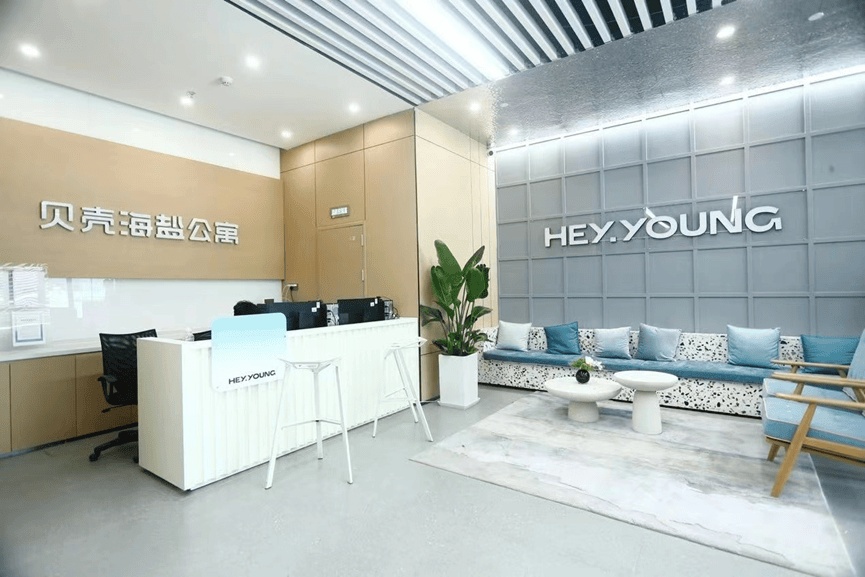
KE Holdings Inc.'s first self-operated mid-to-high-end long-term rental apartment launched in Chengdu. Source: KE Holdings Inc. official WeChat
In terms of repurchase behavior, since the launch of the share repurchase program in September 2022, as of April 25, 2024, KE Holdings Inc. has cumulatively repurchased over $1.2 billion worth of shares, totaling approximately 84 million ADS, accounting for about 6.6% of the total issued shares at the time the repurchase plan was approved by the shareholders' meeting in 2022. In 2024 alone, the company has repurchased over $300 million worth of shares, demonstrating its long-term confidence in the company's future development through concrete actions.
In terms of dividend behavior, KE Holdings Inc. has also adhered to rewarding investors. Among Chinese listed companies, those implementing special dividends are rare. Kweichow Moutai (600519.SH) issued its first special dividend in 2022. In the middle of 2023, KE Holdings Inc. followed the "Moutai King" by distributing its first special cash dividend, totaling approximately $200 million. In April 2024, KE Holdings Inc. distributed another final cash dividend for 2023, totaling approximately $400 million.
In mature markets such as Hong Kong and the U.S., institutional investors dominate, and these institutional investors have always placed great emphasis on dividend policies. Some outstanding U.S. listed companies have long adhered to quarterly dividends, even borrowing money to repurchase shares and pay dividends. Dividends have become one of the most stable fixed incomes for countless investors.
Coincidentally, in the recently released new "National Nine Articles," from emphasizing dividends to mandating dividends, greater attention has been given to the dividend payout ratio. It explicitly states that companies that have not paid dividends for many years or have low dividend payout ratios will face restrictions on major shareholders'减持 and risk warnings. At the same time, incentives will be increased for companies with high-quality dividends, and multiple measures will be taken to promote higher dividend yields.
It can be foreseen that in future domestic and international capital markets, the dividend yield indicator will occupy a more important position, becoming the anchor for measuring individual stock value.
03 Standing Together with Shareholders
Regarding KE Holdings Inc.'s persistent repurchase and dividend behavior, some may ask: Why pay dividends? And why repurchase shares?
Companies and shareholders are inherently partners. When a listed company needs financing, it is the shareholders' investments that fuel business development. When facing external fluctuations, it is long-term investors who accompany the company through cycles. And when the business achieves steady growth and strong profitability, it is time for the company to give back to shareholders with cash surpluses.
To grow stronger and achieve greater glory is the aspiration of every listed company. To realize this vision, market capitalization must be enhanced. How can we truly start from the source and effectively increase market capitalization? Let's peel back the layers, set aside appearances, and grasp the essence.
First, let's look at dividends.
A stock's market capitalization consists of two parts: the return on equity (ROE), which reflects the company's own α and is controllable; and the valuation multiple, which is more determined by market and industry β and is uncontrollable. Therefore, what companies should do is maximize ROE.
Asset turnover is one of the key factors affecting ROE. When the industry is in a weak cycle, companies' capital efficiency often suffers. At this time, converting cash into dividends for shareholders is undoubtedly a wise move. When shareholders enjoy dividends, they also develop goodwill toward the company and are more willing to increase investments. To some extent, a company's dividends will flow back to its stock price, truly realizing 'from shareholders, for shareholders.'
Next, let's look at repurchases.
Share repurchases and cancellations are a calculable and significant positive for stock prices. When a company repurchases and cancels shares, the number of outstanding shares decreases. Even if the company's earnings remain unchanged, earnings per share and net assets will correspondingly increase. Secondly, when a company chooses to repurchase shares, it is "drawing its sword" to the market, showing confidence in the company's future even during periods of low stock prices. It is willing to stand firm with shareholders and share the company's long-term prospects.
Beyond dividends and repurchases, KE Holdings Inc.'s management is highly aligned with the company's interests.
Executive compensation structures that include equity incentives are a mechanism to align the interests of corporate executives with the company. However, these are usually restricted shares, representing "paper wealth" until sold. Nevertheless, the better the stock performance, the higher the potential income for executives, thereby motivating management to drive the company's market-oriented development.
When KE Holdings Inc. listed in Hong Kong in 2022, according to the Hong Kong Stock Exchange's listing rules, companies with a WVR (weighted voting rights) structure were required to ensure that the economic interests of WVR holders corresponded to at least 10% of the shares. To meet this requirement, KE Holdings Inc. granted restricted shares to its co-founders Peng Yongdong and Shan Yigang, imposing strict limitations on the disposal and dividend rights of these shares. Neither has engaged in any 减持行为 in the nearly four years since the listing, adhering to long-termism and standing firmly with the company.
Among Chinese concept stocks and Hong Kong-listed companies, it is rare for executives to refrain from 减持 for nearly four years after listing.
The steadfast holding of KE Holdings Inc.'s executives is a practical demonstration of sharing the "roses of time" with shareholders.
04 Global Leaders Are All Generous
Looking at top companies across industries worldwide, from Coca-Cola (KO.US) to Apple (AAPL.US) to NVIDIA (NVDA.US), their rise to leadership is not only due to the scarcity of their business models but also their generosity to shareholders.
Since 2022, among S&P 500 constituents, the average company has allocated 27% of total cash expenditures to repurchases and 23% to dividends. Before 2023, Apple was the world's most valuable company for at least ten consecutive years and also aggressively repurchased over $588 billion worth of shares during that decade, making it the company with the largest repurchase amount and proportion in the S&P 500. Meanwhile, AI leader NVIDIA's board approved an indefinite $25 billion share repurchase plan in August last year.
As for concerns that dividends may lead to stock price declines, such worries are unfounded.
Over the past few years, Coca-Cola's annual performance growth has been around 5% to 6%, but it has provided shareholders with at least a 3.5% return annually, and its stock price has not fallen. Meanwhile, U.S. tech giant Google (GOOG.US) announced a 15% revenue growth on April 25 and its first-ever dividend of $0.20 per share, causing its stock to surge nearly 16% after hours, adding approximately $300 billion to its market cap.
In fact, cash does not carry a premium in the eyes of capital markets. What secondary markets value is a company's future earning potential, which has nothing to do with cash. On the contrary, dividend payments can enhance market attention and recognition of a company, attracting long-term capital and supporting future valuation increases. Thus, dividends are a win-win move for both shareholders and companies.
05 Cash Cows Reign Supreme
Over the past two decades, most companies have enjoyed the spotlight of China's robust economic growth under globalization. As long as there was a future in the story, investors were willing to pay for it, leading to high valuations becoming the norm among Chinese listed companies.
Consequently, many Chinese companies rushed to go public to raise funds, after which major shareholders would opportunistically cash out in various ways. Meanwhile, minority shareholders, as the less informed party, often ended up the most hurt, with neither tangible dividends nor inflated stock prices.
Now, as we find ourselves in a new economy prioritizing stability, the days when "a pig could fly if it caught the wind" are gone, and the old 常态 of "dream valuations" is fading into history. So, in this new cycle, what kind of companies will investors prefer?
Warren Buffett has given us the answer.
Buffett's Berkshire Hathaway owns multiple stable cash cows, such as insurance, railroads, and energy businesses, which provide the company with steady cash inflows.
In weak cycles, investors will focus more on certain returns rather than illusory high-growth stories of the future.
Certain returns, in essence, are dividends and repurchases. When a company's balance sheet can sufficiently 担保偿债能力; when a company can 拿出真金白银 to repurchase shares; when a company chooses to share profits with shareholders through dividends—investors naturally place more trust in such action-oriented companies.
Faced with uncertainty, cash cow-type companies willing to reward shareholders possess 逆周期 attributes and can provide investors with stable cash flows.
Catalyzed by the new cycle, we hope and believe that more listed companies will follow KE Holdings Inc.'s example, centering on "dividends + repurchases" to truly establish a 良性 relationship with investors and march forward together into the future.
The copyright of this article belongs to the original author/organization.
The views expressed herein are solely those of the author and do not reflect the stance of the platform. The content is intended for investment reference purposes only and shall not be considered as investment advice. Please contact us if you have any questions or suggestions regarding the content services provided by the platform.
