


Hong Kong stocks rose, what are domestic and foreign capital trading?

Since mid-February 2024, the Hong Kong stock market has bottomed out and rebounded. As of April 26, the Hang Seng Tech Index and Hang Seng Index have risen by 16.27% and 11.16% respectively, significantly outperforming major global indices such as the S&P 500 and Nikkei 225. This week, the Hang Seng Index even achieved five consecutive days of gains, perfectly recovering the "lost ground" from the decline at the beginning of the year.
From a liquidity perspective, we have observed improvements in both domestic and foreign capital flows in the Hong Kong market recently.
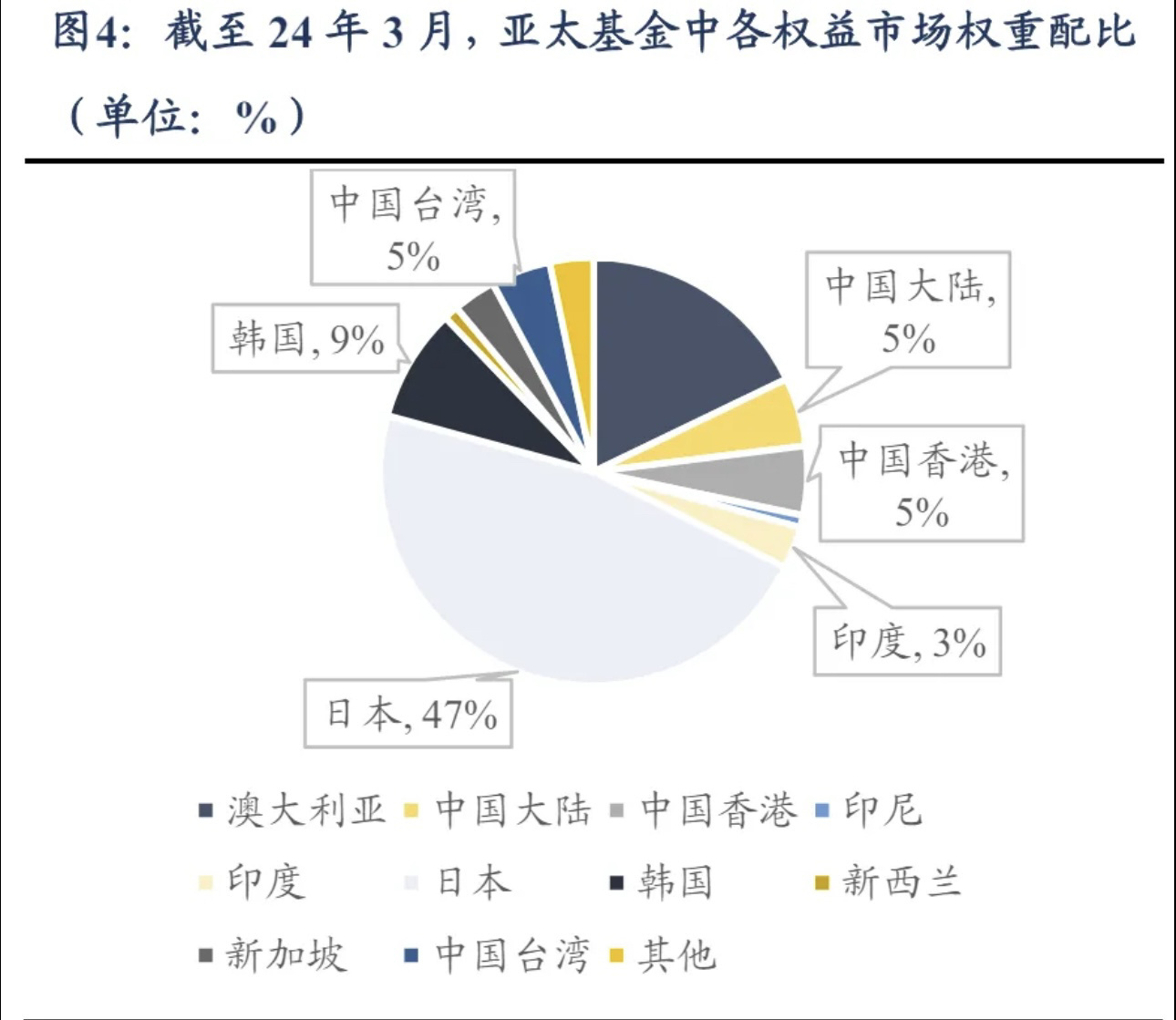
Recently, the scale of foreign capital outflows from the Hong Kong stock market has narrowed, forming a liquidity seesaw with the Japanese and Indian stock markets. This may indicate that some globally/regionally allocated funds are gradually reducing their positions in Japanese and Indian stocks while increasing their allocation to Hong Kong stocks. Based on EPFR data, we found that around mid-February, foreign capital inflows into Japanese and Indian stocks began to peak and decline, while the net outflow from the Hong Kong market gradually converged. In Asia-Pacific funds, as of March, the allocation to Japanese stocks was as high as 46.9%, while Hong Kong and A-shares were both around 5%, indicating that foreign capital still has significant room to increase its allocation to Chinese assets.
What are the funds trading on? The recent rally in the Hong Kong market may be primarily based on the following four logics:
Logic 1: Valuations are "cheap," prompting capital rotation
Currently, the Hong Kong stock market is a valuation 洼地 among global equity assets, highlighting its 配置 value.横向对比来看,the Hang Seng Index ranks last in valuation among major global indices.纵向对比,as of April 26, 2024, the Hang Seng Index's valuation (PE TTM, same below) is below the 20th percentile historically since 2015, while the Hang Seng Tech Index's valuation is at the 15.5th percentile since August 2020. In contrast, Japanese and Indian stocks are both above the 30th percentile in recent years, making the Hong Kong market's 配置性价比 more 显著. Coupled with the significant depreciation of the yen, which has hurt investment returns in Japanese stocks, this may attract capital to rotate from high to low valuations.
Logic 2: Improving domestic fundamentals/expectations
Valuations being "cheap" alone are not enough to justify capital inflows. The rally in the Hong Kong market also reflects improving domestic fundamentals/expectations. Macroeconomic data for Q1 showed better-than-expected GDP growth, a return of the PMI to the expansion zone, and strong exports, leading 外资行 to 普遍上修 their forecasts for China's 2024 GDP growth. At the micro level, internet companies such as Tencent, Meituan, and JD.com reported higher-than-expected profit growth in Q4 2023. The consensus EPS forecast for the Hang Seng Index has been revised up by 2.84% since the end of last year, and 外资行 such as UBS and Goldman Sachs have upgraded their ratings on the Hong Kong market, reflecting improving market expectations for fundamentals.
Logic 3: Stable dividends from blue chips, "latecomer catch-up" by white horses
The Hong Kong market offers attractive dividend yields, with blue chips 作为派息主力 providing stable dividends and 互联网为代表的白马股 significantly increasing their payout ratios.
Logic 4: Catalysts from capital market policies
This week's consecutive gains in the Hong Kong market were 离不开政策的助推. Beyond the four factors supporting the short-term rally, two core variables affecting the long-term trajectory of the Hong Kong market are quietly changing and deserve 持续关注。
First, from a fundamental perspective, the convergence of the nominal growth differential between China and the U.S. In our annual strategy, we highlighted that the narrowing of the China-U.S. nominal growth differential in 2024 would be a core factor in the recovery of Chinese asset prices.
Second, from a liquidity perspective, changes in the U.S. dollar and its 信用. The decline in the intrinsic value of the U.S. dollar may not be a short-term driver of the Hong Kong market's valuation re-rating, but it could mark the "opening chapter" of a longer-term 剧本. From a medium- to long-term perspective, two core variables affecting the Hong Kong market's trajectory are quietly changing. First, the convergence of the China-U.S. nominal growth differential, which will be a core factor in the recovery of Chinese asset prices in 2024. Given the Hong Kong dollar's peg to the U.S. dollar, the Hong Kong market is more sensitive to changes in the 海外宏观 environment and tends to react more strongly. Second, changes in the U.S. dollar and its 信用. Historically, the Hong Kong market has shown a 明显的负相关性 with the U.S. dollar index. Currently, the U.S. dollar is "easier to fall than to rise," and the erosion of its intrinsic value may signal that a 贬值 cycle is "imminent" once the rate-cutting cycle begins, potentially leading to a 系统性抬升 in the Hong Kong market's valuations.
In summary, positive factors are accumulating, and we remain overall optimistic about the Hong Kong market's future trajectory.
The copyright of this article belongs to the original author/organization.
The views expressed herein are solely those of the author and do not reflect the stance of the platform. The content is intended for investment reference purposes only and shall not be considered as investment advice. Please contact us if you have any questions or suggestions regarding the content services provided by the platform.
