


 Commemorative
 Likes Received
BYD's 2024Q1 earnings report interpretation: Revenue growth underperforms, but profitability beats expectations amid intensifying price war

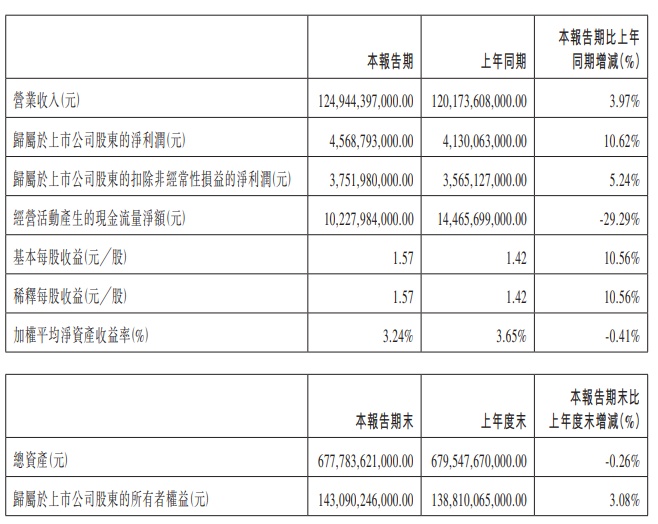
On April 29, BYD released its first-quarter 2024 earnings report. BYD achieved revenue of 124.94 billion yuan (RMB, same below) in the first quarter, a year-on-year increase of 3.97%, significantly lower than the market expectation of 131.72 billion yuan. $BYD COMPANY(01211.HK) $Li Auto(LI.US) $NIO(NIO.US) $XPeng(XPEV.US) $Tesla(TSLA.US) $Dow Jones Industrial Average(.DJI.US) $S&P 500(.SPX.US) $Hang Seng Index(00HSI.HK) $NASDAQ Composite Index(.IXIC.US) $Invesco QQQ Trust(QQQ.US)

I. Summary of Personal Views
1. Due to the slowdown in delivery growth, BYD's revenue growth this quarter was underwhelming. However, thanks to technological and scale upgrades, its profitability exceeded expectations.
2. Although BYD's revenue growth remained relatively stable, the company achieved continuous improvement in gross margin through economies of scale and the decline in lithium carbonate prices. This strategic cost control significantly enhanced its profitability. Additionally, BYD's overseas performance remains outstanding and will be a core growth driver in the future, warranting close attention.
3. Unlike the significant leaps in performance seen in previous periods, BYD's growth has gradually entered a stable phase in recent quarters, with the main highlight being the continuous enhancement of profitability. The current stock price remains in a high-volatility state, so caution is advised, as risks are not low.
Overall, although BYD's revenue growth this quarter was dragged down by slowing delivery growth, its profitability still exceeded expectations due to technological and scale upgrades. Through economies of scale and lower lithium carbonate prices, BYD achieved continuous gross margin improvement. Strong overseas performance also provides a growth direction for its future development. However, as performance growth gradually stabilizes and the stock price remains volatile, investors should carefully assess risks when considering BYD.
II. Financial Analysis: Revenue Growth Underwhelms, Profitability Exceeds Expectations
In terms of revenue, BYD achieved 124.94 billion yuan in the first quarter, a year-on-year increase of 3.97%, significantly lower than the market expectation of 131.72 billion yuan. Recent performance shows that BYD's revenue growth, after a prolonged period of high growth, has noticeably flattened as the base for vehicle deliveries expands and growth rates continue to decline.
In terms of profitability, BYD's net profit attributable to shareholders in the first quarter was 4.569 billion yuan, a year-on-year increase of 10.62%. Non-GAAP net profit (excluding non-recurring gains and losses) was 3.752 billion yuan, up 5.24% year-on-year. Corresponding earnings per share were 1.57 yuan, up 10.56% year-on-year, slightly better than the market expectation of 1.38 yuan, primarily driven by product technology and scale upgrades.
III. Operational Analysis: Intense Domestic EV Competition, Slowing Delivery Growth, Steady Gross Margin Improvement, Rapid Overseas Sales Growth
1. Intense Domestic EV Competition, Slowing Delivery Growth
BYD continues to demonstrate strong competitiveness in the new energy vehicle (NEV) market. In Q1 2024, BYD sold 626,263 new vehicles, a year-on-year increase of 13.44%, further solidifying its position as China's NEV sales champion and showcasing its deep expertise and continuous innovation in the NEV sector.
However, as mentioned earlier, BYD's delivery growth is gradually slowing. This trend is not accidental but a natural outcome of the intense competition in the EV market. In this fiercely competitive environment, not only BYD but most brands face challenges in delivery growth. Even Tesla, the previous leader in the EV sector, showed severe delivery declines in its latest quarter.
The primary reason behind this is limited consumer purchasing power. As the penetration rate of NEVs in China continues to rise, the fastest growth phase has passed. This means that future growth will depend not only on technological innovation and product upgrades but also on infrastructure development to bolster consumer confidence.
To stimulate the consumer market, local governments have introduced policies such as trade-in subsidies. These policies aim to lower the barrier to vehicle purchases and boost consumer willingness, thereby driving sustained NEV market growth. For automakers like BYD, this is a significant opportunity to leverage policy benefits and further increase sales and market share.
2. Continuous Gross Margin Improvement
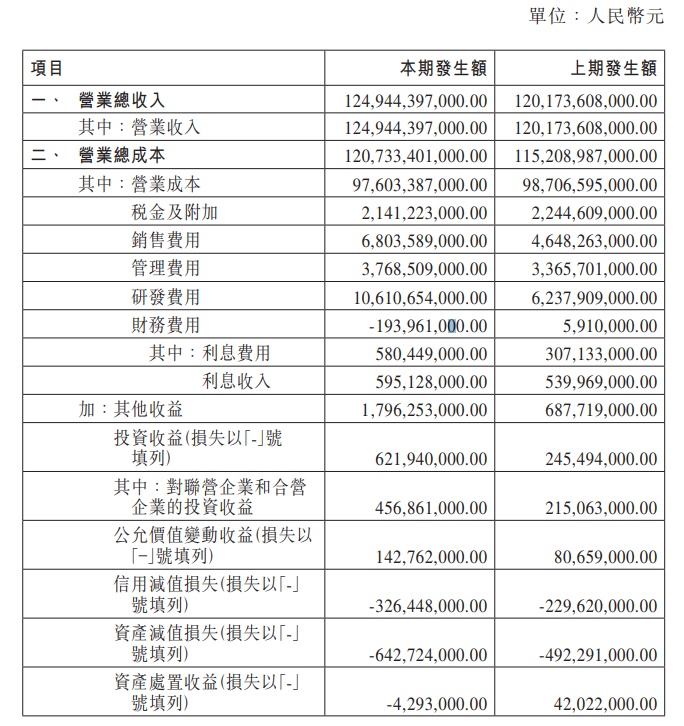
BYD's gross margin rose significantly to 21.88% in Q1, up 4.02% year-on-year. This improvement not only highlights BYD's strong competitiveness in the NEV market but also reflects its exceptional capabilities in supply chain integration and technological innovation.
Over the past two years, BYD's continuous delivery growth has not only secured substantial market share but also driven steady gross margin improvement. Rapid sales growth is a key factor behind the gross margin expansion, as larger sales volumes enable better economies of scale, reducing per-unit production costs and boosting margins.
Meanwhile, the sustained decline in upstream lithium carbonate prices has also supported BYD's gross margin improvement. In the past, fluctuations in raw material prices posed significant pressure on automakers. However, with lithium carbonate prices falling, procurement costs for BYD and others have decreased, freeing up more profit space.
Notably, although BYD initiated the latest round of price wars, its gross margin and profitability remain robust. This underscores the company's years of sustained R&D investment. Only by continuously launching competitive products can automakers stand out in a crowded market, win consumer favor, and create a virtuous cycle of sales and R&D.
3. Remarkable Overseas Sales Growth
BYD's overseas exports showed remarkable growth, with 38,434 passenger vehicles exported, a year-on-year surge of 153%. This figure not only set a new company record but also achieved new sales milestones in multiple regions. This growth reflects BYD's strong competitiveness in international markets and the deepening of its globalization strategy.
As global auto competition intensifies, intelligence has become a key differentiator. BYD's accelerated focus on intelligence, with its "Whole-Vehicle Intelligence" strategy, enhances its core competitiveness and drives the global auto industry's intelligent transformation. It is reasonable to believe that BYD will maintain strong growth momentum in future markets, delivering high-quality, intelligent vehicles and services worldwide. Overseas performance will remain a key focus for future growth.
This article is a personal interpretation of the quarterly report, reflecting my thoughts within my capabilities. Feedback is welcome. Additionally, this article does not constitute investment advice, and readers are encouraged to think independently.
The copyright of this article belongs to the original author/organization.
The views expressed herein are solely those of the author and do not reflect the stance of the platform. The content is intended for investment reference purposes only and shall not be considered as investment advice. Please contact us if you have any questions or suggestions regarding the content services provided by the platform.
