



Can Li-Ning still sleep soundly when others are encroaching on its territory?

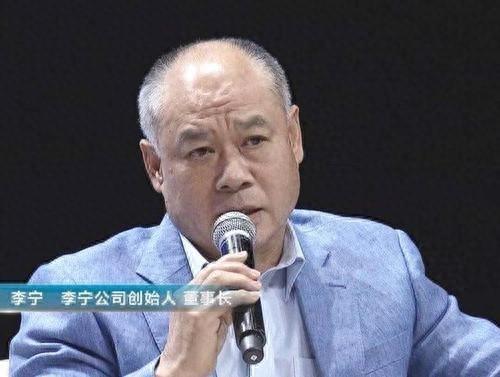
"Gymnastics Prince" Li Ning not only achieved a series of unprecedented accomplishments in his career but also crossed over to create the domestic sports brand "Li Ning," which once rivaled Nike, becoming the undisputed "king of domestic trends." Riding the wave of the 2008 Beijing Olympics, "Li Ning" became a household name across the country, marking the beginning of a legendary business story.
However, as fate would have it, just when it seemed that "Li Ning," born in the '90s and peaking at its "18th birthday," would continue its glory for the next decade, it faced a textbook failure just three years later. The brand entered a turbulent period, changing leadership four times. Even after a "resurgence," it had to relinquish its top position in the domestic sports brand market.
Despite pushing into the high-end market and becoming increasingly expensive, "Li Ning" was left far behind by Anta in terms of revenue and profits, with Xtep also eyeing its position. How could the former "king" sleep soundly with such fierce competition at its doorstep?
01. Ups and Downs Over 20 Years: Has Li Ning Lost Its Way?
Recently, Li Ning released its 2023 financial report, showing revenue of 27.598 billion yuan, a 7% year-on-year increase, but net profits plummeted by 21.58% to 3.187 billion yuan. As the only publicly listed domestic sports brand with declining profits, Li Ning once again found itself in the spotlight.
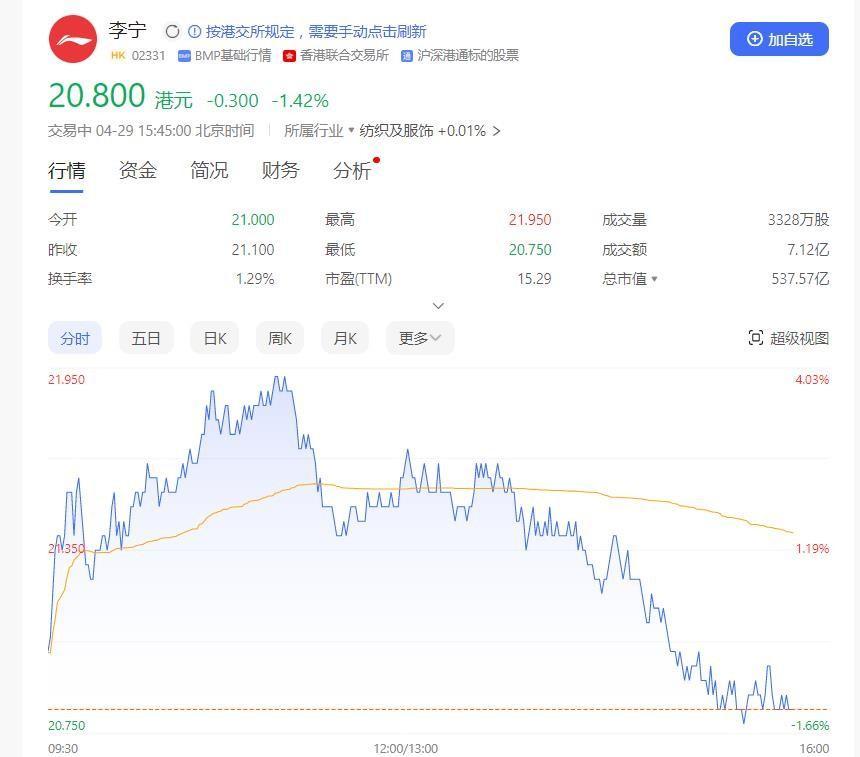
In comparison, Anta reported revenue of 62.36 billion yuan last year, with profits of 10.2 billion yuan, a nearly 35% increase. Xtep's revenue was 14.346 billion yuan, with profits of 1.03 billion yuan, up 11.80% year-on-year. 361 Degrees posted revenue of 8.42 billion yuan, with profits of 1.38 billion yuan, a 28.80% increase. As of April 29 at 15:45, Li Ning's stock price was HKD 20.800, with a market cap of HKD 53.757 billion, down over 80% from its historical peak of over HKD 280 billion.
This raises the first painful question: Why was Li Ning once so glorious?
The success of any brand depends on timing, location, and people. Li Ning's early success was no exception. Targeting the sports apparel market as early as 1989, Li Ning was the first "gold digger" in China's sports brand industry. At the time, brands like Anta, Hongxing Erke, and Peak were still in their infancy. Even Anta, founded shortly after Li Ning, spent its first decade focused on overseas OEM until signing Kong Linghui in 1999, marking the start of its own brand operations. In other words, Li Ning had a decade-long head start, giving it an unparalleled first-mover advantage. Combined with Li Ning's personal accolades, the brand gained immense momentum, skyrocketing in popularity with massive sponsorships and ad campaigns. In 2008, Li Ning's revenue grew by 54%, setting a historic record.
As reported by "People," "Goods shipped from factories didn’t even need to be unloaded at warehouses—dealers’ trucks would take them directly away without touching the ground." This speaks volumes about Li Ning's popularity at the time!
With such a solid foundation in its first decade, why did Li Ning fall from grace?
Riding high on its success, Li Ning, like many domestic sports brands that expanded aggressively after the Beijing Olympics, feasted on the short-term gains without realizing that the "Olympic boom" of 2008 had 透支 future sales. As public enthusiasm for sports waned, the drawbacks of overcapacity began to emerge.
By 2011, the entire sports apparel market began to decline, and by 2013, the industry had shrunk further, leaving everyone struggling. Instead of following international brands in 降价清库存, Li Ning took a contrarian approach, launching the "90 后 Li Ning" campaign. However, this failed to reverse the downturn.
From 2011 to 2013, Li Ning faced a wave of store closures and customer 流失, with revenue halving from its peak of 10 billion yuan. The company nearly faced a 资金链断裂. From 2012 to 2014, Li Ning 累计亏损达 3 billion yuan, losing its crown as China's top sports brand to Anta. During this turbulent period, two consecutive CEOs left, forcing founder Li Ning, who had long retreated from the frontline, to return and salvage the company. Riding the wave of internet marketing and e-commerce, Li Ning finally returned to profitability and regained its footing.
The 2018 New York Fashion Show was a masterstroke for Li Ning, solidifying the "China Li Ning" brand as synonymous with "domestic trends." Li Ning's 业绩狂飙, surpassing 10 billion yuan in revenue for the first time, restoring confidence. Just as Li Ning was gaining momentum, its strongest competitors, Nike and Adidas, handed it an opportunity.
In 2021, Nike and Adidas were embroiled in the Xinjiang cotton controversy, facing widespread boycotts. Li Ning 敏锐地 seized the moment, championing patriotism by supporting Xinjiang cotton. Consumers rallied behind the brand, driving sales up 800% overnight. That year, Li Ning achieved revenue of 22.572 billion yuan, reaching new heights.
Why did Li Ning falter again after its resurgence?
Because,戏剧性的一幕又发生了……
02. The Long Road to High-End
If Li Ning's 每一次复苏历程 were compared to a 花期, the biggest issue is that the 花期 is too short. Shortly after "China Li Ning"爆红出圈, the brand faced a series of mishaps, none of which were due to 不可抗力因素. These events plunged Li Ning back into turmoil!
In September 2021, during the National Games, Tokyo Olympics badminton champion Chen Yufei was injured by her 运动鞋, which drew blood. The shoes were sponsored by Li Ning, sparking a massive controversy over product quality. Although Li Ning quickly pulled the product, the damage was done.
In October 2022, Li Ning made another blunder. A winter jacket from its new collection resembled Japanese military uniforms,引发巨大争议. To make matters worse, Li Ning's e-commerce head Feng Ye blamed the backlash on consumers' lack of knowledge, further angering the public.
After these missteps, Li Ning's hard-earned brand reputation was severely damaged. With neither brand appeal nor 性价比优势, the brand's decision to raise prices repeatedly only alienated consumers further.
The launch of its premium sub-brand "Li Ning 1990" marked its all-in bet on high-end. Priced between 800 and 5,000 yuan, LI-NING 1990 opened 24 flagship stores in prime locations like 恒隆,万象城, and SKP.
Unfortunately, the high hopes for "Li Ning 1990" did not materialize. By the first half of 2023, Li Ning's inventory had ballooned to 2.1 billion yuan. A report by Bank of Communications International noted that due to price-sensitive consumers, weak 加盟商 sales, and inventory pressure from its premium pricing strategy, Li Ning faced significant challenges in 线上线下 price 套利。
Beyond this, many Chinese sports brands share a common weakness—prioritizing marketing over R&D, the root cause of their inability to sustain premium pricing.
Huawei's success in premium smartphones, backed by its vast patent portfolio and unique tech, is a model others envy. Without such 硬实力, brands relying solely on 涨价 will face consumer backlash and 被迫降价去库存. The same logic applies to sports apparel.
Nike's patent lead over domestic brands is undeniable. Among domestic brands, Anta's patent count 一度 reached 3.5 times that of Li Ning, reflecting differences in R&D investment and talent.
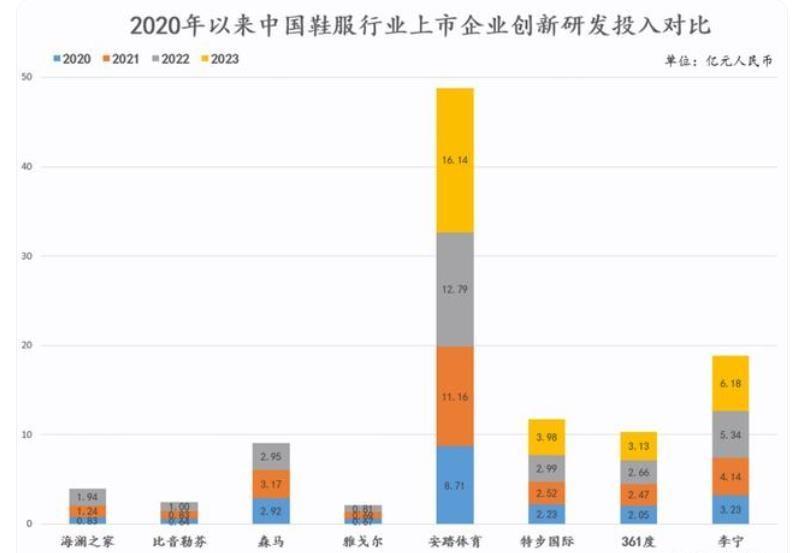
In 2023, Anta's R&D spending reached 1.614 billion yuan,领先 other domestic brands. In terms of R&D intensity, Anta (2.6%) and Xtep (2.8%) also slightly outpaced Li Ning (2.2%).
Without 原创技术卖点, telling a premium story is tough. The era of selling 稻草 as 黄金 through marketing alone is over. Even Gen Z consumers prioritize value over hype.
Can the "stumbling" Li Ning regain its former glory?
Only time will tell!
The copyright of this article belongs to the original author/organization.
The views expressed herein are solely those of the author and do not reflect the stance of the platform. The content is intended for investment reference purposes only and shall not be considered as investment advice. Please contact us if you have any questions or suggestions regarding the content services provided by the platform.
