


Do you get it? Pharmaceutical companies are quietly crossing boundaries...

Transformation and cross-border expansion have become two major themes in the development of pharmaceutical companies: while many traditional Chinese medicine companies are actively promoting innovative transformation, others are venturing into the medical aesthetics sector.
The medical aesthetics market, in particular, holds enormous potential, attracting early investments from companies like Huadong Medicine and Sihuan Pharmaceutical, which have reaped significant rewards.
Recently, Tonghua Dongbao, a leading domestic insulin producer, invested 100 million yuan to acquire a stake in Junhemeng, entering the fields of growth hormones and medical aesthetics, sparking market interest in pharmaceutical companies' cross-border moves.
01
GLP-1 in One Hand, Medical Aesthetics in the Other
The "New Story" of the Insulin Leader
The winds of insulin centralized procurement have shifted, and the insulin leader is writing a new chapter.
On April 23, the results of the national insulin centralized procurement renewal were announced, showing a relatively mild overall impact with prices dropping only 3.8% compared to the first round. Some companies even saw price increases, signaling a change in the insulin procurement landscape. Gan & Lee Pharmaceuticals and Tonghua Dongbao successfully secured bids for all six of their products, with domestic companies reporting significant volume growth year-over-year while foreign companies saw declines, accelerating the process of domestic substitution.
In the competition for the diabetes market, the two leaders have shifted their focus to fourth-generation insulin and GLP-1 hypoglycemic drugs.
Tonghua Dongbao, in particular, has built a comprehensive GLP-1 pipeline. Not only has its biosimilar of liraglutide been approved for market, but it has also developed an oral small-molecule GLP-1 receptor agonist (THDBH110 capsule), a GLP-1/GIP dual-target receptor agonist (THDBH120 injection), and recently licensed ZT001, a biosimilar of semaglutide (for diabetes) from Zhitai Biotech, which has now entered Phase III clinical trials.
However, the competition for semaglutide biosimilars in China is fierce. According to the Insight database, Jiuyuan Gene's semaglutide biosimilar has already filed for approval, while eight other domestic companies, including Chengdu Beite, Chia Tai Tianqing, and Livzon Group, have their semaglutide biosimilars in Phase III clinical trials.
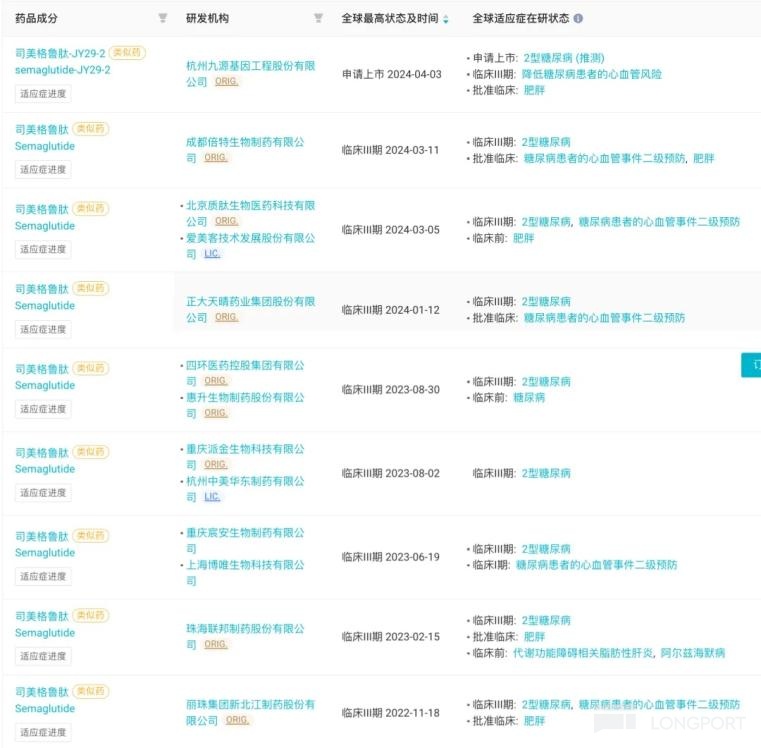
Semaglutide Biosimilar Pipeline (Phase III Clinical Trials and Beyond)
Source: Insight Database Web Version
Additionally, Tonghua Dongbao has unveiled a "new story": beyond deepening its presence in the diabetes market, it is expanding into obesity, NASH, and gout treatment, while also crossing into the growth hormone and medical aesthetics sectors.
Currently, the GLP-1/GIP dual-target receptor agonist (THDBH120 injection) for weight loss has entered clinical trials. The company has also developed two Class 1 new drugs and one chemical oral drug for gout treatment and invested 100 million yuan in Junhemeng to enter the growth hormone and medical aesthetics markets.
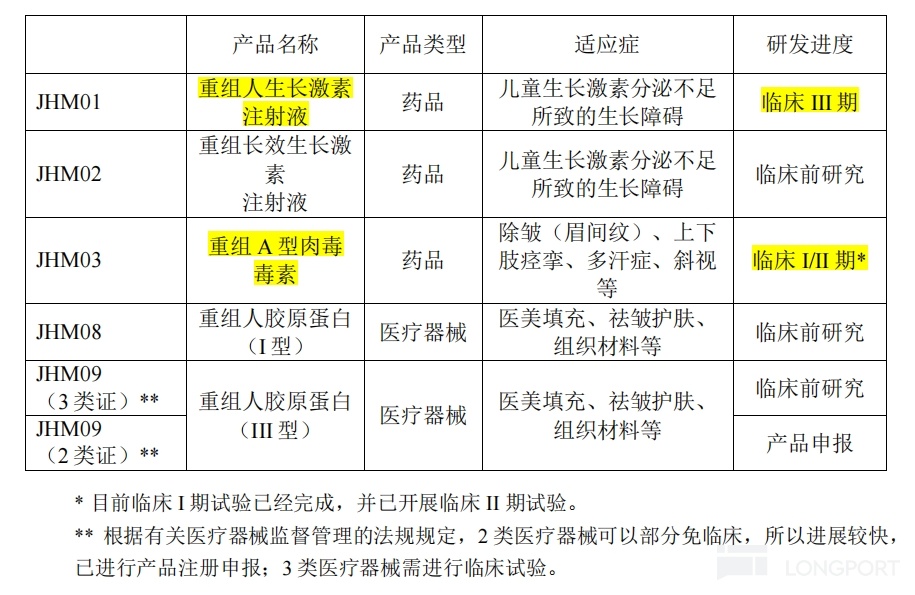
Junhemeng's Key R&D Pipeline Products
Image Source: Tonghua Dongbao Announcement
Tonghua Dongbao's move into medical aesthetics is logical, as its experience in developing and producing GLP-1 weight-loss drugs positions it well to enter the medical aesthetics market.
Similarly, Imeik Technology, a leader in hyaluronic acid-based medical aesthetics, "holds medical aesthetics in one hand and weight-loss drugs in the other," having developed liraglutide injections for weight loss and invested in Zhitai Biotech in November 2023 to license ZT001 (for weight loss), strengthening its strategic position in weight management and fat reduction.
02
Why Cross Over into Medical Aesthetics?
In recent years, many pharmaceutical companies have entered the medical aesthetics sector through investments, agency agreements, and diversified strategies.
For example, Huadong Medicine is a prime example of the investment approach, acquiring UK-based hyaluronic acid company Sinclair in 2018, taking a stake in US-based R2 in 2019, and acquiring energy-based medical aesthetics device companies High Tech and Viora in 2021 and 2022, respectively.
Similarly, CMS Pharma acquired Swiss skin treatment and medical aesthetics company Luqa Ventures Co in 2021, while Yunnan Baiyao invested 500 million yuan to fully acquire its subsidiary Yunzhen Medical, with plans to open eight medical clinics in Beijing and Shanghai.
Other companies have adopted an "agency" strategy to enter medical aesthetics.
Huadong Medicine first ventured into medical aesthetics in 2013 through its subsidiary Huadong Ningbo, securing exclusive distribution rights in China for South Korea's LG's YVOIRE hyaluronic acid injectables. The following year, Sihuan Pharmaceutical signed an exclusive distribution agreement with South Korea's Hugel to co-develop botulinum toxin and hyaluronic acid products. Changsheng Bio established a Sino-foreign joint venture with Italy's InnPharmSRL in 2017 to sell hyaluronic acid products in China.
Fosun Pharma, which emphasizes capital operations, has diversified its medical aesthetics portfolio. In 2013, it established subsidiary Sisram Medical and acquired Israeli medical aesthetics device company Alma Laser, later expanding further to cover clinics, plastic surgery hospitals, dental aesthetics, and personal care.
Jiangsu Wuzhong adopted a hybrid "agency + acquisition" model, acquiring a 60% stake in Shangli Huimei, a subsidiary of Shangli Bio, in 2021 to secure exclusive distribution rights for South Korea's Humedix's latest hyaluronic acid product HARA in mainland China, Hong Kong, and Macau. It also spent 166 million yuan to acquire a 51% stake in Datou Medical, gaining exclusive distribution rights for AestheFill, a "baby face" stimulator, in mainland China.
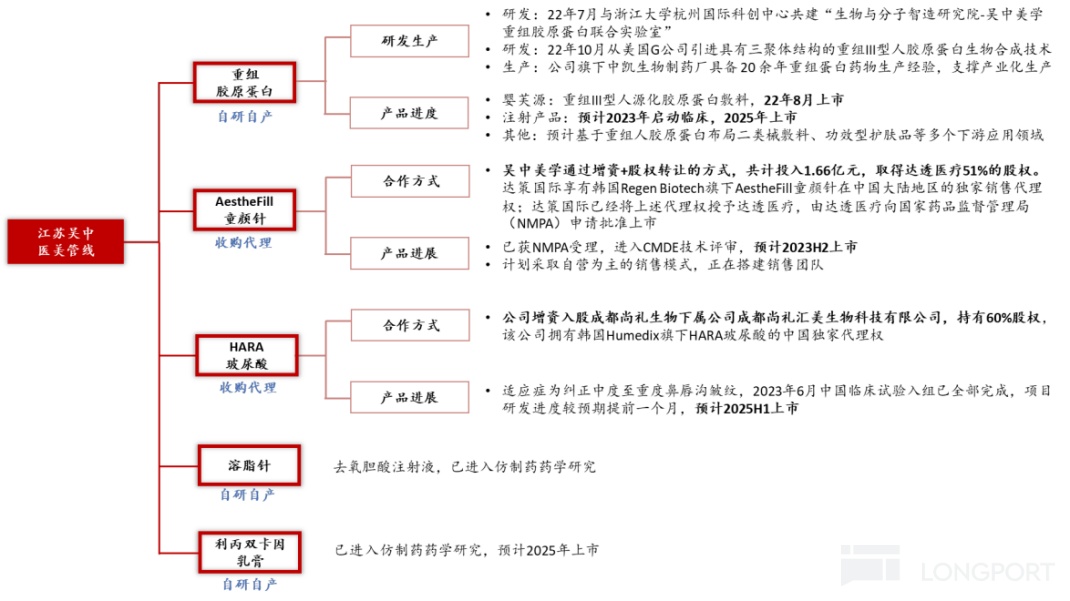
Jiangsu Wuzhong's Medical Aesthetics Pipeline Strategy
Data Source: Company Announcements, Official Website, Caitong Securities Research
The rush of pharmaceutical companies into medical aesthetics is driven by several factors.
On one hand, medical aesthetics is an emerging industry combining healthcare and consumer attributes, with vast growth potential. According to Frost & Sullivan, China's medical aesthetics market is projected to reach 638.2 billion yuan by 2030, with a CAGR of 14.5% from 2021 to 2030.
On the other hand, policies like centralized procurement have squeezed profits in traditional pharmaceuticals, pushing companies to seek new revenue streams. Pharmaceutical firms have inherent advantages in technology, R&D, and clinical resources, making medical aesthetics a synergistic fit.
Pioneers like Huadong Medicine and Sihuan Pharmaceutical have already turned medical aesthetics into profit drivers, attracting others to follow suit.
03
Successful Cross-Border Examples:
Huadong Medicine, Sihuan Pharmaceutical
Crossing over is easy; integrating resources is hard.
To succeed, pharmaceutical companies must deeply understand medical aesthetics, prioritize professionalism and service, and drive product innovation to adapt to market changes.
After all, profit distribution in medical aesthetics is often described as "upstream swimming in wealth, downstream barely scraping by, and midstream struggling to survive."
This is because upstream players—raw material suppliers, device manufacturers, and injectable producers (e.g., hyaluronic acid, botox)—enjoy high margins due to technical barriers and strong bargaining power.
Midstream players, such as public hospital plastic surgery departments and private clinics, face high marketing and operational costs, leading to weak profitability or even losses. For example, Yunnan Baiyao's move into medical aesthetics focused on midstream clinics but struggled due to upstream and downstream constraints.
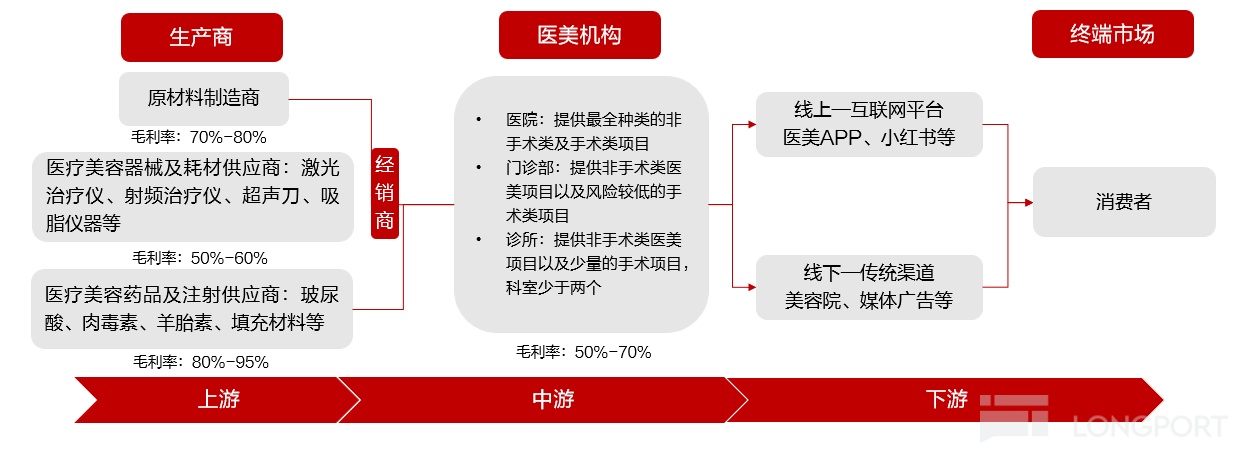
Medical Aesthetics Industry Chain Overview
Source: iResearch, Company Announcements, Donghai Securities Research
Despite fierce competition, some pharmaceutical companies have succeeded, such as Huadong Medicine and Sihuan Pharmaceutical.
Today, medical aesthetics is one of Huadong Medicine's four core businesses, alongside pharmaceuticals, commercial distribution, and industrial microbiology.
In 2023, its medical aesthetics segment achieved record revenue of 2.447 billion yuan (excluding internal offsets), up 27.79% year-over-year, with profitability and contribution to net profit steadily rising. Q1 2024 revenue grew 25.3% year-over-year.
This success stems from Huadong Medicine's high-end international product pipeline covering "non-invasive + minimally invasive" mainstream procedures, with 38 products for wrinkles, fillers, threads, skin care, body contouring, hair removal, and intimate wellness. Its nearly 300-person marketing team has built a global network spanning 80+ countries.
Meanwhile, medical aesthetics has become Sihuan Pharmaceutical's second growth curve, with 2023 revenue surging 200.3% to 450 million yuan, driven by its subsidiary Meiyan Space doubling sales.
Meiyan Space's network now covers 350+ cities and 4,700+ medical aesthetics institutions, including 100% of the top 500 clinics. Its "in-house R&D + BD" model has created a full lifecycle product matrix, with 40+ launched or pipeline products, including "baby face" stimulators, gold microneedles, and Swiss hydrogels.
Clearly, the keys to success are precise entry into non-surgical aesthetics, rich product lines, strong sales networks, and a focus on service and innovation.
04
Summary
Beyond Huadong Medicine and Sihuan Pharmaceutical, Jiangsu Wuzhong has also targeted injectable non-surgical aesthetics, focusing on high-end upstream products through licensing, partnerships, and in-house R&D. Its medical aesthetics revenue soared 2,696.72% in 2023.
Sisram Medical, a Fosun Pharma subsidiary, went public in Hong Kong, growing revenue from $162 million in 2020 to $359 million in 2023, with net profit rising from $13.34 million to $31.5 million.
Pharmaceutical companies' cross-border moves reflect industry transformation and the search for new growth, but they also entail risks, requiring careful balancing of pros and cons.
References:
1. Company financial reports, announcements, official accounts
2. "Three Challenges for Pharma Companies Crossing into Medical Aesthetics," Dameijie, April 15, 2022
3. Kaiyuan Securities, Caitong Securities, Donghai Securities research reports
$HUADONG MEDICINE(000963.SZ) $SIHUAN PHARM(00460.HK) $THDB(600867.SH)
The copyright of this article belongs to the original author/organization.
The views expressed herein are solely those of the author and do not reflect the stance of the platform. The content is intended for investment reference purposes only and shall not be considered as investment advice. Please contact us if you have any questions or suggestions regarding the content services provided by the platform.
