

 Top 10 Influencers in 2025
 Likes Received
Why does Buffett favor oil stocks?

1. First, over the past 20 years, oil prices have been highly volatile due to wars and political factors, but they have generally remained within the range of $40-$100 per barrel. During the same period, the U.S. Consumer Price Index (CPI) increased by approximately 60%.
Specifically, food prices rose by about 70%, energy prices by about 80%, housing prices by about 60%, and healthcare costs by about 120%.
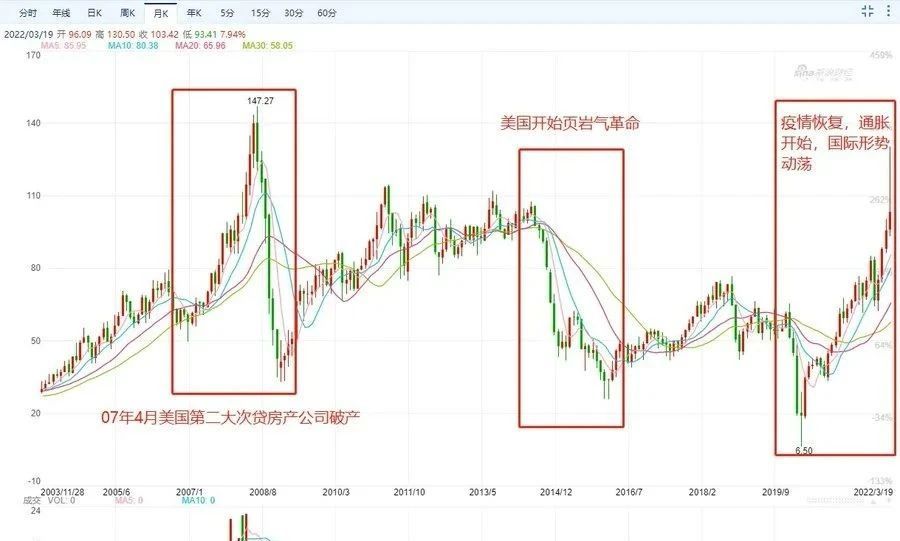
Therefore, from a long-term inflation perspective, oil, as a primary energy source, has significant upside potential!
2. So why hasn't oil prices surged?
1. First, global carbon emission policies in the past have led to a prolonged downturn in capital investment by oil companies, further dampening their desire to expand production. The long-standing "three highs" in the U.S. will inevitably create a new pricing dynamic for oil in the future.
2. The persistent hype around new energy alternatives has long weighed on oil market expectations. However, the adoption rate of new energy vehicles today has fallen far short of expectations. A reevaluation of new energy suggests that oil will remain the world's primary energy source, and its status and price will be reassessed.
3. Previously, OPEC dominated oil supply, with its production adjustments having an absolute impact on global oil prices.
Now, with Russia's newly proven reserves and the commercialization of U.S. shale oil technology, the world has entered a tripartite balance of power among the U.S., Russia, and OPEC. The escalating Israeli-Palestinian conflict has complicated and destabilized relations between the U.S. and Saudi-led Middle Eastern countries (OPEC's core members). Meanwhile, the ongoing Russia-Ukraine war has sharply deteriorated U.S.-Russia relations. From a political standpoint, the strategic importance of U.S. oil resources will become critically significant in the future!
3. From a global supply perspective, oil reserves are limited, and extraction is becoming increasingly difficult, constraining supply growth.
On the demand side, global economic and population growth will drive sustained increases in oil demand. The supply-demand imbalance will lead to long-term upward pressure on oil prices.
In summary: chronic underinvestment in oil and gas + inflation repricing + slower-than-expected adoption of new energy vehicles + heightened strategic importance = rising oil stocks.
Additional notes:
1. The long bull market for oil and gas stocks applies to both A-shares and U.S. stocks.
2. Occidental Petroleum (OXY), held by Warren Buffett, is not only the largest shale oil producer but also the lowest-cost oil company.
$Occidental Petroleum(OXY.US) $CNOOC(00883.HK) $Petroleo Brasileiro SA(PBR.US)
The copyright of this article belongs to the original author/organization.
The views expressed herein are solely those of the author and do not reflect the stance of the platform. The content is intended for investment reference purposes only and shall not be considered as investment advice. Please contact us if you have any questions or suggestions regarding the content services provided by the platform.
