

 Rate Of Return
Tesla 2024 Q2 earnings report interpretation—time to take electric vehicles lightly

After the U.S. stock market closed yesterday, $Tesla(TSLA.US) released its Q2 2024 earnings report. This report is quite interesting when combined with Tesla's stock price trend—it’s the complete opposite of the Q1 report. Before the Q1 report, when the car sales data came out, the market was already full of bearish sentiment due to the sales missing expectations. Tesla's stock price fell all the way below $150. But during the earnings call, Elon Musk's optimistic projections made everyone forget about the weak sales, and the stock rebounded. This quarter, the story is just the reverse.
In my small group chat, I predicted Tesla’s earnings and stock price movements for both Q1 and Q2, and luckily, I got both right. In Q1, when the stock was around $150, I gambled on the earnings and bought 2x leveraged TSLL. For Q2, I personally felt Tesla’s stock had risen too much before the earnings, with half its market cap basically being valuations for non-EV businesses. So when a group member asked for my opinion, I said I was bearish. Since I can’t post screenshots here, feel free to check out the original post on my WeChat public account if you’re interested!
I’ve been tracking Tesla’s earnings for a long time and have written many articles about Tesla’s financials and my personal views, covering the stock from $100 to $300. My core thesis hasn’t changed: Tesla is diversifying its business. $100 was the historical bottom, $150 was undervalued, and anything above $150 reflects premiums for FSD, AI, and other new ventures—valuations that are hard to pin down accurately and rely heavily on imagination. That’s why I personally bought Tesla at $125 and $150 three times and sold around $200. While I missed the gains above $200, holding at the bottom gave me more peace of mind. If you’re interested, you can check out my earlier articles:
Tesla Q1 2024 Earnings Analysis—Buy on Divergence, Sell on Consensus
Tesla Q4 2023 Earnings Analysis—The End of EV Hypergrowth, Time for a Revaluation
Is It Time to Bottom-Fish After Tesla’s Big Drop?

EV Alpha Play: Tesla—Tesla Q4 Earnings Preview
Tesla Q4 2022 Earnings Analysis—The Answer to Tennis Ball or Egg
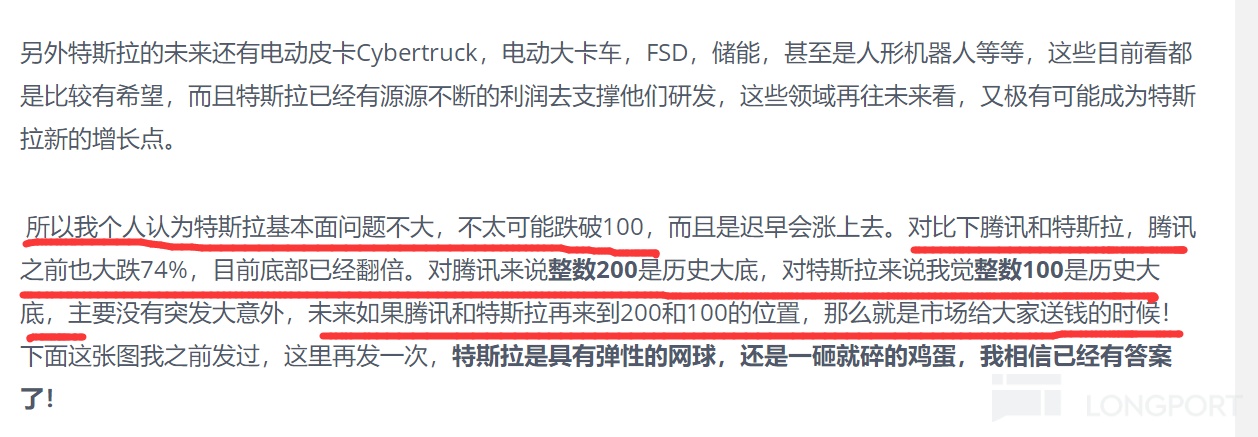
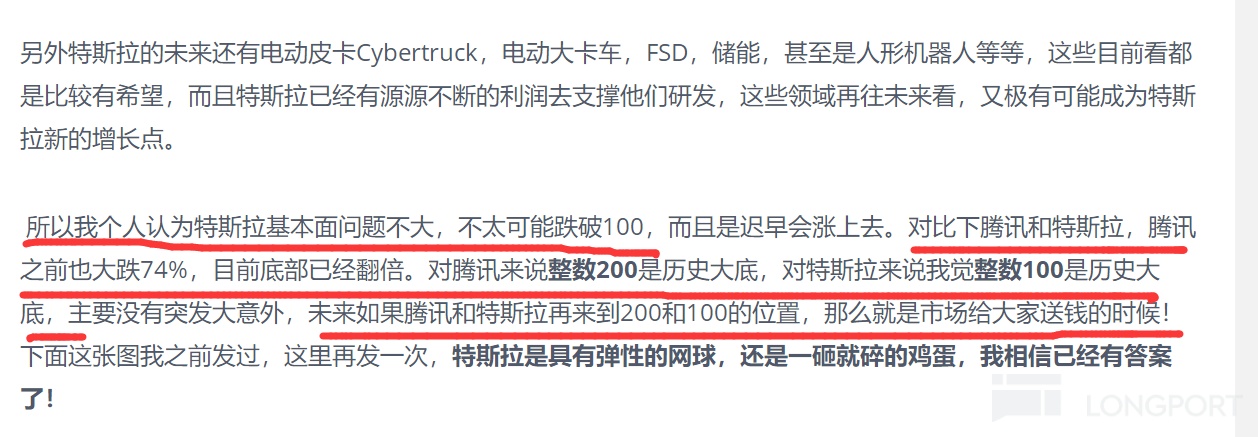
One of these articles was even ranked as the top 精华 article by a brokerage platform last year:

Now, let’s dive into Tesla’s earnings data for reference.
I. Overall Earnings
1. Revenue—Auto Business Continues to Decline, Energy Storage Nearly Doubles
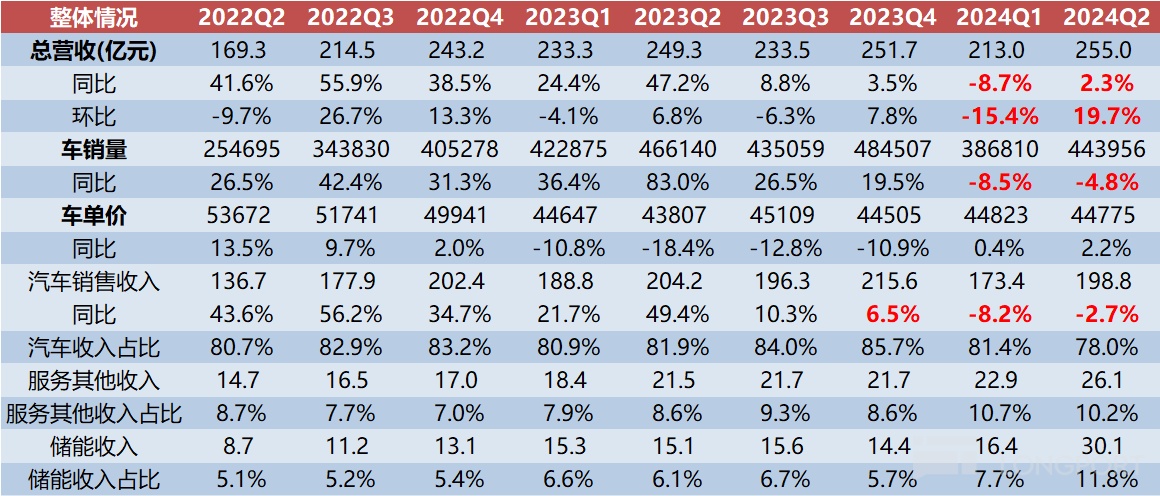
Tesla’s Q2 revenue was $25.5 billion, up 2.3% YoY. At first glance, this reverses last quarter’s decline, but a closer look shows the core auto revenue still fell 3%, marking two consecutive quarters of decline. The growth was mainly driven by energy storage, which nearly doubled.
Auto revenue’s share dropped to 78%, while energy storage’s share rose. But Tesla still relies heavily on car sales. FSD, energy storage, and AI businesses have huge potential but contribute too little revenue currently—this is the most uncertain part of Tesla’s valuation. I must emphasize: many people still obsess over car sales and new models when discussing Tesla, but that’s missing the point. If you’re still focused on EVs, you shouldn’t even be looking at Tesla. Car sales are declining, auto revenue is shrinking—what’s there to watch? Tesla’s stock support in recent quarters has never been about EVs but about AI, FSD, energy storage, and other new ventures, especially AI. If Tesla were just an EV play, at best it’d be the next Toyota—and look at Toyota’s market cap.
2. Gross Margin—Actually Missed Expectations
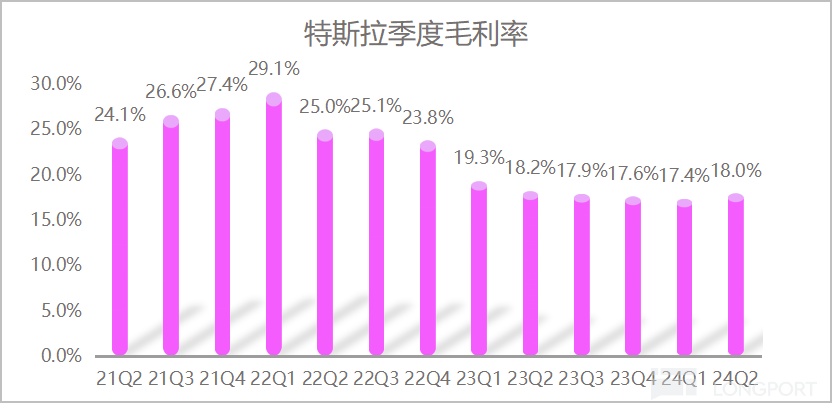
Tesla’s Q2 gross margin was 18.0%, down 0.2% YoY but up 0.6% QoQ. On the surface, this seems okay, but it included $890 million in regulatory credits—almost double the usual amount. Excluding these, the margin was just 14%, which actually missed expectations. Look at China’s EV market—it’s brutally competitive. Tesla’s unchanged models vs. rivals’ multiple annual releases will erode its edge, especially with FSD still unavailable in China.

3. Net Profit—Fourth Consecutive YoY Decline
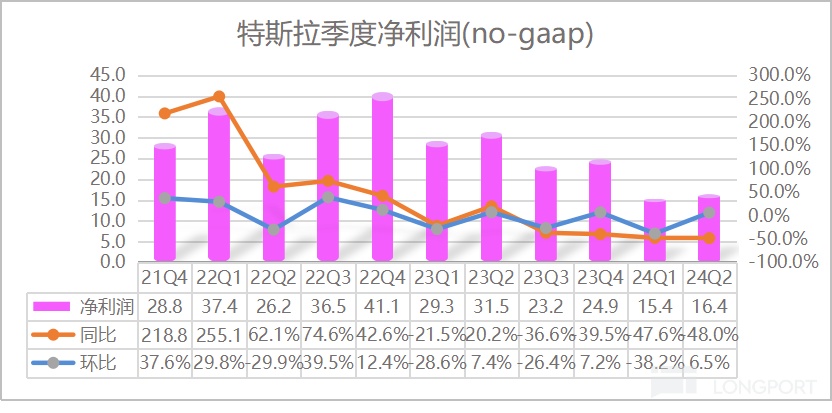
Tesla’s Q2 non-GAAP net profit was $1.64 billion, down 48% YoY, due to lower car sales and higher AI-related expenses. This marks four straight quarters of YoY profit declines.
4. Expenses
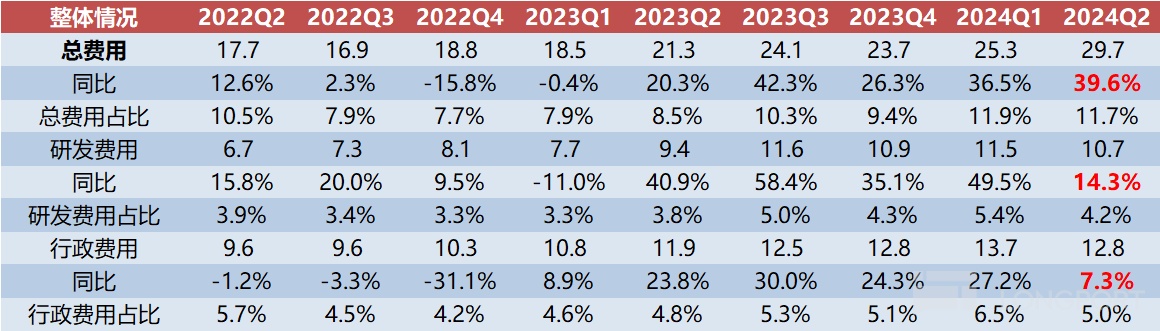
Tesla’s Q2 total expenses were $2.97 billion, up 39.6% YoY, mainly from AI spending. Expense growth far outpaced revenue, but Tesla is starting to rein it in. R&D and SG&A growth slowed significantly, and Q2 saw layoffs.
II. Conclusion
Tesla’s delivery data is out before earnings, so the actual numbers are rarely surprising. A few billion here or there doesn’t really move the needle for Tesla. These are just narratives the market or we ourselves create to explain price moves—or excuses for speculation. Investing in Tesla can’t just be about EV metrics because, frankly, there’s nothing exciting there lately. Monthly sales are known in advance; the EV business is an open book. And EVs are now a traditional industry—they don’t command high multiples. Even as the world leader, Tesla would just be the Toyota of EVs. Look at BYD or Li Auto’s valuations to gauge what Tesla’s EV business is worth. At 80 billion annual net profit and a 30x PE in a bull market, Tesla’s EV business would be valued at $240 billion. So where does the rest of the market cap come from?
The answer is AI and new ventures: FSD, Robotaxi, humanoid robots, energy storage, etc. Take FSD—in China, automakers are all-in on autonomous driving and already monetizing it. Tesla’s FSD revenue in China is negligible, and overseas it’s still modest (as seen in auto revenue growth). Tesla needs to keep scaling its fleet and refining FSD before penetration drives meaningful results.
Then there’s Robotaxi. Recently, Baidu’s Apollo Go went viral and boosted its stock. But I believe Tesla’s Robotaxi tech is far superior—it has the talent, tech, and GPUs. I’d bet on Tesla over Baidu any day. Robotaxis are the future, even if the impact isn’t visible in 1-2 years. In five years? Different story. I think the leader will be Tesla’s Robotaxi, not Apollo Go.
The same goes for humanoid robots—mostly conceptual now but a huge growth lever if scaled. But let’s be real: AI won’t contribute much revenue for years. So for now, it’s all about imagination. Roughly speaking, $150 for Tesla covers EVs + energy storage + FSD in its current state. Anything above $150 is the AI premium—hard to value accurately. That’s why I think $150 Tesla is still cheap, while $200+ Tesla requires faith!
Disclaimer: This is personal opinion, not investment advice! Original content is hard—likes and follows are the best support!
The copyright of this article belongs to the original author/organization.
The views expressed herein are solely those of the author and do not reflect the stance of the platform. The content is intended for investment reference purposes only and shall not be considered as investment advice. Please contact us if you have any questions or suggestions regarding the content services provided by the platform.
