


The different paths of Robin Li and Lei Jun lead to the same destination

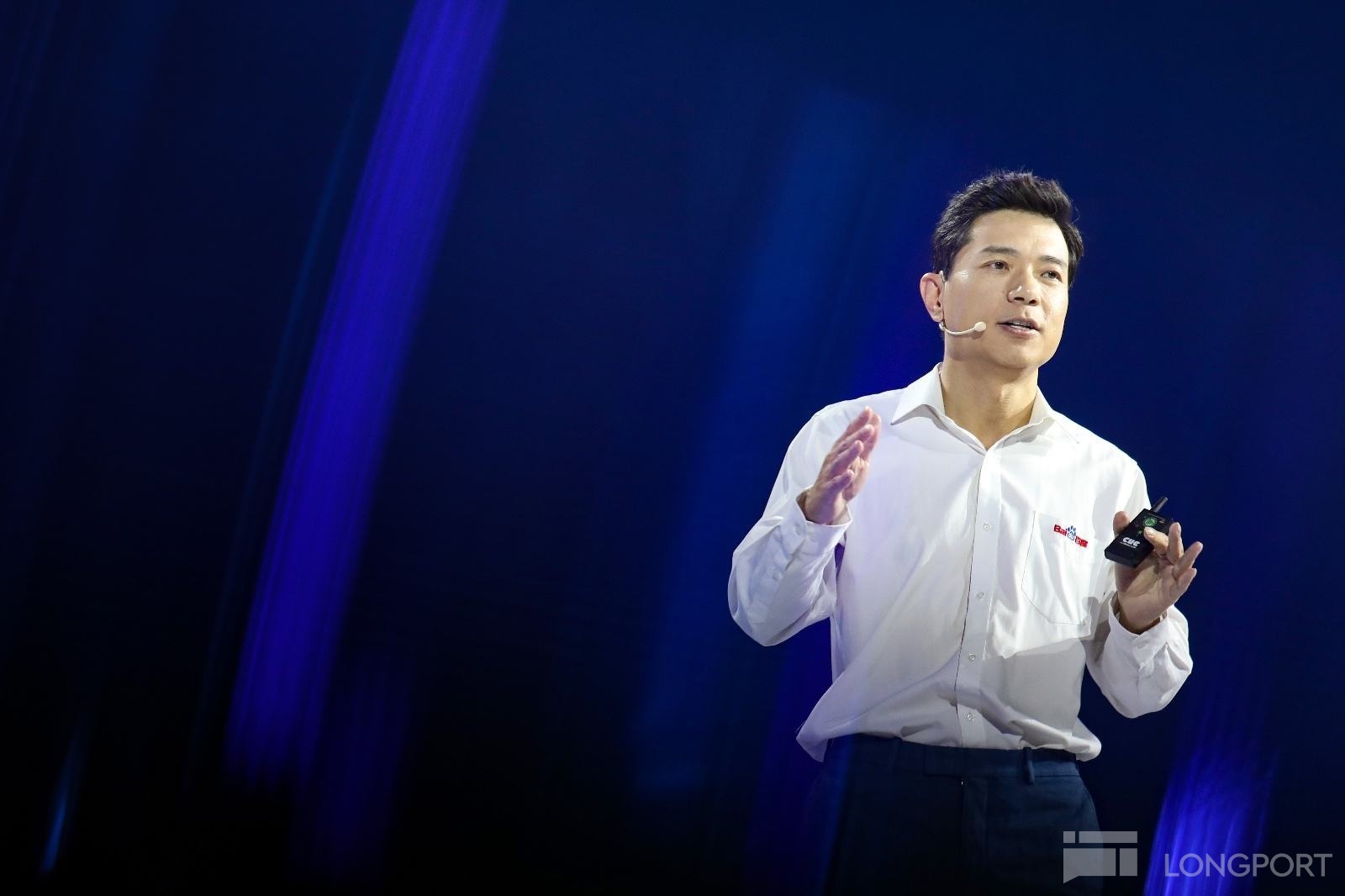
Before the dust settles on Baidu's Apollo Go, the buzz around Lei Jun's annual speech has already started to climb.
Dubbed the "Tech Spring Festival Gala," this annual speech naturally attracted widespread attention.
Unsurprisingly, Lei Jun once again focused on car manufacturing during his speech.
Similarly, after sparking a debate about the pros and cons of autonomous driving, Apollo Go also shifted its focus to how self-driving technology will shape the future of automobiles.
On the surface, there seems to be no difference between Apollo Go and Lei Jun's speech.
Apollo Go is more about applying Baidu's AI technology in commercial scenarios, while Lei Jun's speech delved into his thoughts on car manufacturing and Xiaomi's future plans in this field.
However, a deeper analysis reveals an intrinsic connection between the two.
Whether it's Baidu's application of AI or Lei Jun's vision for car manufacturing, both highlight the transformative impact of smart technology on the automotive industry.
Apollo Go focuses on upgrading existing vehicles with smart technology, while Lei Jun is more concerned with how AI will reshape future cars.
Regardless of the timeline, AI-driven smart technology is the key catalyst for profound changes in the automotive sector.
From this perspective, Apollo Go and Lei Jun's speech are undeniably interconnected.
Through them, we can glimpse a future where AI-led innovations will revolutionize the automotive industry.
From an AI standpoint, Robin Li and Lei Jun are ultimately heading in the same direction.
I
We all know that a new wave of development, driven by AI applications, is unfolding.
For every AI player, success in this new era hinges on deploying their AI technology across as many scenarios and commercial ventures as possible, weaving a vast ecosystem.
Baidu is no exception.
As we know, Baidu was among the earliest in China's tech and internet space to invest in AI.
While others were still battling in the internet arena, Baidu had already begun its AI journey.
Efforts pay off.
After years of groundwork, Baidu's AI initiatives are now bearing fruit.
From the launch of ERNIE Bot to its leading-edge large models and AI-driven business transformations, Baidu has made a remarkable comeback with AI.
Today, mentioning AI inevitably brings Baidu to mind, much like how Baidu was synonymous with the internet in the past.
But Baidu's resurgence is just the beginning.
To thrive in the AI era, Baidu must continue to deploy AI widely, building an ecosystem to sustain its hard-earned advantages.
Hence, we see Baidu aggressively pushing AI applications.
Apollo Go is a prime example of Baidu's AI prowess in action.
It showcases Baidu's achievements in AI and offers a glimpse of its vision for the AI era.
Undeniably, Apollo Go highlights Baidu's leadership in AI technology.
Whether it's reducing transportation costs, improving service efficiency, or enhancing passenger comfort, Baidu's AI is revolutionizing mobility.
Through Apollo Go, we can clearly see how AI-driven transformations in traditional industries will spark a new industrial revolution, unlocking unprecedented opportunities.
Mobility is just the start.
By applying AI to more scenarios and businesses, we can tap into new growth dividends and explore the blue ocean of the post-internet era.
II
Just as Apollo Go is reshaping ride-hailing and taxis with AI, a similar revolution is underway in car manufacturing.
AI is the game-changing technology that will fundamentally transform this industry.
For automakers, creating truly innovative vehicles requires embracing AI.
The emphasis on AI and autonomous driving by industry leaders like Tesla underscores this trend.
Whoever masters AI-driven autonomous driving will hold the key to the next phase of car manufacturing.
This explains why Lei Jun's speech also centered on AI's transformative role in car manufacturing.
Thanks to AI's comprehensive impact, Lei Jun confidently stated that Xiaomi's entry into car manufacturing is perfectly timed.
As he put it, "Smart technology is the soul of cars, and it's just getting started in the EV era. The automotive industry is a century-long race—if you're passionate and committed, now is the best time to join."
Clearly, Lei Jun is also focused on how AI will redefine future cars.
AI will become a standard feature in future vehicles, and only by embracing it can car manufacturing achieve true innovation.
Focusing solely on the internet or the shift from combustion engines to EVs won't bring about real change.
From an AI perspective, Lei Jun's venture into car manufacturing with Xiaomi presents immense opportunities.
With early lessons learned and EVs gaining traction, the industry is transitioning from electrification to intelligence.
Automakers that seize this moment and harness AI's potential can ride the wave of this transformative period.
III
Both Apollo Go's overhaul of mobility and Lei Jun's vision for smart cars converge on one path:
A revolution led by AI is sweeping the transportation sector.
Apollo Go focuses on upgrading existing vehicles with AI, while Lei Jun aims to redefine future cars.
For both traditional and new-age mobility players, integrating AI and advancing toward autonomous driving is the way forward.
This is why Apollo Go and Lei Jun's car venture are two sides of the same coin.
Behind this convergence lies the reality of an AI-driven era.
For Baidu and Xiaomi alike, unlocking AI's potential and exploring new applications is the path to success in this new age.
AI has moved beyond incubation and entered the maturity phase of deployment.
Players must find the right ways to apply AI, achieve commercial viability, and use it to revolutionize traditional industries like transportation and manufacturing.
Conclusion
That Apollo Go and Lei Jun's speech both spotlight AI is no coincidence—it's a convergence of visions.
From this angle, Robin Li and Lei Jun are wading into the same AI river, heading toward the same destination.
This reflects a broader trend: an AI-led revolution is reshaping every industry.
For Baidu under Robin Li and Xiaomi under Lei Jun, seizing AI's opportunities and finding new ways to deploy it will be key to success in this new cycle.
Apollo Go demonstrates AI's impact on traditional mobility, Tesla's autonomous driving showcases its role in modern cars, and Lei Jun is doubling down on this very focus.
A new battleground for AI applications is emerging.
This arena includes not just internet giants like Baidu but also automakers like Xiaomi and Tesla.
This is an all-encompassing transformation, and none of us can escape its reach.$Baidu(BIDU.US)
—The End—
Author: Meng Yonghui, Senior Writer, Columnist, Industry Observer, Influencer, and Digital Economy Scholar.
The copyright of this article belongs to the original author/organization.
The views expressed herein are solely those of the author and do not reflect the stance of the platform. The content is intended for investment reference purposes only and shall not be considered as investment advice. Please contact us if you have any questions or suggestions regarding the content services provided by the platform.
