

 Likes Received
 Posts
Posts"The king of the universe stocks" plummeted by more than 10% overnight, but its competitive advantage remains solid, and it is about to enter a high-probability bottom-fishing zone!

The U.S. stock market has historically had the "September Curse"
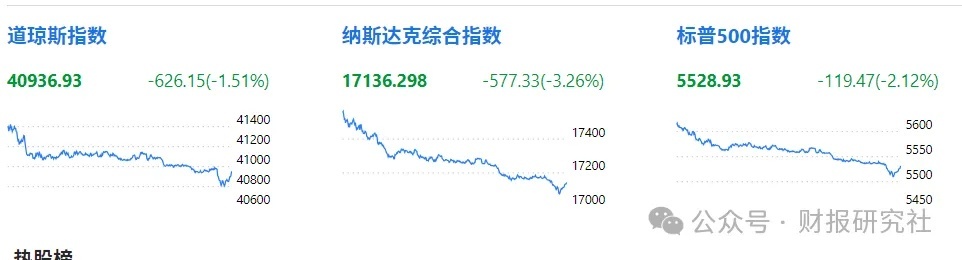
Overnight, U.S. stocks started September with a decline, marking their biggest drop since August 5. The Dow fell over 620 points, dropping below 41,000. The S&P 500 fell over 2%, while the Nasdaq and small-cap indices fell over 3%. The VIX volatility index surged over 40% at one point.
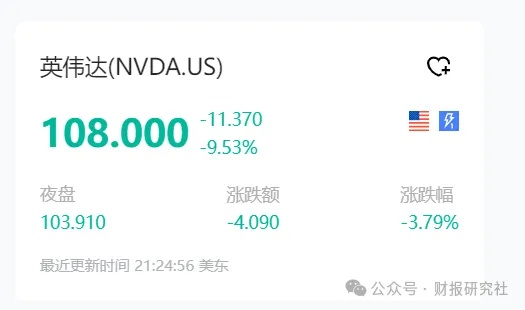
NVIDIA$NVIDIA(NVDA.US) plummeted 9.53%, hitting a three-week low, with its market cap losing $279 billion—the largest single-day market cap loss in U.S. stock history, surpassing Meta's $251 billion loss in February 2022 after earnings.
Our past analyses of NVIDIA have always been validated, and this time, the "Stock King" has once again seen a significant drop.
Let’s analyze it again!!
.......
Sharp short-term stock movements boil down to two factors: fundamentals or sentiment. Let’s examine NVIDIA on both fronts.
1. Any major changes in fundamentals?
NVIDIA’s market cap surpassed Apple’s in recent years to become the new "Universe Stock King" due to its high-end chips.
NVIDIA’s chips fall under its Data Center segment in financial reports.
Data shows the Data Center segment set another record in Q2 revenue, hitting $26.3 billion, up 154% YoY, accounting for 87.46% of total revenue—up 0.82 percentage points QoQ.
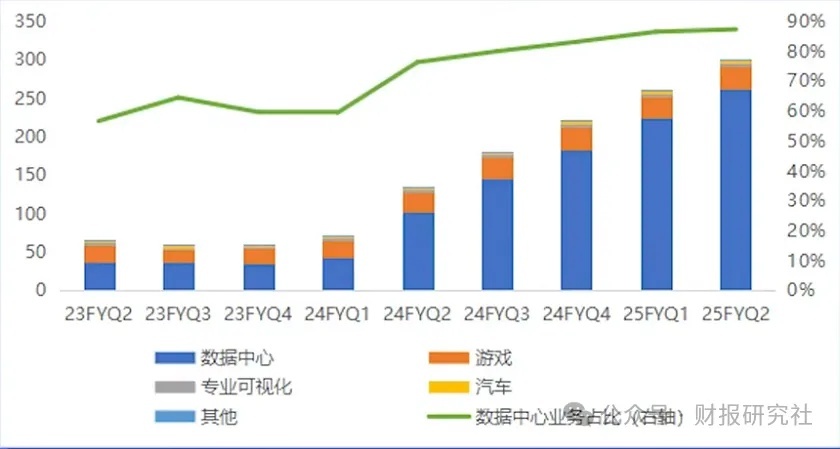
Current trends suggest Data Center growth will continue:
① Sustained AI spending by clients and supply shortages + faster product iterations.
Last quarter, major cloud providers like Google, Microsoft$Microsoft(MSFT.US), Amazon, and Meta$Meta Platforms(META.US) ramped up AI investments.
The four giants’ combined capex hit $57 billion in Q2, up 22.4% QoQ—likely just the beginning.
Research predicts up to $1 trillion will flow into AI infrastructure like data centers over the next five years.
② Second factor: NVIDIA’s products remain supply-constrained and keep evolving.
In Q2, accrued liabilities (reflecting backlog) hit $10.289 billion, staying high, while inventory-to-revenue ratio fell to 22.22%—both signaling persistent shortages.

Meanwhile, R&D spend rose 13.6% QoQ to $3.09 billion, boosting product competitiveness and iteration.
In June, NVIDIA announced accelerating product cycles from 2 years to 1 year, unveiling a 3-year roadmap:
Blackwell Ultra GPU in 2025, Rubin GPU in 2026, Rubin Ultra GPU in 2027.
CEO Jensen Huang added on the earnings call: Blackwell chips will mass-produce in Q4, generating "billions" in revenue.
Conclusion: NVIDIA’s fundamentals aren’t weakening—its chips will stay supply-constrained, with growing competitive edges.
2. Any major shifts in sentiment?
Since NVIDIA hit its all-time high of $140.76 this year, sentiment has shifted notably.
① Biggest shift: Fears of an "AI bubble" bursting.
After its rally, NVIDIA’s P/E peaked above 70x but has since dropped to ~50x amid recent volatility.
Other "Magnificent Seven" tech stocks have similarly pulled back after highs.
The worry? AI stocks’ multi-fold gains may inflate a bubble—prompting profit-taking.
② Insider selling fuels concerns.
Amid high valuations, Jensen Huang has sold $580 million YTD, while other execs/directors unloaded $700+ million in H1.
This amplifies "AI bubble" fears.
③ Antitrust risks loom.
Post-market, reports emerged that the DOJ subpoenaed NVIDIA and third parties for antitrust evidence.
Regulators worry NVIDIA locks clients into its AI chips and penalizes non-exclusive buyers.
This signals escalated scrutiny into NVIDIA’s alleged monopoly.
3. NVIDIA’s buying zone is nearing.
Rational investors weigh fundamentals vs. sentiment to spot overreactions—creating opportunities.
As analyzed, NVIDIA’s fundamentals will only strengthen. Bloomberg estimates a 2024 P/E of just ~27x.
This provides solid downside support.
Sentiment shifts are largely priced in after the 40% drop from $140.
So where’s the high-probability buy zone?
Our take: Buy between $90-$99, sell above $120 for 20%-30% gains—the optimal strategy now.
Why?
At $90+, NVIDIA’s strong fundamentals deter further drops, with buyers waiting.
But at $120+, sentiment headwinds resurface—unless earnings vastly exceed expectations.
Currently down 10% (after-hours -3%), NVIDIA sits at $104.
The high-odds buy zone approaches!
$AMD(AMD.US)
The copyright of this article belongs to the original author/organization.
The views expressed herein are solely those of the author and do not reflect the stance of the platform. The content is intended for investment reference purposes only and shall not be considered as investment advice. Please contact us if you have any questions or suggestions regarding the content services provided by the platform.
