

 Posts
PostsPure.cash revolutionizes tokenomics: airdrops 100% tokens to the community at once and continues burning

Original author: Asher, Co-founder of Pure.cash Labs

Current mainstream tokenomics is on the wrong path
Amid endless token unlocks, this market phase has unfortunately become the "worst bull market ever": Bitcoin's price has recovered to previous highs, but most tokens continue to decline. In my view, the persistent downturn in the entire cryptocurrency space, especially the decline of DeFi, stems from the fact that current project development models have significantly deviated from the core ethos of blockchain. Currently, most infrastructure projects in the industry are on the wrong path.
Venture capitalists see Web3 as a market for massive profits, leading to a flood of capital. However, beyond endless token unlocks, have they truly brought revolutionary innovation to the industry? Although Bitcoin and Ethereum were developed without venture capital involvement, they made groundbreaking contributions to the blockchain industry and continue to dominate most of the crypto market's value.
Even if we take a step back and ask whether VCs can truly endorse a project, the answer remains disappointing. The last bear market witnessed two major failures: LUNA and FTX. Both projects were backed by numerous top-tier VCs but ultimately failed, dealing a heavy blow to the industry.
Since Bitcoin pioneered this industry, fewer and fewer people adhere to the principle of "Don't trust, verify." The industry has gradually fallen under the dominance of capital, and the core spirit of decentralization has been forgotten. The cost of this forgetfulness is immense, as the mission of decentralization—to create a new financial system, or even a new world—underpins the entire industry's value. This also explains why Bitcoin, without VC backing or a known founder, still accounts for over half of the cryptocurrency market cap. It also highlights the failure of thousands of capital-backed projects.
Another key reason for the industry's current predicament is the lack of genuine innovation. Due to this lack, VC support is not only valuable but crucial, as there are almost no other standards to evaluate these projects. Moreover, with VC backing, projects can quickly attract market hype and cash out, leading many founders to become impatient and resort to practices like collusion and inflating funding demands. This environment makes it difficult for true innovators to gain support or attention. When the entire crypto industry lacks innovation, the scenario described at the beginning of this article becomes inevitable. It's like a self-reinforcing "death spiral" dragging the crypto industry toward an irreversible state.
When project teams and VCs can easily make huge profits just by selling tokens, no one has the patience to pursue real innovation—until this premise gradually falls apart. The industry has now reached this stage, and users are aware of it. Everyone is playing with their cards on the table, waiting only for a true revolution to arrive.
The problem isn't capital itself but how it enters
Bitcoin created a truly decentralized network, open and fair to everyone, allowing equal participation. Since its inception, it has attracted a flood of talent and capital. So, how did venture capital firms participate in Bitcoin's growth? The answer is simple: by investing in industries related to its tokenomics and ecosystem, such as mining equipment, operations, trading platforms, and payment platforms. Now, imagine if Satoshi had pre-allocated 20% of Bitcoin to himself, 20% to a foundation, and another 20% to venture capital firms—would Bitcoin still have attracted such diverse talent and capital? Would it have grown to the scale we see today?
By briefly reviewing Bitcoin's development, I’ve summarized the following core points:
· The founding teams of infrastructure projects should design tokenomics that are open and fair to everyone;
· VCs should leverage their research capabilities to invest early in areas related to these infrastructure projects' tokenomics or ecosystem applications;
· VCs should directly sponsor promising infrastructure projects, demonstrating responsibility for industry development while gaining more market information and opportunities in the process.
As more such projects emerge in the market, VCs that adapt early to this new mindset will benefit from the next wave of industry growth. In contrast, VCs that continue to use outdated methods to heavily invest in infrastructure projects will find it increasingly difficult to break even.
Pure.cash revolutionizes tokenomics
Bitcoin's mining mechanism allows everyone to participate fairly, earning widespread trust and continually fostering a thriving ecosystem. In today's crypto projects, airdrops have become a more common method to attract early users. However, most of these projects allocate only a small portion of the airdrop to the community, severely deviating from blockchain's core spirit and becoming one of the main reasons for the industry's current 困境。
Pure.cash is an innovative protocol offering a fully decentralized, delta-neutral stablecoin integrated with long-only perpetual futures, built on Ethereum. By introducing a new tokenomics model—100% of tokens airdropped to the community at once, with continuous token burns—it aims to be a turning point in returning the crypto industry to its original mission. To learn more about the principles behind Pure.cash, visit "The Path to the Holy Grail: Solving the Stablecoin Trilemma".
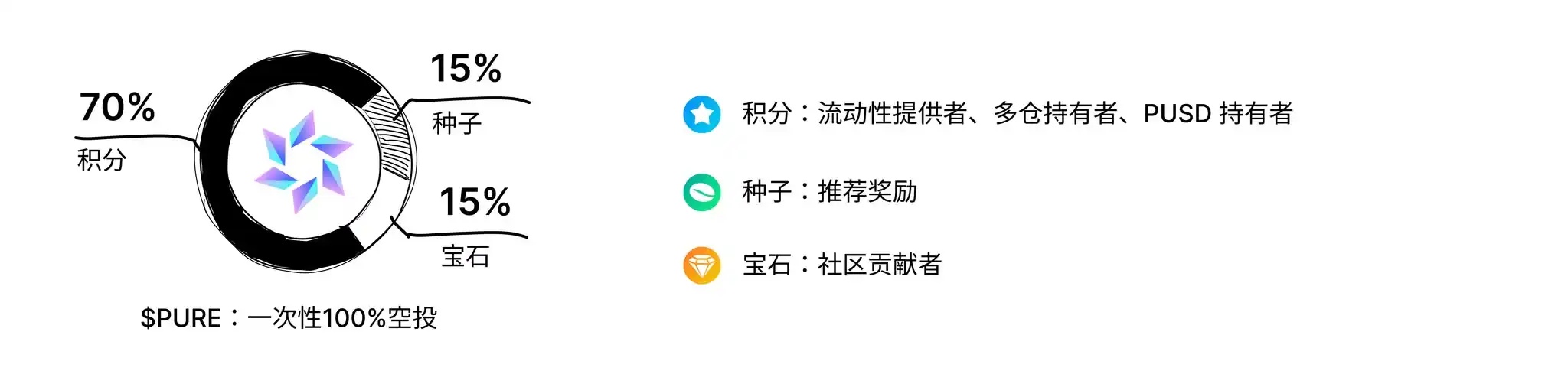
The PURE token will be fully distributed to the community via a genesis airdrop, with no allocation reserved for the founding team or venture capital firms. The protocol developer, Pure.cash Labs, will receive 20% of the platform's fee revenue, ensuring fair participation for all community users while providing sustainable incentives for the protocol. The remaining 80% of fees will be allocated to LPs, the PURE burn pool, and $PUSD use cases.
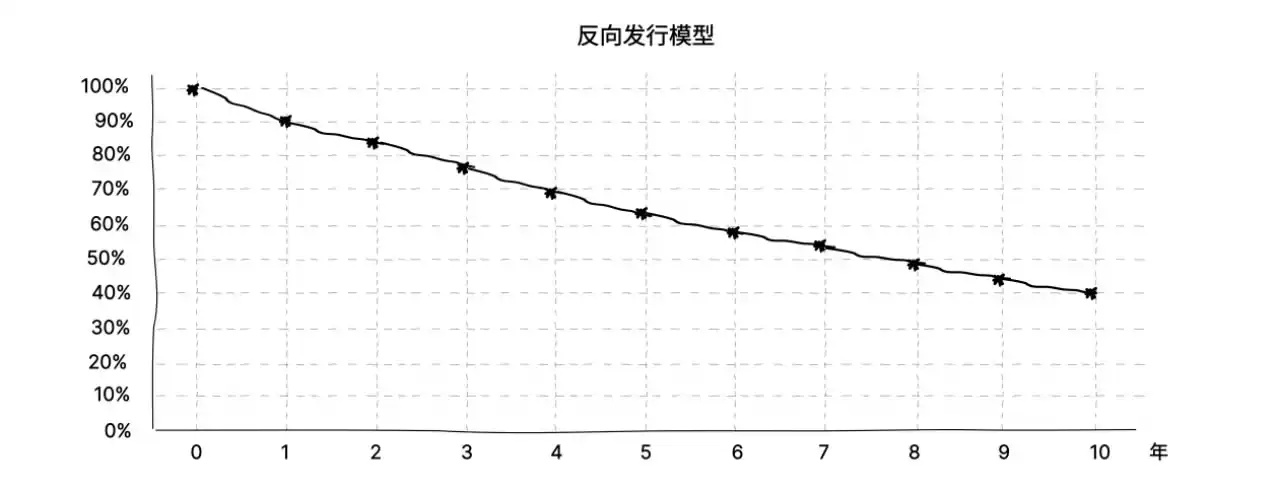
Reverse Issuance Model
The Reverse Issuance Model (RIM) is an innovative deflationary model introduced by Pure.cash. Its main feature is that the maximum supply is reached at the Token Generation Event (TGE), after which tokens are continuously burned, and no new tokens can be minted. This ensures that the circulating supply of tokens issued under this model can only decrease over time.
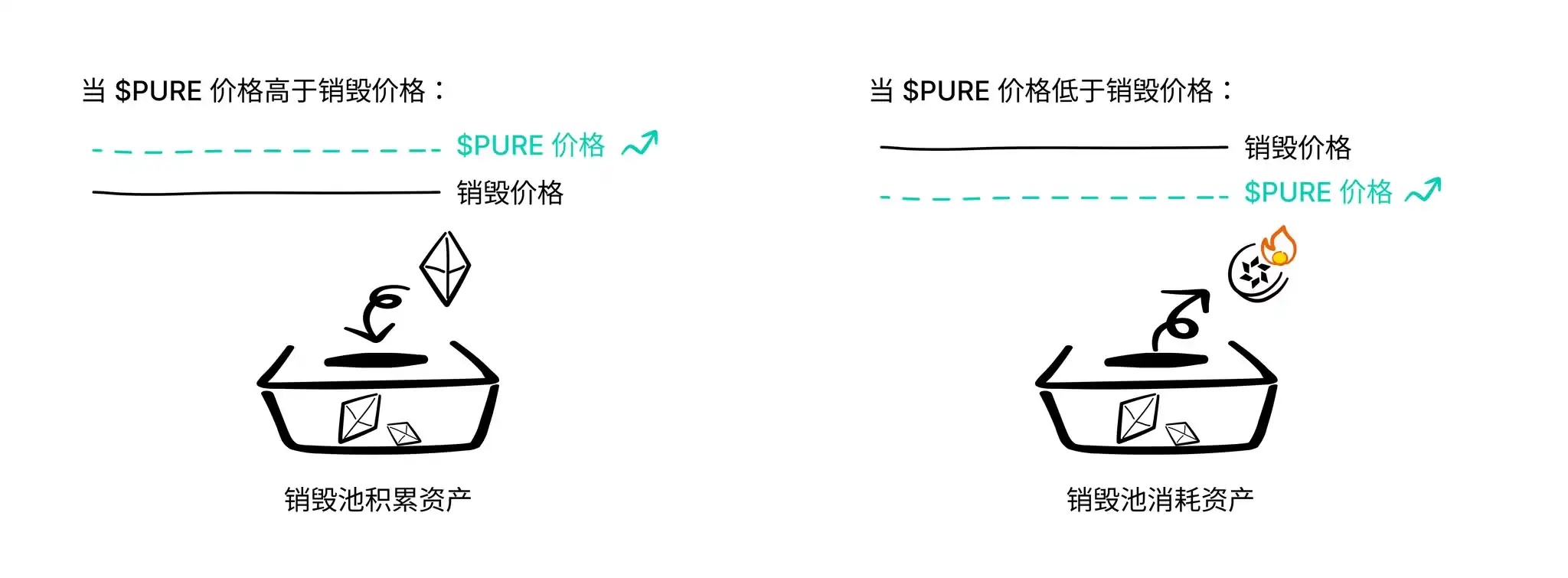
Fixed Price Burn Mechanism
The Fixed Price Burn (FPB) mechanism is a groundbreaking solution introduced by Pure.cash to address the token empowerment challenges in current DeFi projects. Pure.cash sets a fixed burn price (adjustable via DAO) and continuously injects protocol revenue (35% of total transaction fees) into the burn pool. This mechanism allows anyone to burn $PURE and receive assets from the pool at the fixed burn price.
FPB is fully implemented via on-chain smart contracts. Notably, this mechanism is special because it not only continuously reduces token supply through burning but also acts as a price floor buffer.
Conclusion
In summary, Pure.cash proposes a revolutionary approach to tokenomics by embracing the core principles of fairness and decentralization. By ensuring 100% of tokens are airdropped to the community and introducing innovative mechanisms like Reverse Issuance and Fixed Price Burn, Pure.cash not only addresses the shortcomings of current crypto projects but also sets a new standard for the industry. This model is likely to become the long-awaited catalyst for revolution in the crypto space, refocusing attention on genuine innovation and sustainable growth.
This article is contributed and does not represent the views of BlockBeats
The copyright of this article belongs to the original author/organization.
The views expressed herein are solely those of the author and do not reflect the stance of the platform. The content is intended for investment reference purposes only and shall not be considered as investment advice. Please contact us if you have any questions or suggestions regarding the content services provided by the platform.
