

 Likes Received
 Posts
PostsMarket cap shrinks by over 25 billion! Lens Technology, can the 'Apple supply chain' syndrome be solved?

The annual "Tech Spring Festival Gala"—Apple's fall product launch event—was held as scheduled.
However, just like in previous years, this was another case of "incremental innovation": in terms of design, the iPhone16 series saw no major changes except for the Pro Max version, which increased from 6.7 inches to 6.9 inches. In terms of hardware, aside from the upgraded A18 and A18 Pro chips and improved performance, there were no significant changes either.
Additionally, Apple's much-anticipated AI features were even more disappointing—while the entire iPhone16 series supports Apple Intelligence, there are significant regional restrictions.
Compared to Huawei's revolutionary tri-fold smartphone, the new generation of iPhones seems somewhat "overshadowed." From a stock price perspective, market expectations for the iPhone16 were lukewarm. On September 10, the day of Apple's fall event, Apple's stock price rose slightly by 0.36%; over the next three days, the stock price fluctuated narrowly, with a cumulative increase of 0.72% over four trading days.
Of course, Apple's "incremental innovation" is perhaps something everyone has grown accustomed to by now. However, for many companies in the "Apple supply chain," this is not good news.
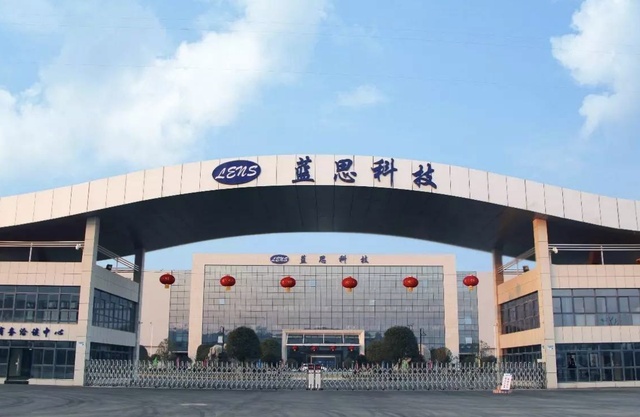
According to Kanjian Finance, the stock performance of these "supply chain companies" has been poor over the past two months, especially for Lens Technology. As of the close on September 18, Lens Technology's stock price was 15 yuan per share, with a total market cap of 74.7 billion yuan. On July 17, the stock price had reached 20.47 yuan per share—meaning that in less than two months, Lens Technology's stock price had dropped by over 25%, and its market cap had shrunk by more than 25 billion yuan.
Growth Still Relies on Apple
In the first half of this year, Lens Technology delivered solid financial results.
Specifically, in the first half of the year, Lens Technology achieved revenue of 28.867 billion yuan, a significant year-on-year increase of 43.07%, and net profit of 861 million yuan, up 55.38%.
Clearly, Lens Technology's performance is recovering, but the primary driver of this growth likely still comes from Apple.
In terms of revenue structure, Lens Technology's revenue in the first half came mainly from three product categories: smartphones and computers, smart cars and smart cockpits, and smart headsets and wearables, with revenues of 24.02 billion yuan, 2.716 billion yuan, and 1.435 billion yuan, respectively, accounting for 83.21%, 9.41%, and 4.97% of total revenue.
Compared to the first half of last year, the smartphone and computer segment saw the fastest growth, with revenue increasing by 7.88 billion yuan from 16.14 billion yuan in the same period last year.
In fact, since 2020, Apple has been Lens Technology's largest customer. For example, in 2023, sales to "Apple Inc." totaled 31.512 billion yuan, accounting for 57.83% of total revenue. Although Lens Technology did not disclose specific customer data in its first-half financial report, given past trends, the revenue growth likely still came from Apple.
Of course, in recent years, Lens Technology has actively pursued diversification. For instance, in the smart car sector, as vehicles evolve toward electrification and intelligence, Lens Technology has also increased its presence in this field.
According to the financial report, in the first half of the year, revenue from smart cars and smart cockpits was 2.716 billion yuan, accounting for 9.41% of total revenue—an increase from 2.282 billion yuan in the same period last year. However, the revenue share for this segment was 11.31% last year, indicating a slight decline this year.
Similarly, revenue from smart headsets and wearables was 1.435 billion yuan in the first half, accounting for 4.97% of total revenue, compared to 1.191 billion yuan and 5.9% in the same period last year. Like the smart car segment, this category saw increased revenue but a lower revenue share.
For now, despite Lens Technology's efforts to expand into new businesses, growth still depends heavily on smartphones and computers—and within that segment, Apple remains the largest customer. In 2023, sales to Apple reached 31.512 billion yuan, meaning Lens Technology still relies heavily on Apple.
The Persistent Challenge of the "Apple Supply Chain"
For Lens Technology, Apple's role is critical.
According to media reports, as early as 2007 with the release of the first-generation iPhone, Lens Technology began supplying Apple with products like glass covers, making it one of Apple's longest-standing suppliers.
Over the past decade, Apple has experienced explosive growth, and Lens Technology, as part of its supply chain, has also developed rapidly. In 2023, Lens Technology's revenue was 53.391 billion yuan, compared to just 6.03 billion yuan in 2011—a nearly ninefold increase in 12 years. At its peak, Lens Technology's market cap reached 201.4 billion yuan.
However, becoming part of the "Apple supply chain" is no easy feat, given Apple's notoriously strict requirements for suppliers.
On one hand, Lens Technology's long-term partnership with Apple hinges on high yield rates and cost advantages, which require substantial R&D investment.
Financial reports show that Lens Technology's R&D spending has increased in recent years, reaching 2.317 billion yuan in 2023. Even in 2021, when net profit plummeted, R&D expenses remained high at 2.134 billion yuan.
On the other hand, to keep up with Apple, Lens Technology has had to invest heavily in fixed assets, leading to significant capital expenditures. According to financial reports, the combined value of "fixed assets + construction in progress" rose from 10.96 billion yuan in 2016 to 36.67 billion yuan in the first half of this year—a more than threefold increase in nine years.
Additionally, under Apple's pursuit of "high cost-effectiveness," Lens Technology's gross margins have remained low. In the first half of the year, the gross margin for smartphones and computers was 13.75%, down from 14.73% in the same period last year. Despite revenue growth, gross margins for this segment declined. As a result, Lens Technology's overall gross margin and net margin in the first half were 14.33% and 3.05%, respectively—down from 16.41% and 2.8% in the same period last year.
In summary, with over 30 billion yuan in revenue from Apple in 2023, Apple remains an indispensable part of Lens Technology's business.
The copyright of this article belongs to the original author/organization.
The views expressed herein are solely those of the author and do not reflect the stance of the platform. The content is intended for investment reference purposes only and shall not be considered as investment advice. Please contact us if you have any questions or suggestions regarding the content services provided by the platform.
