


Breaking news: Nike CEO 'forced to retire'

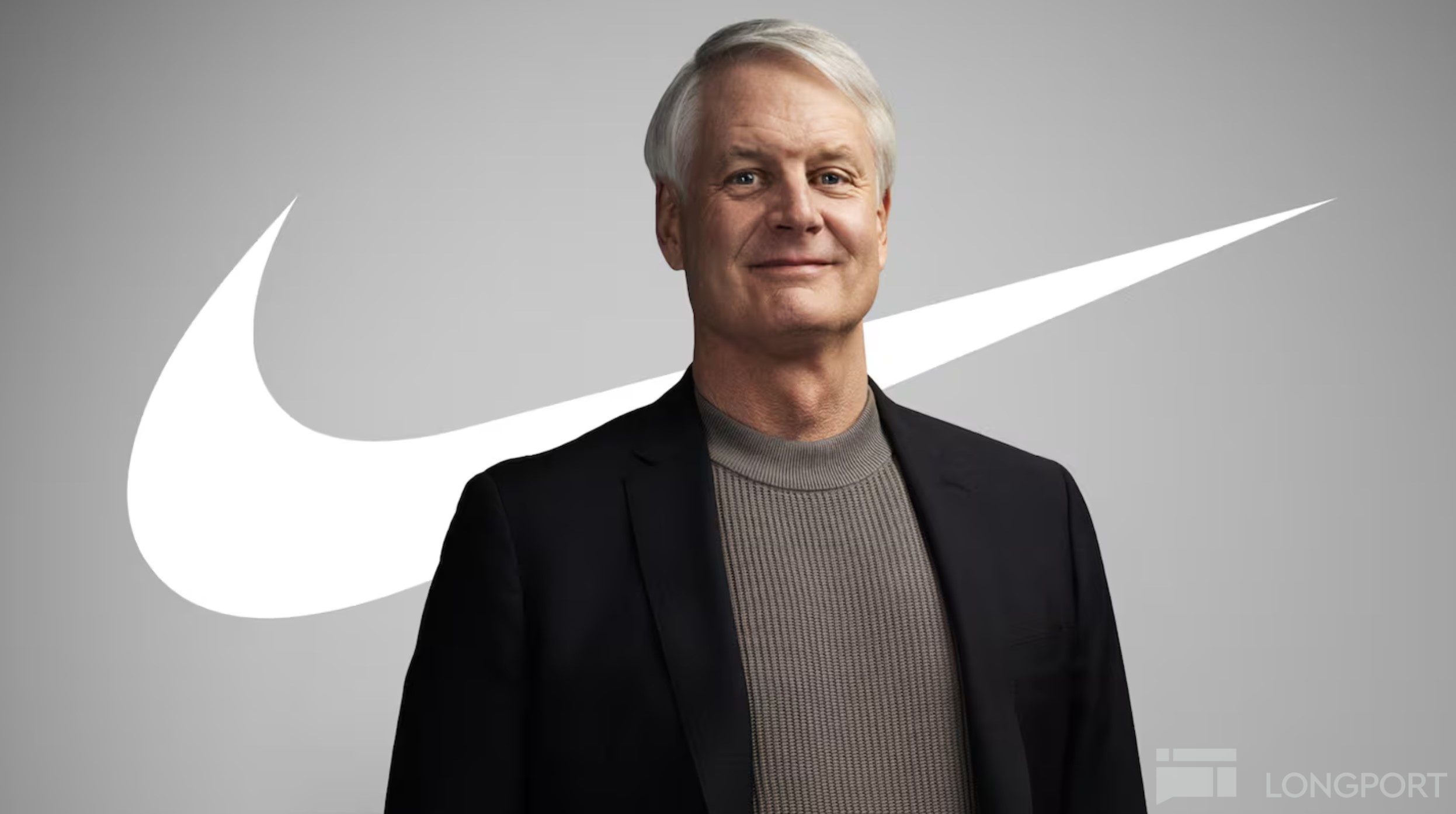
As Nike prepares to announce its first-quarter results for fiscal year 2025, the company has preemptively ousted its current CEO.
On September 19 local time, Nike announced that the board and CEO John Donahoe had mutually decided that Donahoe would retire on October 13. He will be succeeded by Elliott Hill, a former executive who served Nike for 32 years.
Donahoe is 64 years old, while Hill is 60 and has been retired for four years.
Donahoe has been at the helm of Nike for nearly five years, during which the company underperformed its competitors. He is the fourth leader in Nike's 60-year history and the second external CEO, having no prior experience in the sportswear industry before joining Nike.
Now, Nike has chosen Hill, a seasoned insider familiar with the company's history and culture, to replace the external reformer.
Donahoe will also resign from Nike's board, where he has been a member since 2014; he will continue to serve as an advisor until the end of January 2025.
After the Plunge
Nike's stock price has fallen by about a quarter this year, but it rose nearly 8% in extended trading after the CEO change was announced.
Although the increase was not as dramatic as the more than 20% jumps seen when Starbucks and Victoria's Secret replaced their CEOs, it still reflected a sense of relief in the market. However, the stock price of $87 remains far below its November 2021 peak of $177.
At the end of June, after the dismal earnings report, discussions about Nike's CEO succession became public.
Nike's fourth-quarter results for fiscal year 2024 and its downward revision of expectations for fiscal year 2025 ignited market pessimism.
At that time, the stock plummeted 20% after hours, marking the company's worst trading day since its IPO in 1980. The plunge wiped out about $28 billion in market value.
Nike expects revenue for fiscal year 2025 to decline by mid-single digits, with first-quarter sales dropping 10%. Reasons include declines in both physical and online sales, weak wholesale orders, new products failing to gain traction, and a sluggish outlook in Greater China alongside uneven consumer trends across markets.
Following this brutal earnings forecast, analysts speculated that the CEO would soon be ousted. However, around the time of the earnings report, Nike's 86-year-old co-founder Phil Knight stepped in to stabilize the situation, stating that the company stood firmly behind Donahoe, who had his "unwavering confidence and full support."
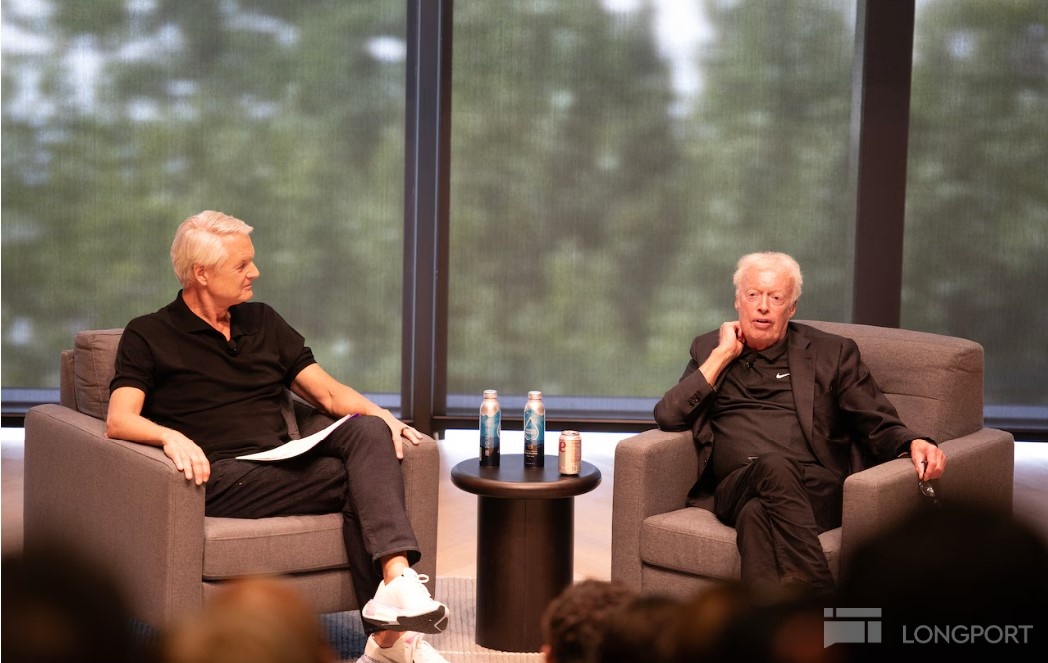
Now, it is also Knight who, in a statement, welcomed Hill "back to the team."
"Leadership transitions are never easy. They test and challenge you, but this change was made after careful consideration and with a steadfast commitment to Nike."
"Looking ahead, I am thrilled to welcome Elliott back to the team. His experience, understanding of Nike, and leadership are exactly what we need right now. We have a lot of work to do, and I look forward to seeing Nike back on its pace."
Nike's executive chairman, Mark Parker, praised Donahoe in a statement: "I want to thank John for his contributions as president, CEO, and board member. I particularly appreciate his leadership during the pandemic and his unwavering support for Nike's global community investments."
Donahoe's farewell message was: "It has been an honor to be part of this incredible company, and I will always cherish my time at Nike and the opportunity to lead the organization. I have deep respect for Phil, Mark, Nike, and its employees. It’s clear that now is the right time for a leadership change, and Elliott is the right person. I look forward to seeing Nike and Elliott succeed in the future."
Five Turbulent Years
Donahoe officially took office on January 13, 2020, just before the pandemic. His career had primarily been in the tech sector, having served as CEO of eBay and software company ServiceNow, as well as CEO of management consulting firm Bain & Company. Donahoe holds an MBA from Stanford University.
His tenure has been fraught with challenges, from the chaos of the pandemic to years of inflation that dramatically reshaped the retail landscape.
Under Donahoe, Nike's annual revenue grew from $39.1 billion in fiscal year 2019 to $51.4 billion in fiscal year 2024. However, in recent quarters, Nike has lost its edge, and its stock performance has been poor.
On one hand, the company earlier focused on direct and digital sales, neglecting wholesale channels, which gave competitors more shelf space. On the other hand, Nike lost its dominance in the critical running category, with performance-focused rivals like On and Hoka drawing away runners.
Donahoe was passionate about digital transformation. Beyond Nike's brand stores and website, the company developed a suite of apps, including SNKRS (for limited-edition sales) and Nike Run Club, and even acquired the year-old virtual collectibles brand RTFKT to expand its presence in the metaverse.
He also heavily relied on limited-edition sneaker sales to boost revenue, which eroded some fans' goodwill toward the brand.
Donahoe believed the company could improve margins and gain valuable consumer data by selling directly.
The transformation initially went smoothly due to the pandemic. From 2019 to 2022, Nike's direct-to-consumer (DTC) channels grew significantly—but at a cost. The company alienated retailers, including long-term partners like Foot Locker, DSW, and Macy's.
As the pandemic ended and consumers returned to physical stores, particularly in the U.S. (which accounts for over 40% of sales), Nike's neglect allowed newcomers like Hoka and On to gain ground. The stock prices of Hoka's parent, Deckers Outdoor, and On Holding surged in 2024, outperforming Nike.
Nike's DTC growth slowed.
In fiscal year 2024, Nike's revenue was $51.4 billion, up 1% on a currency-neutral basis. But in the fourth quarter, DTC revenue fell 8% to $5.1 billion, dragging total revenue down 2% to $12.6 billion.
During the earnings call, management reassured investors: "Nike is focused on regaining market share, but it will take time." They reflected on the running category's performance, pledging to redouble efforts to reclaim their edge. Nike is executing a three-year, $2 billion cost-cutting plan, including layoffs.
Donahoe admitted in an interview, "We got some things right, and some things wrong."
A Nike Insider Returns

Elliott Hill, who will correct Donahoe's missteps, joined Nike as an intern in the 1980s. As a graduate student at Ohio University, he became interested in Nike while writing a thesis on marketing.
Before retiring in 2020, Hill served as president of consumer and marketplace, overseeing all commercial and marketing operations for the Nike and Jordan brands.
Hill said: "I’m eager to reconnect with colleagues and trusted partners I’ve worked with over the years, and equally excited to forge new, impactful relationships that will drive us forward. Together with our talented team, I look forward to delivering bold, innovative products that set us apart in the marketplace and engage consumers for years to come."
Executive Chairman Mark Parker praised the new CEO: "Given our aspirations for the future and the business's past performance, after a thoughtful transition process, the board concluded that Elliott’s global expertise, leadership style, deep understanding of our industry and partners, combined with his passion for sports, brand, product, consumers, athletes, and employees, make him the right person to lead Nike into its next phase of growth."
According to Nike's 8-K filing, Hill's compensation includes a $1.5 million base salary, a target annual bonus of 200% of base pay, and $15.5 million in long-term incentive awards.
Hill will receive a $3 million new-hire RSU award and a $4 million signing bonus upon joining. Donahoe received $1.6 million in salary and $2 million in bonuses in fiscal year 2024.
Hill has held leadership roles in Europe and North America, two critical markets today.
In fiscal year 2024, North America (43% of total revenue) saw a -1% growth rate, while Europe, the Middle East, and Africa (28% of revenue) grew just 1%.
Only China (15% of revenue) expanded, with a 4% year-over-year increase, showing signs of recovery over the past two years—though still below pre-pandemic levels, when Nike China grew at double-digit rates.
Blaming everything on the outgoing CEO would be unfair; some deep-rooted issues predate his tenure.
Running in a Tight Spot
Over the past decade (2013–2023), Nike's revenue grew at a compound annual growth rate (CAGR) of 6.3%, rising from $27.8 billion to $51.4 billion—a 1.8x increase. The median annual growth rate during this period was 6.1%, underperforming the apparel industry average of 8%.
Nike calls itself a "growth company," and its early years of doubling growth rates fit that label. But now, it resembles a highly mature company, cautiously maintaining slow growth amid fierce competition.
Investors' concerns are evident in the stock price: as competition intensifies, Nike risks decline.
Take On Running, for example, which has taken share from Nike: Nike's footwear revenue grew only in the low single digits year-over-year, while Adidas's footwear revenue grew 13%, Under Armour's declined, and On's surged 21%.
On Holding's five-year CAGR exceeds 50%, with product gross margins near 60%, stable in recent years. Nike's gross margins hover around 45%, in line with the industry.
Nike created the running shoe market, but its explosive growth days are over.
According to a June RBC report, emerging brands like Hoka, Asics, New Balance, and On accounted for 35% of the global market in 2023, up from 20% between 2013 and 2020.
In terms of scale, Nike's $51.4 billion revenue in fiscal year 2024 makes it the undisputed industry leader. But in profitability, it matches the industry average without surpassing it.
Nike's median operating margin over the past decade was 13%, matching the industry median. Its median reinvestment margin was 1.2%, slightly below the industry's 2.1%.
In apparel, players like Lululemon have demonstrated entirely different marketing approaches, focusing more on community and building tight customer relationships rather than following Nike and Adidas's playbook of signing high-profile athletes.
However, both Lululemon and Nike have recently struggled amid weak demand and a worsening economic environment, enduring the cyclical downturn in apparel.
Navigating the Chinese Market
Nike also urgently needs a breakthrough in China.
Greater China was once Nike's most profitable and critical growth market, but the 2021 cotton controversy disrupted its momentum. As local brands gained share, Nike tried to revive the market by increasing demand-generation spending—but before it could fully recover, weak consumer sentiment struck.
In 2019, international sportswear giants like Nike held over two-fifths of the Chinese market, while Anta, the leading local brand, had just one-sixth. But in recent years, consumer preferences have shifted noticeably, with brands like Anta, Li-Ning, and Hongxing Erke gaining recognition and rapidly expanding online and offline.
Donahoe visited China in June, where he and management acknowledged the challenges in the near term but noted that history shows when the company acts decisively, supports innovation, and markets it effectively, consumers quickly respond.
In fiscal year 2024, Nike's Greater China revenue was $7.545 billion, second only to the peak of $8.29 billion in fiscal year 2021.
Management expressed concerns about traffic: fourth-quarter revenue in Greater China grew 7%, boosted by Tmall's early start to the 618 shopping festival. Excluding this timing benefit, management noted on the earnings call that Nike failed to meet its targets, with persistently weak traffic across all channels.
By channel, Nike Direct fell 2% in Greater China in Q4, Nike Stores dropped 6%, Nike Digital grew 8%, and wholesale rose 15%. EBIT grew 4%, though forex headwinds persisted.
Management believes China remains highly promotional and is cautiously managing inventory for Nike and its partners. Overall, Nike's outlook for Greater China has weakened in the short term, but the company remains confident in its long-term competitive position.
Nike plans to reinvest nearly $1 billion in consumer-facing initiatives in fiscal year 2025. For example, the company will strengthen its running and major-city campaigns, increase design and sales resources in key sports, deepen its sports marketing mix, emphasize brand differentiation in physical retail, and drive larger brand campaigns.
The copyright of this article belongs to the original author/organization.
The views expressed herein are solely those of the author and do not reflect the stance of the platform. The content is intended for investment reference purposes only and shall not be considered as investment advice. Please contact us if you have any questions or suggestions regarding the content services provided by the platform.
