


The intelligent exploration of "good houses", Huawei and Poly have set an example for the industry.

Under the guidance of "promoting the stabilization and recovery of the real estate market," the real estate sector is about to enter a new cycle.
Especially after entering 2024, discussions around "model innovation" have emerged frequently. The unmet housing needs from the previous cycle will become the core driving force of the new cycle.
For example, in late August, the concept of "quality housing" was defined with a focus on green, low-carbon, smart, and safe directions. Against the backdrop of intelligent transformation across industries, the smart renovation of living spaces has become a consensus in the sector.
The question is: What constitutes a smart "quality housing," and how can it be achieved?
On October 12, Huawei and Poly Development signed a strategic agreement for whole-house smart solutions. Leveraging Poly Development's real estate project construction capabilities and Huawei's strengths in technological innovation, industrial resource integration, and commercial operations, the two parties will collaborate on the "quality housing" initiative.
The cross-industry partnership between Huawei and Poly Development marks a new chapter in the integration of real estate and technology, offering a fresh approach to building "quality housing."
01 A Must-Answer Question in the Transition to "Smart"
Why is "smart" a key feature of "quality housing"?
A mainstream view is that "quality housing" should function as a stationary "smart terminal."
First, it requires smart control capabilities, enabling voice-activated management of doors, windows, lighting, air conditioning, kitchen, and bathroom appliances—essentially, "speak, don’t touch."
Second, it needs smart sensing capabilities to automatically detect changes in the indoor environment and adjust temperature, brightness, humidity, and air quality as needed.
As the era of extensive development fades, homebuyers are becoming more rational, shifting focus from high-return investments to the livability of properties. This trend is pushing the real estate industry toward an era of quality supremacy, where smart technology—deeply impacting living experiences—naturally becomes the inevitable path for transformation.
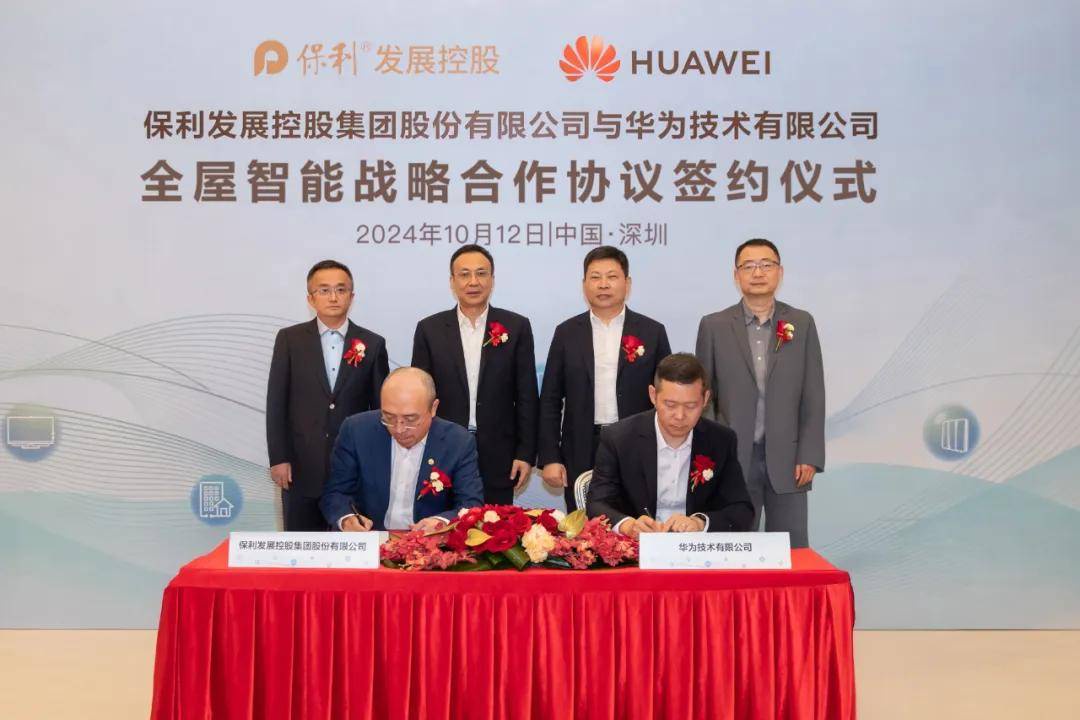
As Liu Ping, Chairman of Poly Development Holdings Group, stated in his speech at the signing ceremony: "The real estate industry is at a critical juncture of transformation. Elevating living quality has become the market's core theme, necessitating learning from high-tech enterprises to explore unconventional, innovation-driven development paths."
The challenge lies in the fact that China currently has around 3,000 companies specializing in building smart device integration and nearly 3,000 product suppliers, with varying quality and a lack of unified standards.
Given that homes last for decades, solving whole-house smart technology challenges and meeting growing smart experience demands—turning intelligence into a value-added feature—will directly determine real estate companies' growth potential in the new cycle.
Choosing the right partner is, without a doubt, a must-answer question.
Poly Development's answer was to sign a strategic agreement with Huawei, selecting the most authoritative partner in the whole-house smart sector.
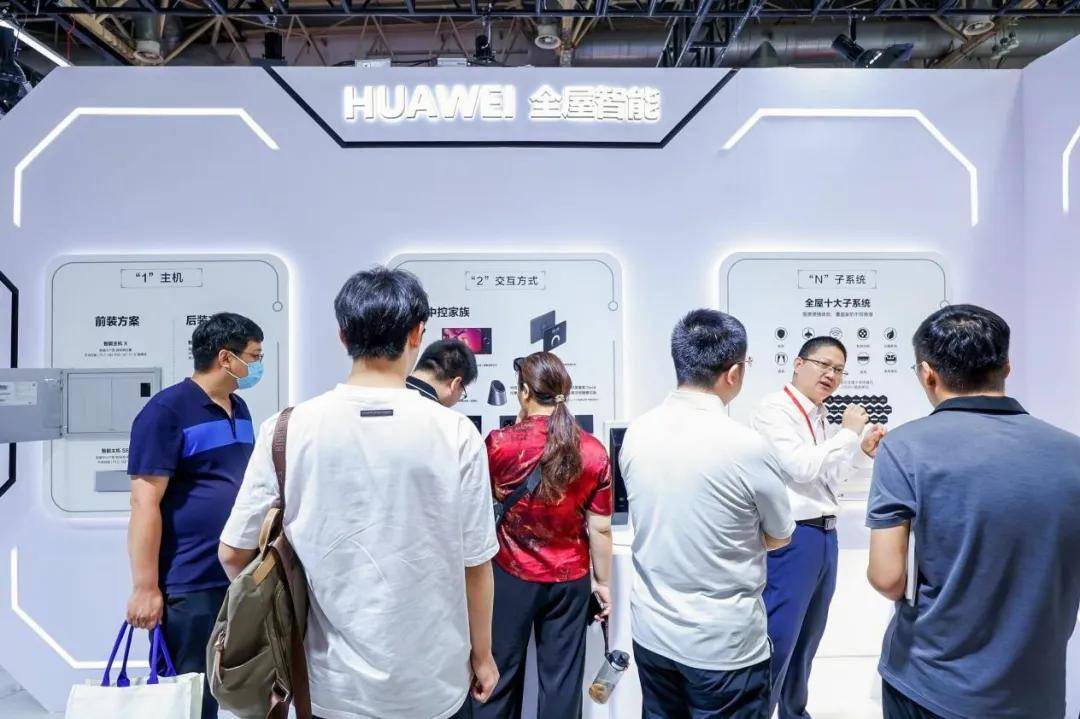
The rationale traces back to June 2024, when Huawei, as the lead unit, inaugurated the "Whole-House Smart Key Laboratory" during the "Housing Expo." This lab, now China's most important and authoritative ministerial-level whole-house smart space laboratory, is tasked with developing premium solutions—from standard research and industrial policy to scenario innovation, solution incubation, and commercial implementation.
As early as early 2023, Huawei Whole-House Smart began engaging with Poly Development, holding multiple rounds of discussions on products, technologies, and ecosystems. Several of Poly Development's key projects adopted Huawei's products and technologies, paving the way for the strategic collaboration.
Focusing on the details, as reported: "The two parties will jointly develop smart premium and demonstration projects. Huawei's spatial smart technology will empower Poly Development's real estate development, construction, commercial, hotel, wellness, tourism, and apartment sectors, facilitating the rollout of benchmark smart space solutions."
At every crossroads of industrial transformation, industry leaders must step forward, using technology and imagination to set examples for the ecosystem and carve out new market tracks. Following this logic, the Huawei-Poly alliance has undoubtedly set a precedent for smart "quality housing."
02 Huawei's Solution: Innovation as the Key
How can smart "quality housing" be built?
While unified standards and answers may not yet exist, valuable experience and insights abound. In 2021, Huawei began exploring whether homes could be smartened like cars, leading to the launch of its Whole-House Smart Solution. This evolved into a modular 1+2+N architecture: 1 smart host, 2 core interaction modes, and N subsystems.
Over the past three years, Huawei has strategically developed interactive hardware/software experiences and the HarmonyOS ecosystem. Today, over 2,300 brand partners and 5,800+ smart devices are part of the Huawei Whole-House Smart ecosystem, enabling personalized customization for all user types.
In the context of real estate's smart transformation, Huawei—known for innovation—is deepening smart home experiences to elevate living standards while pioneering smart services and delivery models. It addresses two core pain points in "quality housing":
First: Installation and maintenance.
Unlike traditional wireless solutions, Huawei's independently developed PLC (Power Line Communication) technology ensures 99.99% connection success and supports 128 nodes per circuit, balancing stability and flexibility.
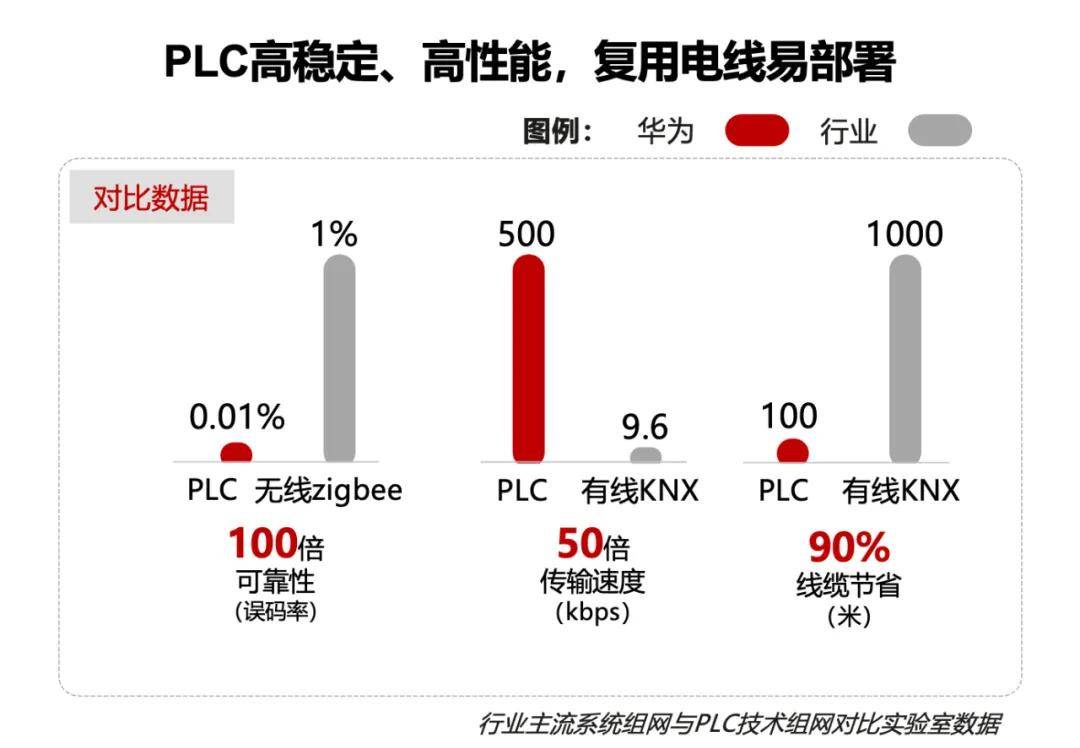
For installation, Huawei's PLC solution uses existing electrical wiring, drastically simplifying setup compared to KNX low-voltage systems. It’s arguably the most construction-friendly connectivity tech.
For maintenance, Huawei's AI Life app offers self-diagnosis and self-repair tools, guiding users through troubleshooting—significantly reducing upkeep complexity.
Second: Cost efficiency.
Cost savings come in two forms: installation (38% lower construction costs) and operations (AI-driven energy savings and system control).
A prime example is the PLC+AI sensor suite, where millimeter-wave radar enables breath-level precision tracking, adjusting power usage based on occupancy. Data shows a 55㎡ conference room can save ¥1,972 annually, with a 21-month ROI.
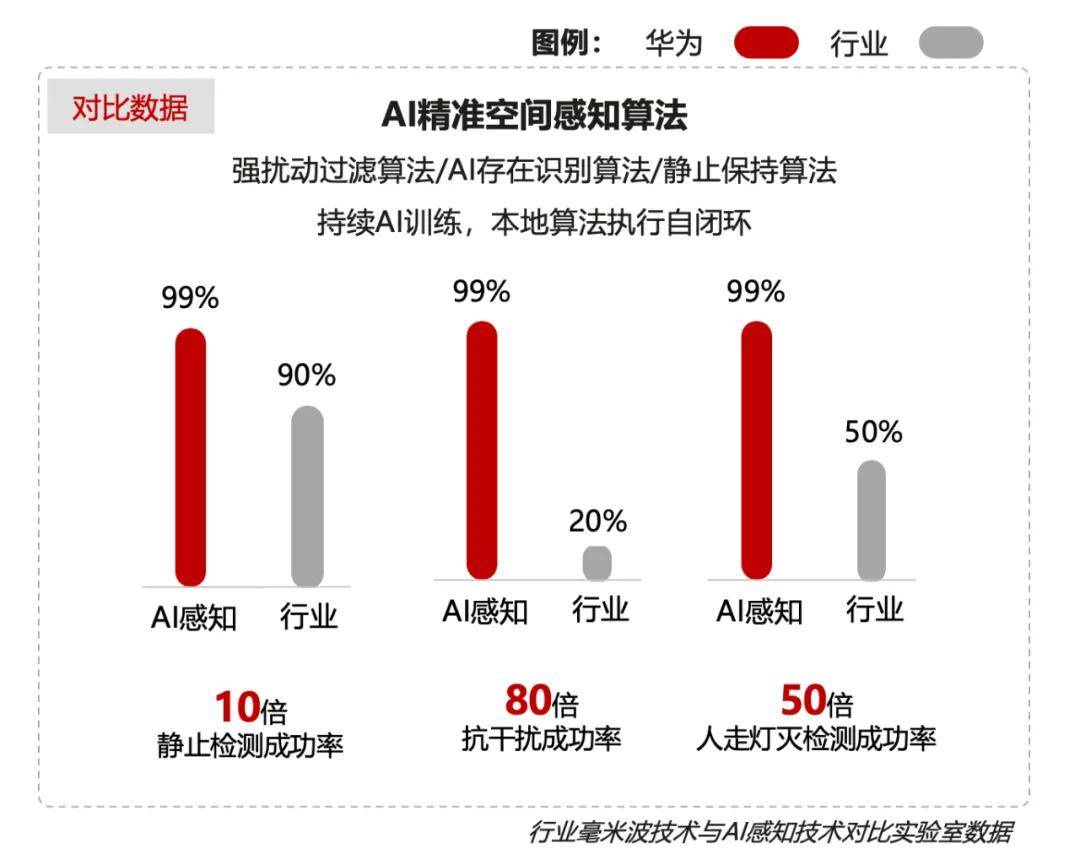
Thus, Huawei's solution doesn’t just deliver smartness—it pioneers green, low-carbon, and safe paradigms, using intelligence to create new productive forces.
As the Huawei-Poly collaboration deepens, whole-house smart living will gain visibility, clarifying "quality housing" standards and charting a new path for industry transformation. Once sci-fi, smart homes are accelerating into mainstream reality.
03 Expanding the Possibilities of "Spatial Intelligence"
Parallel to the "quality housing" exploration is the wave of spatial intelligence.
Beyond Poly, China Resources Land, Sino-Ocean South China, and Lianfa Group have all signed in-depth agreements with Huawei Whole-House Smart in the past six months, spanning real estate development, construction, commercial, hotel, wellness, tourism, and apartment sectors.
Zooming out, the new cycle demands novel models and formats—capturing quality-era demands and riding the digital/smart wave to unleash fresh product vitality.
As the pioneer of "spatial intelligence," Huawei’s collaborations won’t be limited to residences but will explore transformative pathways for real estate. Already, new possibilities are emerging.
Smart wellness, for instance.
By end-2023, China had 297M seniors aged 60+ (21.1% of the population) and 217M aged 65+ (15.4%), entering moderate aging. This demographic shift presents unprecedented opportunities for smart wellness.
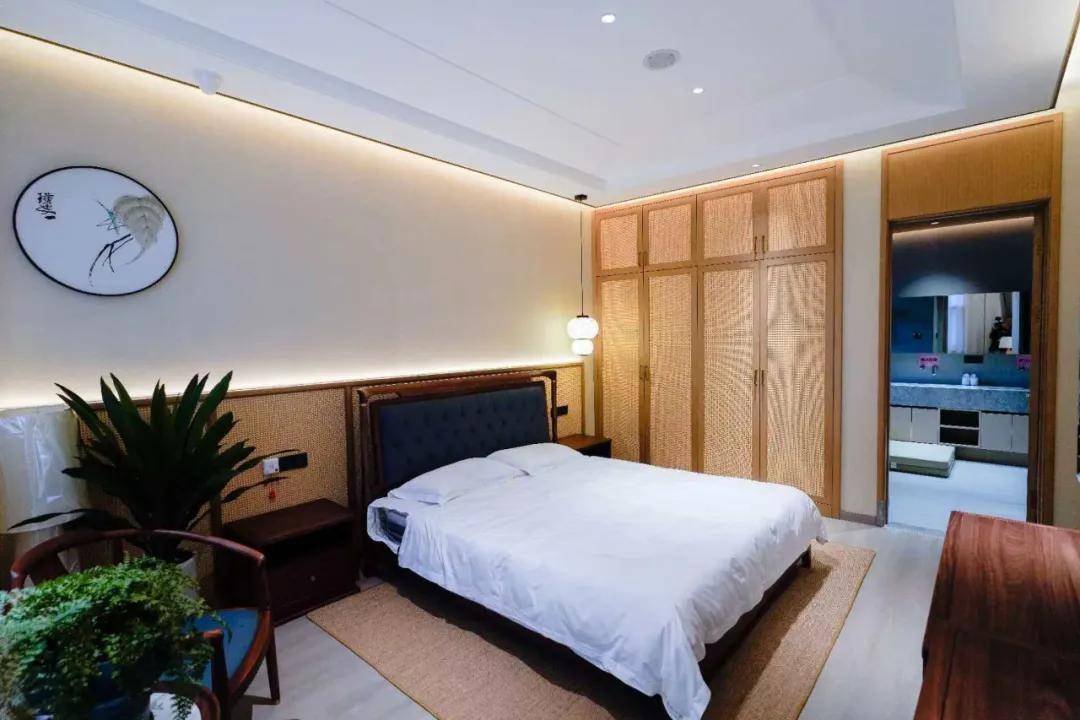
At the Huangjing Shijia TCM Wellness Town in Datong, Shanxi, Huawei created a "model space" integrating PLC+AI sensors for fall detection, prolonged bathroom stays, sleep monitoring, and emergency alerts—offering 24/7 elderly care.
Smart hotels, another example.
Traditional hotels face check-in queues, data errors, and operational inefficiencies. Many hesitate to adopt smart solutions due to high installation and maintenance costs.
Huawei’s PLC cuts installation costs by ~50%, with AI maintenance saving ¥96K annually. Data shows smart check-in/out boosts occupancy by 14.2%, raises average rates by ¥41.9, and earns 79% guest retention.
As Richard Yu, Huawei’s Executive Director and CEO of Consumer BG, stated: "Together, we’ll pioneer smart living benchmarks and herald a new era of intelligent living."
Smart wellness and hotels are just the beginning. As Huawei collaborates with Poly, CR Land, and others, more forward-thinking solutions will emerge, reshaping real estate’s smart future.
04 Closing Thoughts
Great changes begin subtly.
For Poly, whole-house smart unlocks tangible value-adds, securing greater influence in the new cycle. For Huawei, "spatial intelligence" as a unique "new productive force" holds vast untapped potential.
The Huawei-Poly partnership redefines "quality housing": not just upgraded living spaces and smart lifestyles, but a holistic industrial upgrade poised for qualitative leaps in the smart era.
It also signals that tech-real estate fusion is establishing "quality housing" as the new standard, offering concrete pathways for industry transformation—ushering in a future of green, low-carbon, smart, and safe vitality.
The copyright of this article belongs to the original author/organization.
The views expressed herein are solely those of the author and do not reflect the stance of the platform. The content is intended for investment reference purposes only and shall not be considered as investment advice. Please contact us if you have any questions or suggestions regarding the content services provided by the platform.
