


The privatization failure of China Traditional Chinese Medicine Holdings led to a sharp drop in its stock price. What are the reasons behind the wave of privatization in Hong Kong stocks?


On October 21, $TRAD CHI MED(00570.HK) gapped down, with intraday losses exceeding 40%, drawing widespread attention.
Did China Traditional Chinese Medicine Holdings' privatization fail?
Recently, China Traditional Chinese Medicine Holdings announced that the preconditions for Sinopharm Group's privatization offer at HKD 4.6 per share had not been met, as its overseas direct investment was not approved, and the final deadline for the preconditions (October 18, 2024) was not extended. As a result, the privatization proposal expired on October 18, and the company's listing status on the Stock Exchange will not be revoked.
It is reported that on February 21 this year, China Traditional Chinese Medicine Holdings announced that Sinopharm Group intended to privatize the company at HKD 4.6 per share, representing a 34.11% premium over the pre-suspension closing price (February 7).
Stimulated by this news, China Traditional Chinese Medicine Holdings' stock price surged 24.2% on February 22 after trading resumed.
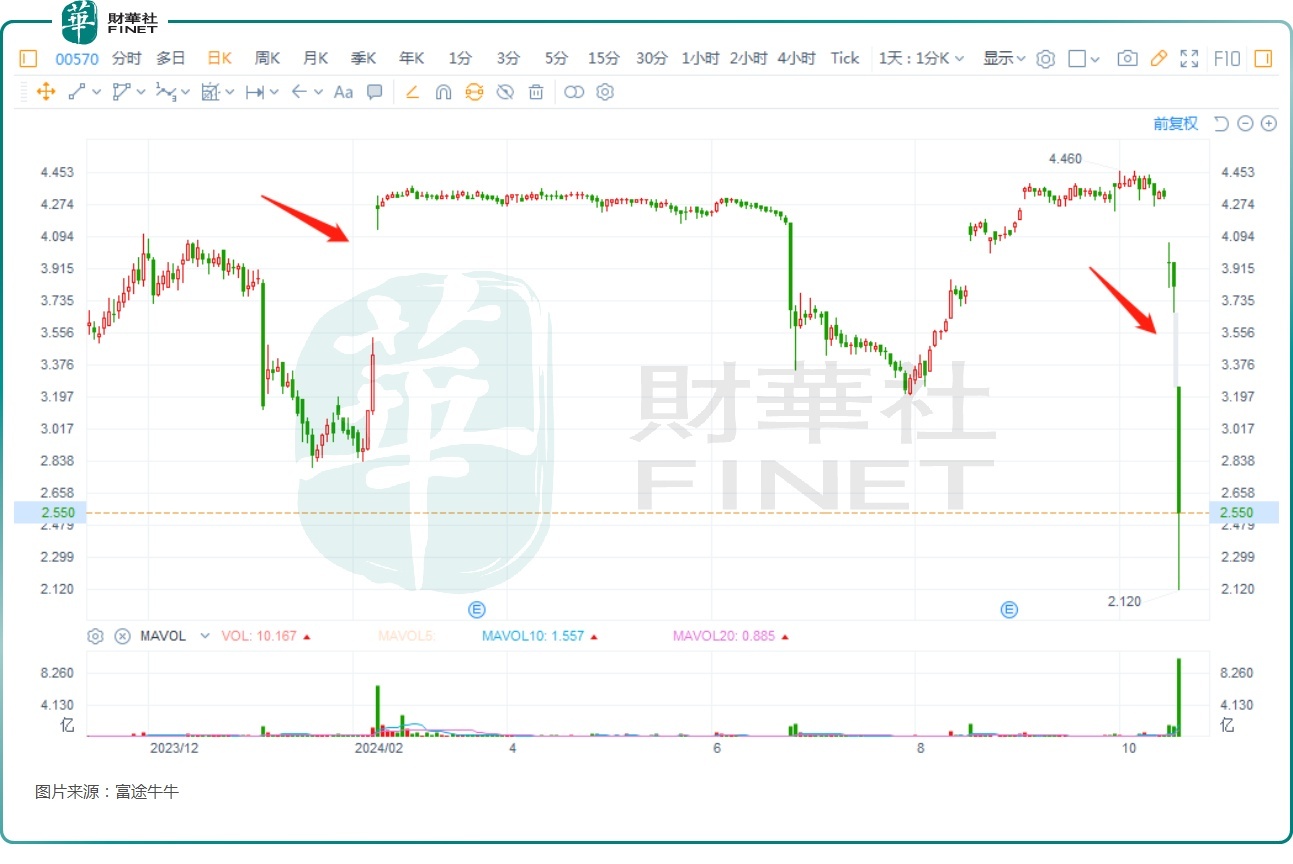
Given the earlier stock price surge due to privatization rumors, the recent plunge following the failed privatization is hardly surprising.
Other Companies Privatized This Year
It is worth noting that, beyond the stock price fluctuations, the original intent behind China Traditional Chinese Medicine Holdings' privatization may be more noteworthy.
According to reports, China Traditional Chinese Medicine Holdings cited limited secondary market trading volume as restricting its ability to function as a listed financing platform.
In fact, the Hong Kong stock market has faced liquidity challenges in recent years, with many listed companies struggling to raise funds—a hot topic among investors. Data from the Hong Kong Exchange also shows that the average daily turnover for the first nine months of 2024 was HKD 113.3 billion, up 3% year-on-year but still significantly lower than the full-year averages for 2020, 2021, and 2022.
Against this backdrop, many listed companies have opted for privatization or voluntary delisting.
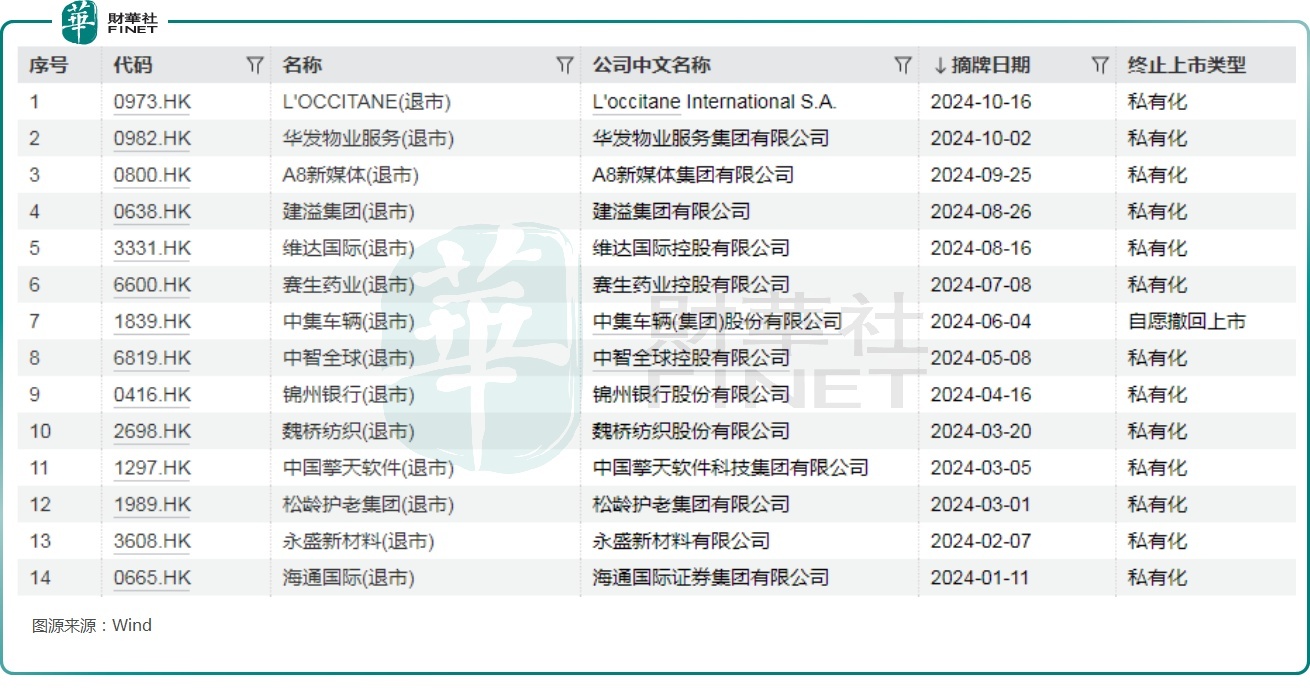
Wind data shows that as of October 20, 13 Hong Kong-listed companies have been privatized this year, with another voluntarily withdrawing its listing. Together, these account for about 38.9% of total delistings, up nearly 15 percentage points from the previous year.
Additionally, $Franshion Hospitality(00292.HK) , $ASIA STANDARD(00129.HK) and the offeror, The Sai Group Limited, jointly announced on October 20 that the privatization plan became effective on October 18 (Bermuda time), with the convertible bonds offer becoming unconditional and remaining open for acceptance until 4:00 PM on November 1, 2024 (Friday).
Franshion Hospitality expects its listing status on the Stock Exchange to be withdrawn, effective from 4:00 PM on October 22, 2024 (Tuesday).
Conclusion
Due to insufficient liquidity, some Hong Kong-listed companies have chosen privatization, while others have repeatedly called for expanding the scope of Stock Connect and adjusting eligibility thresholds—all aimed at improving stock liquidity and facilitating corporate financing.
The good news is that the Fed has begun an interest rate cut cycle, and multiple Chinese government departments have introduced major supportive policies. These factors have collectively driven a strong rebound in the Hong Kong market since mid-to-late September, significantly improving liquidity. If the market continues to strengthen after adjustments, liquidity may further recover, potentially easing the privatization wave.
Author: Yan Shisi
The copyright of this article belongs to the original author/organization.
The views expressed herein are solely those of the author and do not reflect the stance of the platform. The content is intended for investment reference purposes only and shall not be considered as investment advice. Please contact us if you have any questions or suggestions regarding the content services provided by the platform.
