


Changshan Pharmaceutical's stock price is approaching the 20CM limit-up. Does putting on the 'weight-loss drug disguise' mean riding the wind?

The commercialization prospects of the new drug remain uncertain.
Source|Pharmaceutical Research Society
Nowadays, any pharmaceutical company associated with "weight-loss drugs" seems to have boarded a fast-growing train, becoming a "hot commodity" in the capital market.
Take Changshan Pharmaceutical for example. On October 17, Changshan Pharmaceutical's stock price surged nearly 20% to hit the daily limit, followed by gains in Borui Pharmaceutical, HanYu Pharmaceutical, JinKai Bio, and Baihua Pharmaceutical. This rally didn’t just appear recently. According to Tian Tian Kang Yang, Changshan Pharmaceutical's stock price has risen over 270% in just one month from September 11 to October 16, 2023.
The significant rise in Changshan Pharmaceutical's stock price is largely attributed to its newly developed drug, Ebenatide. It is reported that Ebenatide belongs to the currently popular GLP-1 drugs, which can improve human metabolism and achieve effects like blood sugar reduction and weight loss.
Given the current weight-loss drug trend and Changshan Pharmaceutical being the fastest A-share listed company in GLP-1 drug development, many investors are optimistic about its growth prospects.
However, stripping away the hype, Changshan Pharmaceutical’s core competitiveness may not be as strong as perceived. How much will this affect the commercialization of its new drug?
I. Has Its Core Heparin Business Hit a Ceiling?
Currently, Ebenatide is seen as one of Changshan Pharmaceutical’s "growth hopes," mainly because its main business operations are becoming increasingly unstable.
Specifically, Changshan Pharmaceutical does not specialize in weight-loss or diabetes drugs but focuses on heparin products. As stated in its financial reports, the company is one of the few domestic enterprises with a complete heparin product chain, capable of R&D, production, and sales of heparin crude products, heparin APIs, and heparin preparations.
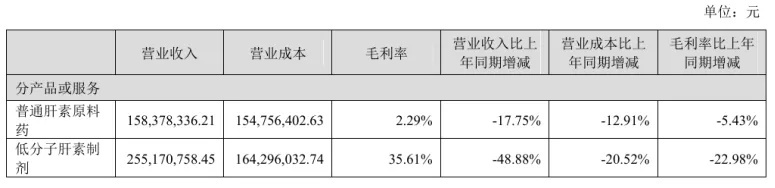
However, its heparin business has not been performing well recently. According to its financial report, in the first half of this year, Changshan Pharmaceutical’s revenue was 568 million yuan, down 30.79% year-on-year, with a net loss of 46.9 million yuan and an adjusted net loss of 53.67 million yuan. In terms of products, revenue from standard heparin APIs fell 17.75%, while low-molecular-weight heparin preparations dropped 48.88%.
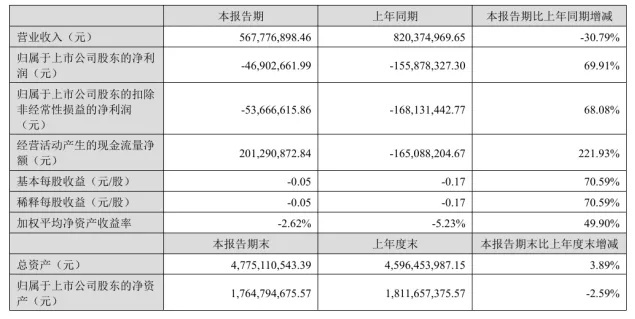
Given the current state of the heparin market, Changshan Pharmaceutical’s declining performance is not surprising.
In fact, heparin is a relatively niche segment in the pharmaceutical industry. According to a report by Global Market Insights, the global heparin market was valued at over $4.5 billion in 2021 and is expected to exceed $5.7 billion by 2028, with a compound annual growth rate (CAGR) of just 2.8% from 2021 to 2028.
In terms of competitive landscape, a report by Qianzhan Industry Research Institute shows that in China’s heparin industry, companies with registered capital exceeding 1.5 billion yuan, such as Red Sun Pharma, Fosun Pharma, JianYou Shares, and Hepalink, are industry leaders. Those with registered capital between 500 million and 1.5 billion yuan, including Huarun Shuanghe, ShuangLu Pharma, Changshan Pharmaceutical, and Dongcheng Pharma, form the first tier, while others with less than 500 million yuan are in the second tier.
It’s clear that while Changshan Pharmaceutical has some recognition in the heparin market, it faces stiff competition from more influential players. Meanwhile, price fluctuations of its core products have also impacted its performance.
As disclosed in its financial report, the centralized procurement policy has capped the prices of low-molecular-weight heparin preparations that haven’t passed evaluation, leading to a significant year-on-year decline in sales volume and revenue for Changshan Pharmaceutical’s low-molecular-weight heparin calcium injections in the first half of this year.
Given the state of its core business, it’s inevitable for the company to focus on product innovation and explore new markets.
It is reported that Changshan Pharmaceutical’s application for the marketing authorization of Ebenatide injections has been accepted by the NMPA. Currently, the company has largely completed the on-site inspection by the CFDI and the registration testing by the NIFDC. Ebenatide is now in the professional review stage.
Changshan Pharmaceutical stated that if Ebenatide is approved and successfully launched, it will diversify the company’s revenue streams, reduce reliance on heparin products, enhance profitability and risk resilience, and accelerate its transformation into an innovative pharmaceutical company.
However, it’s worth noting that Changshan Pharmaceutical’s development direction for Ebenatide doesn’t fully align with market expectations.
II. Is Ebenatide’s Commercialization Future Uncertain?
As mentioned earlier, investors’ optimism about Changshan Pharmaceutical is largely driven by the booming weight-loss drug trend.
WHO data shows that over 1 billion people worldwide suffer from obesity, including 650 million adults, 340 million adolescents, and 39 million children. It is estimated that by 2025, the number of overweight and obese people in China will exceed 265 million.
The enormous market demand has kept the weight-loss drug sector hot. Morgan Stanley predicts that the weight-loss drug market will exceed $54 billion by 2030, while Goldman Sachs estimates it could soar to $100 billion.
For specific companies, pharmaceutical giants like Novo Nordisk and Eli Lilly have already soared with their weight-loss drug products.
According to Novo Nordisk’s financial report, in the first half of this year, its flagship GLP-1 weight-loss drug, semaglutide, generated $12.97 billion in sales across three versions, accounting for about 66% of the company’s total revenue. Thanks to semaglutide’s success, Novo Nordisk’s market cap once surpassed $600 billion.
Back to Changshan Pharmaceutical, many investors see its GLP-1 drug R&D as an entry into the "weight-loss drug concept stock" camp. Given its relatively fast progress, the company is bound to attract market attention. However, Changshan Pharmaceutical has not actively catered to these expectations.
It is reported that Changshan Pharmaceutical has repeatedly emphasized that Ebenatide’s indication is for type 2 diabetes and that the company has not conducted clinical trials for obesity or weight loss. Of course, given the nature of GLP-1 drugs, it’s possible that Changshan Pharmaceutical may explore Ebenatide’s potential for weight loss in the future.
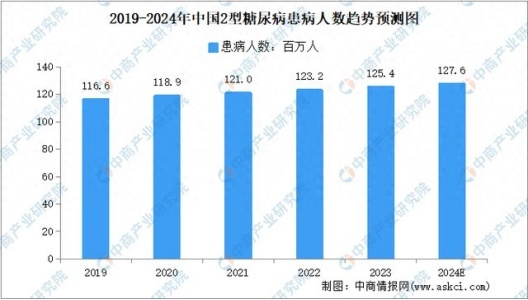
Additionally, the demand for diabetes treatment is also significant. Data from China Business Intelligence Network shows that in 2023, China had 125 million type 2 diabetes patients, with the number expected to reach 127 million in 2024. This presents another revenue opportunity for Changshan Pharmaceutical.
However, the harsh reality is that its current main business may hinder Ebenatide’s commercialization. As is well known, the R&D and launch of a new drug require substantial funding. Changshan Pharmaceutical is simultaneously developing its heparin business and venturing into diabetes drug R&D, which could strain its resources.
According to its financial report, the company’s total liabilities stand at 3.022 billion yuan, up 0.54% year-on-year, including accounts payable of 288 million yuan and advance receipts of 16.5 million yuan.
Moreover, competition in the GLP-1 sector is intensifying, with over 100 GLP-1 drugs in clinical development globally, nearly half of which are from domestic pharmaceutical companies.
In short, Changshan Pharmaceutical faces numerous challenges on its path to new growth. Investors should assess the situation carefully.
The copyright of this article belongs to the original author/organization.
The views expressed herein are solely those of the author and do not reflect the stance of the platform. The content is intended for investment reference purposes only and shall not be considered as investment advice. Please contact us if you have any questions or suggestions regarding the content services provided by the platform.
