


The stock price of Laekna Therapeutics surged over 36% due to muscle-building and fat-loss drugs, but can it really tell a 'good story'?

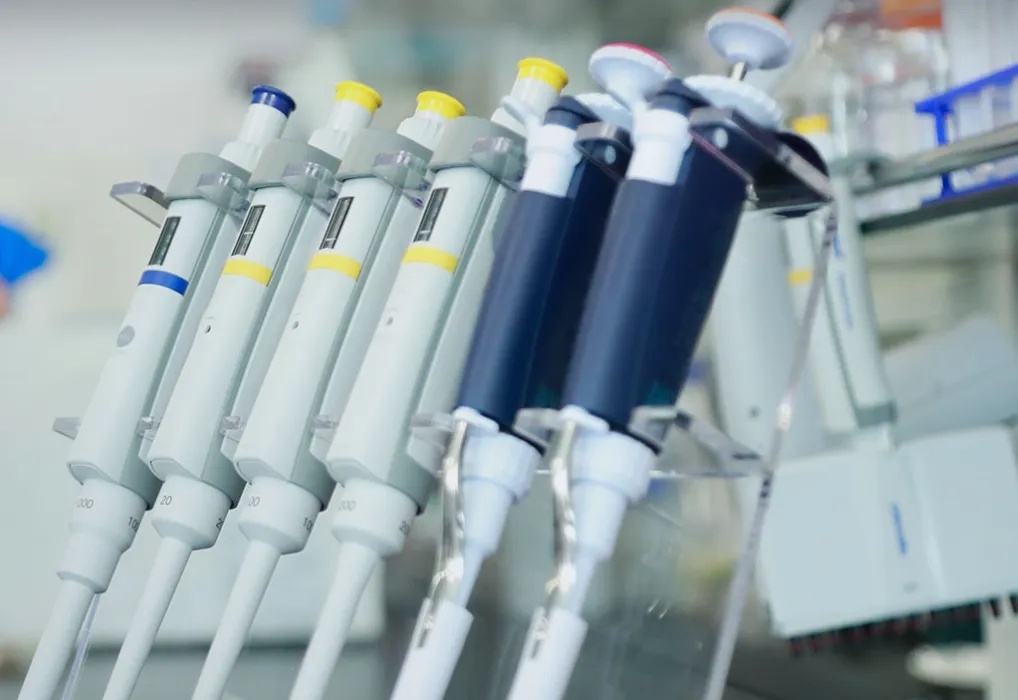
"Weight-loss Companion" Boosts Stock Price, But Laekna Therapeutics' Development Pace Remains Heavy.
Source|Pharmaceutical Research Society
The booming weight-loss drug market is truly 不缺热度。
On October 17, the National Health Commission issued the "Obesity Diagnosis and Treatment Guidelines (2024 Edition)". This is the first authoritative multidisciplinary guideline for obesity treatment in China, which is of great significance for standardizing clinical obesity treatment in the country.
At this juncture, a batch of "weight-loss drug concept stocks" in the capital market have attracted further attention, including Laekna Therapeutics. It is reported that on October 17, Laekna Therapeutics' stock price surged by more than 36% to HKD 8.41 in the afternoon, hitting a new high since April 16 this year.
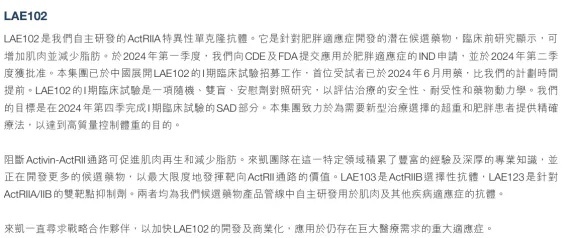
Behind the soaring stock price, the company's muscle-building and fat-reducing product development has also made new breakthroughs. Recently, Laekna Therapeutics announced significant progress in the Phase I clinical trial of its product LAE102: the subcutaneous injection (SC) part of the single ascending dose (SAD) study has been initiated.
It is reported that LAE102 is a first-in-class monoclonal antibody independently developed by Laekna Therapeutics, which can be combined with GLP-1 receptor agonists to achieve fat reduction while minimizing muscle loss.
From the perspective of the current explosive demand for weight-loss drugs, Laekna Therapeutics is riding the wave, but its multi-product pipeline layout and fierce market competition also make its development pace far from light.
1. Capturing the Trend with "Weight-loss Companion"
For innovative pharmaceutical companies like Laekna Therapeutics, the weight-loss drug trend is indeed not to be missed.
The World Obesity Federation predicts that the number of obese patients worldwide will reach 1.2 billion by 2030. It can be seen that the growing demand for weight loss is creating a huge drug market.
Frost & Sullivan predicts that the global GLP-1 drug market will reach $24.6 billion in 2024.
The giants at the center of the trend have already "raked in" a wave of money. In the first half of this year alone, the global sales of Novo Nordisk's semaglutide and Eli Lilly's tirzepatide, two GLP-1 drugs, reached $13 billion and $6.658 billion, respectively, totaling $19.658 billion.
But this does not mean that other pharmaceutical companies have no opportunities. Currently, creating a "weight-loss companion" is a good entry point.
One major reason is that the current GLP-1 drugs on the market have certain "flaws". It is reported that using GLP-1 drugs for weight loss is always accompanied by about 25%-40% muscle loss. Rapid muscle loss can increase the risk of osteoporosis and reduced immunity.
This also provides an entry point for innovative pharmaceutical companies like Laekna Therapeutics to enter the weight-loss drug 赛道。
Regarding the current development of LAE102, Dr. Lv Xiangyang, Chairman of Laekna Therapeutics, said: "In the field of muscle-building and fat reduction, LAE102 has become the first ActRIIA-specific antibody to enter the clinical stage for obesity treatment. Preclinical studies have shown its effects in increasing muscle and reducing fat, making it a potentially more ideal weight-control drug. Laekna has fully 布局 the ActRII pathway, establishing a new drug R&D platform, and is continuously developing follow-up product combinations, including LAE103 (ActRIIB-specific antibody) and LAE123 (dual-target inhibitor for ActRIIA/IIB)."
However, how much growth space LAE102 can 开辟 for Laekna Therapeutics remains debatable.
2. Challenges Facing LAE102
In the field of fat reduction and muscle building, Laekna Therapeutics is actually "bumping fists" with giants like Eli Lilly.
According to 药研网整理, the only ActRII antibodies that have 真正 entered clinical research for obesity as an indication are Eli Lilly's Bimagrumab and Laekna Therapeutics' LAE102.
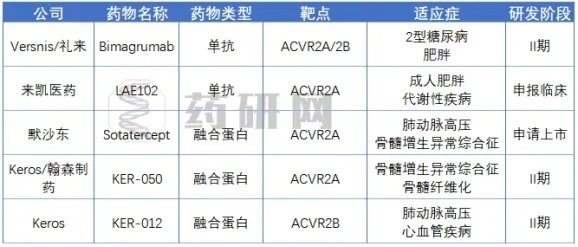
In terms of clinical progress, Eli Lilly's Bimagrumab is ahead of Laekna Therapeutics' LAE102. Additionally, Phase II clinical study results showed that after 48 weeks of treatment with Bimagrumab, patients' total body fat content decreased by an average of 20.5%, while muscle mass increased by 3.6%.
From this perspective, Eli Lilly's Bimagrumab may commercialize sooner. If its efficacy is outstanding, it may 率先占领高地. For Laekna Therapeutics, there is 难免担忧 that Eli Lilly's 抢跑 will leave little 份额 for LAE102.
Moreover, considering Laekna Therapeutics' multi-product pipeline 布局, the 研发压力 is significant, and when LAE102 can enter the 销售 market is also a question.
According to 财报透露, as of June 30, 2024, Laekna Therapeutics has initiated seven clinical trials for LAE102, LAE002 (afuresertib), LAE001, and LAE005 to address unmet medical needs in obesity and cancer.
To advance the development of related products, the company's 研发费用 have been growing in recent years.
财报显示 that in the six months ended June 30, 2024, Laekna Therapeutics'研发费用 reached RMB 126 million, a year-on-year increase of 23.3%. Additionally, due to the absence of product sales, the company has 始终处于亏损状态. Reports show that in 2021-2022, Laekna Therapeutics recorded net losses of RMB 749 million and RMB 782 million, respectively. In the first half of 2024, the company reported a 期内亏损 of approximately RMB 143 million.
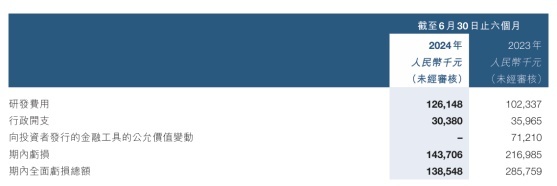
Overall, Laekna Therapeutics' current 资金实力 is 偏弱, and whether it can 支撑 the 上市 of key products like LAE102 remains highly uncertain.
The copyright of this article belongs to the original author/organization.
The views expressed herein are solely those of the author and do not reflect the stance of the platform. The content is intended for investment reference purposes only and shall not be considered as investment advice. Please contact us if you have any questions or suggestions regarding the content services provided by the platform.
