


 Buffett Apprentice
Sinohytec's new share subscription: Long-term policy benefits, short-term performance hard to see

Recently, China's leading hydrogen energy storage and transportation equipment manufacturer, Guofu Hydrogen Energy, has launched an IPO subscription for new shares on the Hong Kong stock market.
Established in 2016, Guofu Hydrogen Energy is a leading manufacturer of hydrogen energy storage and transportation equipment in China, specializing in the R&D and production of core hydrogen equipment across the entire industry value chain, covering hydrogen production, storage, transportation, refueling, and utilization. Its product offerings include on-board high-pressure hydrogen supply systems and related products, hydrogen refueling station equipment and related products, hydrogen liquefaction and liquid hydrogen storage and transportation equipment, and water electrolysis hydrogen production equipment and related products. According to Frost & Sullivan, in 2023, Guofu Hydrogen Energy ranked first in domestic sales of on-board high-pressure hydrogen supply systems and on-board high-pressure hydrogen storage cylinders, with market shares of 23.6% and 26.2%, respectively. It also ranked first in the number of hydrogen refueling stations built by equipment companies in China, with a market share of 25.7%.
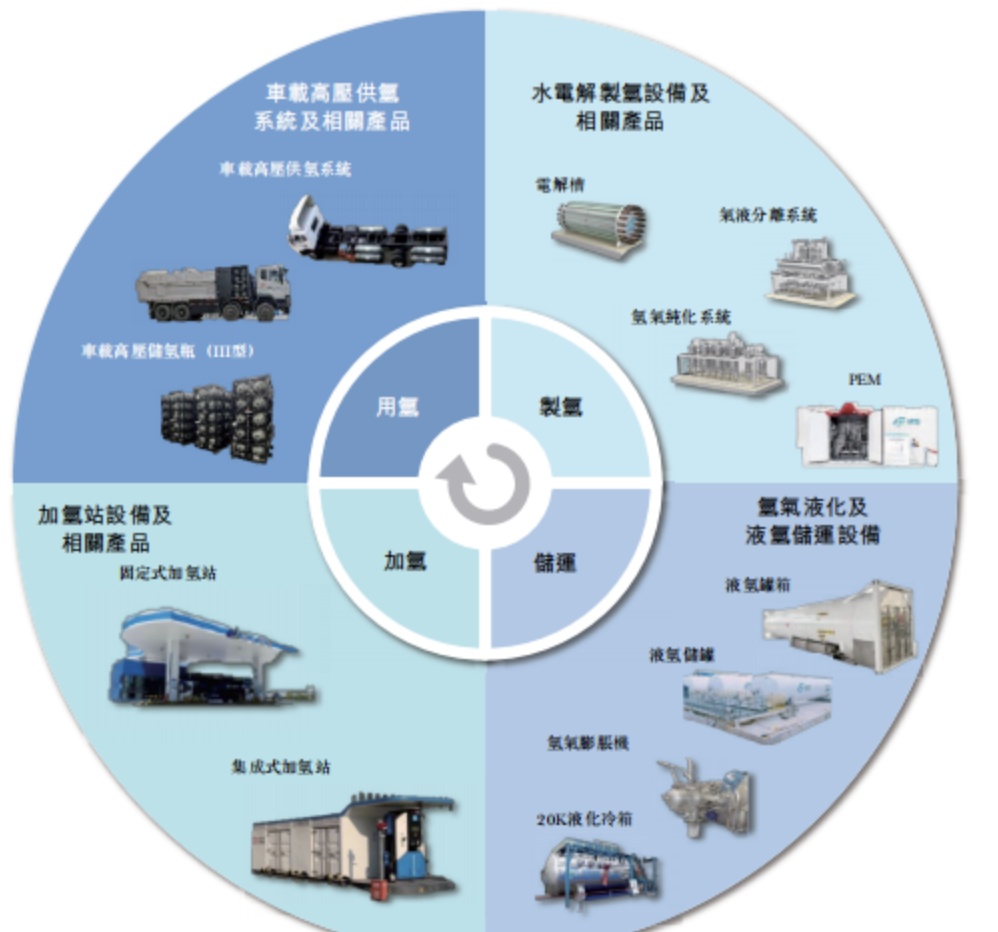
As a next-generation clean energy source, hydrogen energy has significant advantages over widely deployed photovoltaic and wind energy in terms of environmental friendliness and energy density. Moreover, hydrogen can be produced through various methods, including industrial waste gases from coal and water electrolysis, yielding high-quality hydrogen products.
However, due to high technical barriers, the industrialization of hydrogen energy has been progressing slowly, with many critical areas still requiring breakthroughs. Nonetheless, both at the industrial and application levels, national and local governments continue to focus on and encourage the development of the hydrogen energy industry, actively pushing it to the next stage.
On September 29, 2024, the Handan Municipal Government issued the "Handan Hydrogen Energy Industry Development Plan (2024–2035)," emphasizing the future construction of a "one core, two wings, two corridors, multiple points" hydrogen energy industry layout. The plan focuses on enhancing Handan's hydrogen energy innovation capabilities, consolidating its advantages in hydrogen equipment manufacturing, and expanding diverse application scenarios. By 2024, the city aims to promote 300 fuel cell vehicles and build five hydrogen refueling stations. By 2030, it plans to promote 2,000 fuel cell vehicles, replace 20 hydrogen-powered buses, build 33 hydrogen refueling stations, and achieve an annual green hydrogen production capacity of 600 tons.
On October 9, 2024, the Hubei Provincial Department of Economy and Information Technology released the "Hubei Action Plan for Accelerating Hydrogen Energy Industry Development (2024–2027) (Draft for Comments)." The plan aims to cultivate and expand the hydrogen energy industry, improve the modern hydrogen energy industrial system, and develop hydrogen energy as one of the new productive forces. By 2027, Hubei aims to establish a preliminary hydrogen energy industrial layout centered on Wuhan, creating a national hydrogen equipment hub focused on electrolyzers and fuel cells, and becoming a key hydrogen energy hub in China. The plan also seeks to demonstrate hydrogen applications in transportation and industrial sectors, with a target of achieving a total hydrogen industry chain output value of RMB 100 billion, including RMB 30 billion from hydrogen production.
On October 30, 2024, the National Development and Reform Commission issued the "Guidance on Vigorously Implementing Renewable Energy Replacement Actions," proposing to accelerate the promotion of renewable energy for low- and medium-temperature heat utilization in industries such as papermaking, printing, and food processing. In sectors like synthetic ammonia, synthetic methanol, petrochemicals, and steel, the plan encourages large-scale replacement of high-carbon hydrogen with low-carbon hydrogen and explores the construction of integrated wind-solar-hydrogen-ammonia-alcohol bases.
On October 31, 2024, the Changping District Bureau of Economy and Information Technology in Beijing released the "Notice on Soliciting Hydrogen Energy Industry Funding Support Projects for 2024." Changping District will provide financial support for hydrogen energy development in 11 areas, with funding reaching up to RMB 20 million.
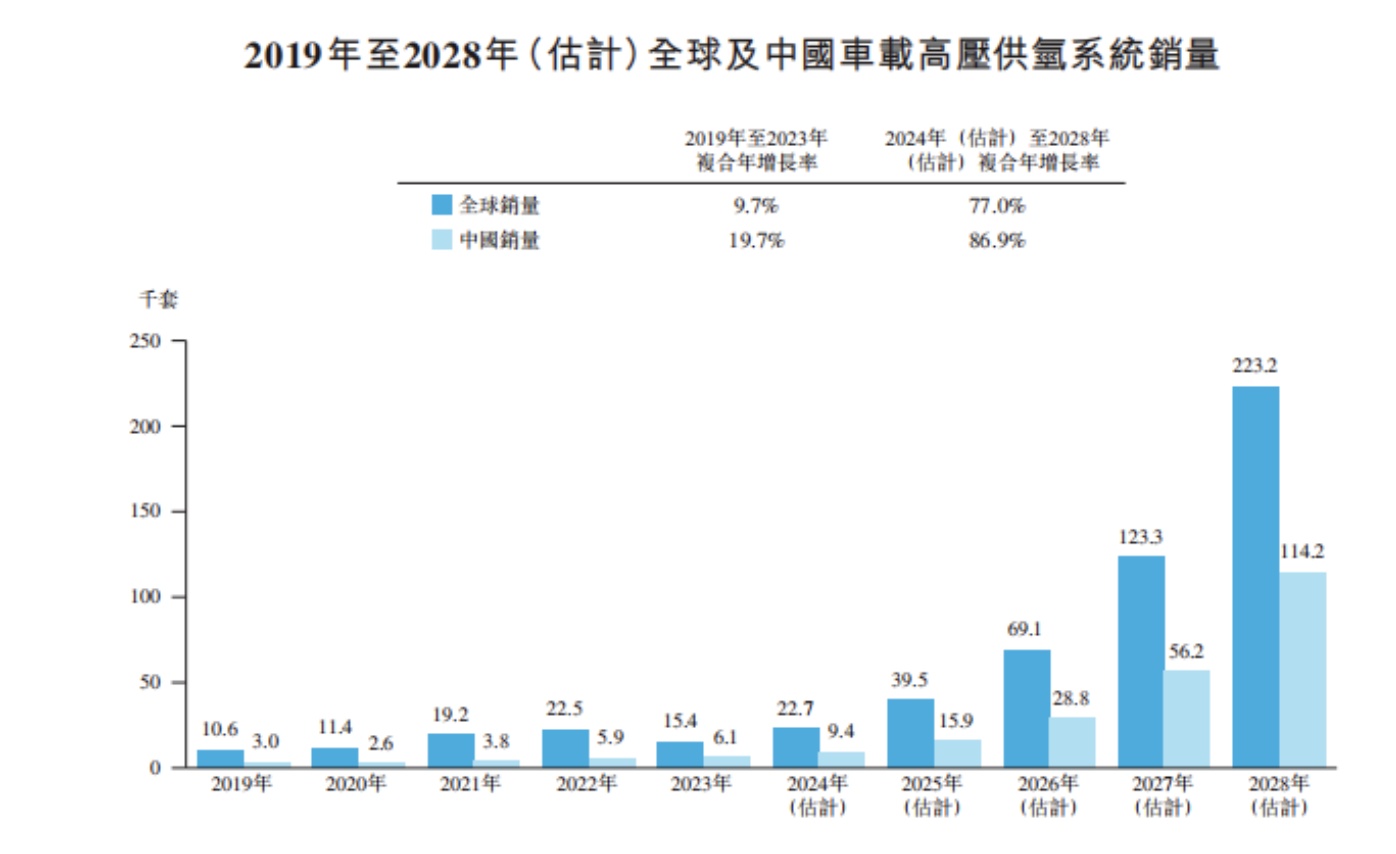
With the implementation of relevant policies, the hydrogen energy market is expected to see growth in both supply and demand across production, storage, transportation, and utilization. Increased investment and financing activity in the sector may drive market expansion. In the medium to long term, the improvement of hydrogen infrastructure will enhance the scale of the entire industry chain, with continued progress in the commercialization of hydrogen refueling stations, hydrogen storage and transportation, and fuel cell core components.
The founding team of Guofu Hydrogen Energy originated from the A-share listed company Furuise. As a globally leading special equipment company, Furuise has a clear advantage in special materials and equipment technologies. Guofu Hydrogen Energy has inherited this innovation-driven development philosophy, giving it unique strengths in hydrogen storage and transportation equipment.
For the three fiscal years ending December 31, 2021, 2022, and 2023, as well as the first five months of 2023 and 2024:
Guofu Hydrogen Energy's revenue was approximately RMB 330 million, RMB 360 million, RMB 520 million, RMB 50 million, and RMB 60 million, respectively, with a compound annual growth rate (CAGR) of 25.96%.
Gross profit was approximately RMB 30 million, RMB 40 million, RMB 90 million, RMB 0, and RMB 0, respectively, with a CAGR of 71.42%.
R&D expenses were approximately RMB -40 million, RMB -40 million, RMB -40 million, RMB -10 million, and RMB -20 million, respectively, with a CAGR of -3.24%.
Net profit was approximately RMB -80 million, RMB -100 million, RMB -80 million, RMB -40 million, and RMB -100 million, respectively, with a CAGR of -0.14%.
Gross margins were approximately 9.65%, 10.85%, 17.87%, 5.80%, and 1.95%, respectively.
R&D expenses as a percentage of losses were approximately 55.45%, 44.42%, 52.05%, 22.51%, and 17.61%, respectively.
Due to the industry's early-stage development, the company's financial statements reflect losses, a common situation among hydrogen energy companies. Whether it's the earliest listed company, SinoHytec, or Guohong Hydrogen Energy, which went public in 2023, none have escaped this fate.
However, Guofu Hydrogen Energy may chart a different course.
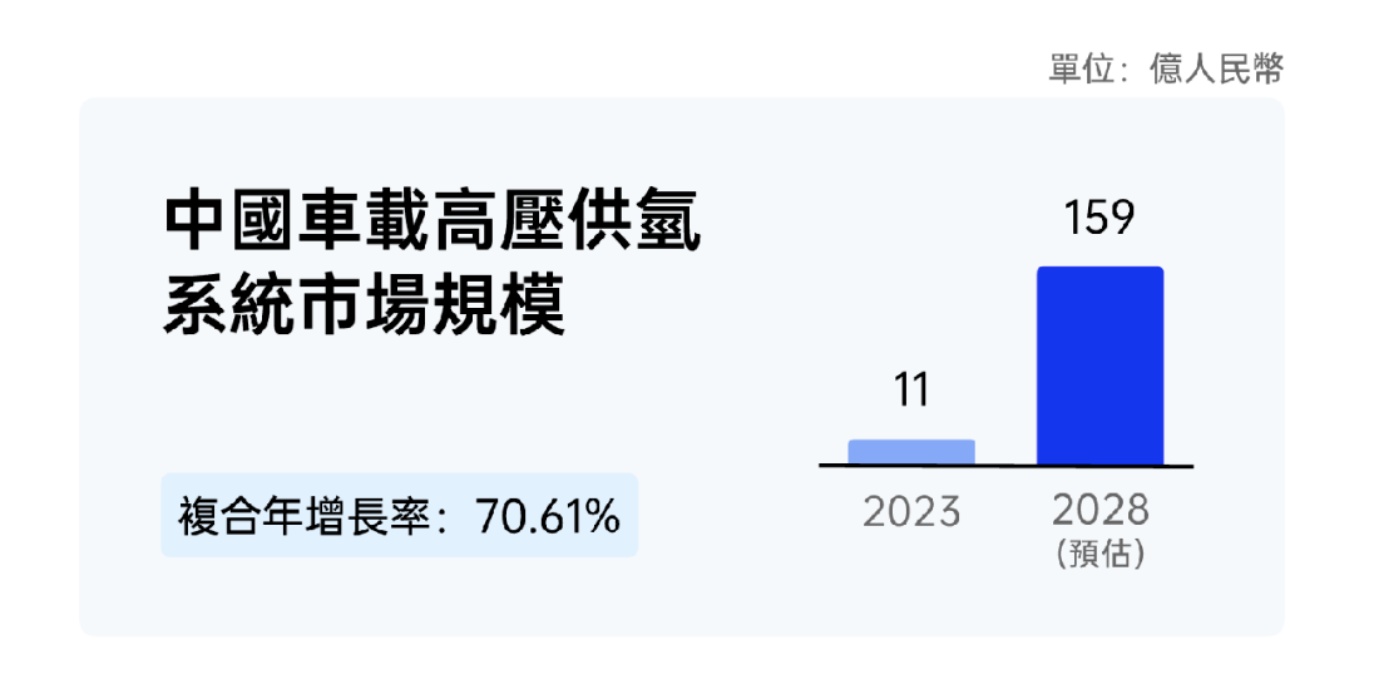
Both Guohong Hydrogen Energy and SinoHytec primarily focus on the hydrogen fuel cell vehicle industry chain. From the perspective of new energy vehicle development, the automotive industry chain is long, involves numerous companies, and has a vast downstream market, making it an attractive ecosystem at first glance.
But is this really the case?
Japan was the first country to invest in hydrogen fuel cell vehicles, bypassing lithium-ion batteries entirely. However, after nearly two decades of development, it still lacks a flagship company like Tesla. The persistently high costs of hydrogen fuel cell vehicles remain a major constraint on industry growth.
Compared to the rapid growth of new energy vehicles, hydrogen fuel cell vehicles are still in a very early stage.
The limited scale of downstream industries has hindered the development of hydrogen vehicle component manufacturers. Economies of scale are critical in all industries, and the current industry size makes it difficult for companies to thrive.
However, looking beyond the hydrogen vehicle industry chain may reveal more interesting opportunities.
Beyond automotive fuel, hydrogen energy has significant potential in energy storage. Current major grid energy storage methods include pumped hydro, lead-acid batteries, and compressed air storage, with pumped hydro dominating.
If hydrogen energy can be widely applied in energy storage, it could unlock more industrial opportunities. With high energy density and environmental friendliness, significant cost reductions in compression and storage could accelerate industry growth.
Moreover, compared to other methods, hydrogen energy storage may offer higher efficiency and lower overall costs.
Currently, power grids face significant curtailment of wind and solar energy due to their unstable output, posing risks to grid stability. If wind and solar power can be integrated with hydrogen utilization, it could open new possibilities in the energy storage market.
For storage and transportation equipment manufacturers like Guofu Hydrogen Energy, this could represent a vast blue ocean market.$GUOFUHEE(02582.HK)
The copyright of this article belongs to the original author/organization.
The views expressed herein are solely those of the author and do not reflect the stance of the platform. The content is intended for investment reference purposes only and shall not be considered as investment advice. Please contact us if you have any questions or suggestions regarding the content services provided by the platform.
