



Has Tesla made a comeback?

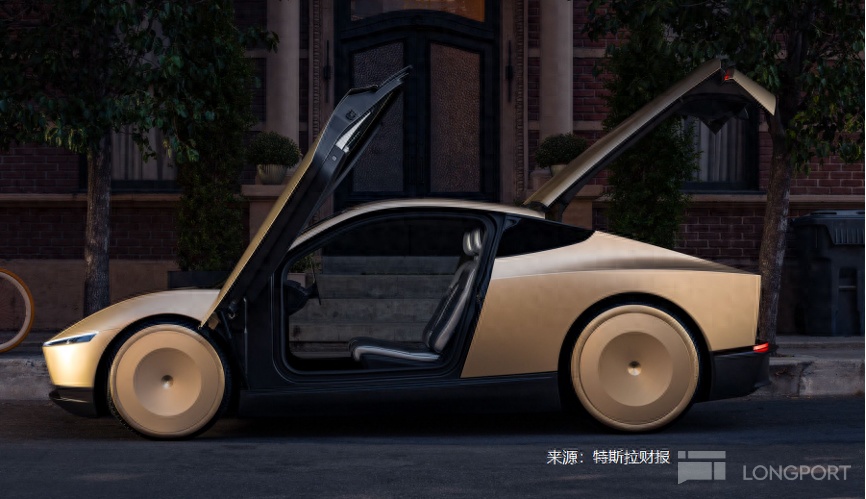
Electric vehicle manufacturer$Tesla(TSLA.US) has seen its stock price perform like a roller coaster this year.
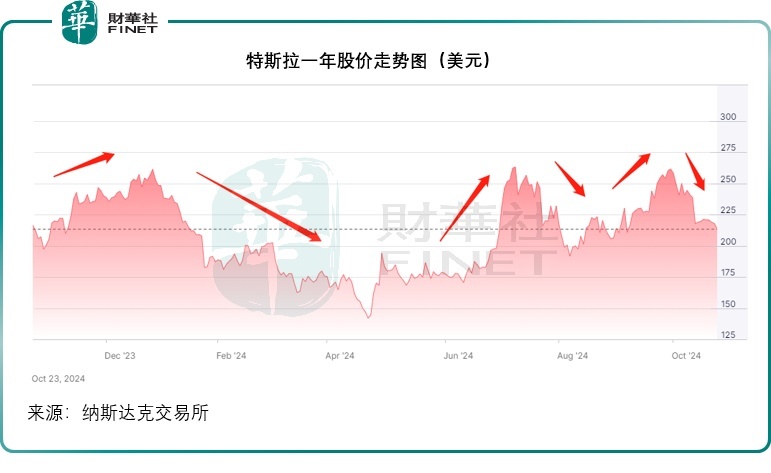
After announcing its Q3 2024 results on the evening of October 23, 2024, Tesla's stock price surged over 12% in after-hours trading, and as of October 24, it was up 11.67% in pre-market trading.
Q3 Performance Exceeds Expectations
In Q3 2024, Tesla's total deliveries increased by 6.40% year-over-year to 462,900 vehicles, as shown in the chart below. By October 22, 2024, Tesla had produced its 7 millionth electric vehicle. Elon Musk mentioned that its weekly production of smart vehicles (capable of autonomous driving) reached 35,000 units, while Waymo's entire fleet is less than 1,000 vehicles.
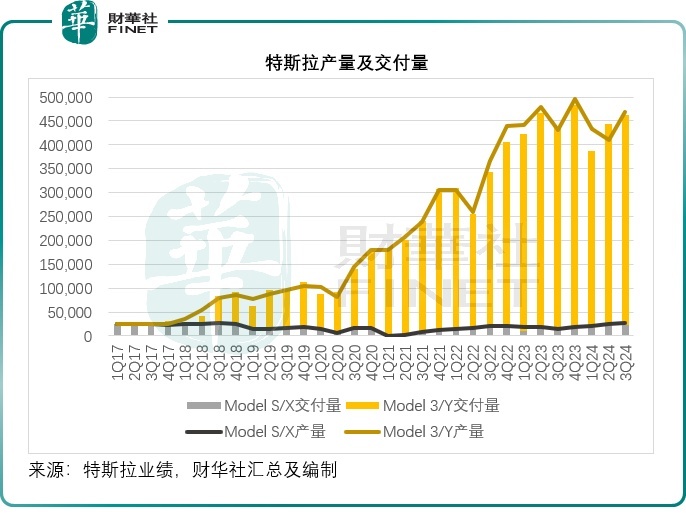
However, due to changes in product mix, pricing adjustments, and financing incentives, the average selling price of its vehicles (excluding currency effects) declined. Q3 automotive sales revenue was $18.831 billion, up only 1.34% year-over-year; total automotive revenue increased slightly by 1.99% year-over-year to $20.016 billion. Meanwhile, energy generation and storage revenue and services and other revenue grew by 52.41% and 28.81% year-over-year, respectively. Total Q3 revenue rose 7.85% year-over-year to $25.182 billion, slightly below market expectations of $25.37 billion.
Notably, Tesla's profitability improved significantly in Q3.
The company revealed that its cost of sales per vehicle dropped to a record low of $35,100 (approximately ¥249,700 RMB)—while the starting price of Tesla China's most basic Model 3 Rear-Wheel Drive variant is currently ¥231,900 RMB. This was mainly due to lower raw material costs, shipping expenses, tariffs, and other one-time expenses. The per-unit production cost at the Shanghai Gigafactory continued to improve quarter-over-quarter, reaching its lowest level.
Caijing noted that Tesla's automotive gross margin improved to 16.40% in Q3 2024, up from 15.75% in the same period last year and 13.86% in the previous quarter.
Additionally, the company's energy generation and storage and services and other segments saw continued margin improvements, reaching 30.51% and 8.82% in Q3, respectively—up 6.07 and 2.86 percentage points year-over-year and 5.96 and 2.41 percentage points quarter-over-quarter.
Interestingly, the CFO disclosed during the earnings call that Tesla's Full Self-Driving (FSD) and Advanced Smart Summon (ASS) features for the Cybertruck in North America contributed $326 million in revenue in Q3, which falls under the services and other segment.
Thanks to improved automotive and non-automotive gross margins, Tesla's consolidated gross margin rose 1.95 percentage points year-over-year and 1.89 percentage points quarter-over-quarter to 19.84% in Q3 2024.
With margin improvements and a 5.55% year-over-year decline in operating expenses, the company's operating margin improved to 10.79%, higher than 7.55% in the same period last year and 6.29% in the previous quarter. Tesla's non-GAAP diluted EPS for Q3 was $0.72, up 9.09% year-over-year and 38.46% quarter-over-quarter, also surpassing market expectations of $0.58.
Affordable New Model to Enter Production and Deliveries in First Half of Next Year
In terms of production capacity, Caijing estimates Tesla's annual capacity at over 2.35 million vehicles (see chart below), though Musk hinted it could reach up to 3 million.
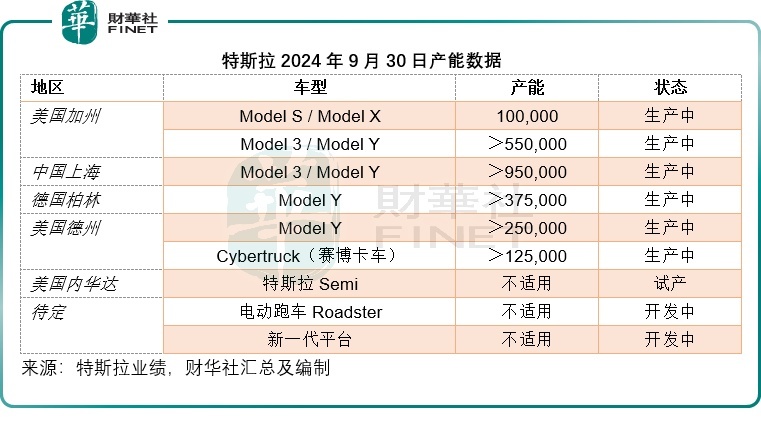
Tesla disclosed that Q3 production of the refreshed Model 3 at its U.S. factories (California, Nevada, and Texas) increased quarter-over-quarter, while production costs declined. Cybertruck production also rose quarter-over-quarter, achieving positive gross margin for the first time. Preparations for the Semi factory continue, with construction set to begin by the end of 2025 as planned.
The Shanghai Gigafactory recently hit two milestones: 1) Producing its 3 millionth vehicle in October and exporting its 1 millionth vehicle in September; 2) Per-unit production costs continued to improve quarter-over-quarter, reaching their lowest level.
The Berlin Gigafactory also saw quarter-over-quarter improvements in per-unit operating costs. As of Q3 2024, the Model Y was the best-selling vehicle in Sweden, the Netherlands, Denmark, and Switzerland for 2024, as well as Europe's top-selling car in September. In Norway, the Model Y was the best-selling EV in Q3, with cumulative sales now exceeding 60,000 units.
Management believes Tesla is currently between two growth waves: The first began with the global expansion of the Model 3/Y platform, while the next will be driven by advancements in autonomous driving and new product launches, including those based on its next-generation vehicle platform.
Tesla expects full-year 2024 vehicle deliveries to show modest growth. Caijing estimates the company's deliveries for the first three quarters at around 1.29 million vehicles, down 2.30% year-over-year, suggesting Q4 deliveries may continue to rise.
The company anticipates its energy storage deployments will more than double year-over-year in 2024, indicating strong growth in Q4 for this segment.
Regarding profitability, Tesla stated it will continue innovating to reduce production and operating costs to optimize margins for hardware-related businesses. At the same time, it will aggressively expand profits from AI, software, and fleet-related operations. Revenue from services like FSD and Smart Summon in Q3 suggests Musk is following $Apple(AAPL.US)'s playbook of using hardware to attract users and software to retain them.
On the hardware front, Tesla continues to maximize profits through production optimizations. For example, its Robotaxi will adopt an innovative "Unboxed" production strategy—modular assembly like building blocks—eliminating the need for dedicated production lines for specific models and improving cost efficiency.
Additionally, Tesla's in-house 4680 battery development is progressing well and nearing competitiveness as the most cost-effective battery in the U.S. after subsidies and tariffs, with lower per-kilowatt-hour costs.
Nevertheless, given the anticipated surge in vehicle production and energy storage expansion, Tesla will still need to source significant battery volumes from competitors rather than relying solely on in-house production.
Regarding new products, Musk said the affordable model will enter production and begin deliveries in the first half of 2025. He roughly estimates next year's delivery growth could range between 20%-30% barring unforeseen circumstances. He expressed confidence that the Cybercab could enter mass production by 2026, targeting at least 2 million units annually—not limited to one factory—with an ultimate goal of 4 million (his most optimistic estimate).
These new products will be built on next-generation and existing platforms, with the affordable model compatible with current production lines to reduce costs and maximize capacity utilization.
On software and services, Musk revealed plans to launch a ride-hailing service for the public in California and Texas next year. While California's regulatory approval process is lengthy, he expects approval in 2024; Texas will move much faster, with a definite launch there. Other states may also see the service next year.
For energy storage, the Lathrop Megapack factory is now producing 200 Megapacks weekly, with an annualized run rate of 40 GWh. Tesla began construction on a second energy storage factory in Shanghai in May 2024, targeting Q1 2025 production. Initial capacity will start at 20 GWh before expanding further. Soon, Tesla could deliver 100 GWh of energy storage annually. According to Tesla's official account, a single Megapack can store over 3,900 kWh—equivalent to 65 Model 3 batteries or enough to power a base Model 3 for over 39,000 km.
Summary
In summary, Tesla's Q3 2024 results exceeded Wall Street's general expectations, and its optimistic outlook drove the EV maker's stock higher post-earnings. However, year-to-date, Tesla's shares are down 14.02%, and whether the rebound can sustain will depend on performance in the coming quarters.
Author: Mao Ting
The copyright of this article belongs to the original author/organization.
The views expressed herein are solely those of the author and do not reflect the stance of the platform. The content is intended for investment reference purposes only and shall not be considered as investment advice. Please contact us if you have any questions or suggestions regarding the content services provided by the platform.
