


 Posts
PostsFrom stable returns to real assets, how does Plume Network seize the new high ground of RWAfi?

Last night, Bitcoin surged to a high of $73,650, just 0.2% shy of its second annual peak. Meanwhile, the total open interest in Bitcoin contracts across the network exceeded $43 billion, setting another all-time high. Additionally, Bitcoin spot ETFs have seen continuous net inflows for multiple days, with all signs indicating that we may be entering another bullish phase in this cycle.
Against this market backdrop, numerous innovative projects and technological applications are emerging, aiming to meet investors' demand for diversified asset allocation through new products and services—especially in the RWA sector, where interest in financial products based on stable yields and real value continues to rise.
As an innovator in the RWA space, Plume Network has created a modular ecosystem specifically designed for DeFi users, offering crypto enthusiasts a new way to invest in and manage real-world assets. Leveraging technologies such as AI-driven asset valuation, zero-knowledge proof of reserves, and cross-chain liquidity support, Plume Network is committed to enhancing liquidity and transaction convenience, catering to crypto users' needs for stable returns and tangible value.
On October 31, Plume Network will launch a pre-staking campaign, allowing early participants to experience the product ahead of the mainnet launch. BlockBeats seized this opportunity to conduct an exclusive interview with Teddy Pornprinya, Co-founder and CBO of Plume Network, delving into the founding team, strategic partnerships, and future roadmap of Plume Network, while exploring how RWA can become a core pillar supporting the DeFi ecosystem in the blockchain space.
Backed by Industry Giants: Why Is Plume Network Winning Over Capital?
BlockBeats: Could you introduce yourself and share why you chose to enter the crypto industry?
Teddy: My name is Teddy, one of the co-founders of Plume Network, and I serve as the Chief Business Officer, overseeing all market-related initiatives. I graduated with a degree in Business Administration from the University of California, Berkeley, and began my career in the M&A division of traditional investment banking. Later, I joined Coinbase's corporate development and venture capital team, served as the Business Development Lead for a DeFi protocol, and eventually joined Binance (BNB Chain), where I was responsible for business expansion and ecosystem development.
My first encounter with the crypto industry was during the Memecoin frenzy in late 2017, but I've always been fascinated by the concept of financial freedom and the potential of blockchain technology to enable a new financial system. The rise of smart contracts and DeFi in 2020 solidified my interest, leading me to join Coinbase's corporate development and VC team in 2021, officially marking the start of my crypto career!
BlockBeats: Having worked at Coinbase and Binance, two of the world's top crypto exchanges, what unique aspects did you observe in their operational styles? How have these experiences influenced your entrepreneurial journey?
Teddy: At Coinbase, I had the privilege of participating in early-stage investments and strategic acquisitions, which gave me a comprehensive understanding of the rapidly evolving crypto landscape. My interest in RWA also grew during this time, allowing me to deeply analyze market trends and the infrastructure needed to support RWA, spanning private credit, stablecoins, custody solutions, and more.
I particularly enjoy engaging with early-stage founders, listening to their visions, and understanding their challenges and goals. One standout colleague was Johanna, now VP of Growth at Plume Network. We worked closely at Coinbase on multiple high-profile M&A and VC deals.
My time at Binance was different but equally rewarding. In the BNB Chain business development and ecosystem team, I gained firsthand insights into RWA tokenization projects. The high-pressure environment at Binance highlighted the immense demand for tokenization support, marketing strategies, and liquidity in RWA—elements that later became core pillars of Plume Network.
Every conversation and new insight reinforced my belief that RWA innovation needs a dedicated space. These experiences were instrumental in shaping Plume Network's vision: to become the blockchain platform driving RWA growth and opportunities.
BlockBeats: Plume Network's team includes co-founders Chris and Eugene, who bring years of product and investment experience, as well as employees from Robinhood, dYdX, LayerZero, Polyhedra, and JPMorgan. How does this diverse background help Plume Network build advantages in security, compliance, and user trust?
Teddy: Co-founder Chris possesses deep expertise in designing and managing RWAfi ecosystems and products, ensuring compliance with complex regulatory requirements. Core team member Eugene was a key figure in developing Robinhood Crypto's trading infrastructure and the lead architect for dYdX's independent chain migration.
Additionally, our team includes members from LayerZero and Polyhedra, providing critical support for cross-chain interoperability of RWAfi assets. We also have veterans from JPMorgan and Galaxy Digital, who bring traditional finance expertise, focusing on compliance and trust-building to ensure Plume Network's platform remains secure and reliable.
BlockBeats: In May, Plume Network raised $10 million in a seed round led by Haun Ventures, with participation from Galaxy Digital and Superscrypt. What does this investment mean for Plume Network?
Teddy: This investment is a significant endorsement, as we secured backing from top-tier institutional investors like Haun Ventures, Galaxy Digital, and Superscrypt. From our perspective, the RWA market is poised for massive growth, with institutions increasingly allocating capital to this space and tokenizing their money market funds.
Related reading: Haun Ventures: Plume Network's Investment and Its Deep Understanding of RWAfi
What excites me most is that these investors genuinely align with our RWAfi vision and trust our team's execution. Our reputation for delivering results in the industry is further validated by their support, confirming we're on the right path.
Their involvement reflects confidence in RWAfi's potential and Plume Network's innovative approach, as well as shared trust in our team's ability to realize our vision: building a vibrant RWAfi ecosystem on the blockchain.
Pokémon Cards with High Leverage: Plume Network's RWA Blueprint
BlockBeats: RWAfi is a concept introduced by Plume Network to design more localized RWA products for crypto users. Can you explain the motivation behind this idea and Plume Network's core strategy to achieve it?
Teddy: The RWAfi (Real World Asset Decentralized Finance) concept emerged from our observation of existing RWA solutions, which often cater to institutional needs with tools and architectures that lack flexibility and usability for everyday crypto users. Early on, we identified a critical gap: bridging crypto-native communities with real-world assets in a modular, flexible, and DeFi-centric way.
Traditional RWA typically involves tokenizing assets like real estate, bonds, or private equity, primarily serving sophisticated investors and large capital providers. RWAfi, however, is designed for crypto retail users who want not just tokenized assets but also direct participation in DeFi interactions. In RWAfi, tokenized assets aren't passive holdings—they're empowered with DeFi functionalities like lending, liquid staking, and yield generation.
Plume Network focuses on building modular tools to simplify asset tokenization, enabling users and developers to onboard assets seamlessly without cumbersome compliance or complex processes. Our RWAfi toolkit includes modular DeFi features like RWA lending, liquid staking, and liquidity pools, allowing users to easily manage and earn yields on assets within the Plume Network ecosystem.
BlockBeats: Plume Network aims to make RWA more appealing to crypto users. How does Plume Network decide which real-world assets are suitable for tokenization? What real yields and use cases do you think will attract crypto-native users? Could you share some live or upcoming applications and their yield structures?
Teddy: We prioritize assets aligned with crypto-native interests and behaviors, bringing tokenized assets with stable yields or speculative potential on-chain. Plume Network evaluates assets based on factors like long-term income stability, speculative opportunities, and culturally relevant collectibles.
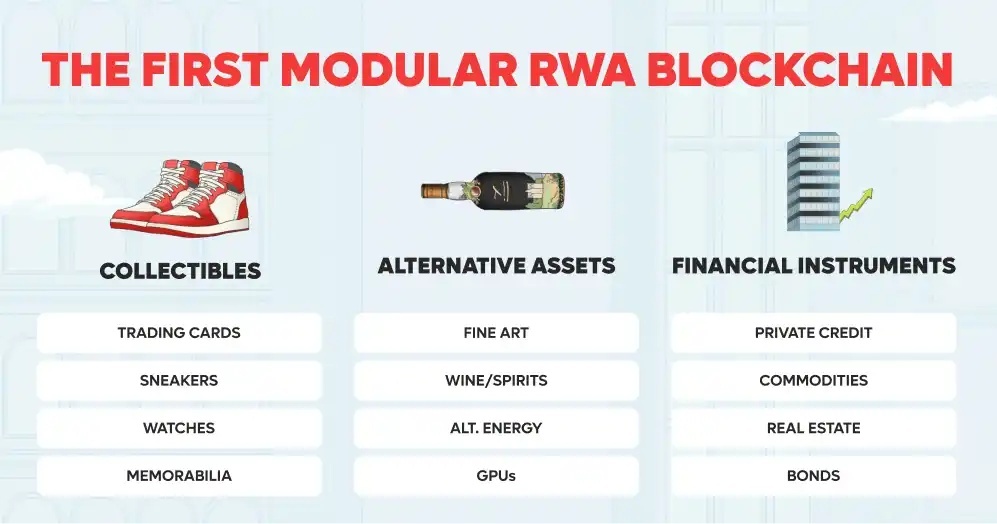
We categorize these assets into three types:
· Stable Yield Assets
These offer steady, high returns, appealing to users seeking predictable income. Partners like Credbull, Projective, and Mineral Vault tokenize private credit, solar energy, and mineral projects, generating annualized yields of 7-15%.
· Speculative Assets
These cater to users capitalizing on price volatility. For example, Cultured provides real-time data on sports and economic events, enabling on-chain speculation based on real-world outcomes—ideal for short-term high-yield traders.
· On-Chain Collectibles
Collectibles merge digital identity with real-world value, resonating with crypto-native users. Kixmafia, for instance, tokenizes rare sneakers, allowing collectors to showcase and engage with like-minded enthusiasts. While yields may be lower, the social and cultural value attracts passionate collectors.
BlockBeats: On Plume Network, RWA assets can be lent and traded like crypto assets. How is this liquidity achieved, and what new experiences does it offer users?
Teddy: Plume Network combines RWA's stability with DeFi's liquidity and operability, unlocking new possibilities like collateralization, liquid staking, composite yields, and even perpetual DEX trading.
Our liquidity strategies include:
· Collateralized Assets
Users can borrow stablecoins or other crypto assets using tokenized RWAs (e.g., real estate or private credit) as collateral, similar to traditional crypto lending but with lower volatility, reducing lender risk.
· Liquid Staking
Like crypto liquid staking, users stake assets while using tokenized versions in other DeFi activities. For example, staking tokenized real estate yields liquid staking tokens usable across yield-generating protocols, maximizing utility and compounding returns.
· Composite Yield Assets
Assets like private credit or infrastructure investments generate stable returns. Users can either claim these yields directly or reinvest them into other DeFi applications, compounding gains across the ecosystem.
· Perpetual DEX Trading
For speculative traders, RWAs can be listed on Plume Network's perpetual DEXes, enabling long/short positions on tokenized real estate or commodities—blending traditional finance with DeFi's speculative appeal.
Building a Trusted Ecosystem: Plume Network's Security and Future Plans
BlockBeats: Does Plume Network have key global partners or technical collaborations? How does it work with other chains and crypto projects to enhance RWAfi liquidity and adaptability?
Teddy: We're establishing strategic partnerships to drive RWAfi adoption, spanning technical upgrades and liquidity expansion, all aligned with our vision to significantly improve RWA asset liquidity and usability.
We're piloting an AI-driven RWA proof-of-concept (PoC) to optimize tokenization processes. AI insights help identify assets that resonate with users, boosting on-platform liquidity.
For asset reserves, we're implementing zero-knowledge proof of reserves (ZK PoR) with ZK projects, enabling verification without disclosing sensitive data—critical for institutional trust.
Our collaboration with Arbitrum focuses on cross-chain capabilities for RWA tokens, leveraging its Layer 2 scaling to enhance liquidity and interoperability.
Integration with LayerZero enables seamless RWA asset transfers across blockchains, expanding Plume Network's reach and user base.
Celestia provides modular data availability, optimizing on-chain RWA transaction processing for faster, cheaper trades—ideal for commodities and stocks.
BlockBeats: How does Plume Network ensure global compliance and regulatory adherence in RWAfi? What are your views on future crypto regulations, and what safeguards exist against fraud?
Teddy: Our platform embeds a robust, modular compliance framework, allowing KYC/AML checks at the application level per jurisdiction. We also integrate AML protocols and blockchain analytics to monitor illicit activity.
For U.S. compliance, we partner with regulated broker-dealers and transfer agents, ensuring securities-like assets are issued and traded lawfully. ZK PoR verifies reserves without exposing sensitive data, balancing transparency and privacy.
Globally, Plume Network aligns with exemptions like Regulation A, D, and S, serving retail and institutional investors across regions.
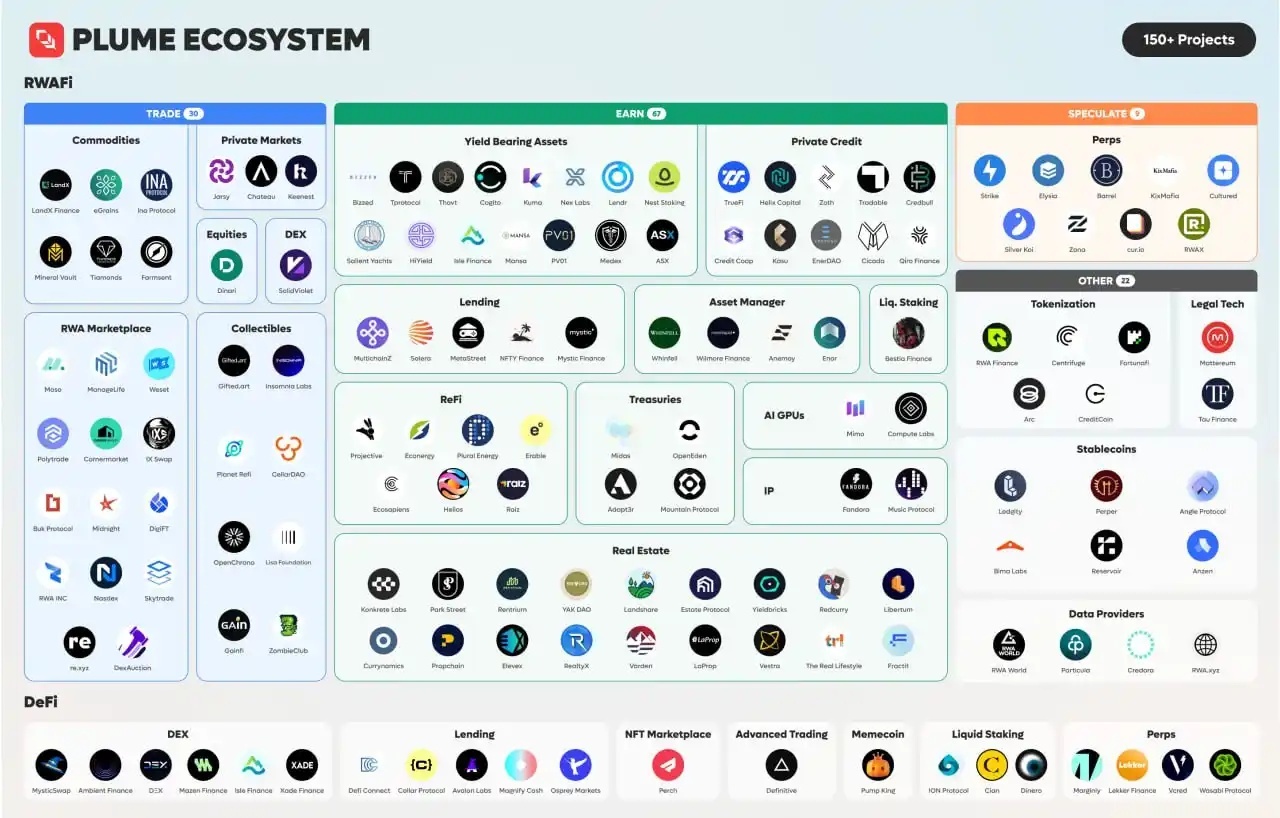
BlockBeats: Plume Network's ecosystem boasts hundreds of protocols, millions of active wallets, and billions of transactions. How was this built, and how does the platform maintain stability and trust amid rapid growth?
Teddy: We created a hub for developers and applications, with dedicated teams for protocols, DeFi, RWA, and capital partnerships. For users, our RWAfi ecosystem prioritizes intuitive design and real yields, fostering trust in on-chain RWA investments.
BlockBeats: What key trends do you foresee in RWA, and what role will Plume Network play?
Teddy: RWA is poised for mainstream adoption as crypto users seek substantive, low-correlation yields beyond volatile tokens. Institutional tokenization of money market funds will accelerate this shift. Plume Network aims to lead by making RWA composable within DeFi, creating a modular ecosystem for retail and institutional users alike.
BlockBeats: What's next for Plume Network? Any major milestones?
Teddy: Our pre-staking campaign launches October 31, giving early participants a head start! Upcoming features include Data Highway for reliable on-chain data flows, native account-abstraction smart wallets, and Plume Network Arc for streamlined RWA tokenization. We're also developing ZK PoR to ensure asset transparency, underscoring our commitment to a secure, composable RWA ecosystem.
The copyright of this article belongs to the original author/organization.
The views expressed herein are solely those of the author and do not reflect the stance of the platform. The content is intended for investment reference purposes only and shall not be considered as investment advice. Please contact us if you have any questions or suggestions regarding the content services provided by the platform.
