

The first to complete self-verification: Luckin Coffee overcomes the crisis.

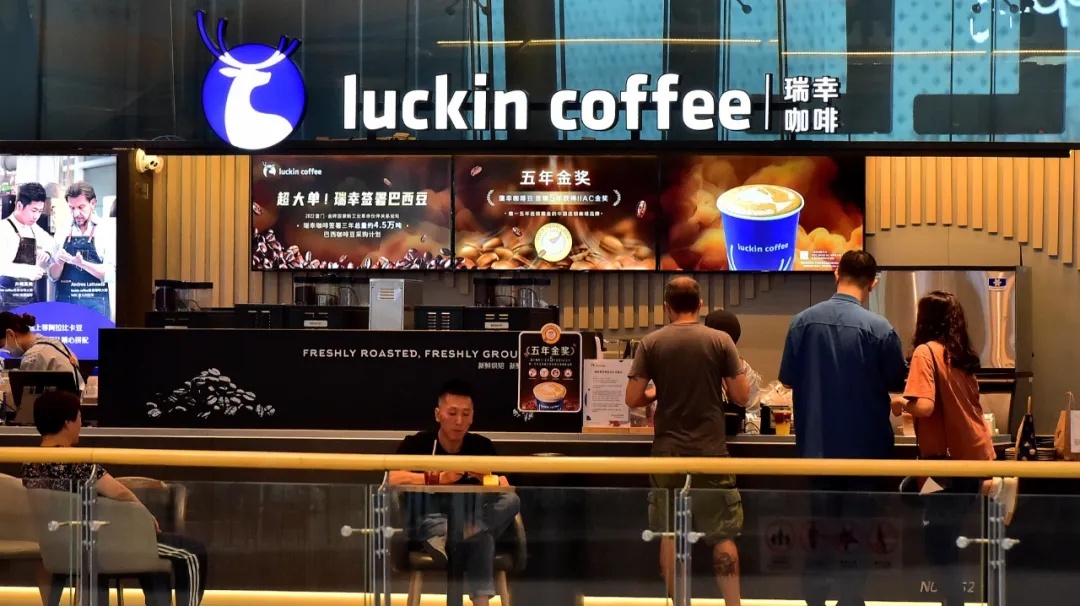
After 2022, the offline beverage market has undergone dramatic changes. Emerging coffee brands like Cotti Coffee have aggressively entered the market, reigniting price wars. Meanwhile, the tea beverage market, backed by capital, has also become ambitious, with some leading companies rapidly rising as new forces in the consumer market.
All these phenomena have put Luckin Coffee in the spotlight. Analysts have begun to re-examine this leading player in the coffee industry: in a highly competitive market, Luckin's growth and profitability face dilution risks, which became a prevailing market view at the time.
In response, Luckin adopted an aggressive strategy, which can be summarized as:
Prioritizing market share growth as its core strategy, including but not limited to low-price tactics (mainly to attract users) and accelerating store expansion (opening 8,000 new stores in 2023).
The short-term cost was evident—same-store sales showed signs of decline, becoming Luckin's biggest controversy.
The key question is whether Luckin can seize new growth opportunities under this market-share-first strategy, which is the purpose of this article.
Core arguments:
First, from KFC overcoming past challenges to Starbucks struggling in China, the offline F&B industry proves that market share determines dominance—gain it to thrive, lose it to decline.
Second, the tea and coffee industry will face a brutal adjustment phase—survival of the fittest, where the last standing wins. Companies will shift from blind expansion to "protecting the three financial statements," and Luckin, with its high market share, is poised for a turnaround.
Third, capital markets will reassess the industry, with market share becoming a critical metric.
F&B Industry: Market Share Rules All
When new competitors emerge, operational volatility (especially declining same-store sales) isn’t unique to Luckin.
A review of China's offline F&B history highlights KFC and Pizza Hut as prime examples.
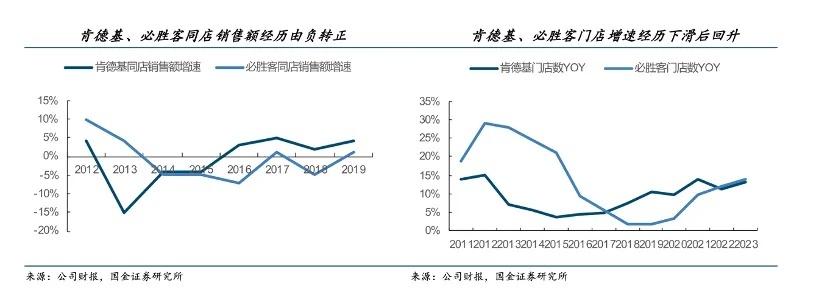
Post-2012, intensified competition dragged down same-store sales for KFC and Pizza Hut in China, even triggering management reshuffles—mirroring Luckin's current situation.
To counter this, the new management implemented measures including:
1) Brand revitalization: youth-focused, personalized store redesigns;
2) Smaller store formats: Pizza Hut leaned into speed as casual dining competition grew;
3) Accelerated expansion: KFC jumped from 3,000 stores in 2010 to over 5,000 by 2015.
Their "market-share-first" approach, targeting lower-tier cities with restrained pricing, initially squeezed margins in 2014. But by 2015, their market share advantage paid off, driving a fundamental recovery, securing years of dominance.
In 2023, KFC faced a new rival: Tastien. The latter gained traction with its "Chinese-style burger + affordability" model, expanding rapidly via franchising (3,358 new stores in 2023) and encroaching on KFC's turf.
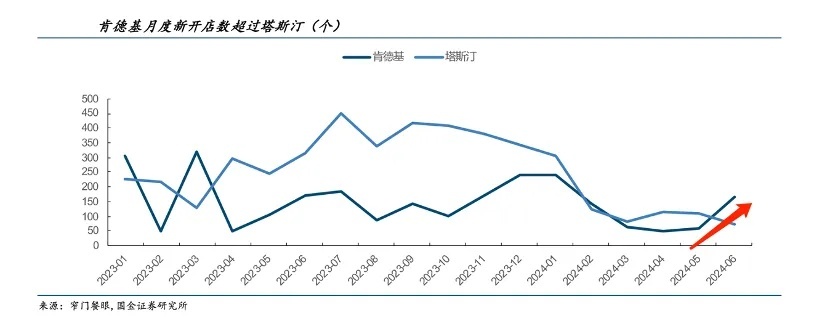
Despite this "old challenge, new problem" scenario (akin to Luckin's), KFC doubled down on its playbook: ramping up small-store openings in 2024 to narrow the gap with Tastien, even surpassing its rival’s June openings. Market share remains KFC's top priority to secure a comeback.
Economically, offline F&B thrives on network effects—scale enables brand 溢价 and sales growth. Sufficient market share lets companies reach more consumers, driving these advantages.
Not all grasp this. Starbucks, once a global coffee oligopoly, has floundered. CEO Laxman Narasimhan admitted in Q2 2024: "China is our most significant international challenge," yet Q3 saw global revenue drop 3%, with China’s average ticket down 8% and transactions down 6%, cratering same-store sales by 14%.
While countless analyses dissect Starbucks’ woes, most overlook its contrast with KFC’s resilience.
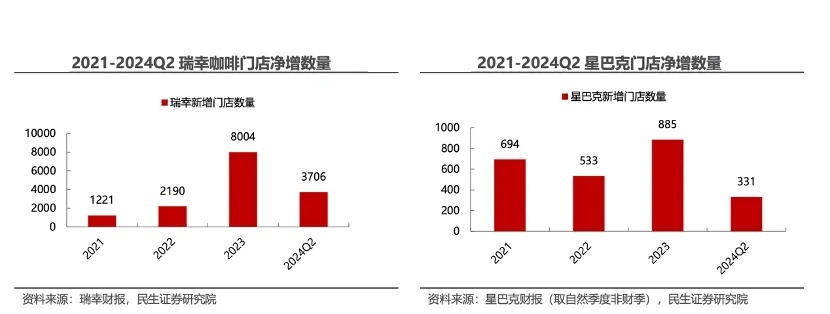
In 2021, Starbucks opened half as many stores as Luckin; by 2023, just 1/10th. Even in 2024’s Q2, it managed only 1/12th of Luckin’s openings.
While KFC and Luckin accelerated expansions amid competition, Starbucks ceded market share—a costly misstep.
Recent reports claim Starbucks will abandon price wars (to protect P&L). Our framework deems this a blunder: slower expansion + high prices will further erode share, compounding long-term pressure.
This analysis underscores market share’s supremacy over short-term same-store metrics—it’s the linchpin for enduring industry leadership.
If KFC leveraged share to withstand assaults, can Luckin replicate this?
Market Share Priority Must Ensure Profitability
While we emphasize market share’s importance, it’s not a panacea. It’s a necessary but insufficient condition—effectiveness hinges on profitability, lest companies veer off course.
Take Cotti Coffee and tea brands as case studies.
Their rapid rise relied on venture capital. As consumer internet growth plateaued, investors pivoted to offline retail, chasing the "scale-fast-IPO-exit" playbook—inspired by Luckin’s win over Starbucks.
Now, with stores blanketing cities to towns, the IPO phase stalls. Even listed players like ChaPanda (halved on debut, ~15x P/E) disappoint versus Luckin’s ~30x.
Why the cold reception despite soaring store counts?
Key reasons:
1) Fierce competition + product homogenization depress 溢价. Expansion focus starves R&D (Cotti’s failed attempts to replicate Luckin’s Coconut Latte hype). Capital influx has distorted supply-demand dynamics, exacerbating oversupply.
2) The expansion race neglects sustainable profitability.
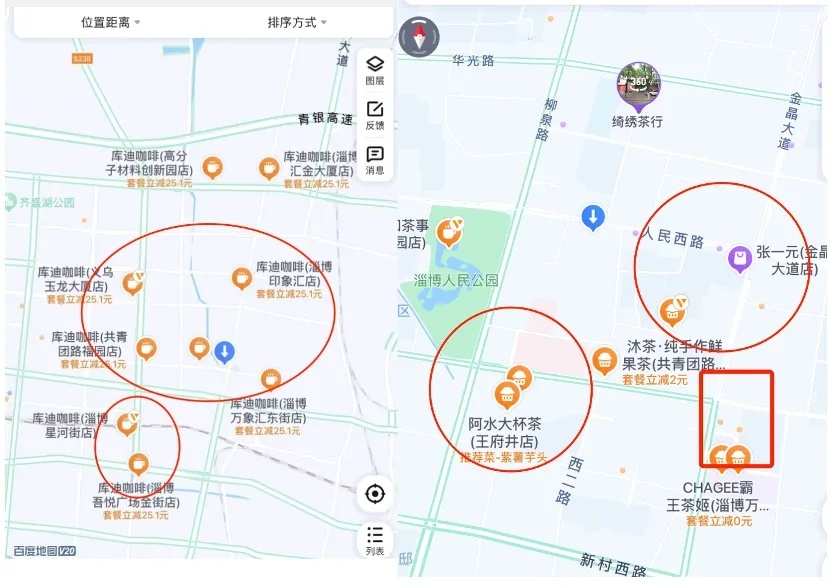
Our tracking shows Cotti and tea brands cluster at traffic hubs. As pictured (Zibo’s People’s Park area), prime locations spark rent wars, inflating costs beyond value.
With prices suppressed by oversupply and rents/ wages/ materials inflated, losses prolong. This uncertainty fuels stock volatility and valuation risks.
Cotti’s 2023 surge led some to predict a Luckin-like success via price wars. But times differ: Cotti and tea brands juggle rent battles and discounts, straining unit economics—hence 2024’s slowdown (franchisees bear discount costs, an unsustainable model).
The lesson: Market share gains must ensure profitability. Capital markets value "dynamic share."
Blitzscaling with capital works short-term, but without profitability, share is fleeting—Cotti and tea brands now face this reckoning.
How does Luckin stay profitable amid cutthroat competition?
Coffee (office-driven) and tea (leisure-driven) differ in store locations. Luckin’s 10,000+ pre-expansion stores (low rents) and mature supply chain curb costs versus peers.
Like KFC, Luckin defended share aggressively. Though same-store sales dipped short-term, operating profits improved, proving its model to markets.
Side note: Despite emulating Luckin, Cotti’s store mix and cost structure differ starkly.
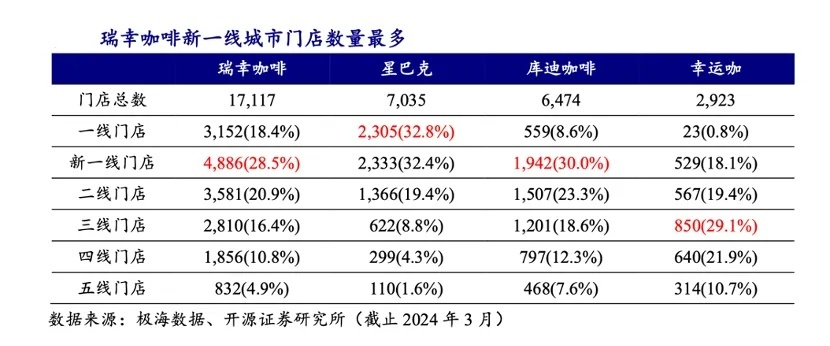
The chart shows Luckin and Starbucks skew toward Tier 1/New Tier 1 (high-profit) cities, while Cotti and Lucky Cup focus on Tier 3.
Most aspiring IPO candidates can’t prove profitability, spooking exchanges and regulators—hence the "all talk, no action" IPO rumors.
Worse, weak IPO traction and valuations may deter VC funding, forcing firms to self-fund share retention.
Thus, the industry will soon see:
1) A shakeout: weak brands will exit, rebalancing supply-demand; poorly managed players will fade.
2) A shift from frenzy to rationality, prioritizing financial health over price wars.
Luckin’s Q3 2024 same-store sales (-13.1% YoY, improved from -19.9% in Q2) hint at early trends.
Its market-share focus and the industry’s adjustment phase are boosting pricing power (it’s already tweaked discounts).
If sustained, Luckin’s environment will soften as rivals prioritize survival (profitability). This grants Luckin room to innovate (e.g., afternoon tea products bridging coffee/tea), capturing more users and pressuring tea players. Store productivity will rise, further improving same-store sales.
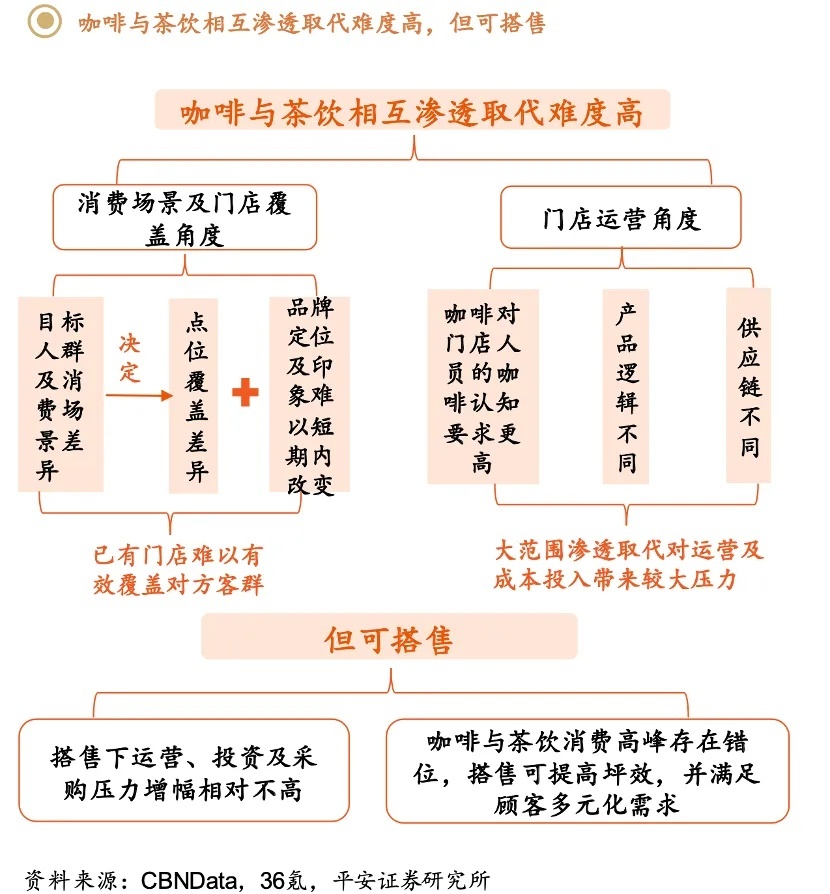
Ping An Securities’ report aligns: coffee/tea’s off-peak synergy boosts productivity and diversifies demand. Luckin’s move forces the industry to rethink sustainability.
This analysis contrasts Luckin, Starbucks, and KFC’s crisis responses, predicting a brutal offline beverage shakeout. Higher barriers will emerge (beyond just capital), ushering in a golden era for high-share players—their valuations poised to climb. Stay tuned.
$Luckin Coffee(LKNCY.US)
The copyright of this article belongs to the original author/organization.
The views expressed herein are solely those of the author and do not reflect the stance of the platform. The content is intended for investment reference purposes only and shall not be considered as investment advice. Please contact us if you have any questions or suggestions regarding the content services provided by the platform.
