

 Rate Of Return
Xiaomi's Q3 2024 earnings report interpretation - Automotive and AIoT support the second growth curve

01
—
Revenue, Gross Profit
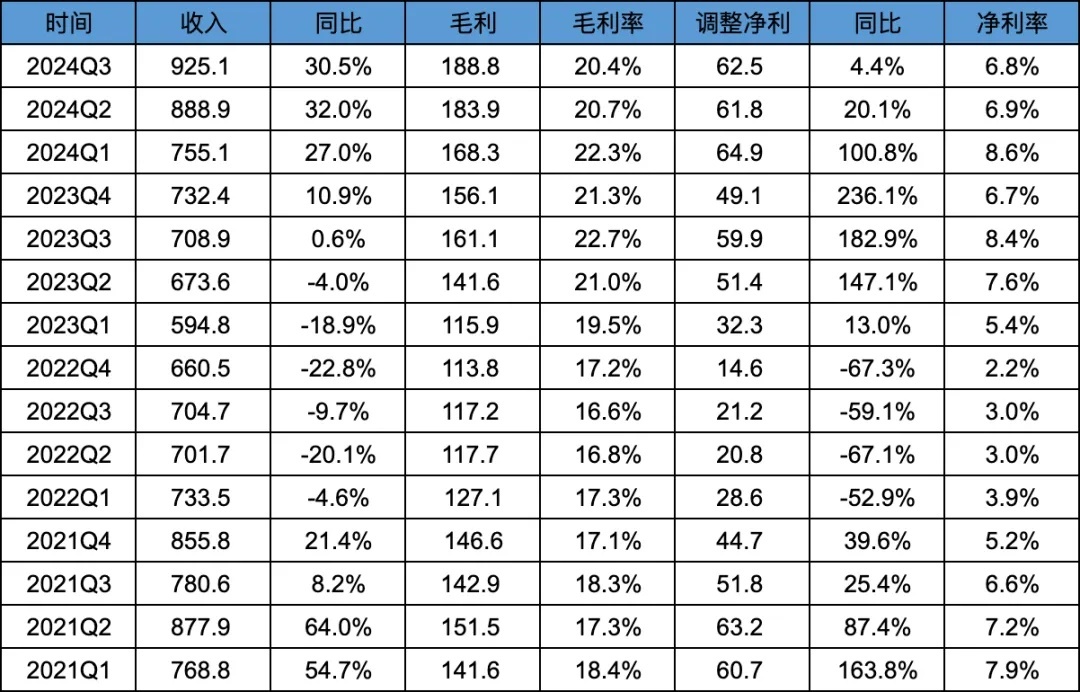
Q3 Quarter:
Revenue reached 92.51 billion yuan, a year-on-year increase of 30.5%; excluding the automotive sector, total revenue was 82.81 billion yuan, up 16.8% year-on-year.
Gross profit was 18.88 billion yuan, up 17.2% year-on-year, with a gross margin of 20.4%; excluding the automotive sector, total gross profit was 17.22 billion yuan, up 6.9% year-on-year.
Adjusted net profit was 6.25 billion yuan, up 4.4% year-on-year, with a net margin of 6.8%; excluding the automotive sector, adjusted net profit was 7.75 billion yuan, up 29.4% year-on-year.
This quarter's total revenue and gross profit grew by 30.5% and 17.2% year-on-year, respectively, which is outstanding given the base of 300 billion yuan. However, excluding the automotive sector, the growth rates for smartphone and AIoT businesses were 16.8% and 6.9%, respectively, both declining by over 10 percentage points.
It is evident that the automotive business is a crucial second growth driver for Xiaomi. Current trends suggest that the automotive sector is indeed supporting Xiaomi's future growth potential.
02
—
Segment Growth Rates
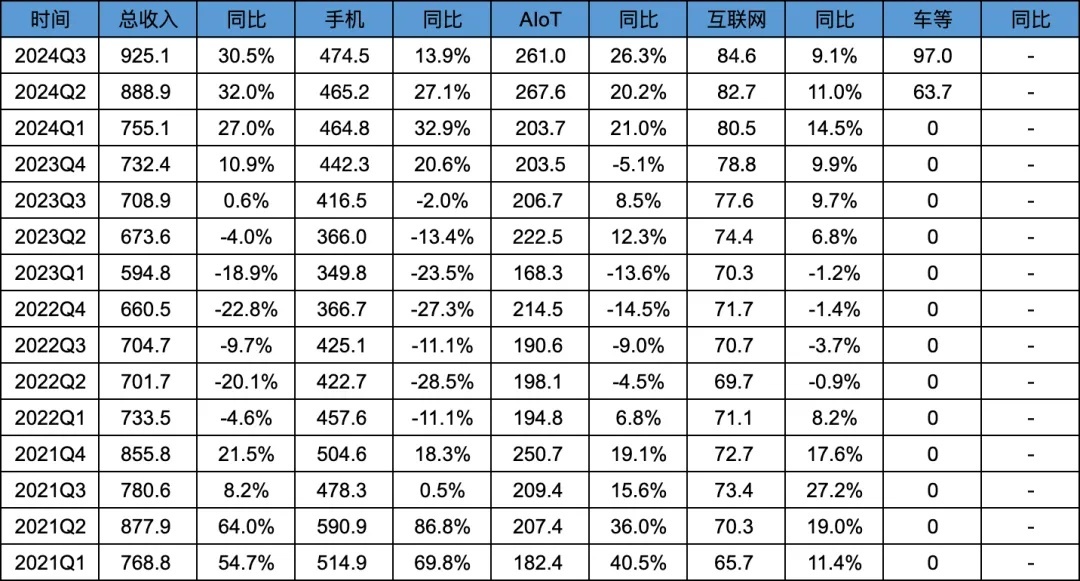
Q3 Quarter:
Overall revenue grew by 30.5% year-on-year; smartphone revenue grew by 13.9%; AIoT grew by 26.3%; internet services grew by 9.1%.
Over the past three quarters, smartphone and internet services growth has gradually declined, with the latest growth rates around 10%. AIoT has maintained over 20% growth for three consecutive quarters, while the automotive sector has shown even higher growth.
Details:
Q3 air conditioner shipments exceeded 1.7 million units, up over 55% year-on-year;
Refrigerator shipments reached 810,000 units, up 20% year-on-year;
Washing machine shipments exceeded 480,000 units, up over 50% year-on-year;
Global tablet shipments grew by 58.4%, ranking fifth globally and third in China;
Global wearable shipments grew by over 50% year-on-year;
Q3 advertising revenue was 6.2 billion yuan, up 14.4%, while gaming revenue was 1.1 billion yuan;
Q3 overseas internet revenue was 2.7 billion yuan, up 18.3%, hitting a new high; overseas internet revenue accounted for 32.5%, up 2.5 percentage points year-on-year.
02
—
Segment Gross Profit
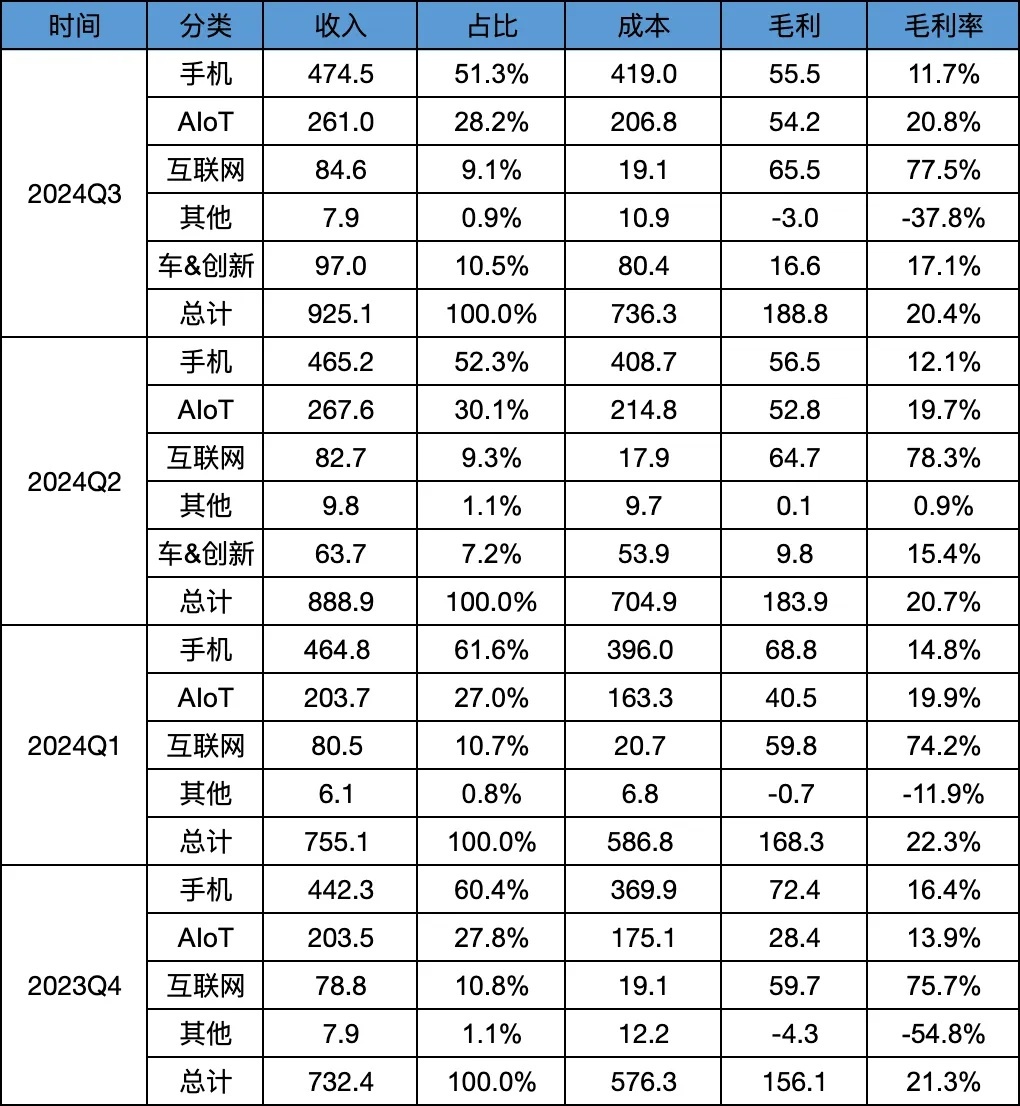
Q3 Quarter:
Smartphone gross profit was 5.55 billion yuan, with a gross margin of 11.7%, declining for four consecutive quarters. Compared to last year's 16.6%, the margin dropped nearly 5 percentage points, attributed to rising upstream supply chain costs and intense competition.
AIoT gross profit was 5.42 billion yuan, with a gross margin of 20.8%, improving for four consecutive quarters and up 3 percentage points year-on-year.
Internet services gross profit was 6.55 billion yuan, with a gross margin of 77.5%, up 3.1 percentage points year-on-year.
Automotive gross profit was 1.66 billion yuan, with a gross margin of 17.1%, up 1.7 percentage points quarter-on-quarter from Q2's 15.4%.
From a gross profit perspective, while smartphone revenue remains the highest, its low margin due to competition means its contribution is less than internet services and comparable to AIoT.
AIoT and automotive sectors show faster growth potential, with AIoT gross profit likely to surpass smartphones soon, and automotive gross profit possibly exceeding smartphones next year.
04
—
Net Profit, Free Cash Flow
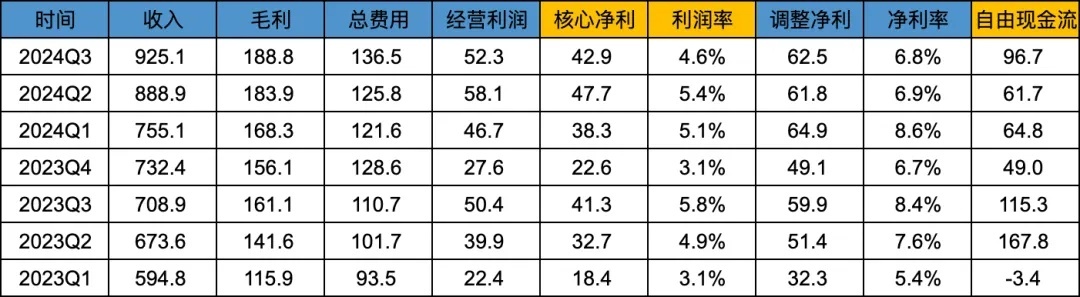
Adjusted net profit excludes equity compensation and depreciation/amortization costs, making it less reflective of core profitability. Free cash flow also fluctuates due to receivables, payables, and capital expenditures. Thus, core net profit (gross profit - expenses - taxes) is more indicative.
Assuming an 18% tax rate, Xiaomi's core net profit this quarter was 4.29 billion yuan, with a cumulative 12.88 billion yuan for the first three quarters, up 39.4% year-on-year.
Despite automotive losses, Xiaomi's core profitability grew significantly, with a 39.4% increase in net profit. However, the net margin remains low at 4.6%, reflecting the challenges of the hardware industry.
05
—
Device Data
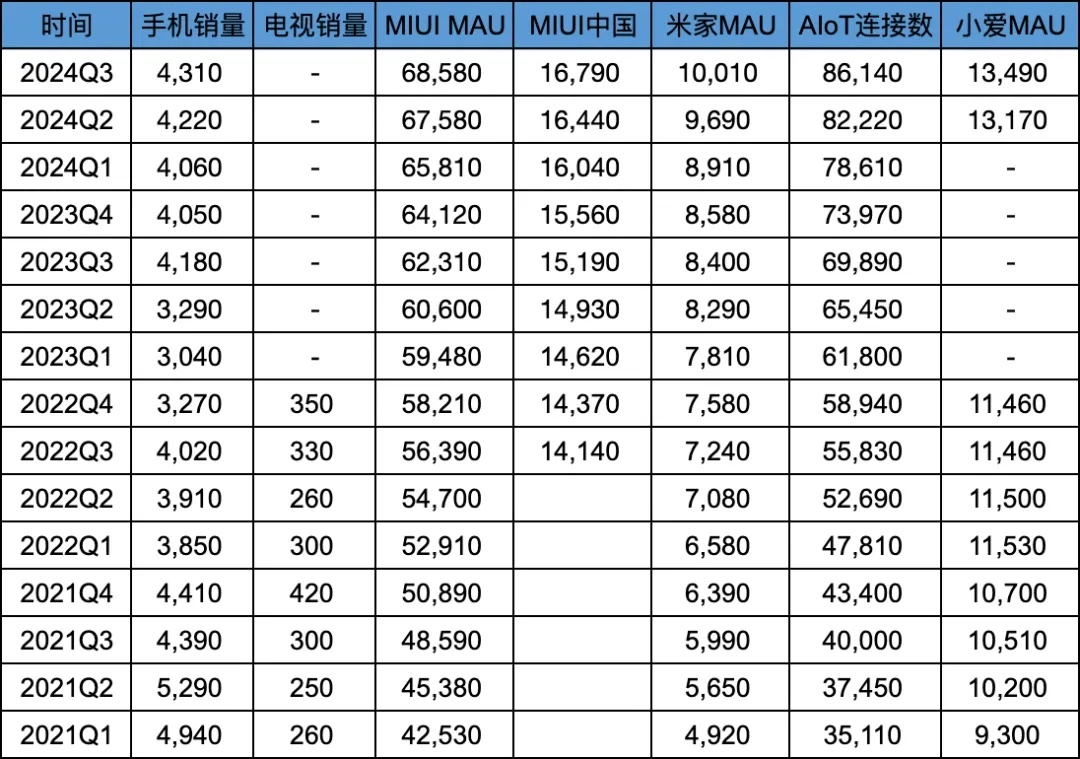
Q3 global smartphone shipments ranked third, with a 13.8% market share, maintaining a top-three position for 17 consecutive quarters.
Xiaomi ranked top three in 52 countries/regions and top five in 69. In China, it ranked fourth with a 14.7% share.
In China, premium smartphone shipments accounted for 20.1%, up 7.9 percentage points year-on-year. Breakdown by price segment: 18.1% (3K-4K), 22.6% (4K-5K), and 6.9% (5K-6K).
Offline channel share in China was 10.3%, up 1.7 percentage points. Xiaomi has over 13,000 retail stores in China.
Double 11 sales hit a record 31.9 billion yuan across all channels.
Smart TV global MAUs reached 6.91 million.
Users with five or more connected AIoT devices reached 17.1 million.
06
—
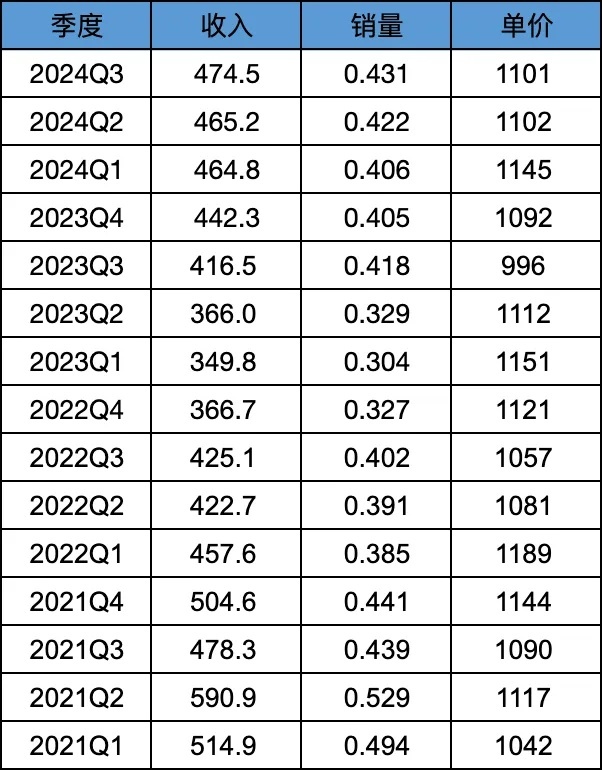
Smartphone ASP
07
—
Other Information
Automotive & Innovation:
Revenue: 9.7 billion yuan; Cost: 8.04 billion yuan; Gross profit: 1.66 billion yuan (17.1% margin); Equity compensation: 200 million yuan; Expenses: 3.3 billion yuan; Capex: 1.87 billion yuan; Adjusted net loss: 1.5 billion yuan.
Q3 Su7 deliveries: 39,790 units; Cumulative deliveries: 67,157 units. ASP rose from 228,600 yuan (Q2) to 238,600 yuan (Q3).
127 sales outlets in 38 cities as of Q3.
City NOA rollout began in late October, with end-to-end beta testing by year-end.
Other:
Cash: 151.6 billion yuan; Debt: 27.4 billion yuan; Net cash: 124.2 billion yuan.
Investments: 430 companies, total book value of 64.9 billion yuan.
Employees: 42,057 (39,905 in China, mostly in Beijing HQ; R&D staff: 20,436). Total compensation: 5.7 billion yuan (average quarterly pay: 135,500 yuan).
Share buybacks: 249 million shares for 3.71 billion HKD.
Patents: 41,000. $XIAOMI-W(01810.HK) $Xiaomi Corporation(XIACY.US)
The copyright of this article belongs to the original author/organization.
The views expressed herein are solely those of the author and do not reflect the stance of the platform. The content is intended for investment reference purposes only and shall not be considered as investment advice. Please contact us if you have any questions or suggestions regarding the content services provided by the platform.
