

 Rate Of Return
Nio 2024Q3 earnings report interpretation - Free cash flow turns positive

01
—
Sales Volume
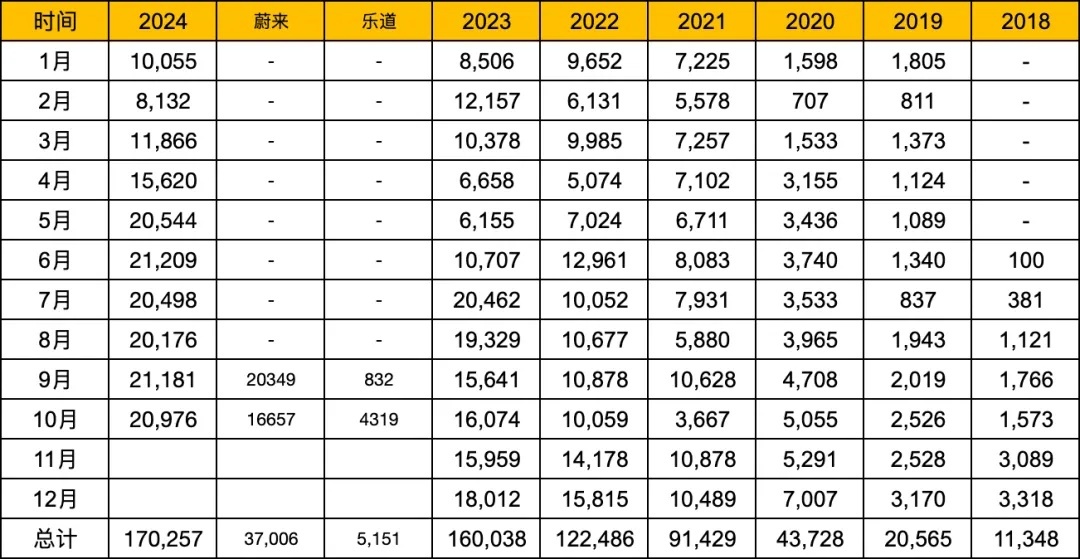
Q3 sales volume reached 61,855 units, up 11.6% year-on-year and 7.8% quarter-on-quarter. Of these, Nio brand sales accounted for 61,023 units, while the Onvo brand, which began deliveries in late September, sold 832 units.
As of the end of October, cumulative sales reached 170,257 units, up 35% year-on-year, with total cumulative sales hitting 619,851 units.
Q4 Sales Guidance:
Between 72,000 and 75,000 units, representing year-on-year growth of 43.9%-49.9%.
Given that Nio delivered 20,976 units in October, November and December would need to deliver between 51,000 and 54,000 units, averaging 25,500-27,000 units per month.
02
—
Infrastructure
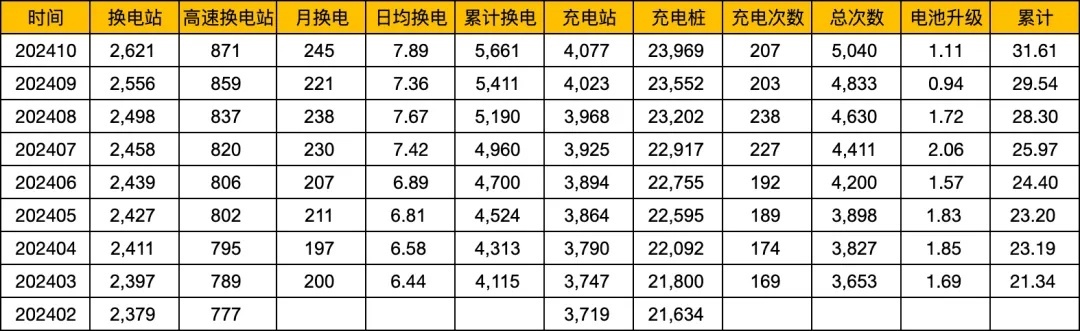
As of the end of October:
Battery Swap Stations:
2,621 stations, including 871 highway swap stations. Only 240 new stations were added in the past 8 months, far below the annual target of 1,000.
Battery Swaps:
October saw 2.45 million swaps, averaging 78,900 daily swaps—both record highs. However, monthly swaps only increased by about 20% compared to March, indicating slow growth. Cumulative swaps reached 56.61 million.
Charging Stations:
4,077 stations, with 330 added in the past 8 months, totaling 23,969 charging points. October charging sessions hit 2.07 million, up 22.5% from March. Cumulative charging sessions reached 50.4 million.
Battery Upgrades:
11,100 upgrades in October, with cumulative upgrades at 316,100. Monthly upgrades averaged 16,000 over the past 8 months.
Overall, Nio's charging and swap infrastructure is substantial, with 6,698 stations cumulatively. However, expansion has slowed this year, likely due to funding constraints. Many charging stations are destination chargers (slow charging). With Onvo's launch, Nio must accelerate swap station construction.
03
—
Revenue
Q3:
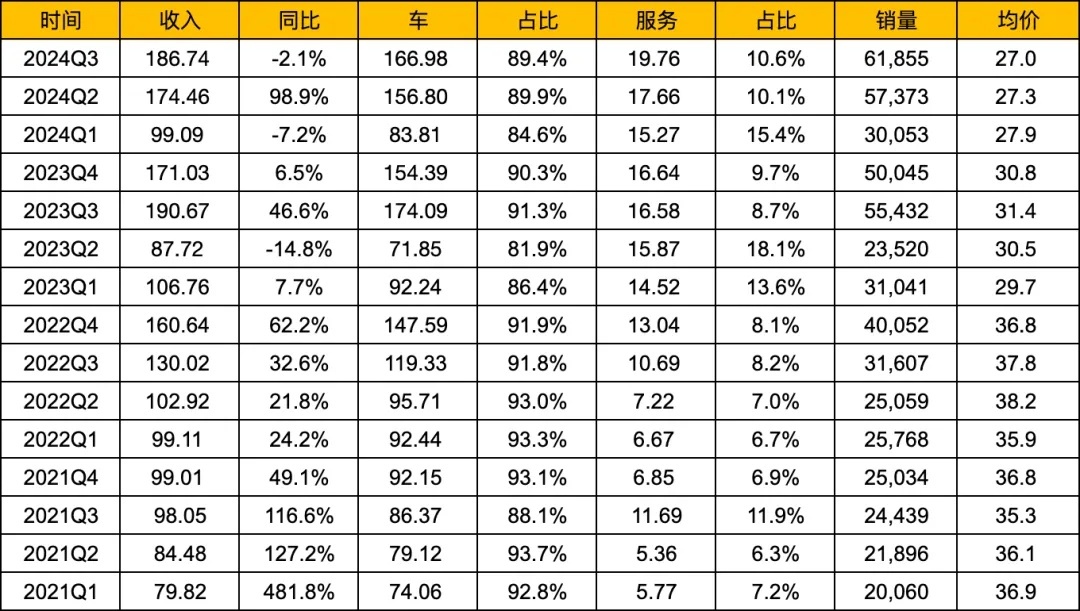
Total revenue: ¥18.67 billion (-2.1% YoY). Vehicle sales: ¥16.7 billion (-4.1% YoY). Service revenue: ¥1.98 billion (+19.2% YoY).
Q3 sales of 61,855 units at an average price of ¥270,000—marking four consecutive quarters of declining ASP.
First Three Quarters:
Total revenue: ¥46.03 billion (+19.5% YoY). Vehicle sales: ¥40.76 billion (+20.5% YoY). Service revenue: ¥5.27 billion (+12.1% YoY).
04
—
Gross Profit & Margin
Q3:
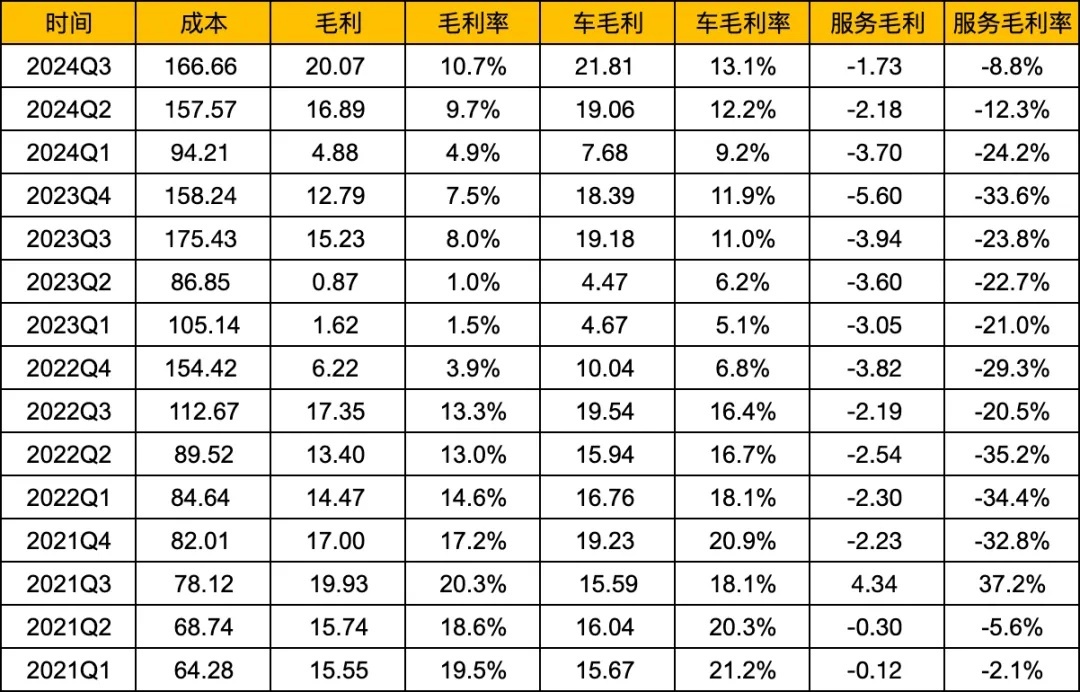
Gross profit: ¥2.01 billion (10.7% margin). Vehicle gross profit: ¥2.18 billion (13.1% margin). Service gross loss: ¥-170 million (-8.8% margin).
First Three Quarters:
Gross profit: ¥4.18 billion (9.1% margin). Vehicle gross profit: ¥4.855 billion (11.9% margin). Service gross loss: ¥-760 million (-14.4% margin).
Vehicle gross margin hit 13.1% in Q3, a two-year high. As capacity utilization improves with higher sales, further margin expansion is expected in Q4.
05
—
Expenses & Expense Ratio
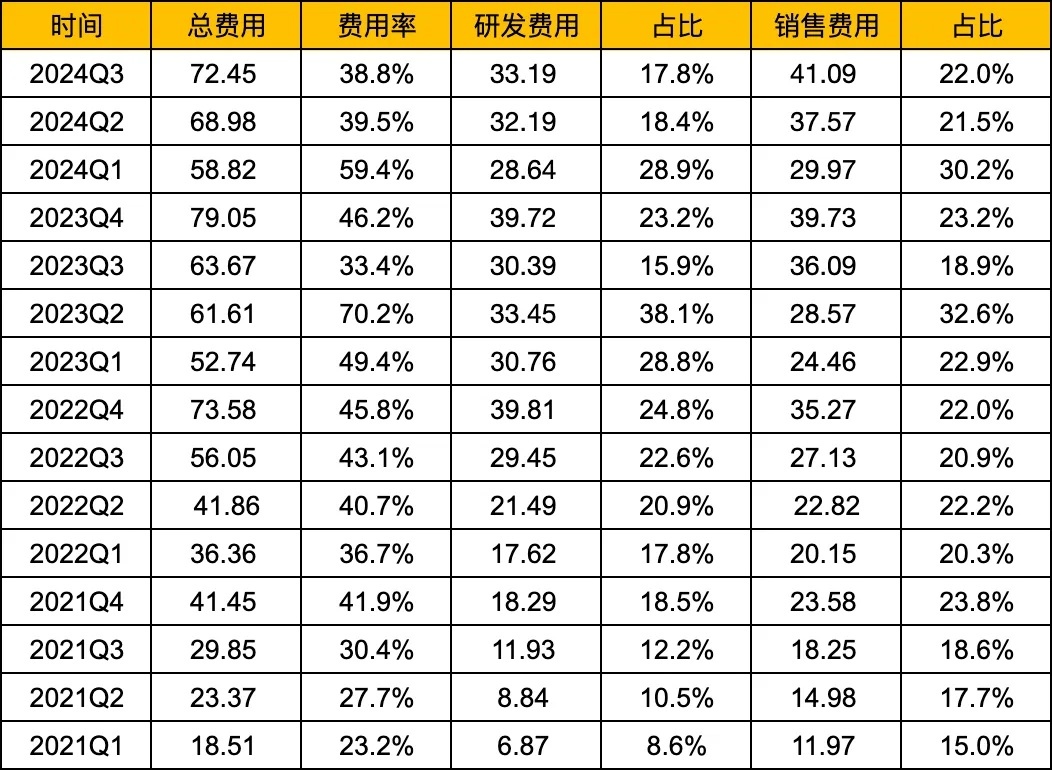
Q3:
Total expenses: ¥7.245 billion (38.8% ratio). R&D: ¥3.32 billion (17.8% ratio). SG&A: ¥4.11 billion (22% ratio).
First Three Quarters:
Total expenses: ¥20 billion (43.5% ratio). R&D: ¥9.4 billion (20.4% ratio). SG&A: ¥10.86 billion (23.6% ratio).
Despite margin improvements, expense ratios remain high. R&D averages ¥3 billion per quarter—the highest among EV startups—yet hasn’t driven proportional margin gains. Similarly, high SG&A hasn’t significantly boosted sales.
Inefficient expense-to-output conversion keeps operating losses above ¥5 billion quarterly.
06
—
Profit & Profit Margin
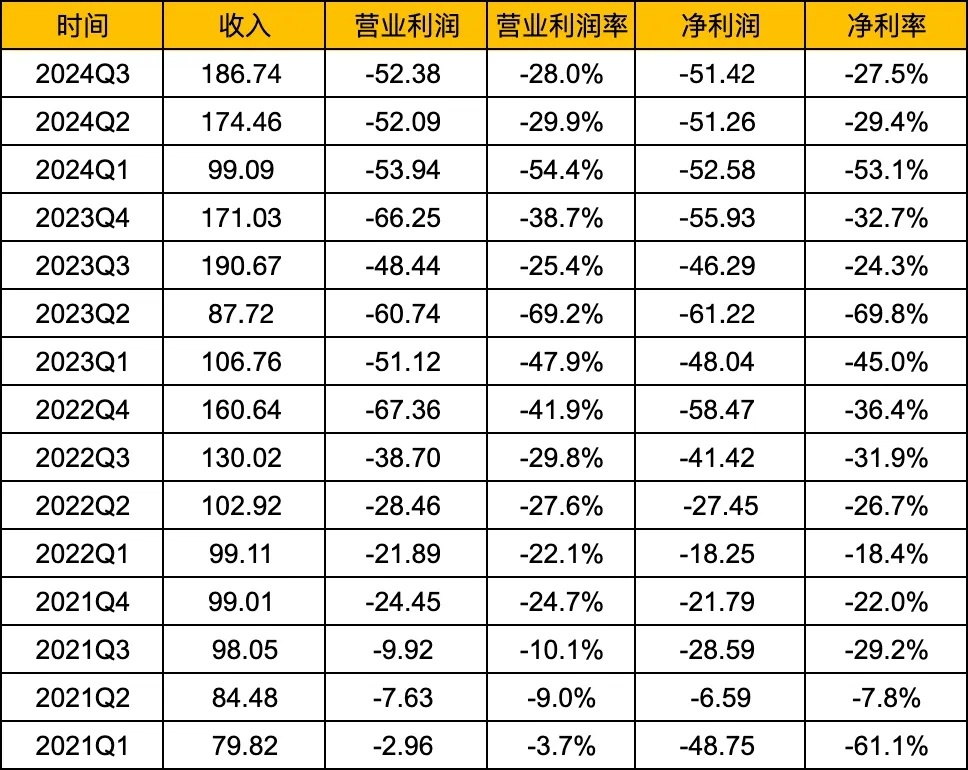
Q3:
Operating loss: ¥5.24 billion (-28% margin). Net loss: ¥5.14 billion (-27.5% margin).
First Three Quarters:
Operating loss: ¥15.84 billion (-34.4% margin). Net loss: ¥15.53 billion (-33.7% margin).
Loss ratios are declining with sales growth, but quarterly losses remain above ¥5 billion, straining cash flow. Nio must continue fundraising for at least 1-2 more years.
07
—
Cash & Net Assets
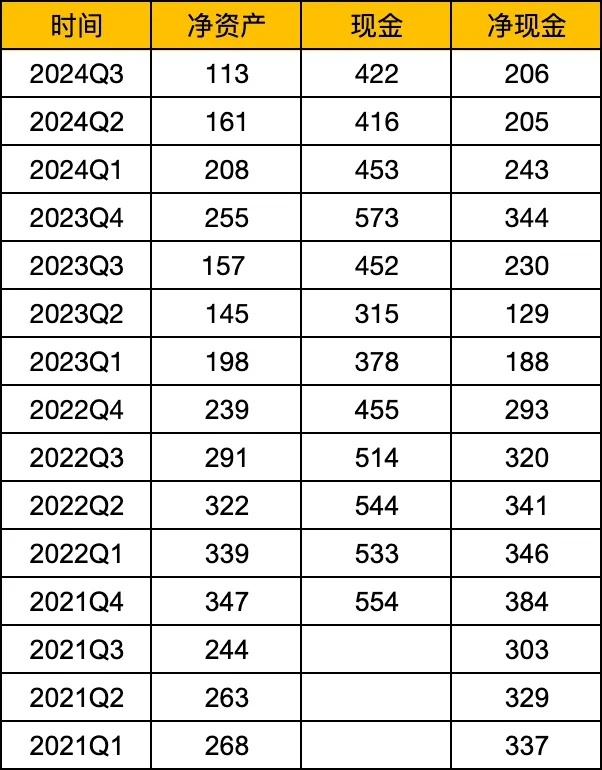
As of Q3, net assets fell to ¥11.3 billion. Cash reserves: ¥42.2 billion. Interest-bearing debt: ¥21.6 billion. Net cash: ¥20.6 billion.
Liquidity appears strong, but ¥20+ billion in debt incurs ~¥1 billion annual interest, requiring refinancing.
Payables total ¥30 billion, with ¥57+ billion in short-term liabilities. Despite cash reserves, liquidity remains tight.
Q3 saw positive free cash flow—a critical improvement. Sustained sales growth is needed to alleviate pressure. $NIO Inc(NIO.US) $Li Auto(LI.US) $Tesla(TSLA.US)
The copyright of this article belongs to the original author/organization.
The views expressed herein are solely those of the author and do not reflect the stance of the platform. The content is intended for investment reference purposes only and shall not be considered as investment advice. Please contact us if you have any questions or suggestions regarding the content services provided by the platform.
