


With a stock price around 3 yuan and a market cap of approximately 700 million, has Zensun Sci-Tech, a 'first-in-class' company, reached a dead end?

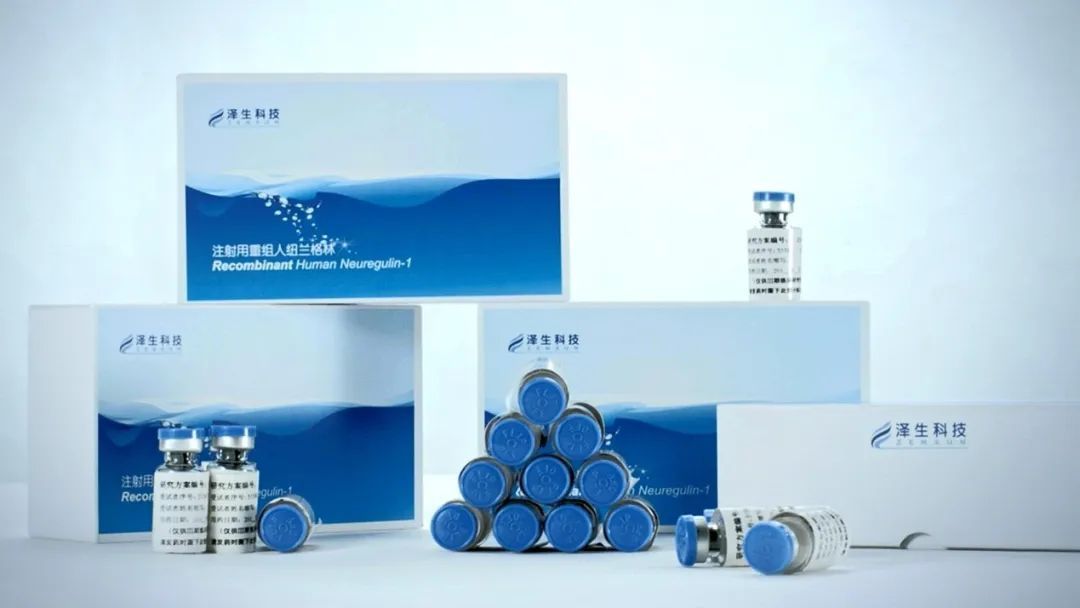
Over two decades of "forging a single sword."
Source|Pharmaceutical Research Society
In the marathon of "first-in-class" (drugs that use a completely new and unique mechanism to treat a disease) development, Zensun Sci & Tech is still persevering, but the capital willing to "accompany the run" may be dwindling.
On November 18-19, the company's stock price plummeted by 40.89% and 50%, respectively. By November 20, the stock price saw a slight rebound but only reached 3.65 yuan per share, with a market capitalization of just 703 million yuan.
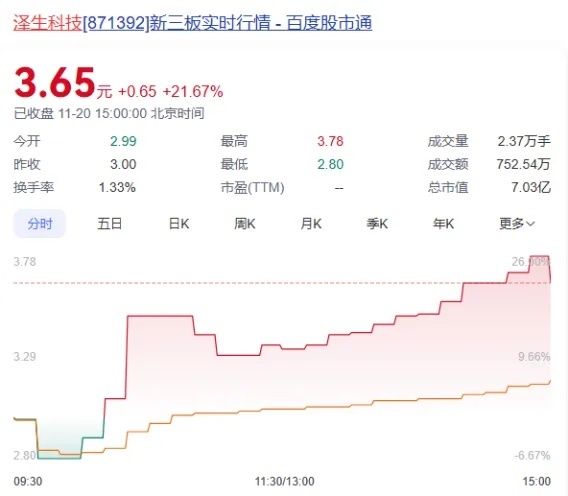
In the vast pharmaceutical market, such performance is undoubtedly dismal, especially for a Biotech company that has been around for 24 years.
Had it followed a normal development trajectory, Zensun Sci & Tech might have unlocked significant growth potential with commercialized products. The problem, however, is that the company has spent over two decades "forging a single sword" without tangible results.
I. Targeting Heart Failure: Zensun Sci & Tech's Two-Decade "Sword-Forging" Journey
It’s undeniable that Zensun Sci & Tech possesses a rare quality—persistence.
Since its founding in 2000, Zensun Sci & Tech has focused on the field of cardiology, dedicated to developing "first-in-class" drugs to treat major diseases like heart failure. Currently, the company's flagship investigational drug is recombinant human neuregulin (proposed brand name: Neucardin®).
The rationale behind Zensun Sci & Tech's aggressive development of this product is clear.
First, the market demand is enormous. In 2019, there were nearly 30 million heart failure patients globally, with projections reaching 38.7 million by 2030. Additionally, industry consultancy Globaldata predicts that by 2028, the heart failure drug market in eight major markets, including the U.S. and China, will hit $22.1 billion.
Second, the self-developed product has a degree of scarcity. Dr. Zhou Mingdong, founder of Zensun Sci & Tech, once stated: "Current clinical drugs for chronic heart failure mainly include diuretics, ACE inhibitors, beta-blockers, and aldosterone receptor antagonists, which work by promoting sodium excretion, dilating blood vessels, or lowering heart rate. To date, no approved drug can directly improve myocardial cell structure and function to treat heart failure."
Based on this market insight, Zensun Sci & Tech carved out its differentiated niche. Unlike existing heart failure drugs, its recombinant human neuregulin treats mild-to-moderate chronic heart failure by promoting orderly myocardial cell alignment, improving cardiac structure, and enhancing pumping efficiency.
Optimistically, with its unique mechanism, Zensun Sci & Tech could carve out significant growth in the vast heart failure drug market, bolstered by several accolades.
For instance, in 2019, Nature Biotechnology described neuregulin as "a rare first-in-class drug from China" and listed Zensun Sci & Tech among the few Chinese biopharma firms developing novel target drugs. The company's research has also received support from China's "11th Five-Year," "12th Five-Year," and "13th Five-Year" National Major New Drug Innovation Projects, as well as the "863" Major Program.
Yet, in reality, the prolonged and tortuous R&D path has cast a shadow over its commercial prospects.
II. Clinical Trial Flaws: The Struggle to Bring the Flagship Drug to Market
Zensun Sci & Tech has faced repeated setbacks in commercializing recombinant human neuregulin.
Since 2012, the company has been pushing for drug approval. However, clinical trial flaws (e.g., failure to achieve statistically significant mortality reduction) have delayed commercialization.
To encourage innovative drug development, China's National Medical Products Administration (NMPA) agreed that Zensun Sci & Tech could temporarily set aside the mortality reduction issue. If the company can demonstrate that recombinant human neuregulin significantly improves cardiac function, it may apply for conditional approval while continuing the confirmatory survival trial ZS-01-306.
However, pioneering "first-in-class" drugs remains fraught with challenges. On November 18, 2024, Zensun Sci & Tech announced yet another clinical trial failing to meet its primary endpoint.
Meanwhile, massive R&D investments have plunged the company into sustained losses. According to its 2024 interim report, Zensun Sci & Tech generated revenue of 1.7547 million yuan (up 3,620% YoY) but posted a net loss of 56.7174 million yuan (up 21.99% YoY), with basic EPS at -0.2900 yuan.
Such performance inevitably disheartens investors.
Still, Zensun Sci & Tech's tenacity is commendable. Historically, due to constraints in funding, talent, and technology, most Chinese biopharma firms have opted for "fast follow" strategies (quickly replicating multinational pharma's core products), with few attempting "first-in-class" innovation.
From this perspective, Zensun Sci & Tech holds notable betting value. For the company, the adage "high risk, high reward" may have fueled its persistence. But even the most patient capital cannot outlast time.
The copyright of this article belongs to the original author/organization.
The views expressed herein are solely those of the author and do not reflect the stance of the platform. The content is intended for investment reference purposes only and shall not be considered as investment advice. Please contact us if you have any questions or suggestions regarding the content services provided by the platform.
