


Unable to break free from the OEM dilemma, Liangpin Shop's trust crisis remains unresolved

Original @新熵 Author 丨 Xiaoyi Editor 丨 Jueying
The food safety controversy that has been brewing for over half a month has finally come to an end, allowing Bestore to temporarily breathe a sigh of relief.
On November 18, in response to allegations by a fraud-exposing influencer that some of Bestore's products had "fake ingredient lists," the Market Supervision and Administration Bureau of Dongxihu District, Wuhan, Hubei Province, issued an official statement declaring the claims unsubstantiated after investigation, confirming the products were compliant.
The topic quickly sparked heated discussions. Subsequently, Bestore officially released a clarification announcement, stating that its products—Osmanthus Nut Lotus Root Powder and Spicy Hot Pot Noodles—had ingredients consistent with their labels, and that it would file lawsuits against the two influencers who made the allegations.
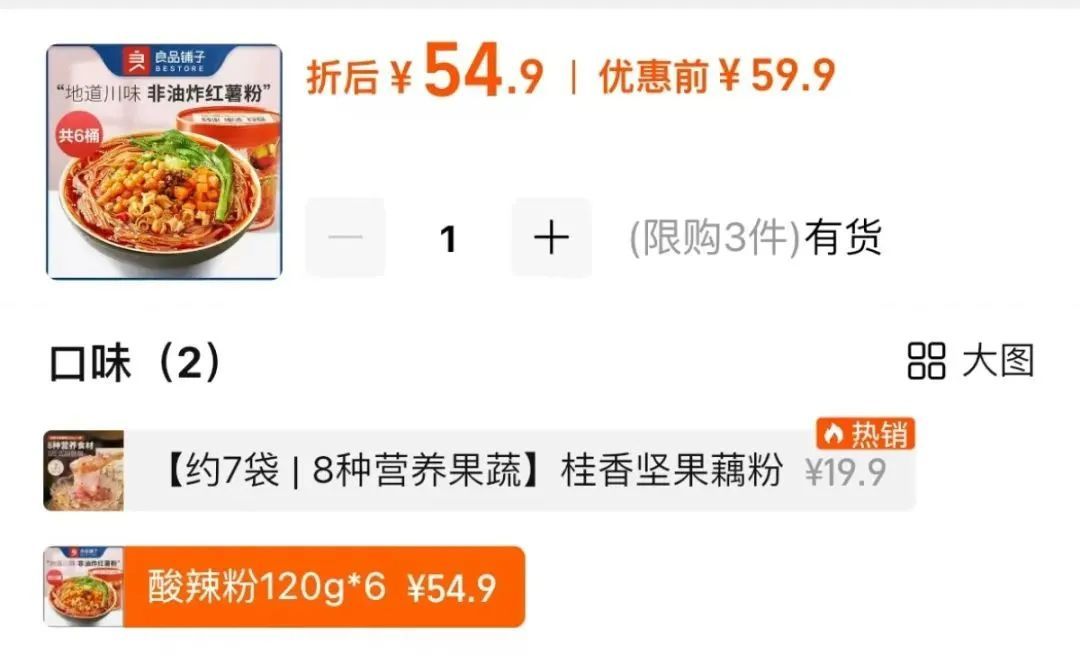
Meanwhile, these two products quietly reappeared on major e-commerce platforms. Bestore's stock price, after nearly a week of volatile declines, began to rise steadily at the opening on November 19.
However, the relief was short-lived. Before the dust could settle, the influencer "Songge Dahuzi" doubled down on his 质疑 despite the official conclusion, releasing another video on the 21st stating he would file an administrative lawsuit against the authorities for dismissing his claims, adding, "There’s more to come—just wait."
This reignited the controversy, further destabilizing the situation. Regardless, the scandal has dealt a significant blow to Bestore's brand reputation, especially amid its already struggling financial performance. For Bestore, deep reflection and urgent action are now imperative.
Recurring Food Safety Scandals: Are Contract Manufacturers to Blame?
The uproar began in early November when influencers "Songge Dahuzi" and "Bounty Hunter Ash" released a series of exposé videos.
In the videos, the two presented collected product samples, testing equipment, lab reports, and notarized documents, directly accusing Bestore’s Osmanthus Nut Lotus Root Powder and Spicy Hot Pot Noodles of 掺假—the former allegedly containing cassava starch and the latter lacking sweet potato starch as claimed.
Bestore responded swiftly, denying the allegations. The Dongxihu District Market Supervision Bureau also acted promptly, announcing an investigation.
Why did the controversy escalate over the following two weeks before the official report was released?
Xu Xiongjun, a renowned strategic positioning expert and founder of Jiude Positioning Consulting, told「新熵」that the 焦点 of the controversy—sweet potato vs. cassava starch—has been a hot-button issue online for years, easily triggering consumer sensitivity. Additionally, the fact that the products were outsourced raised further doubts about quality control.
According to the official report, the Osmanthus Nut Lotus Root Powder was produced by Anhui Yanzhifang Food Co., Ltd., while the Spicy Hot Pot Noodles were manufactured by Henan Pinzheng Food Technology Co., Ltd.—both under Bestore’s 委托。
Notably, "Bounty Hunter Ash" had recently exposed another high-profile case in September, proving that 红薯粉丝 sold by influencer "Northeast Rain Sister" contained only cassava 成分。
Bestore also has a track record of prior incidents: in 2021, consumers complained about 蛆虫 in its chicken sausages, followed by reports of plastic in mooncakes, substandard enoki mushrooms, and mold 超标 in cashews.
「新熵」found 1,811 complaints against Bestore on the Black Cat 投诉 platform, involving 异物, spoiled food, and false advertising.
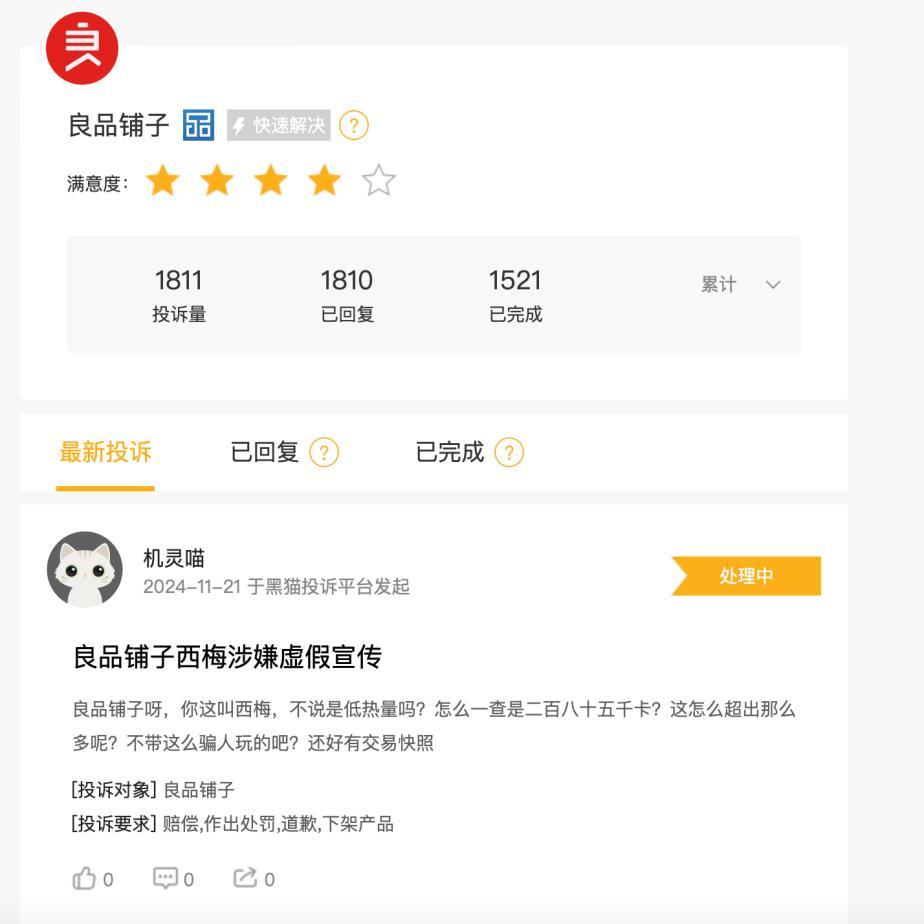
▲ Image/Black Cat complaint screenshot
Some argue that the root cause lies in Bestore’s reliance on 代工模式, where quality control is inherently challenging. With no in-house production and over 1,500 SKUs spanning diverse categories, vulnerabilities in production, storage, and logistics are inevitable.
Under this model,代工厂 may cut corners to meet cost pressures—similar to the cassava-for-sweet-potato substitution in "Northeast Rain Sister’s" case.
Since November 2023, Bestore has implemented price cuts for over 500 products, aiming for 80% coverage eventually, per "21st Century Business Herald." This cost-cutting may further strain 代工厂 relationships.
Losing Ground to Bulk Snack Competitors
While the scandal appears as a 代工-related crisis, it reflects deeper issues of Bestore falling behind industry trends.
Financial reports tell the story: Q3 2024 revenue plunged 20.81% to ¥1.594 billion, with a net loss of ¥4.5 million—a 325.2% YoY drop. In contrast, rivals Three Squirrels and Yanjin 铺子 posted growth.
Compounding the trouble, on November 20, Bestore announced that its 第二大股东,达永有限公司, had 减持 1.13% of shares (4.5245 million) between November 1–19.
Wen Zhihong, a partner at Hejun Consulting, noted that Bestore’s struggles stem largely from the rise of bulk 零食 stores, which bypass distributors to offer lower prices. According to 艾媒咨询, such stores grew from 2,500 in 2021 to over 22,000 by October 2023, pressuring premium brands like Bestore.
Zhang Qian, a former Bestore fan, now shops at cheaper offline stores, citing convenience and better value.
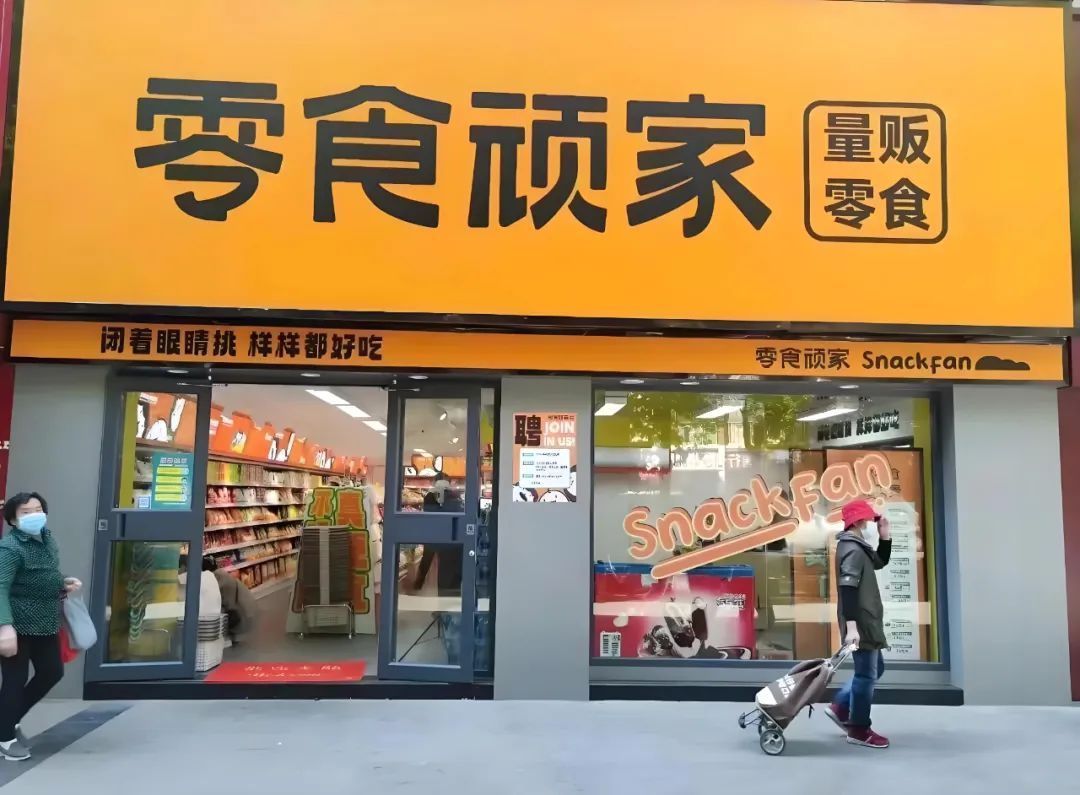
Bestore attempted to launch its own bulk brand, "Snack Wanjia," but failed to expand beyond Hubei, with just 300+ stores. Meanwhile, competitors like Yanjin 铺子 partnered early with bulk leader "Snack Very Busy," while Three Squirrels acquired "Ai Snacks" and "Ai Discount" to catch up.
Brand Trust Shattered, Low R&D a Hidden Risk
Rebuilding consumer trust will be an uphill battle for Bestore.
Xu Xiongjun emphasized that "brand perception outweighs facts"—the scandal’s damage lingers regardless of 官方结论. Bestore’s 降价 strategy, launched in 2023 without 自有工厂, raises quality-vs.-cost concerns, unlike peers with in-house production.
While Bestore has adjusted 供应链—directly sourcing bulk nuts and grading 原料 for cost efficiency—代工环节的 quality risks remain across its 1,500-SKU portfolio from scattered manufacturers.
Per 财报, Bestore improved inventory turnover to 15.88 days in 2023 by increasing direct supplier shipments to 70%. However, as 界面新闻 reported,代工厂 also handle product testing—藕粉供应商 submitted samples to multiple labs between June and September 2024 for 基因鉴定等 tests,暗示 cost pressures on suppliers.
Xu added that shrinking demographics and health trends exacerbate Bestore’s woes, as its traditional high-sugar/oil/salt products clash with consumer preferences for 天然 snacks—a perception hard to reverse.
Ironically, Bestore slashed R&D spending by nearly 60% to just ¥14 million in Jan–Sept 2024, while sales expenses topped ¥1.1 billion.
Amid external challenges, Bestore must refocus on core competencies—clarifying its 定位 and innovating products aligned with consumer needs.
The copyright of this article belongs to the original author/organization.
The views expressed herein are solely those of the author and do not reflect the stance of the platform. The content is intended for investment reference purposes only and shall not be considered as investment advice. Please contact us if you have any questions or suggestions regarding the content services provided by the platform.
