

ByteDance has launched another hit product, directly challenging Youku, iQiyi, Tencent Video and Mango TV.


Original @新熵 Author 丨 Xiaoyi Editor 丨 Jueying
No one expected that Hongguo Short Drama could rise within just a year, even posing a significant survival threat to long-form video platforms.
In August 2023, the Hongguo Short Drama app quietly launched. At that time, short dramas were primarily watched via mini-programs, and Hongguo's emergence was like a pebble dropped into a calm lake, causing little ripple.
Around the same time, driven by a keen instinct, Zhang Yi, chief analyst at iMedia Research, saw short drama apps as an opportunity and suggested that long-form video platforms launch standalone apps. However, these platforms dismissed the idea, confident in the appeal of high-quality horizontal content and underestimating the growth of short dramas, believing there would be little overlap or conflict between the two user bases.
The shift began in March this year. According to data from third-party agency QuestMobile, in March 2024, Hongguo Short Drama ranked sixth in the online video industry with 54 million monthly active users (MAUs), but its average daily usage per user reached about 1.38 hours, surpassing major long-form platforms like iQiyi, Youku, Tencent Video, and Mango TV.

By September this year, Hongguo Short Drama surged even further, with MAUs hitting 120 million, a 1045.9% year-on-year increase, securing the top spot in the industry. Some media even reported that Hongguo's daily active users (DAUs) had exceeded 50 million, with ambitions to surpass 100 million.
How did Hongguo Short Drama achieve such a meteoric rise in just over a year?
The Secret to Its Rise: Free Isn’t the Only Factor
"Come watch short dramas on Hongguo—not only are they all free, but you can also earn money."
In June this year, Ma Yu was successfully persuaded by a friend to try Hongguo Short Drama. Previously, she enjoyed short dramas but was reluctant to pay for them, often scouring the internet for free resources—a tedious and time-consuming process.
Hongguo Short Drama solved this problem. Just by downloading the app, Ma Yu could access a vast library of short dramas, including hits like "Lure Her In" and "Night Without Light." Moreover, by completing daily tasks like check-ins, she could earn diamonds, which could be cashed out once accumulated. This delighted Ma Yu, who now spends hours glued to her phone every day.
Free access is Hongguo's first major draw, but it’s not the only advantage. Other free short drama platforms exist, such as Hippo Theater, Xingya Short Drama, Wild Elephant Theater, Xifan, and Maitian Short Drama. Among these, Xingya Free Short Drama by Jiuzhou also performed well, ranking seventh in MAUs in the online video industry in March.
Why did Hongguo Short Drama alone achieve a staggering lead by September?
Zhang Shule, an internet industry analyst, explained to "New Entropy" that this is largely due to the traffic matrix of ByteDance’s ecosystem, as most short drama app companies are small to medium-sized.
Hongguo is developed by Beijing Bimo Liuxiang Technology Co., Ltd. ("Bimo Liuxiang"), which is wholly owned by Beijing Douyin Information Service Co., Ltd. According to "Economic Observer," before Hongguo's launch in 2023, ByteDance internally reallocated employees from Tomato Novel to focus on short dramas, providing substantial traffic and commercialization support.
"Hongguo Short Drama complements ByteDance’s ecosystem, including Douyin and Tomato Novel," Zhang Shule noted. For example, most content on Hongguo is adapted from Tomato Novel’s IP, and users who encounter short drama clips on Douyin are prompted to download the Hongguo app.

▲ Image: Screenshot of the Hongguo app
Beyond traffic, ByteDance’s financial backing is another advantage. While Hongguo leverages Douyin and Tomato Novel for traffic, retaining users ultimately depends on content quality and variety—areas where financial muscle helps.
On one hand, Hongguo acquires high-performing existing dramas like "Night Without Light" and "Lure Her In." This allows producers to monetize their content twice—first through initial distribution and then by selling rights to Hongguo—while Hongguo builds a library of proven hits at low cost.
On the other hand, leveraging Tomato Novel’s vast IP library, Hongguo collaborates with production companies to adapt these stories into short dramas, enabling rapid content updates. Yuan Zichao, Hongguo’s copyright partnership lead, mentioned in November 2024 that the platform releases over 1,000 new short dramas monthly, with a total library exceeding 15,000 titles.
Behind this massive output are lucrative incentives for collaborators. Screenwriter Wang Qi told "New Entropy" that Hongguo pays scriptwriters between 15,000 and 100,000 RMB for IP adaptations, with more favorable revenue-sharing terms than other platforms. Adapting existing novels is also less time-consuming than creating original scripts, yet equally or more profitable.
In short, free platforms are a game of burning cash and traffic to secure market share. The deeper the pockets, the faster the expansion—and ByteDance is never shy about spending.
Short Dramas Divert Traffic, Long-Form Video Anxiety
The micro-short drama market continues to expand. According to iMedia Research, China’s online micro-short drama market reached 37.39 billion RMB in 2023, up 267.65% year-on-year, and is projected to exceed 100 billion RMB by 2027.
Though long-form platforms are reluctant to admit it, short dramas are eating into their market share—especially with Hongguo’s rapid rise. A telling moment came at a late-October film and culture forum, where iQiyi founder Gong Yu openly urged the industry to embrace micro-short dramas rather than treat them as a threat.
Earlier, in September, iQiyi announced its entry into the micro-short drama space, launching "Short Drama Theater" and "Micro Theater." The former features 5-20 minute horizontal episodes across genres like historical romance, modern romance, and suspense, while the latter offers 1-5 minute vertical episodes targeting male/female audiences and older demographics. iQiyi also pledged to share over 70% of a short drama’s revenue with producers.
The urgency to compete is palpable.
Financially, the pressure is stark. In Q3, both iQiyi and Mango TV reported year-on-year declines in revenue and net profit. iQiyi’s revenue fell 10%, with net profit plummeting 51.8%; Mango TV’s revenue dropped 7.14%, with net profit down 27.41%.
Tencent Video and Youku don’t disclose standalone financials, but parent company reports hint at struggles. Alibaba’s digital media and entertainment division (including Youku) saw Q3 revenue dip 1% year-on-year to 5.694 billion RMB, with an adjusted loss of 178 million RMB. Tencent noted in its Q3 earnings that Tencent Video’s paying subscribers slightly declined by 0.85% to 116 million.

Broadly, the domestic drama market is shrinking. Lighthouse Professional’s "2024 Q1 Drama Market Report" showed total plays down 10.1% year-on-year to 25.683 billion, with hit series declining by 28.3%.
Lin Ming admits watching less long-form content this year. "I only check out platforms like Youku or iQiyi for specific shows, like 'Eternal Night Galaxy' or 'Lane Families.' Otherwise, I’m glued to short dramas—they’re fast-paced and satisfying," he told "New Entropy."
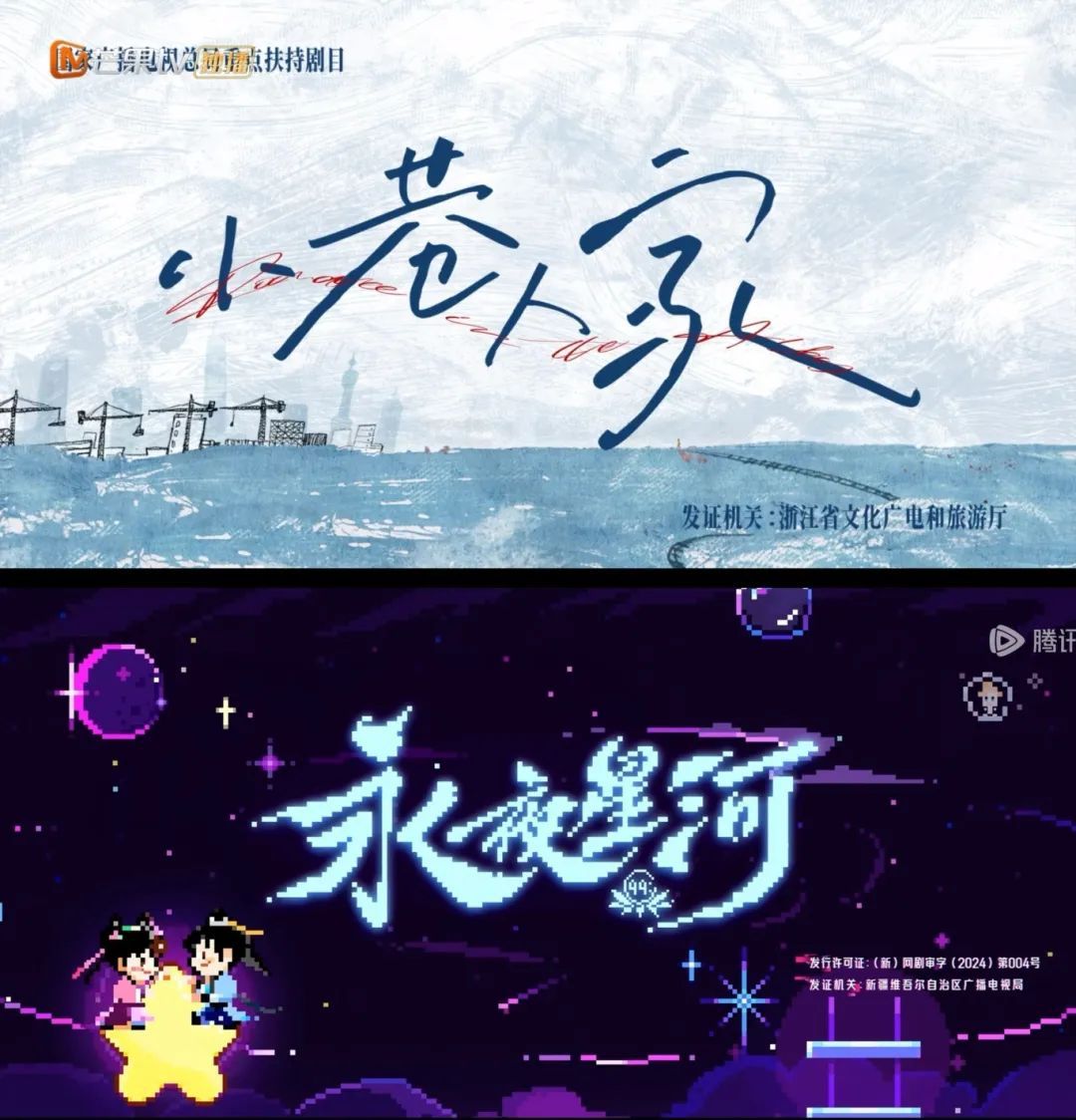
Zhang Yi pointed out that internet traffic has plateaued, creating a zero-sum game among platforms. As short dramas grow, movies and long-form series inevitably suffer, given their overlapping audiences.
iMedia Research shows short drama viewers are primarily aged 20-60, spanning homemakers, service workers, laborers, white-collar workers, and retirees—the same demographics long-form platforms rely on.
"The core issue for long-form content is that smartphones and short videos have fragmented user attention," Zhang Yi analyzed. "This is irreversible and antithetical to the immersive, horizontal format long-form depends on—and they haven’t found a viable new model."
Hongguo’s rise is a wake-up call: whether long or short, only user-approved content survives. Those that ignore demand, regardless of scale, will be left behind—a historical lesson.
Market Shifts: Traffic Buying vs. Ad Models
It’s not just long-form platforms feeling the heat—short drama companies reliant on traffic-buying models are also threatened.
Unlike traffic-buying, Hongguo monetizes via in-app ads (IAA), where users watch free content interspersed with ads (e.g., an 8-second ad every 3 episodes). This demands different content strategies.
Veteran screenwriter Wang Qi, who’s worked on both models, notes that traffic-buying scripts prioritize high-emotion hooks to drive payments, while IAA scripts focus on logical pacing to retain viewers through ads.
"I’d rather train newcomers than hire traffic-buying writers, who are set in their high-emotion style and resist adapting to IP-based storytelling," he said.
For traffic-buying firms, Hongguo’s dominance risks their livelihood, as the two models are fundamentally different.
But traffic-buying growth has underperformed due to holiday movie releases, piracy, free short dramas, and market saturation. DataEye initially projected 2024 traffic-buying at 42 billion RMB but later revised it to 25-30 billion, with IAA now accounting for ~30% of the market (or more, per Zhang Yi).
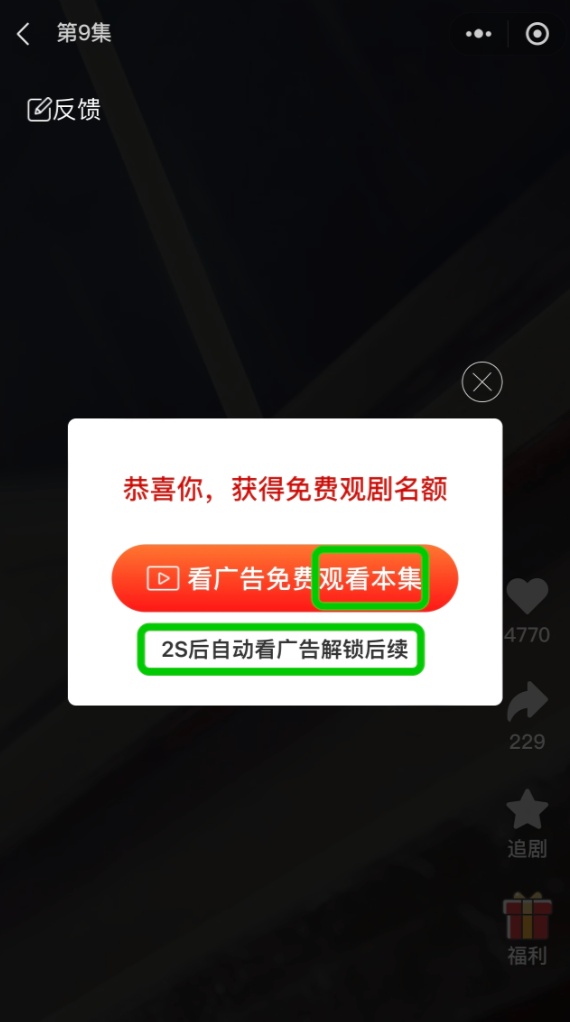
"With internet traffic peaking, companies need new products to attract users," Zhang Yi told "New Entropy." "Short dramas, with over 500 million users, have immense growth potential."
While Hongguo leads for now, its long-term position hinges on whether rivals emerge. Zhang Yi believes competitors still have a window until Hongguo hits ~300 million MAUs, after which the market will consolidate around 2-3 leaders.
As for long-form platforms, short dramas will squeeze but not eliminate them. "The old guard can’t board the new ship—their challenge remains profitability and finding balance," he said, suggesting standalone apps to avoid confusing users with mixed content.
He cited Tencent’s transition from QQ to WeChat as a model: "Separate products for separate eras bought QQ time to adapt, preserving Tencent’s dominance."
Objectively, Hongguo’s rise is meteoric but hasn’t yet destabilized long-form’s foundation. Still, as long-form platforms struggle to monetize, short dramas’ impact is undeniable—reshaping revenues, market share, and strategies.
Despite this, while long-form video remains mired in profitability challenges, short dramas have already delivered a blow that reverberates across finances, market position, and strategic planning—a hurdle impossible to ignore.
The copyright of this article belongs to the original author/organization.
The views expressed herein are solely those of the author and do not reflect the stance of the platform. The content is intended for investment reference purposes only and shall not be considered as investment advice. Please contact us if you have any questions or suggestions regarding the content services provided by the platform.
