

SF Express raises funds at a discount in Hong Kong, with internationalization becoming the new bet.

Original @新熵 Author 丨 Ful Shen Editor 丨 Long Kui
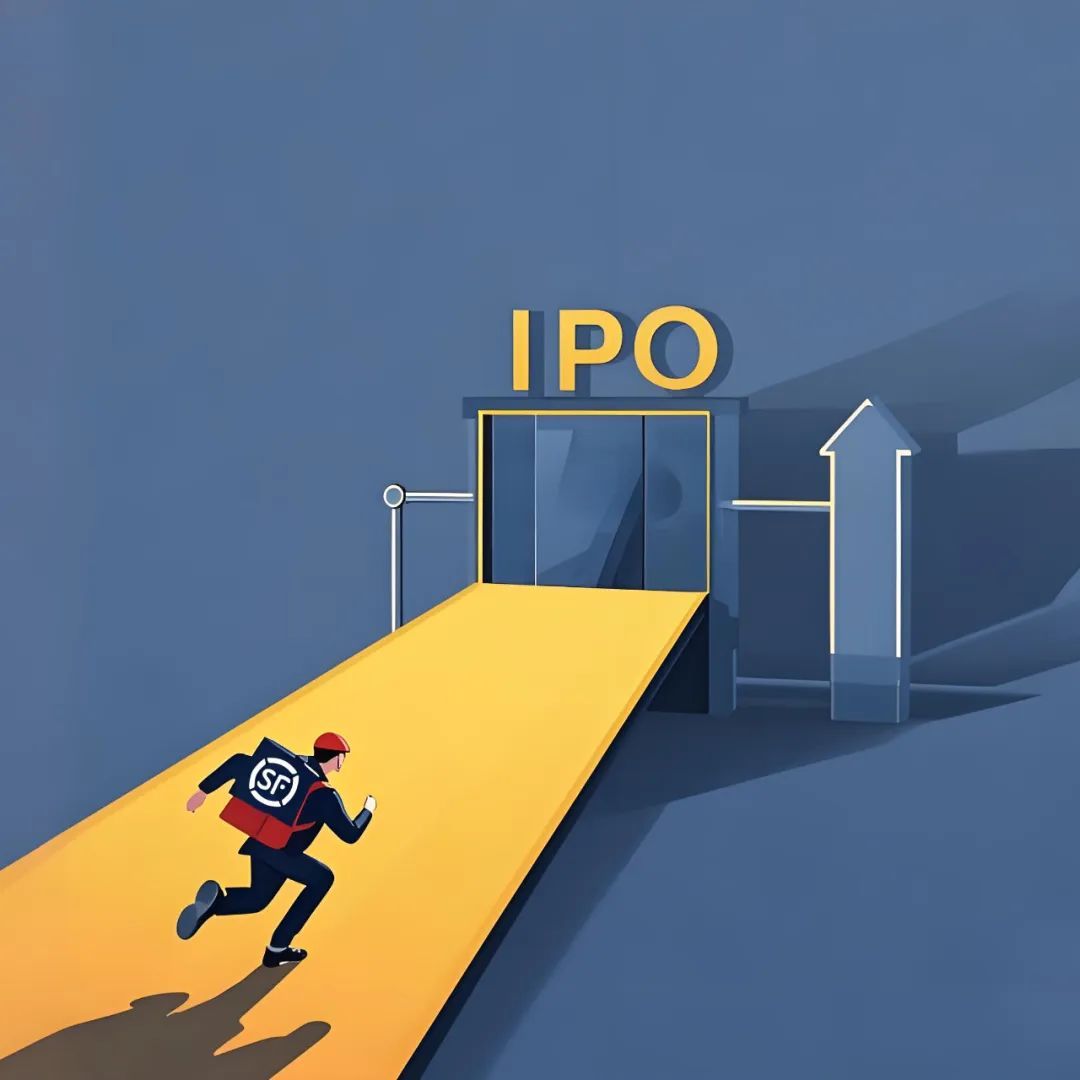
SF Express, which made a secondary listing on the Hong Kong stock market, closed flat on its first day with zero gains but faced a break below the issue price on the second day.
In June last year, J&T Express was the first to knock on the door of the Hong Kong Stock Exchange, followed by SF Express, which submitted its prospectus in August. However, it failed to complete the hearing within six months, leading to the lapse of its application. In June this year, SF Express finally achieved its goal in its second attempt at the Hong Kong Stock Exchange. On November 27, it officially issued shares at HK$34.30 per share. Wang Wei, the founder of SF Group, successfully rang the bell at the Hong Kong Stock Exchange, accompanied by a delivery courier.
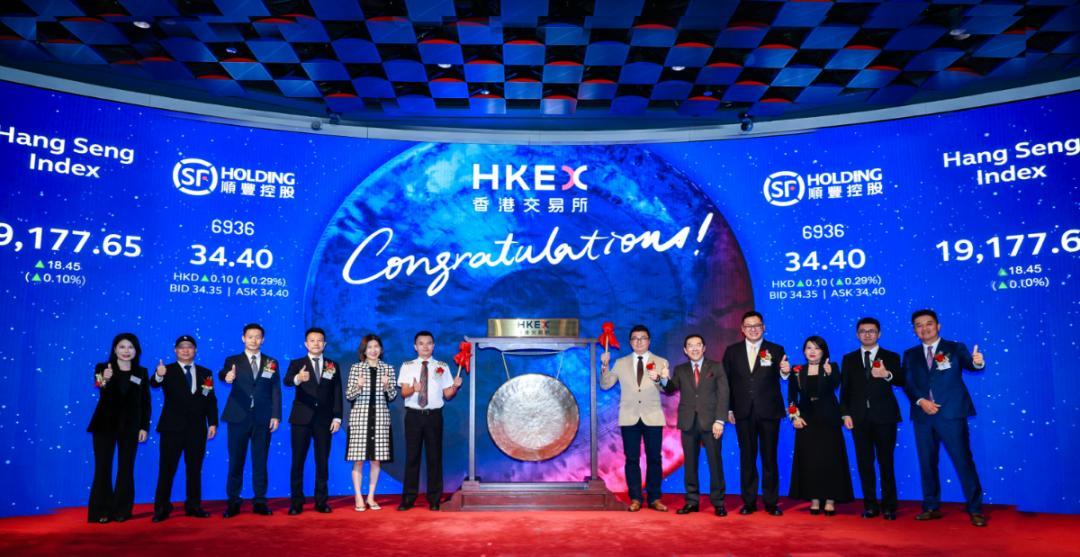
It’s worth noting that behind SF Express’s market value of 200 billion yuan, there is the support of nearly 500,000 delivery "couriers." In SF Express’s cost structure for 2023, nearly 36% of the costs came from outsourced labor.
Typically, after A-share listed companies choose to make a secondary listing in Hong Kong, their trading prices are generally lower than those on the A-share market. In the secondary market, there is a concept of A/H premium or H/A discount. On November 26, SF Express closed at 42.07 yuan on the A-share market, once again confirming this convention.
In the past, internet companies like BAT and Xiaomi chose to list in Hong Kong mainly because they couldn’t meet the profitability thresholds of the A-share market. Most state-owned enterprises listed in both A and H markets are not particularly focused on market value management but rather aim to open up international financing channels.
Among its peers, JD Logistics and J&T Express are currently trading below their issue prices in Hong Kong. Even as the leading domestic courier, SF Express’s second bell-ringing was met with a break below the issue price on the second day, which was hardly surprising.
A company’s stock performance in the secondary market does not always reflect its operational conditions. Wang Wei once bluntly stated, "After listing, a company becomes a money-making machine. Daily stock price fluctuations affect the company’s nerves, which is detrimental to management."
For this Hong Kong listing, SF Express issued a total of 170 million shares. If the over-allotment option is not exercised, the net proceeds raised by SF Express reached HK$5.662 billion, making it the second-largest IPO in Hong Kong this year. Forty-five percent of the funds raised will be used to strengthen international and cross-border logistics capabilities. SF Holding has risen to become a leading comprehensive logistics service giant in China and Asia, following closely behind UPS, DHL, and FedEx on the global stage.
On one hand, its international business, which has yet to gain a firm foothold, urgently needs more investment to face competition. On the other hand, the profit margins in the domestic market are shrinking, and debt is rising. Even a discounted fundraising in Hong Kong (on the evening of November 24, SF Holding’s H-share was priced at HK$34.3, a 24% discount to the A-share closing price of 42 yuan on November 25) has become the best choice for SF Express at the moment.
The Allure of Hong Kong Stocks
From being a "human courier" shuttling between Hong Kong and Guangdong docks with a suitcase to the 73 cargo routes operating day and night at Ezhou Huahu Airport, Wang Wei’s understanding of the courier and logistics industry is that self-operation is the only way.
In 2017, when Ezhou Airport started construction, SF Express’s net profit was only 4.7 billion yuan. This "China’s first cargo airport" required an investment of nearly 20 billion yuan, equivalent to burning through four years of SF Express’s profits at once, indirectly leading to huge losses for the group in 2020. Wang Wei had to publicly apologize at the shareholders’ meeting but also expressed his determination to "stand firm."
Since 2020, SF Holding has significantly increased its fixed asset investments year by year. By 2021, its investment soared to 19.2 billion yuan, hitting a record high.
SF Express’s heavy investment in its self-operated model has always faced challenges from the "Tongda" system represented by STO, ZTO, YTO, and Yunda. The latter’s franchise model only requires investment in main transport lines and key regional hubs, while lower-level terminal coverage is entirely handled by franchisees for pickup and delivery.
This not only greatly improves the efficiency of expansion and market capture but also reduces financial pressure on courier companies by making full use of social resources.
In contrast, SF Express, which shoulders all aspects of the courier chain on its own, must heavily invest in building infrastructure. Financial reports show that SF Express’s debt scale rose from 34.7 billion yuan in 2018 to 118.2 billion yuan in 2023, with the debt-to-asset ratio increasing from 48% to 53%. The latest data shows that SF Express’s debt scale in the first half of 2024 was 121 billion yuan, already reaching last year’s level.
Substantial capital investment in its main business is one thing, but these expenditures may not yield returns or achieve expected economic benefits in the short term. However, in recent years, SF Express has gradually tightened its capital expenditures. In the first half of 2024, its capital expenditure dropped to 5.1 billion yuan, indicating that SF Express may have entered a new phase of investment returns.
Additionally, after SF Express’s backdoor listing on the A-share market in 2017, it also embarked on a simple and brutal "buy, buy, buy" spree.
From 2018 to 2021, SF Express spent 1.7 billion yuan to acquire a 71% stake in Guangdong Xinbang Logistics; $100 million to invest in the U.S. logistics service platform Flexport; 5.5 billion yuan to acquire the Chinese business of Germany’s Deutsche Post DHL Group; and HK$17.555 billion to acquire a 51.5% stake in Kerry Logistics, listed in Hong Kong.
Three years of mergers and acquisitions pushed SF Express’s A-share market value to a peak of over 500 billion yuan, but its gross profit margin nearly halved compared to the initial 20% at the time of listing.
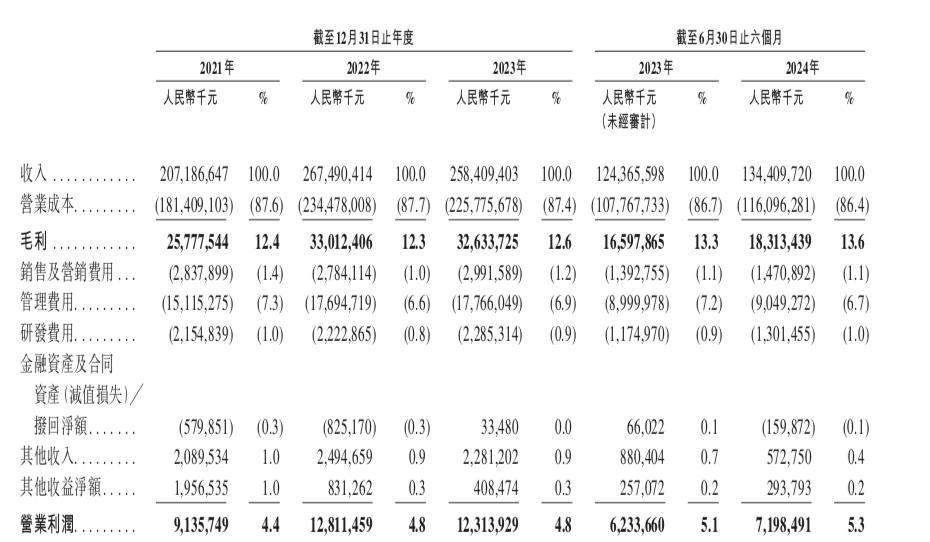
Data shows that SF Express’s gross profit margins from 2021 to 2023 were 12.37%, 12.49%, and 12.82%, respectively, while its net profit margins were 1.89%, 2.62%, and 3.06%. With profitability failing to improve, SF Express’s market value has shrunk to around 200 billion yuan.
SF Express is not unaware of the challenges of the Hong Kong stock market. Two subsidiaries sent to Hong Kong in 2021, SF REIT and SF City, are currently trading below their issue prices. Kerry Logistics, acquired and consolidated, had a brief moment of glory but soon returned to normal. However, the international label and more diversified financing channels after a Hong Kong listing are still must-haves for SF Express, which is eager to expand overseas and in dire need of funds.
Unable to Outcompete the "Tongda" System
Years of "price wars" in the domestic courier industry have forced once-familiar brands like Deppon and Best to sell themselves for survival. As the industry leader, SF Express is not immune to these effects.
According to third-party data, SF Express’s market share in 2014 was 11.5%, with its unique timeliness advantage giving it a 61.2% industry premium. In the following years, as other courier companies continuously lowered industry average prices in the price war, SF Express merely maintained its original pricing. By 2018, its industry premium reached 93.7%, but its market share dropped to 7.63%.
Although its revenue and profits were enough to keep SF Express firmly in the top spot in the short term, the "Tongda" system and the rising J&T Express, backed by e-commerce platforms, could first capture the broader e-commerce parcel market and then improve timeliness to counterattack SF Express’s last stronghold.
Sensing the threat, SF Express began lowering prices in 2019. By 2021, it had reduced the industry premium to 64.3%. In 2020, it also established Fengwang Express, focusing on e-commerce parcels and the franchise model.
However, SF Express’s strategy of "if you can’t beat them, join them" did not yield the expected results. Its market share never broke 10%, and the profit losses from price cuts were painfully real. Ultimately, in 2023, SF Express abandoned its "price-for-volume" strategy and returned to its premium positioning, selling Fengwang Express to J&T Express.
In 2024, statistics released by the State Post Bureau showed that domestic courier business volume in the first half of the year reached 80.16 billion parcels, a year-on-year increase of 23.1%, while courier business revenue totaled 653 billion yuan, up 15.1% year-on-year. However, these growth figures did not translate equally to individual courier companies.
The prospectus shows that SF Express’s business is divided into three parts: express and large-item delivery, intra-city instant delivery, and supply chain and international business. Among them, the "small but beautiful" time-sensitive express delivery remains the main business, driving the express sector as the company’s pillar. However, intra-city instant delivery has underperformed, contributing less than 3% of revenue for three consecutive years.
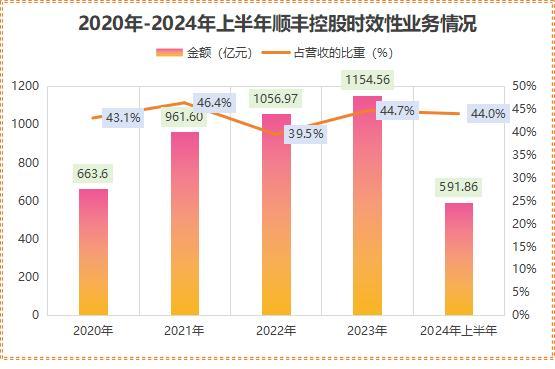
▲ Figure/New Stock Radar
However, SF Express’s "time-sensitive express" advantage, which it built its reputation on, is weakening. The 2024 interim report shows that this business still accounts for 44.03% of SF Express’s total revenue, generating nearly 60 billion yuan in revenue. Although it remains the largest business, JD.com, the "Tongda" system, and others are speeding up deliveries and lowering prices, putting pressure on SF Express.
Although SF Holding’s business volume is lower than that of JD Logistics and the "Tongda" system, which are "tied" to e-commerce platforms, its average revenue per ticket is seven times theirs. Taking the single-ticket revenue of SF Express, YTO, Yunda, and STO in May as an example, the figures were 15.25 yuan, 2.23 yuan, 2.03 yuan, and 2.01 yuan, respectively, down 1.17%, 2.82%, 16.8%, and 9.05% year-on-year. More volume and higher revenue have led to lower unit prices and even lower profits.
SF Express is already a unique presence in the industry. After abandoning its obsession with market share, its gross profit margin has remained above the industry average, but competitive pressure persists. JD Logistics, which also operates a self-operated model, and Cainiao, which is preparing to go solo after Alibaba’s reforms, have been advancing into SF Express’s comfort zone of time-sensitive express delivery in recent years. The "Tongda" system and J&T Express are also shortening delivery times step by step through digitalization.
The initial concerns have now materialized, and past efforts have fallen short of expectations. Unable to compete domestically, SF Express can only turn its gaze overseas. This Asian leader and global fourth-largest courier giant must now face the more complex dynamics of the global market.
Seeking a Lifeline Overseas
Supply chain and international business have always been seen as SF Express’s second growth curve, with revenue share rising from 8.7% in 2020 to 33.6% in 2022. This was largely due to SF Express’s acquisition and consolidation of Kerry Logistics in 2021.
However, the good times didn’t last. After the pandemic, the decline in global air and sea freight prices caused SF Express’s international business to plummet in 2023, from a peak of 48.47 billion yuan in revenue in 2022 to 25.76 billion yuan, dragging down SF Group’s overall revenue for the first time in years. The latest data for 2024 shows some recovery in international business, but the downturn has not been reversed.
Choosing a secondary listing in Hong Kong, SF Express specifically stated in its submission that it "has passed the peak of capital expenditure," seemingly avoiding the image of being cash-strapped. Instead, it repeatedly emphasized its "internationalization" strategy in announcements: "To further advance the internationalization strategy, create an international capital operation platform, enhance the international brand image, and improve comprehensive competitiveness."
It’s clear that Wang Wei has bet SF Express’s next phase on overseas expansion.
As early as August 2023, at a shareholders’ meeting, Wang Wei seemed impatient with SF Express’s internationalization pace. He bluntly stated, "SF Express cannot fall behind its peers. (Listing in Hong Kong) is for internationalization. Although SF Express has made some investments in international business, it’s not enough. SF Express needs an international capital platform."
In fact, SF Express’s planned overseas expansion began even earlier, in 2009, riding the wave of Korean cosmetics purchasing agents. Within two years, it covered all of South Korea. After 2013, it expanded to Thailand, Singapore, and Malaysia in Southeast Asia, as well as Japan in East Asia.
Kerry Logistics is the largest third-party logistics company in the Southeast Asian market. However, this is also the birthplace of J&T Express, the predecessor of J&T Express. The latter was founded in Indonesia in 2015. According to data from third-party agency Frost & Sullivan, J&T Express’s market share in Southeast Asia reached 22.5% in 2022.
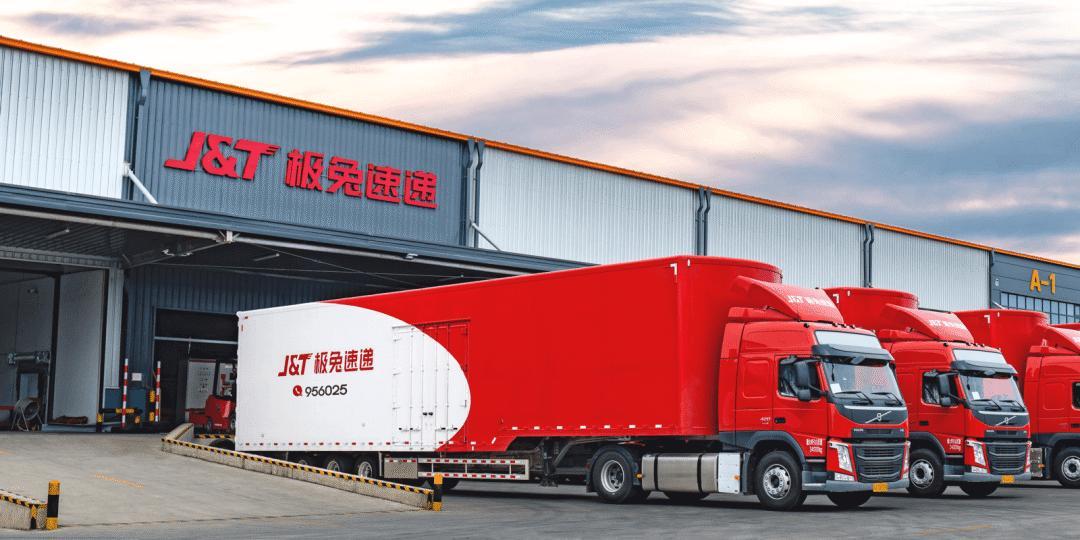
SF Express, trying to extricate itself from the domestic price war, finds the same competitors overseas.
The "Tongda" system is not content to struggle in the domestic price war and has also turned to overseas expansion as a potential direction. Zhou Jian, the former CEO of Fengwang Express, which SF Express sold, joined YTO as the executive president of international express delivery, with J&T Express in Southeast Asia as his primary target.
Today, J&T Express, with the rapid expansion of Temu, the cross-border e-commerce platform under Pinduoduo, has planted its flag in North America. Alibaba and JD.com, which also have overseas e-commerce businesses, have propelled their Cainiao and JD Logistics to take the lead in international logistics and delivery.
Of course, these front-runners, along with SF Express, must face UPS, DHL, and FedEx, which currently occupy nearly 90% of the global courier market. At present, the competition is still focused on the domestic cross-border logistics market. Previously, Frost & Sullivan predicted that China’s cross-border logistics market would reach $171.4 billion by 2027, with a compound annual growth rate of 5.6% from 2023 to 2027.
Judging from SF Express’s past overseas business layout strategy, obtaining a Hong Kong-listed company status would naturally facilitate more convenient mergers and acquisitions. In the second half of 2023, Kerry Logistics announced plans to sell several subsidiaries engaged in courier services in the Asia-Pacific and Europe to SF Express for HK$250 million.
It is foreseeable that SF Express’s grand strategy for internationalization will likely continue its "buy, buy, buy" merger model. However, as a third-party independent courier company lacking the logic of commercial flow driving logistics, SF Express must also find a strong partner to compete with e-commerce-affiliated courier companies.
The copyright of this article belongs to the original author/organization.
The views expressed herein are solely those of the author and do not reflect the stance of the platform. The content is intended for investment reference purposes only and shall not be considered as investment advice. Please contact us if you have any questions or suggestions regarding the content services provided by the platform.
