


 Buffett Apprentice
AI glasses will set off a new wave in consumer electronics.

Since the rumors about Apple developing AI glasses in the middle of the year, this new product form has become a new focus for investors.
However, just like the previously popular smartphones, AR/VR devices, and wireless Bluetooth earbuds, the success of AI glasses as a new consumer electronics category requires the participation of both tech giants and Huaqiangbei.
Currently, grassroots research shows that dozens of solution providers in Huaqiangbei are already working on it, with prices dropping from $100 to as low as $20.
In the smartphone era, fierce competition among over 100 brands left only five profitable survivors. This time, due to fragmented demand and flexible supply, it’s likely that 10 or more brands will survive and thrive.
This year, the two major waves of interest in AI glasses occurred in mid-year and year-end.
The first wave began on August 12 with rumors about Apple’s AI glasses. Skepticism about the trend was a key factor, given the limited number of major players (only META had a product).
The second wave was also tied to Apple. On November 5, reports surfaced that Apple had officially greenlit its AI glasses project, codenamed "Atlas." On November 8, Baidu’s AI glasses were rumored for launch at its World Conference (though it drew little attention). On November 12, Baidu officially unveiled its AI glasses, while reports claimed Xiaomi’s first AI glasses would debut in April 2025.
That night, reports suggested Looktech, Rokid, Yingmu, Shargeek, Lenovo, and others might release AI glasses by year-end, sparking widespread buzz. Market confidence in AI glasses surged, and attention soared.

Subsequently, the AI glasses sector followed trends in edge AI applications. On December 18, the release of Doubao’s visual understanding model highlighted the potential for AI glasses as a practical application. On December 19, Shargeek’s glasses, priced from 999 yuan, drew market attention.
SoCs gained traction due to their high value elasticity in AI deployment (volume and price rising). Major supply chains also drew interest as product roadmaps became clearer.
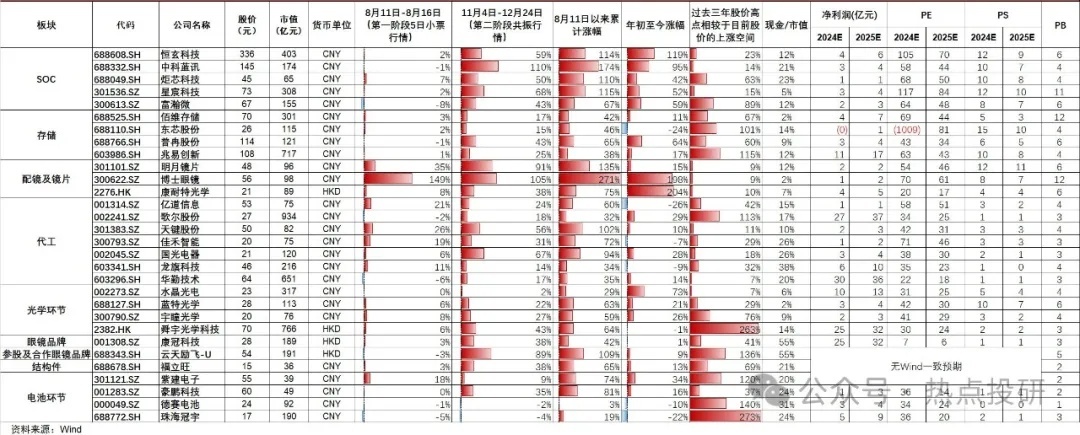
Despite the hype, AI glasses shipments remain low in the short term.
WellsennXR predicts global AI glasses shipments won’t exceed 10 million units in 2025. Supply chain earnings may not materialize until 2026, keeping the market in speculative mode.
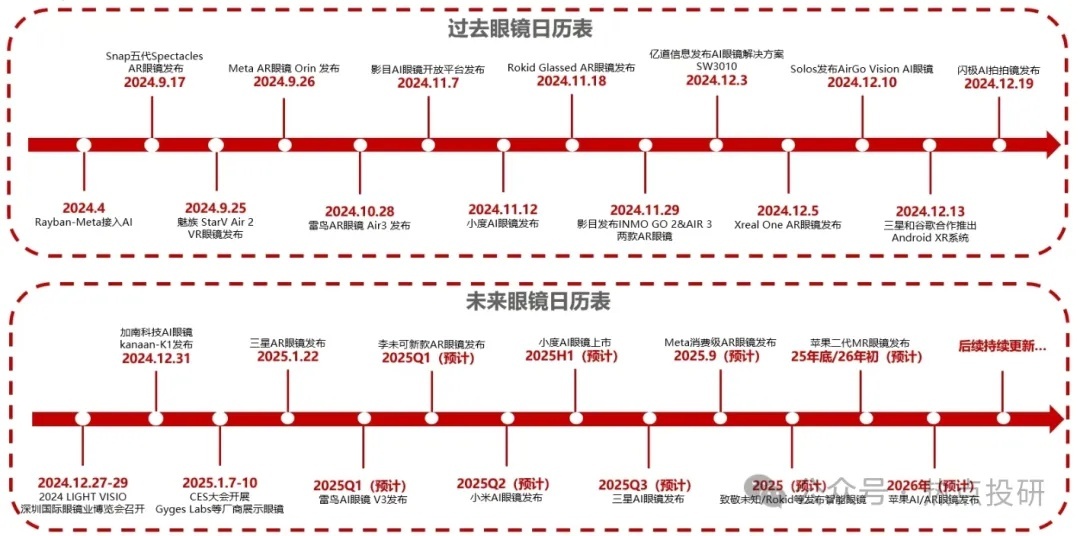
—From a visible catalyst perspective (with clear timelines), focus on major players’ products and supply chains. Smartphone makers (large user base, strong branding, hardware synergy) may lead, followed by model developers (content ecosystem and AI advantages). Xiaomi’s AI glasses (25Q2) are the fastest-moving among smartphone brands, making them a near-term catalyst and potential breakout hit (imagine post-launch hype mirroring Vision Pro’s early 2024 buzz, with first-person photos flooding social media).
Next up are Samsung (25Q3), ByteDance (25Q3), META (25Q3), and Apple (2026). Key metrics to watch: weight (ideal under 40g vs. regular glasses’ 20g), battery life (over 1 hour of camera use vs. current 30-40 minutes), camera quality (ISP, EIS stabilization, 60fps+), and smartphone integration.
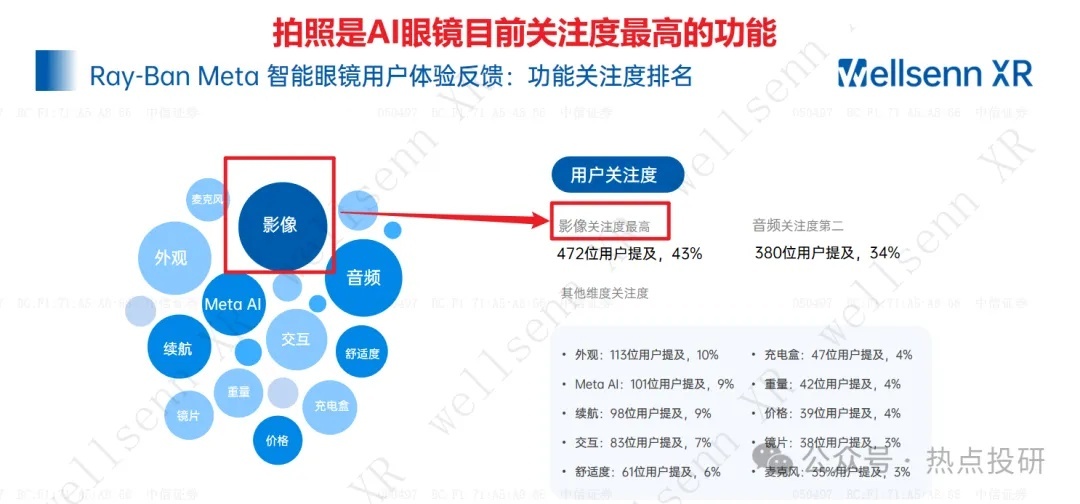
Chart: RayBan Meta glasses user interest ranking
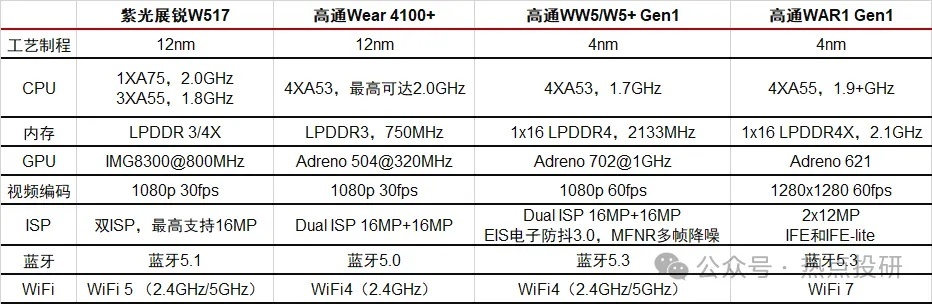
Chart: Key specs for Qualcomm and Unisoc’s glasses chips
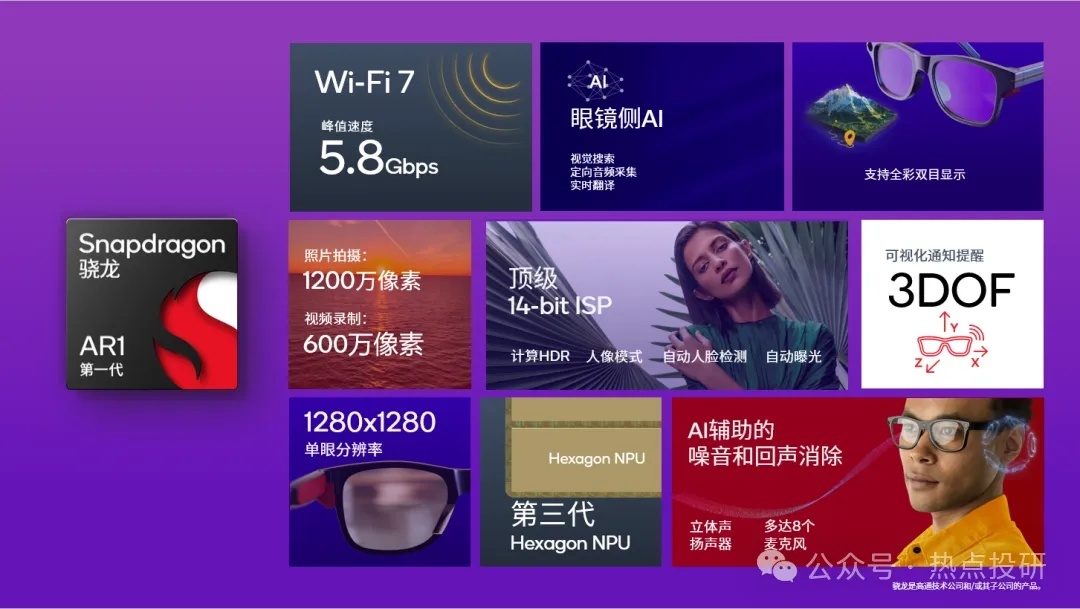
Chart: Qualcomm AR1 chip

Chart: AI glasses release roadmap
—From a hidden catalyst perspective (unclear timelines), track major players like OpenAI, Apple, META, and ByteDance for AI glasses and model advancements (this year’s two AI glasses waves were driven by such unpredictable catalysts).
Compared to AR/VR, AI glasses seem lower-risk and more mass-market. With more giants entering, they could pioneer the next consumer electronics wave post-smartphones.$Tesla(TSLA.US)
The copyright of this article belongs to the original author/organization.
The views expressed herein are solely those of the author and do not reflect the stance of the platform. The content is intended for investment reference purposes only and shall not be considered as investment advice. Please contact us if you have any questions or suggestions regarding the content services provided by the platform.
