

 Top 10 Influencers in 2025
 Markel
What is Trump thinking? Just tariffs.

I don't understand him economically, but what about from a historical perspective?
My argument will revolve around two key historical cases:
20th-century U.S. protectionist policies → The Great Depression. Excessive protectionism like the Smoot-Hawley Tariff Act triggered global trade wars and worsened the Great Depression.
19th-century British free trade policies → Imperial decline. Advocating free trade led to the loss of industrial dominance and replacement by the U.S.
Overcapacity is the core issue—whether through openness or protectionism, failure to absorb excess capacity leads to crisis.
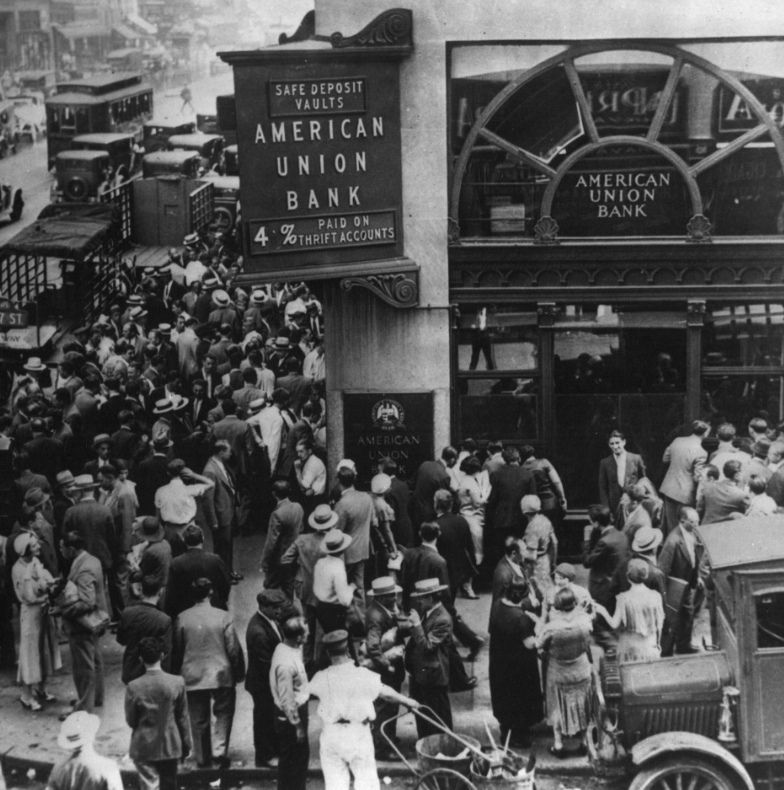
20th-century U.S. Protectionist Policies
100 years ago, the U.S. faced the Great Depression. In 1900, the Smoot-Hawley Tariff Act raised tariffs on over 20,000 imported goods to historic highs. After its passage, many countries retaliated with tariffs, causing U.S. imports and exports to drop by 67% during the Great Depression.
The 1920s, the Roaring Twenties. Big cities were decadent, while marginal urban and rural areas imploded. Why? Four words: overcapacity. Before the 1920s, Europe was at war, and the U.S. supplied industrial and agricultural goods. When Europe resumed production, the U.S., as the world’s factory, kept leveraging and expanding—once you start, you can’t stop. Prices for industrial and agricultural goods plummeted, e.g., agricultural income fell from $14.5 billion in 1919 to $8.1 billion in 1921. By 1929, the Great Depression hit.
Thus, the U.S. pinned its hopes on unrealistic domestic demand and doubled down on protectionism. U.S. exports dropped from $2.341 billion in 1929 to $784 million in 1932. Global trade fell by 60% from 1929 to 1933. Rising prices for daily goods and public anger erupted in 1932, ousting Republican Hoover and ushering in Democrat Roosevelt to repair the global system.

19th-century British Free Trade Policies
In 1860, Britain and France championed free trade. From 1867 to 1900, U.S. industrial output, like steel, grew over 20-fold. Openness allowed the U.S. to replace Britain and France as the dumping nation; protectionism would have caused America’s overcapacity to implode. Britain lost an empire, partly due to openness and free trade.
In 1846, Britain repealed the Corn Laws, and in 1860, signed the Cobden-Chevalier Treaty, promoting free trade to monopolize global markets with industrial superiority. Britain unilaterally opened to the world, but its free trade clashed with others’ protectionism, eroding its "first-mover advantage." Meanwhile, the U.S. industrialized under protectionism.
Of course, the U.S. Great Depression was mainly caused by credit bubbles + overcapacity, but the tariff act was the final catalyst. Post-war European recovery reduced demand for U.S. agricultural and industrial goods, while America’s cutthroat industrial system forced overproduction.
Dumping nations need to offload excess capacity abroad. Whether Trump’s logic is intentional or not, he’s sealing the release valve, causing localized implosions. Historically, he might not care about short-term economics—assuming his cabinet even grasps this history.
Just my two cents—who knows?
$US Steel(X.US) $Apple(AAPL.US) $Microsoft(MSFT.US) $Alphabet(GOOGL.US)$Amazon(AMZN.US) $Meta Platforms(META.US) $Tesla(TSLA.US) $NVIDIA(NVDA.US) $Netflix(NFLX.US) $Disney(DIS.US) $Coca Cola(KO.US) $McDonald's(MCD.US) $Alibaba(BABA.US) $PDD(PDD.US) $BYD Company(BYDDY.US) $Dow Jones Industrial Average(.DJI.US) $NASDAQ Composite Index(.IXIC.US)$S&P 500(.SPX.US) $Hang Seng Index(00HSI.HK)
The copyright of this article belongs to the original author/organization.
The views expressed herein are solely those of the author and do not reflect the stance of the platform. The content is intended for investment reference purposes only and shall not be considered as investment advice. Please contact us if you have any questions or suggestions regarding the content services provided by the platform.
