

In-depth analysis of TSMC's 2025 Q1 financial report

Key Financial Metrics
TSMC's Q1 2025 earnings report showed strong performance, with revenue reaching NT$839.25 billion, a year-on-year increase of 41.6%. Net profit was NT$361.6 billion, up 60.3% YoY, far exceeding market expectations of NT$346.8 billion. In terms of profitability, gross margin was 58.8% and operating margin was 48.5%, both higher than market expectations.
From the revenue structure, HPC (High Performance Computing) contributed 59% of revenue, smartphones accounted for 28%, while IoT and automotive each accounted for 5%. Advanced processes (7nm and below) accounted for 73%, with 3nm, 5nm, and 7nm accounting for 22%, 36%, and 15% respectively, becoming the main growth drivers.
Q2 Guidance
TSMC expects Q2 revenue to range between $28.4-$29.2 billion (market expectation: $27.16 billion), a sequential increase of 11%-14%. Despite the earthquake causing some capacity loss in Q1, Q2 has seen strong demand for order replenishment. Gross margin guidance is 57%-59%, and operating margin guidance is 47%-49%.
Growth Drivers
1. Surge in AI chip demand: Orders for 3nm/5nm AI accelerators from clients like NVIDIA and AMD continue to grow, with TSMC expecting AI-related revenue to double in 2025.
2. HPC platform expansion: Cloud service providers have strong demand for data center chips, with hyperscale clients like Microsoft and Amazon securing advanced packaging capacity (CoWoS), driving TSMC's HPC revenue share above 50%.
3. Technological leadership: 2nm process will enter mass production in the second half of the year, with performance improving 10%-15% over 3nm. Apple, Qualcomm, and others have already secured capacity, supporting long-term growth expectations.
Capital Expenditure
TSMC maintains its 2025 capital expenditure at $38-$42 billion, a year-on-year increase of 27%-41%. Funds will mainly be used for:
1. 2nm R&D and mass production: Combined monthly capacity at Hsinchu's Fab 20 and Kaohsiung's Fab 22 will exceed 30,000 wafers by year-end.
2. Overseas expansion: The 4nm fab in Arizona, USA, has begun production, with the 2nm fab accelerated to 2027; Japan's Kumamoto fab focuses on mature processes, while a European fab is in planning.
3. Advanced packaging capacity: CoWoS packaging monthly capacity will reach 650,000-700,000 units in 2025, easing AI chip supply chain bottlenecks.
Tariff Impact
Expected U.S. tariffs on semiconductor imports have prompted client strategy adjustments:
1. Orders shifting to U.S. fabs: NVIDIA's Blackwell chips and AMD's 5th-gen EPYC processors have moved to TSMC's Arizona 4nm fab, with Apple also increasing U.S.-made chip procurement. Current monthly capacity at the U.S. fab is only 20,000-30,000 wafers, with clients queuing for capacity.
2. 30% foundry fee hike: To offset high U.S. construction costs, TSMC announced a 30% price increase for U.S. fabs, while Taiwan fab prices remain unchanged. This is expected to reduce U.S. fab losses and test client acceptance of technology premiums.
Overall, TSMC's Q1 earnings report confirms its irreplaceability in the global semiconductor ecosystem: technological leadership offsets geopolitical risks, while AI demand resilience counterbalances weak consumer electronics. Despite short-term cost pressures under tariff shadows, clients are forced to accept price hikes to secure supply chains, highlighting TSMC's pricing power. Future focus will be on U.S. fab capacity ramp-up and 2nm yield performance—if technological advantages persist, TSMC will remain one of the biggest beneficiaries of the AI wave.
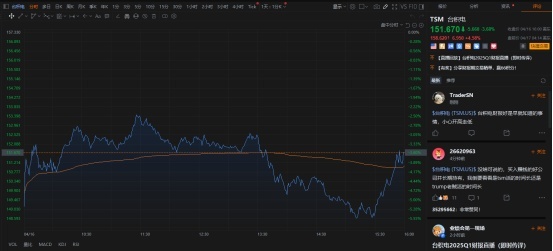
$Taiwan Semiconductor(TSM.US)
The copyright of this article belongs to the original author/organization.
The views expressed herein are solely those of the author and do not reflect the stance of the platform. The content is intended for investment reference purposes only and shall not be considered as investment advice. Please contact us if you have any questions or suggestions regarding the content services provided by the platform.
