


Bao Bao dared to confront Trump publicly this time, and the core conflict has become irreconcilable.

Save US Treasuries or Rescue US Stocks? The Fed's Bottom Line Logic
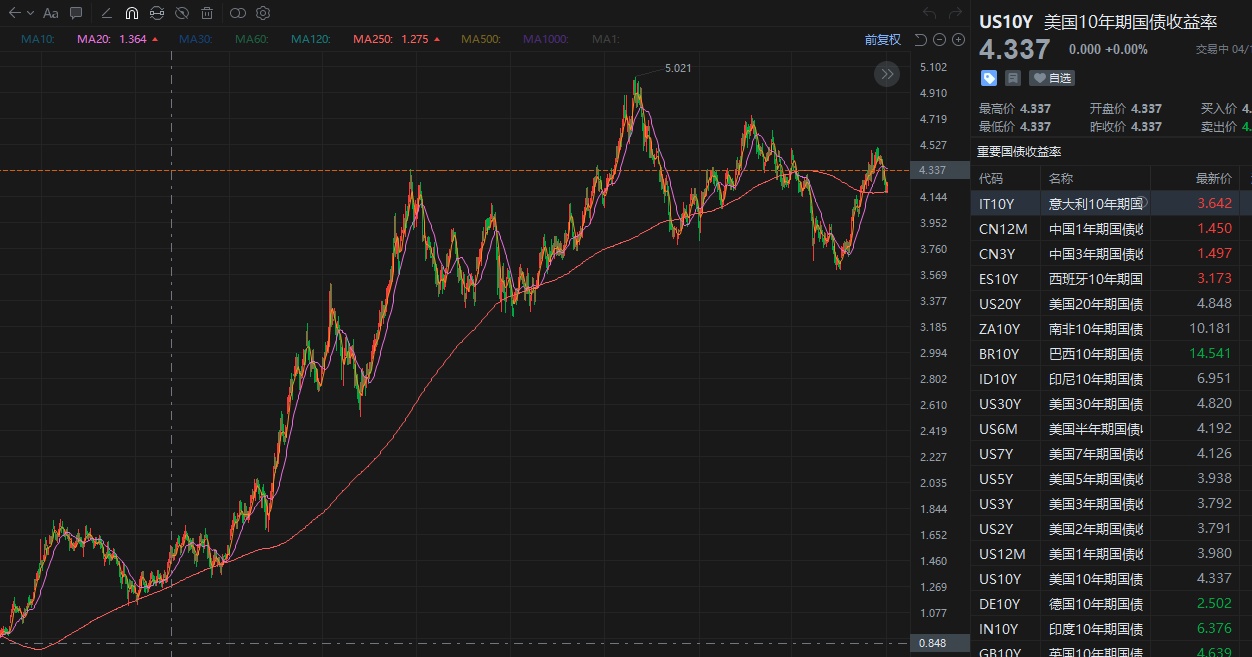
The Fed's balance sheet remains as high as $7.2 trillion, with core PCE inflation at 2.8%, far above the 2% target. Powell has clearly stated that the Fed won't backstop the stock market, as it is more concerned about systemic risks in the Treasury market—the 10-year Treasury yield is approaching 4.5% again, and 30-year mortgage rates have exceeded 7%. Cutting rates now to boost stocks could trigger a sell-off in Treasuries, undermining the foundation of the dollar's credibility.
Trump's tariff threats are essentially election tools, but the side effects are already showing: states like California are suing the government over illegal tariffs causing economic damage, and soaring Treasury yields have forced Trump to delay some tariffs. Even crazier is the rumored "Mar-a-Lago Agreement"—proposing taxes on foreign investors holding US Treasuries and even threatening to delist Chinese stocks. This strategy of wanting foreign capital to buy Treasuries while blocking their profits is backfiring on the US economy.
The Fed insists on not cutting rates, but the Treasury's Q1 net issuance of Treasuries has surged year-over-year. Market demand is severely insufficient, with the 10-year Treasury real yield exceeding 4%, creating the largest divergence from US stock valuations in 20 years. Like two pumps running simultaneously, market liquidity is being drained rapidly.
Corporate Earnings Expectations Collapse: Tariff Impact Far Exceeds 2018
Among S&P 500 companies, over two-thirds listed tariffs as the biggest risk in Q1 earnings—three times the number in 2018. Tech giants are hit hardest: NVIDIA could lose $5.5 billion in revenue due to the H20 chip ban, and AMD's MI308 chip orders in China have halved, with both stocks down 15% from their peaks.
Semiconductors Become the Biggest Casualty
After China imposed a 34% tariff on US goods, the cost of importing lithography machines and other equipment surged over 50%, forcing SMIC to accelerate domestic alternatives. US equipment maker Applied Materials saw Q2 China revenue plunge 60%, and Lam Research cut 15% of its workforce.
The semiconductor sector's P/E ratio has dropped from a peak of 90x to 70x, but the market still hasn't fully priced in "de-globalization" risks. During the 2018 trade war, the Philadelphia Semiconductor Index halved in six months, with Japanese and Korean equipment makers (Tokyo Electron, Samsung) becoming the biggest winners, with exports to China surging 40%. Domestic memory chip maker YMTC raised capacity utilization to 90%, but the technology gap remains a critical weakness.
Retail investors should stay away from the storm and embrace hard assets in this market.
Keep Nasdaq 100 exposure below 40%, and prioritize reducing high-valuation tech stocks (P/E > 50x).
Positioning in Anti-Tariff Assets
Energy Stocks: US shale oil companies (e.g., Chevron) benefit from crude import restrictions, with WTI crude holding above $85/barrel;
Defense Stocks: Lockheed Martin holds $87 billion in government orders, with geopolitical conflict premiums persisting;
Gold: Even without Fed rate cuts, gold has broken $2,600/oz as the market prices in "dollar credibility collapse."
Monitor the VIX and go long USD/CNH—under tariff escalation, the yuan faces clear pressure.
This power struggle has no winners:
If the Fed holds rates, US stocks could repeat 2022's 20%+ drop;
If Trump forces monetary policy intervention, dollar hegemony will unravel faster;
The real turning point may come in Q3 2025: either a US-China tariff truce or collapsing US economic data forcing a policy shift.
$NVIDIA(NVDA.US)$Tesla(TSLA.US)$NASDAQ Composite Index(.IXIC.US)
The copyright of this article belongs to the original author/organization.
The views expressed herein are solely those of the author and do not reflect the stance of the platform. The content is intended for investment reference purposes only and shall not be considered as investment advice. Please contact us if you have any questions or suggestions regarding the content services provided by the platform.
