


Comprehensive analysis of Tesla's stock price trend under tariffs! Should we pin our hopes on Q1 performance?

Tesla's Lost Resilience
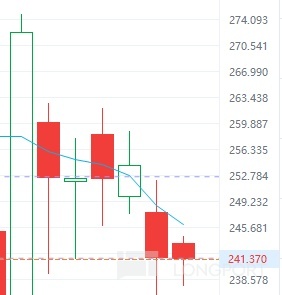
Tesla$Tesla(TSLA.US) has shown weak performance after a strong rally with the market on April 9, closing around 252 for the next four days, indicating sideways consolidation. Meanwhile, Nvidia$NVIDIA(NVDA.US) , Google$Alphabet(GOOGL.US) , Apple$Apple(AAPL.US) , Microsoft$Microsoft(MSFT.US) , and the S&P 500$SPDR S&P 500(SPY.US) have all rebounded to their April 9 highs. Tesla's performance is clearly disappointing, losing its resilience and underperforming the broader market and tech peers.
Reasons include:
①Although Trump temporarily delayed reciprocal tariffs for 90 days, the existing 25% tariffs on automobiles and parts remain a major hurdle for automakers.
②Trump not only maintained tariffs on China but also escalated retaliatory tariffs.
Thus, whether it's Trump's "market boost" or "tariff escalation," both are blows to Tesla.
China's Critical Role for Tesla
37% of Tesla's sales come from China. In 2024, Tesla delivered 1,789,226 vehicles globally, with ~657,000 retail sales in China, accounting for 36.7%. This figure rose to 39.73% in Q4.
40% of Tesla's production relies on China. The Shanghai Gigafactory has an annual capacity of 1M vehicles (Model 3/Y), producing ~916,660 units in 2024 (including exports). Global capacity is ~2.5M-3M (Shanghai, Fremont, Austin, Berlin), with China contributing 36%-40%.
20-30% of components in Tesla's North American plants come from China. Bloomberg and Reuters report that 20%-25% of parts in Tesla's NA plants are Chinese-sourced, mainly batteries and electronics. IHS Markit estimates 25%-30% Chinese components in NA-made Model 3/Y.
Rumors suggest all Optimus actuators are from China. While unverified, China dominates robotics supply chains (batteries, sensors, motors), controlling ~70% globally. Optimus' cost targets depend on this efficiency.
On April 16, reports indicated Tesla paused plans to export Cybercab/Semi parts from China to the US due to higher tariffs.
Tariffs Are the Core Drag on Tesla
Goldman notes automakers struggle to fully pass costs to consumers. Escalating US-China trade tensions may further erode Tesla's China share, benefiting BYD and EV startups. In the US, Tesla's California share (1/3 of EV sales) fell to 43.9%, with registrations down 15.1% YoY.
Upcoming Earnings Are the Near-Term Catalyst
Tesla will report Q1 2025 earnings after market close on Tuesday (April 22).
Current consensus estimates for Tesla 25Q1:
Revenue: $21.54B (+1.12% YoY);
EPS: $0.37 (+8.24% YoY).
Despite weak price action, Tesla shows strong support at 252 and 241.
Tesla's Business Structure
Revenue breakdown:
Auto sales (77.0%): $19.8B (-8% YoY); regulatory credits: $692M (3.5% of auto revenue, +70% YoY).
Energy storage/generation (11.9%): $3.06B (+113% YoY).
Services/other (10.9%): $2.8B (+31% YoY).
Tesla's Shanghai Megafactory began production on Feb 11, 2025, targeting 10K Megapacks/year (~40 GWh). Storage outperforms, but impact is magnified post-stock slump.
Autos (77%) remain Tesla's core. Robots/FSD face US-China headwinds, making 25Q1 challenging.
The copyright of this article belongs to the original author/organization.
The views expressed herein are solely those of the author and do not reflect the stance of the platform. The content is intended for investment reference purposes only and shall not be considered as investment advice. Please contact us if you have any questions or suggestions regarding the content services provided by the platform.
