


The debt-to-asset ratio climbed to 73.72%, revealing the 'survival challenge' behind Xiangxue Pharmaceutical's pre-restructuring.

After putting on the "ST hat", the risks of Xiangxue Pharmaceutical are now in plain sight.
This debt-ridden pharmaceutical company on the edge of a cliff urgently needs a buffer period to prevent further deterioration. Currently, there is still some hope.
Recently, Xiangxue Pharmaceutical announced that the Guangzhou Intermediate People's Court (hereinafter referred to as "Guangzhou Intermediate Court") has agreed to the company's pre-restructuring, with a pre-restructuring period of 3 months. Meanwhile, the Guangzhou Intermediate Court has appointed King & Wood Mallesons (Guangzhou) (lead institution) and Guangdong Oriental Kunlun Law Firm as joint temporary administrators during the pre-restructuring period.
It is worth noting that Xiangxue Pharmaceutical's entry into the pre-restructuring phase was directly driven by creditor Guangdong Jinglong Construction Group Co., Ltd. (hereinafter referred to as "Jinglong Construction"). According to reports, as of September 30, 2024, Xiangxue Pharmaceutical owes Jinglong Construction 66 million yuan in construction payments. Jinglong Construction believes that Xiangxue Pharmaceutical "is unable to repay its due debts and lacks the ability to repay, but has restructuring value and feasibility," and thus filed a pre-restructuring application with the court.
This also serves as a push for Xiangxue Pharmaceutical to improve its asset-liability structure. Of course, there is significant uncertainty.
Xiangxue Pharmaceutical also issued a risk warning in its announcement.
"Pre-restructuring is a procedure before the Guangzhou Intermediate Court formally accepts the restructuring application. The court's approval of pre-restructuring does not mean it has formally accepted Jinglong Construction's restructuring application, nor does it mean the company has officially entered the restructuring process."
"Even if the Guangzhou Intermediate Court formally accepts the restructuring application, there remains the risk of bankruptcy and liquidation if the restructuring fails. If the company is declared bankrupt due to restructuring failure, its stock may face delisting under the relevant rules of the Shenzhen Stock Exchange's Growth Enterprise Market."
Overall, Xiangxue Pharmaceutical's development outlook is far from optimistic. So, what led to its operational difficulties? And where does its restructuring value lie?
How Did Xiangxue Pharmaceutical Fall into the ST Situation Step by Step?
Generally, companies labeled as "ST" face both internal and external factors.
For Xiangxue Pharmaceutical, there is significant room for improvement in its internal management standards. This issue was highlighted in the "Advance Notice of Administrative Penalty" issued by the China Securities Regulatory Commission (CSRC) on March 21 this year, with two key points drawing major attention:
First, in its 2019 annual report, Xiangxue Pharmaceutical failed to properly account for losses from the demolition of villas, inflating profits by 53.8325 million yuan, or 45.98% of the reported total profit for the period. It wasn’t until April 2024 that the company adjusted the related costs via an announcement.
Second, from 2016 to 2020, Xiangxue Pharmaceutical transferred funds to its controlling shareholder, Guangzhou Kunlun Investment Co., Ltd., and other related parties under the guise of purchasing trust products or cooperative operations in Chinese herbal medicines. These funds were used for debt repayment and equity acquisitions by the related parties, with the total amount exceeding 4.8 billion yuan over five years. Xiangxue Pharmaceutical failed to disclose these non-operational fund transfers in a timely and complete manner, leading to material omissions in its annual reports.
As a result, the CSRC imposed administrative penalties totaling 20.65 million yuan on Xiangxue Pharmaceutical and its responsible parties.
Looking at Xiangxue Pharmaceutical's operations, external factors such as intensified market competition, fluctuating raw material prices, and centralized procurement policies have also significantly impacted its business.
Xiangxue Pharmaceutical primarily focuses on the R&D, production, and sales of traditional Chinese medicines, with core products including antiviral oral liquids, Banlangen granules, and Juhong series, alongside medical devices, a small number of Western medicines, and pharmaceutical distribution.
The traditional Chinese medicine industry is highly competitive, with a clear winner-takes-all dynamic. According to Menet data, in 2024, 187 traditional Chinese medicine brands with sales exceeding 100 million yuan collectively captured over 66 billion yuan in China's urban retail pharmacy market. Among them, brands like Huarun Sanjiu Medical's Ganmaoling Granules exceeded 2 billion yuan in sales.
Despite years of effort, Xiangxue Pharmaceutical has built some brand recognition. However, its main products—cold and cough medicines—face strong competition and substitutability, limiting its market potential.
Additionally, Xiangxue Pharmaceutical sources its raw materials from external suppliers, and as agricultural products, their prices are highly volatile due to climate, supply-demand dynamics, and monetary policies, adversely affecting the company's operations.
Coupled with centralized procurement policies, Xiangxue Pharmaceutical's financial performance has declined sharply.
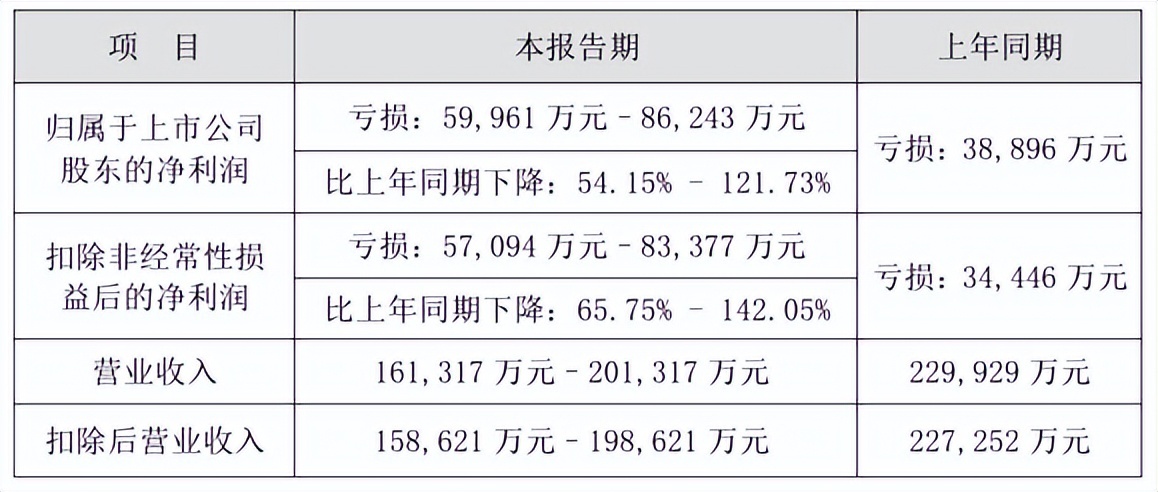
Financial reports show that from 2021 to 2023, Xiangxue Pharmaceutical's revenue was 2.971 billion yuan, 2.187 billion yuan, and 2.299 billion yuan, respectively, with net losses attributable to shareholders of 677 million yuan, 530 million yuan, and 389 million yuan—totaling nearly 1.6 billion yuan in losses. For 2024, the company expects revenue to further decline to 1.613-2.013 billion yuan, with net losses widening by 54.15%-121.73% to 600-862 million yuan.
Meanwhile, Xiangxue Pharmaceutical faces significant debt pressure. As of September 30, 2024, its total liabilities stood at 5.937 billion yuan, with current liabilities accounting for 5.157 billion yuan and a debt-to-asset ratio of 73.72%.
Under these circumstances, investor confidence and patience are wearing thin. However, the story isn’t entirely bleak.
Can TCR-T Ignite Capital Enthusiasm, But Sustainability Is Questionable?
Looking back at Xiangxue Pharmaceutical's 2024, an interesting phenomenon emerges: despite poor financial performance, its stock price surged significantly.
According to Tonghuashun data, in 2024, Xiangxue Pharmaceutical's stock rose by 89.71%, ranking third in the A-share pharmaceutical sector and first among over 70 traditional Chinese medicine companies. Its market cap once exceeded 10 billion yuan.
What fueled this capital enthusiasm? The answer is TCR-T.
TCR-T, or "T cell receptor-engineered T cell therapy," is a novel cell immunotherapy similar to CAR-T. It involves genetically modifying a patient's T cells to express exogenous TCRs that can specifically recognize tumor antigens, enabling targeted tumor cell destruction.
Compared to CAR-T, TCR-T is safer and more suitable for treating solid tumors like head and neck cancer, liver cancer, and melanoma.
Some investors believe, "The past decade in T cell adoptive immunotherapy belonged to CAR-T, but the next decade will belong to TCR-T." Market potential is vast: from 2021 to 2025, China's TCR-T therapy market is projected to grow from 38.7 billion yuan to 104.14 billion yuan, with a CAGR of 28.1%.
Currently, Xiangxue Pharmaceutical is riding this industry wave.
In its 2024 interim report, Xiangxue Pharmaceutical stated it has established a complete TCR-T technology platform, including tumor-specific antigen discovery, TCR screening and affinity optimization, protein expression, antigen preparation, T cell cloning, clinical-grade lentivirus production, and TCR-T cell production processes. It has also developed a proprietary TCR-T pipeline.
In terms of R&D milestones, Xiangxue Pharmaceutical is moving beyond the "concept" stage.
On March 30, 2025, a seminar on the confirmatory clinical trial plan for TAEST16001—a TCR-T therapy for advanced soft tissue sarcoma—was held in Guangzhou. The trial is sponsored by Xiangxue Life Sciences (a subsidiary of Xiangxue Pharmaceutical) and led by Peking University Cancer Hospital and Sun Yat-sen University Cancer Center.
TAEST16001, independently developed by Xiangxue Life Sciences, is China's first TCR-T product approved for confirmatory clinical trials. It has completed Phase I and preliminary Phase II trials, demonstrating good safety and tolerability, and has been included in the breakthrough therapy list. It has also received IND approvals for advanced esophageal cancer and non-small cell lung cancer.

Clearly, Xiangxue Pharmaceutical holds a first-mover advantage in TCR-T R&D. If TAEST16001 succeeds, the company could stage a comeback driven by market demand.
However, challenges remain formidable.
First, the competitive landscape is taking shape. Roughly 20 domestic companies are developing TCR-T therapies, racing to commercialization. Second, developing an effective TCR-T product requires hundreds of millions of dollars and years of clinical trials. For a debt-laden company like Xiangxue Pharmaceutical, the risk of R&D setbacks is real.
Conclusion
Overall, Xiangxue Pharmaceutical's traditional Chinese medicine business lacks novelty, while its innovative drug story remains largely conceptual, creating a "double bind." Compared to long-term storytelling, resolving its debt crisis is the company's most urgent task.
Pre-restructuring may offer Xiangxue Pharmaceutical a lifeline, but true revival will take time, testing its ability to rebuild competitiveness amid policy pressures and market shifts. If successful, its case could serve as a valuable reference for peers.
Source: Pharmaceutical Research Society
The copyright of this article belongs to the original author/organization.
The views expressed herein are solely those of the author and do not reflect the stance of the platform. The content is intended for investment reference purposes only and shall not be considered as investment advice. Please contact us if you have any questions or suggestions regarding the content services provided by the platform.
