

BMW's flagship EV factory: Is the electrification technology layout not aggressive enough?


Produced by Zhineng Auto
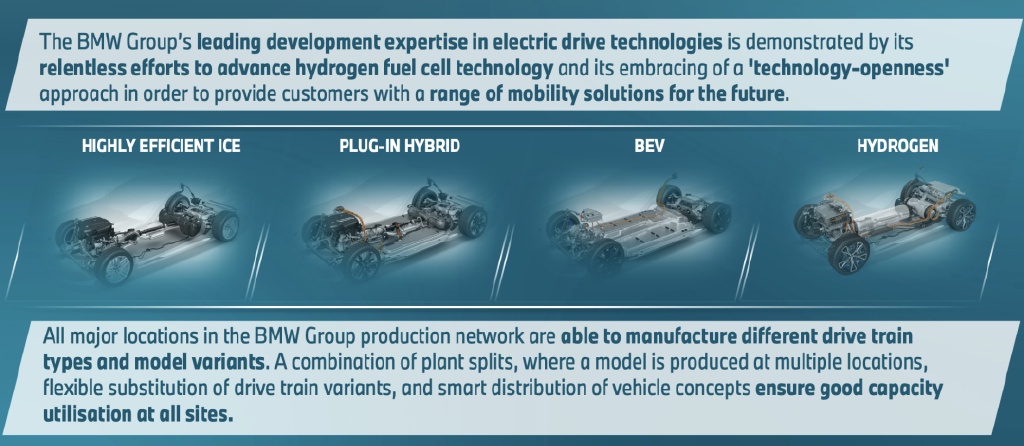
BMW's Steyr plant is gradually transforming into one of the global core production bases, becoming a key part of its new generation electric drive system strategy.
However, the pace of factory capacity expansion and the choice of technical path show an extremely cautious approach, not only reflected in the precise control of electrification but also in the layout of electrically excited synchronous motors (SSM) and permanent magnet synchronous motors (PSM).

Part 1
Selection and Deployment of Core Electric Drive Technology
The Steyr plant is defined as the hub of BMW's electric future, with its strategic position first reflected in its independent development and integrated manufacturing capabilities.
BMW has clearly adopted two mainstream motor architectures: electrically excited synchronous motors (SSM) and permanent magnet synchronous motors (PSM). These are deployed on two newly built production lines, reflecting considerations for future vehicle coverage and a pragmatic approach to technological openness.
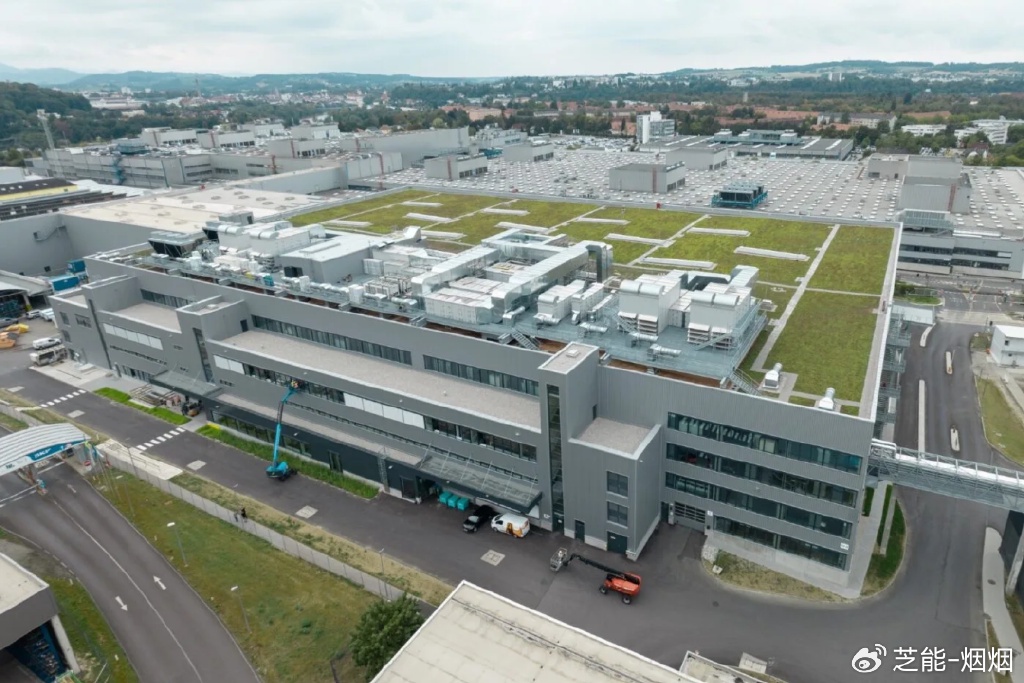
● The first production line uses EESM technology, with the main feature being the elimination of reliance on traditional permanent magnet materials. Instead, electromagnetic coils on the rotor generate excitation fields, achieving similar operational effects to permanent magnet synchronous motors.
The motor structure's greatest advantage lies in avoiding dependence on rare earth materials, enhancing supply chain independence, and preventing demagnetization risks of permanent magnets under high-speed conditions, thereby improving overall thermal stability.
This line is divided into two versions: rear-wheel drive and all-wheel drive, serving different electric vehicle platforms. The EESM uses a rotor excitation control system, which can adjust excitation current at different speeds to achieve a wide range of efficiency control.
In BMW's chosen solution, the rotor integrates excitation windings, powered through slip rings or brushless excitation mechanisms, ensuring flexible switching between low-speed high-torque and high-speed cruising states, meeting both urban and highway driving needs.
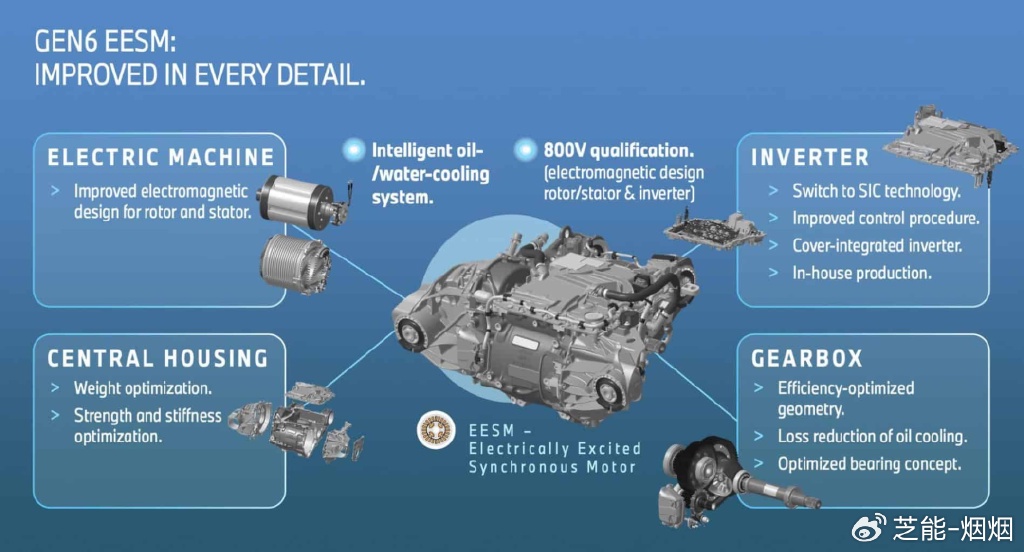
● The second production line uses PSM technology, which, due to its compact structure, high power density, and fast response, has become the preferred choice for high-performance electric vehicles.
BMW's choice of this technology clearly aims to meet the needs of a wider range of vehicle power segments, including high-performance sports cars and large luxury SUVs.
Through the interaction of stator three-phase AC excitation and permanent magnet rotor flux, PSM motors can maintain high efficiency and output stability at high speeds, making them particularly suitable for long-distance highway cruising and frequent acceleration scenarios.
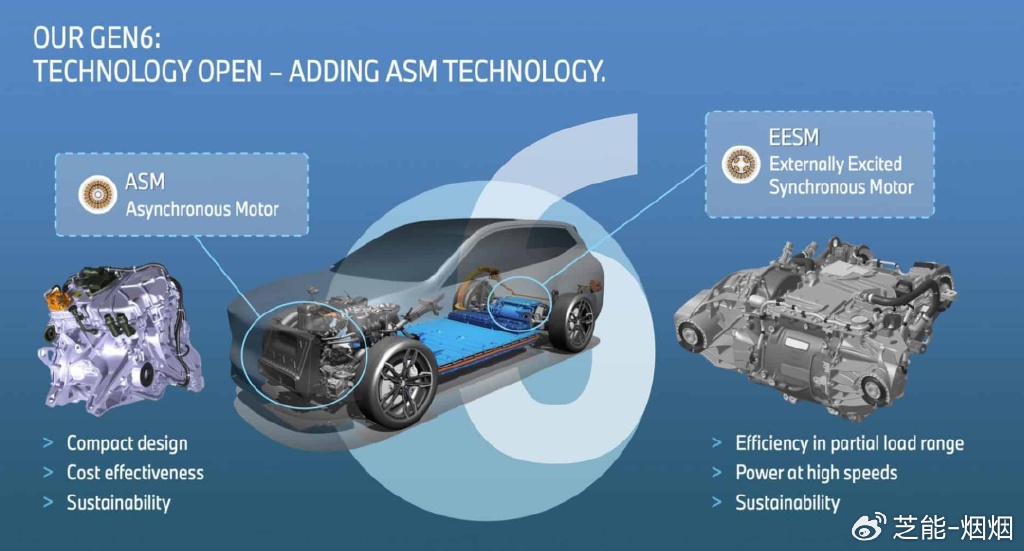
The production plan for ASM motors is also more aggressive, with an annual output of 400,000 units, twice that of ESSM's 200,000 units, indicating that BMW still views high-performance electric vehicles as a pillar of its brand image.
ASM motors rely heavily on rare earth resources, but BMW has collaborated with supply chain partners to develop alternative materials and improve recycling efficiency, attempting to mitigate resource security concerns.
◎ Currently, the first SSM production line has entered the mass production preparation phase and is expected to officially begin large-scale production in the fall of 2025;
◎ The second ASM production line will begin mass production in the fall of 2026. By then, Steyr's two core electric drive production lines will be fully operational, with a combined annual output of 600,000 units, forming the core supply system for BMW's global BEV drive systems.
Steyr is strategically transitioning to an electric drive center, but the overall production layout still retains a clear dual-track structure.
Currently, there are 13 internal combustion engine production lines in the factory, while only two electric drive system motor production lines are deployed, far from reaching the boundary of "full electrification" in terms of area and capacity. In 2023, Steyr still produced about 1.2 million gasoline and diesel engines, while the planned annual capacity for electric drives is 600,000 units, only half of the traditional capacity.
In terms of actual factory deployment, the electric drive system production lines are concentrated in a newly built 85,000-square-meter workshop, accounting for only about 28% of the total production area, with no significant compression or dismantling of existing internal combustion production lines. BMW has retained sufficient redundancy and recovery flexibility for internal combustion engines.
From a manufacturing system perspective, Steyr's new production lines are highly modular and platform-based. Whether ESSM or ASM motors, their production modules adopt unified underlying control units, testing standards, and assembly processes.
A large number of automated units are delivered through local developer collaborations, including core processes such as automatic wiring harness insertion, motor housing encapsulation, and airtightness testing, ensuring adaptability to component iterations during production line switches.
Statements from BMW executives also confirm this strategic thinking—maintaining a "dual-energy adaptable" production system.
Regardless of whether the market leans toward internal combustion or electric, Steyr can flexibly switch production rhythms, reducing transformation risks and retaining strong structural adaptability for BMW in the current uneven global electrification landscape.

Part 2
BMW's EE Architecture:
Four "Super Brains"
BMW's EE architecture evolution has gone through technological iterations from local control to distributed, central gateway, domain architecture, and now zonal architecture.
Currently, BMW's Neue Klasse adopts a central high-performance computing platform + zonal architecture model, with four "super brains" as core nodes, forming a three-layer computing structure of central-regional-peripheral.
This design ensures both the concentration of computing resources and the flexibility and real-time performance of vehicle function distribution, embodying the typical characteristics of "centralized computing, distributed sensing, and execution proximity" in software-defined vehicle architectures.
The four "super brains" respectively handle tasks such as in-vehicle entertainment, autonomous driving, dynamic control, and basic vehicle functions, forming parallel collaboration in functionality and efficient data flow:
◎ The in-vehicle entertainment system runs the panoramic iDrive, supporting multi-modal interaction and information graphics rendering, creating an immersive smart cockpit experience. Its computing core handles tasks such as voice recognition, image processing, HMI animation encoding/decoding, and information fusion, placing high demands on GPU rendering capabilities and system bus bandwidth.
◎ The autonomous driving module is a typical multi-sensor data fusion node, processing perception data from cameras, millimeter-wave radar, ultrasonic radar, etc. Core algorithms include object recognition, path planning, and behavior prediction. Its software and hardware deployment is usually based on the Linux RT system, combined with heterogeneous computing platforms (CPU+GPU+DSP+NPU), with strict requirements for system latency, reliability, and redundancy mechanisms.
◎ The dynamic control unit needs to control the vehicle chassis, power output, braking system, etc., at millisecond-level response times, quickly adjusting motor torque output and suspension stiffness through closed-loop control algorithms. Especially on BEV platforms, this module also needs to work closely with the battery management system (BMS) to optimize power recovery strategies.
◎ The basic vehicle function computing platform integrates body control (Body Domain), comfort functions (e.g., HVAC), remote updates (FOTA), vehicle access control, etc., covering about 100 function points. The system needs to maintain high availability, low-power operation, and support hot-swapping and OTA incremental update capabilities.
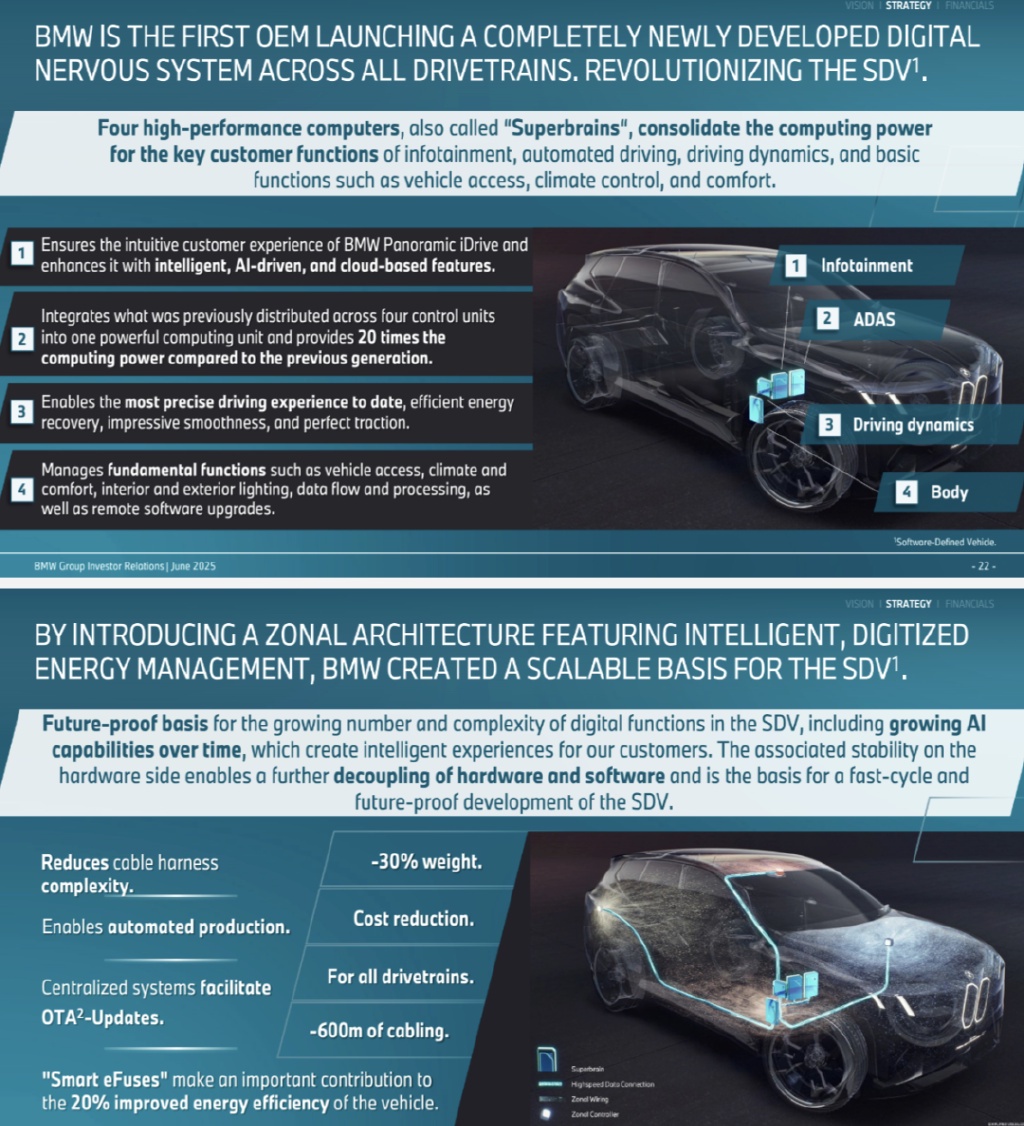
The above four modules rely on shared service middleware (Shared Service Layer) to achieve data collaboration and access permission isolation. The middleware is containerized and deployed between the operating system and applications, abstracting communication protocols, unifying device interfaces, and controlling access permissions, ensuring the architecture's stability, security, and future scalability.
Neue Klasse manages logical functions through zonal modules, supporting real-time OTA updates. For example, during a full vehicle upgrade, multiple "super brains" coordinate through zonal controllers, performing concurrent zonal updates by function group without affecting core driving logic, minimizing upgrade time.
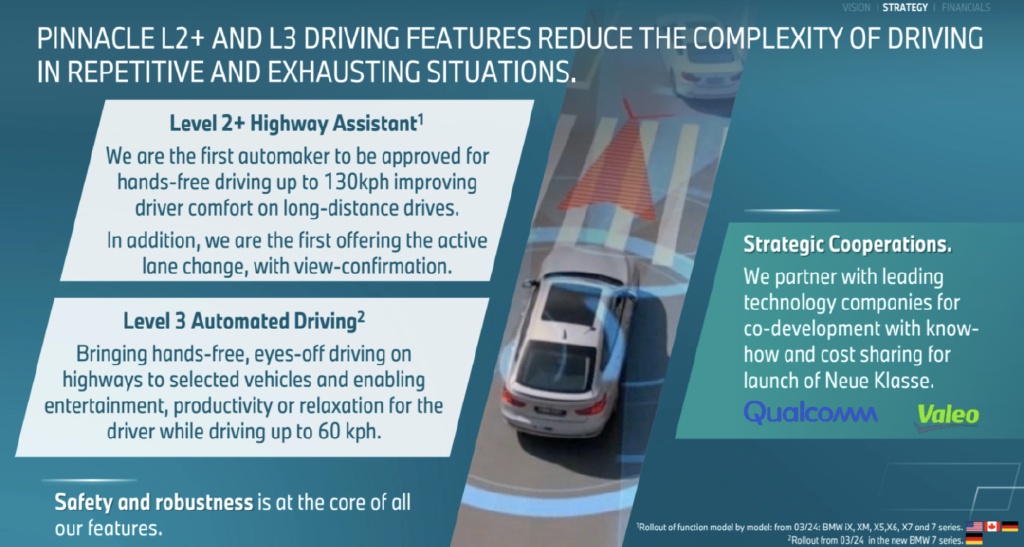
BMW is advancing the upgrade of intelligent assisted driving technology, gradually transitioning from L2+ to L3. BMW has long collaborated with Qualcomm and Valeo to develop intelligent driving systems. BMW's intelligent driving features are relatively conservative in innovation, with an overall style centered on safety, stability, and reliability.
In the Chinese market, BMW has partnered with Momenta to launch high-level intelligent assisted driving functions for urban scenarios, based on Qualcomm's single 320TOPS (NPU) or dual 640TOPS computing power SA8797P (8797) platform, supporting advanced features including urban memory navigation.
Whether these can impress electric vehicle consumers remains to be seen.
Summary
BMW's electric drive system construction at the Steyr plant reflects the rationality and restraint consistent with its brand tone. Externally, it emphasizes a "century project," but in practice, it focuses on technological robustness and structural flexibility as the core themes. It builds solid underlying manufacturing capabilities at key nodes while leaving ample space for various market and technological paths.
The copyright of this article belongs to the original author/organization.
The views expressed herein are solely those of the author and do not reflect the stance of the platform. The content is intended for investment reference purposes only and shall not be considered as investment advice. Please contact us if you have any questions or suggestions regarding the content services provided by the platform.
