

China Literature catches up, Zhu Xiaohu enters the game, the LABUBU track is being redefined

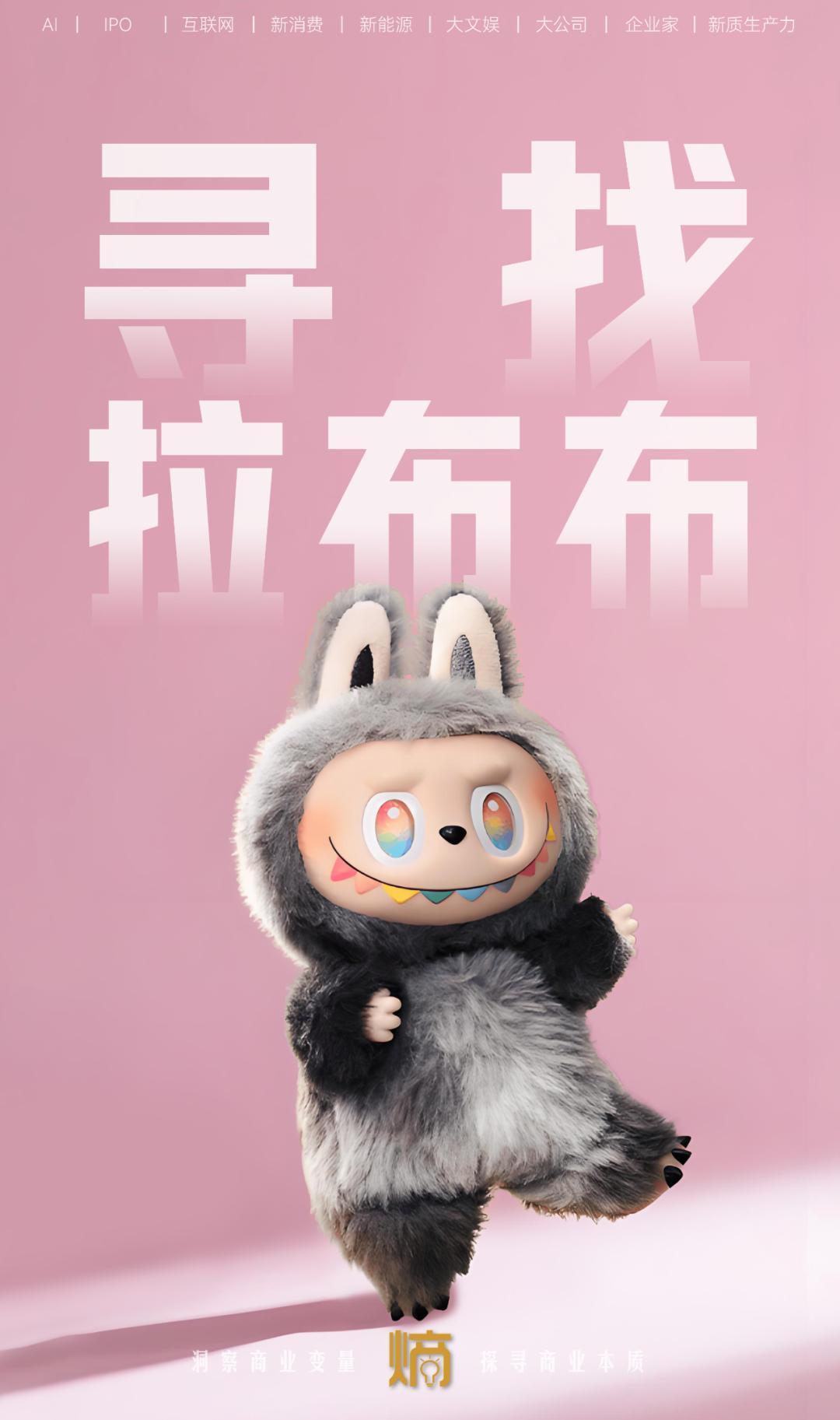
The new entrants are not competing for trendy toys, but for the next entry point of traffic and value.
Original ⓒ New Entropy New Consumption Group
Author | Yingmu Editor | Jiang Li, Jiuli
Before the explosion of Pop Mart, it might have been hard to imagine that in less than a year, everyone's attention would be focused on a trendy toy figure.
But today, the wave of creating figures and IPs has not only started but is also in full swing. Recently, according to 36Kr, the famous domestic plush trendy toy brand "Super Vitality Factory" has exclusively opened strategic investment to the Yuewen Group. After the transaction is completed, Yuewen, as the only external investor, will obtain a 10% stake in the company.
The parent company of the "Super Vitality Factory" brand, Hangzhou Lecheng Brand Management Co., Ltd., is a company in the plush toy industry. This investment is the first publicly available fundraising case in the domestic vertical plush toy industry to receive investment from mainstream institutions. Well-known original IPs such as "Cino," "Adou," and "Alber" belong to this company.
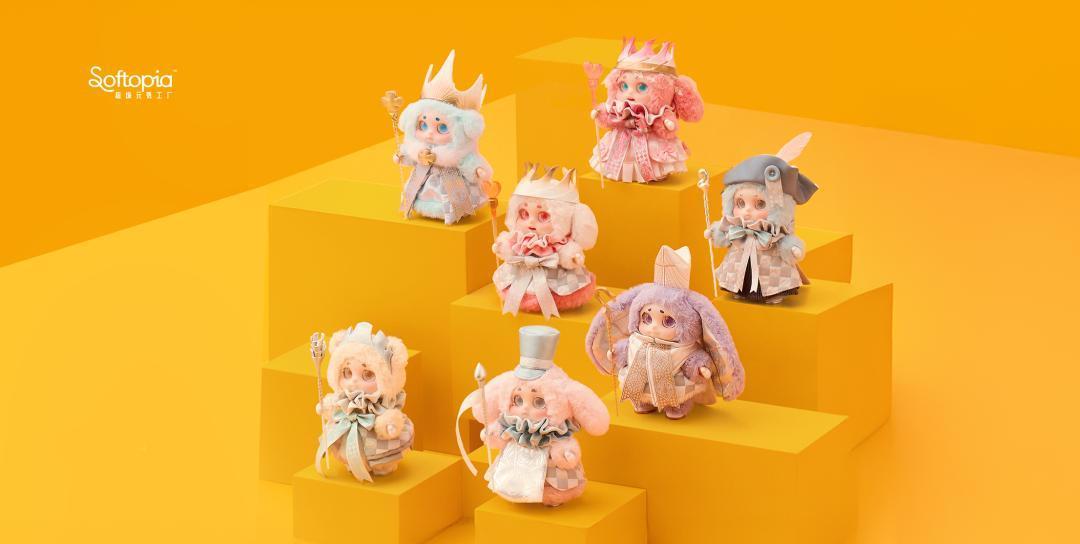
▲ Image/Cino Magic Chessboard Park Series Plush Blind Box Doll
As an investor, the imagination that Yuewen Group can offer seems even more exciting. Yuewen includes several subsidiaries such as Qidian, QQ Reading, and Tencent Animation, with rich IP resources and mature IP development experience, making this investment full of endless imagination.
After the success of Pop Mart, whether it is large companies or the investment circle, it seems that they are accelerating their layout for trendy toys. Not long ago, the AI trendy toy company Luobo, founded by the former interior design head of XPeng Motors and the product design head of XPeng Robotics (Pengxing Intelligence), received investment from Zhu Xiaohu of GSR Ventures. This company, similar to the currently popular trendy toy figure company, was praised by Zhu Xiaohu as "Luobo is a team that originated from the field of embodied intelligence and base large models, but the founding team chose a direction closer to commercialization. This is a team that follows the underlying business logic."
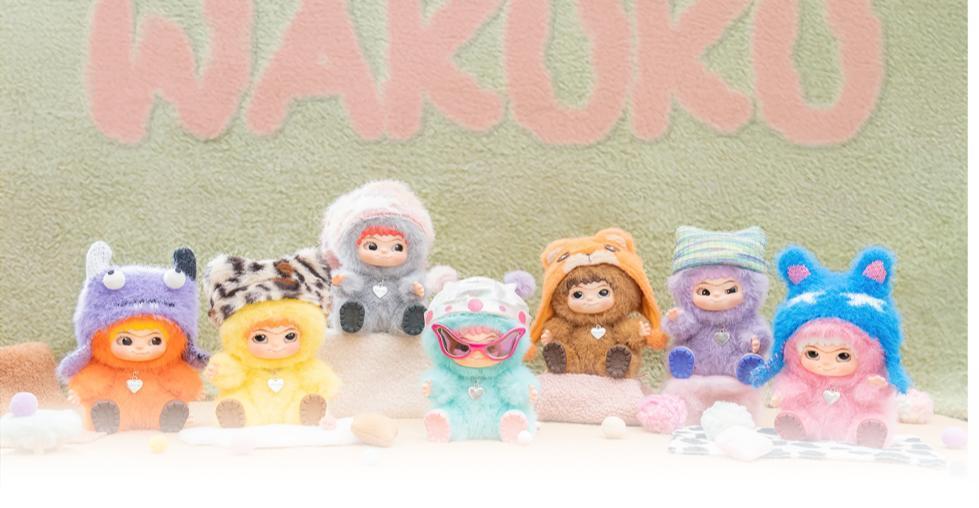
Another popular figure, WAKUKU, is also operated by companies including Lehua, the parent company of Wang Yibo, and the listed company Quantum of Song.
After Pop Mart proved the huge market for trendy toy figures, major companies have bet on this field, not only seeing another possibility for commercialization but also expecting a new narrative dominated by emotional value. From this perspective, whether it is AI companions, embodied intelligence, or the next virtual star or blockbuster movie, trendy toy figures are starting a new competition.
Why are the big players flocking to trendy toys?
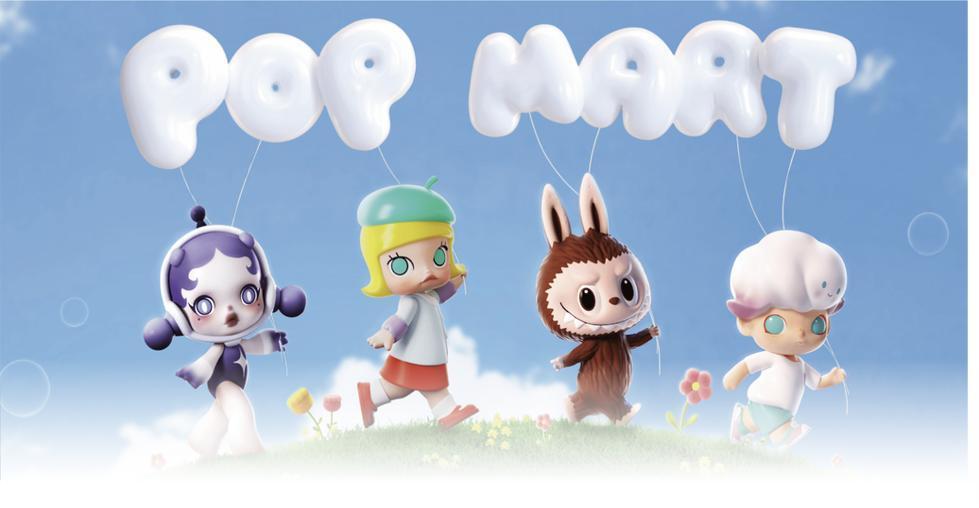
The trendy toy figure track is so lively, what is the logic behind it? All the logic seems to point to a vague concept—IP.
In reports about Pop Mart, company executive Si De once explained the possibility of IP (intellectual property products) crossing time and age. He said, "My parents would definitely not like Pikachu, but when I reach my parents' age, I might still like Pikachu. This is the charm of IP, as long as we work and continue to invest, for a long enough time." When asked what kind of company Pop Mart is, founder Wang Ning believes it can be compared to two companies, one is LEGO, and the other is Disney.
From another perspective, the value of IP is now more bound to the success of Pop Mart itself. In the secondary market, Pop Mart is a super new consumer brand with a market value of over 300 billion, with annual revenue of 13.038 billion yuan in 2024, a year-on-year increase of 106.92%, setting a new historical high. This brand, called "Plastic Moutai" by the outside world, has a gross profit margin as high as 60.8%, and it seems to have unlimited potential: entering 2025, Pop Mart's unaudited revenue in the first quarter increased by 165%-170% year-on-year, with a growth rate further accelerating compared to 2024.
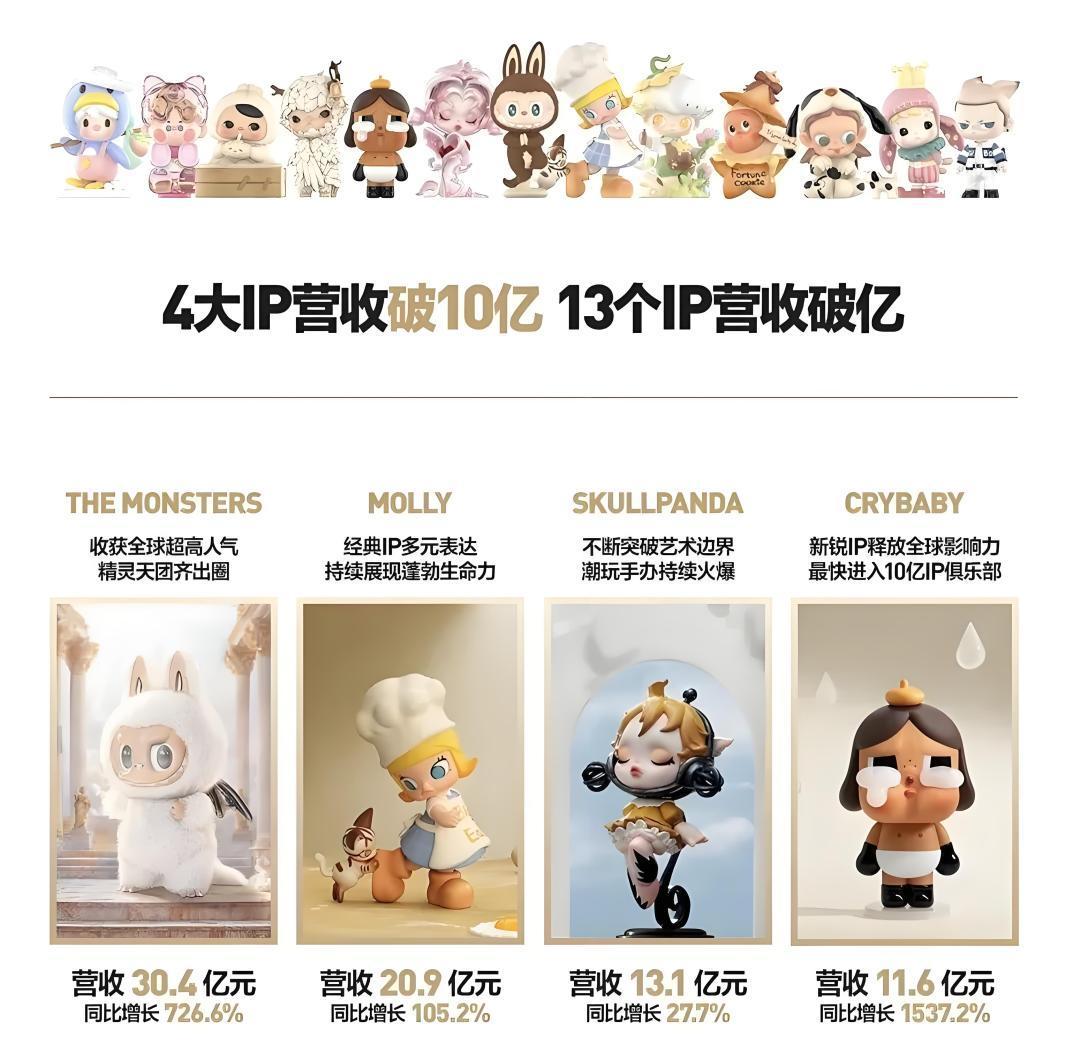
▲ Image/Pop Mart 2024 Annual Report's 4 Major IPs
IP can be so successful, perhaps breaking many people's perceptions, and as a company with high growth, an excellent business model, and optimistic future expectations, Pop Mart has gone viral with an inconspicuous figure, seemingly making everyone excited about discovering a treasure.
On the other hand, from the perspective of creating IP, looking back at the players entering the track, the new entrants seem to be eager for a Pop Mart-style success.
The most typical representative should be Lehua Entertainment.
From a business perspective, Lehua Entertainment's business is still deeply tied to top artist Wang Yibo. According to previous reports by Prism, based on Lehua Entertainment's 2021 annual report, Wang Yibo contributed about 300 million yuan in revenue. This income contribution is significantly ahead compared to other signed artists of the company during the same period.
According to reports from Times Finance, in recent years, Lehua Entertainment's performance has fluctuated greatly. Financial reports show that from 2021 to 2024, Lehua Entertainment's revenue fell from 1.29 billion yuan to 765 million yuan. Among them, the net profit for 2022 was 1.725 billion yuan (mainly affected by changes in the valuation of convertible preferred shares), a loss of 143 million yuan in 2023, and a return to a net profit of 44 million yuan in 2024.
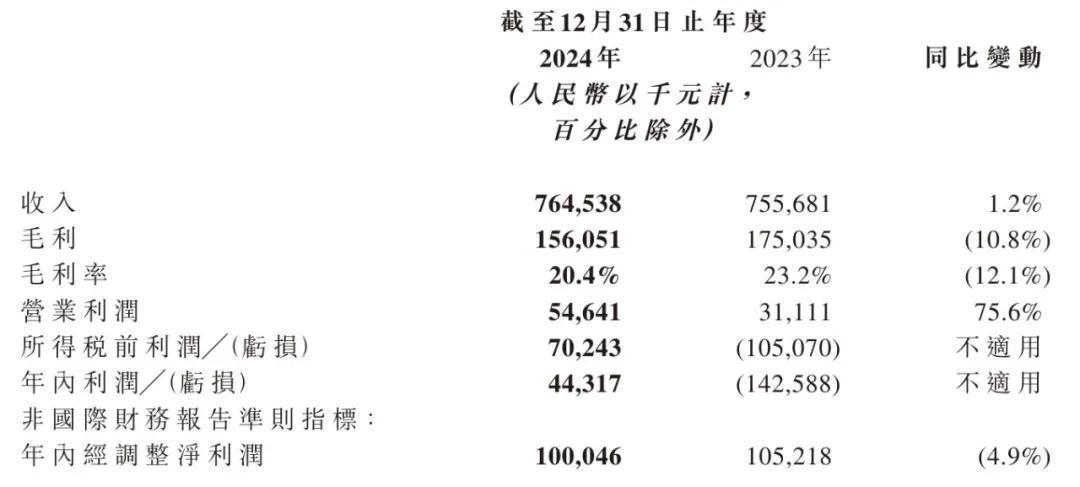
▲ Image/Lehua Entertainment Financial Report
It is generally believed in the industry that its overall performance is dominated by artist management business and highly dependent on top artists. Although Lehua is also expanding diversified businesses and continuously investing in incubating more mid-level artists, the return rate is not high. At the same time, the cost of artist management continues to rise. Lehua Entertainment, which is overly reliant on top artists, needs to develop more businesses to share risks.
Similarly, in terms of IP creation, compared to star artists, figures seem to have greater imagination based on Pop Mart's success. It is reported that Lehua has successfully increased WAKUKU's exposure through interaction with its artists, and this approach is similar to Korean girl group Lisa recommending LABUBU.
In addition to considerations for optimizing the current business model, empowering its IP is another reason why large companies like Yuewen choose trendy toy figures.
Related reports show that Yuewen's IPs are almost firmly in its own hands, and Yuewen has been expected to be "China's Marvel." Regarding IP development, since Yuewen acquired New Classics Media, the first choice for film and television development is internal production. At that time, there was the "Yuewen Film and Television - New Classics Media - Tencent Pictures" troika. Of course, there is also game development. Previously, the most successful game adapted from Yuewen IP was "Douluo Dalu." The mature IP combined with the operation method of trendy toy figures, obviously, Yuewen seems to not need to spend too much effort to build a relatively complete figure system.
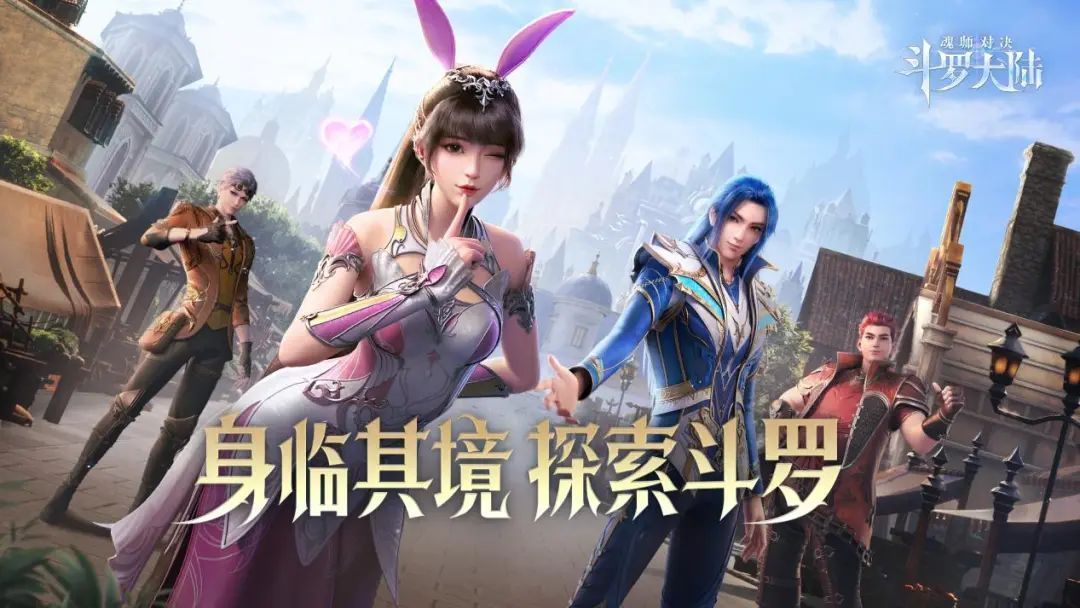
But for Yuewen, what may be more important is the imagination after the IP takes shape. Film and television and games, limited by large-scale investment, uncertainty in adaptation, and long cycles, have a certain degree of risk, while trendy toy figures just happen to compensate in this direction.
Big companies compete for the "value entry" of differentiation
Of course, the success of LABUBU itself contains multiple meanings, and further speaking, chasing the next LABUBU is not limited to the pursuit of commercialization.
Reviewing the entire history of LABUBU's popularity, according to industry observer Cai Yu's report, LABUBU was initially a trendy toy ornament in Hong Kong. After Pop Mart took over, on the one hand, it adjusted LABUBU's image, put it in blind boxes, upgraded the material from monochrome injection molding to magnetic accessories and luminous materials, and launched a series of plush pendants, encouraging young people, especially young women, to hang it on their backpacks.
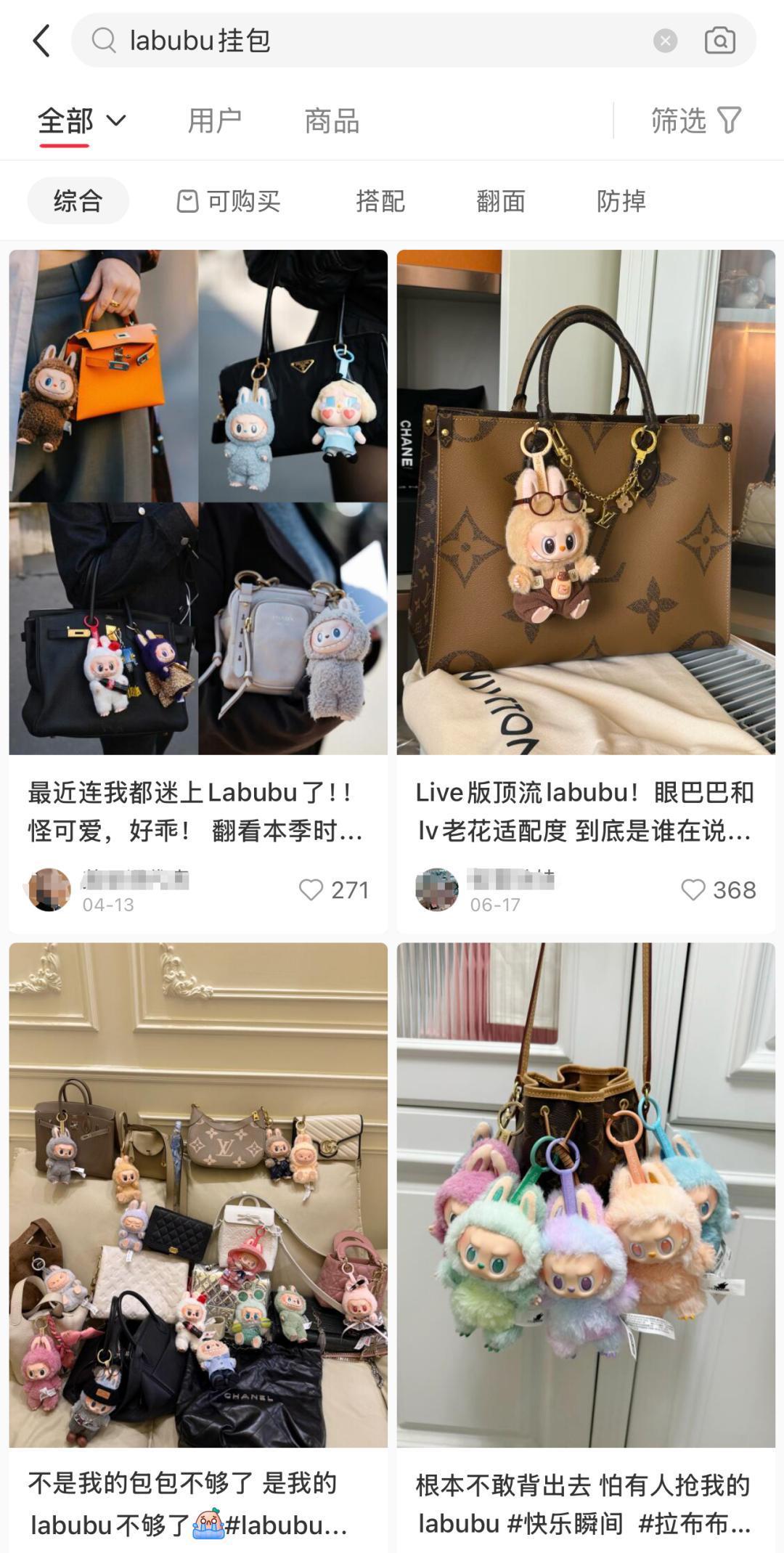
▲ Image/Screenshot from Xiaohongshu
More importantly, Pop Mart also pushed LABUBU to Bilibili, where the density of young people in the mainland is the highest, to participate in the "Emoji Contest." These actions gradually pulled LABUBU out of the toy cabinets of otaku collectors and expanded it to a broader "business" scene.
Subsequently, Cai Yu believes that after 2023, the global market has undergone emotional shifts in the century-old changes, Pop Mart has made efforts to go overseas, and the domestic market also supports the cultural industry, LABUBU has ushered in its own era, standing at the top of the global trendy toys.
To some extent, it can be seen that behind LABUBU's success is the first appearance of a new category in the era of value reshaping. In other words, the layout for similar LABUBU is also a layout for new categories generated by emotional value and era transitions, even a layout for a new traffic entry.
This also explains why in the secondary market, all the measurement standards for consumer goods are gradually failing on Pop Mart.
As proposed by industry observer Yuanchuan in the report, investment is a game of gambling with uncertainty, so market participants will use quantitative standards to reduce risk exposure. The so-called rigid demand, pain points, and high frequency imply that investors can estimate a rough market space and growth multiple based on the corresponding consumer group size. However, the growth narrative of most niche markets is the rebellion of consumer brands against universal standards in an era of demand differentiation.
And this rebellion, to some extent, is precisely the unique charm of IP. Such cases are constantly being verified among new players.
At the beginning of its establishment, Luobo also tried directions with "higher embodied content" such as desktop robots: that is, small products with certain mobility and operational capabilities. However, after November 2024, due to discovering that the core needs of users are understanding, companionship, and social gameplay, rather than complex action performances, Luobo shifted its focus to AI trendy toys.
Luobo Intelligence believes that the core capability of AI emotional companion products is not "dialogue," but "cultivation," so they designed what they consider to be the most core capabilities: "character evolution" and "long-term memory."
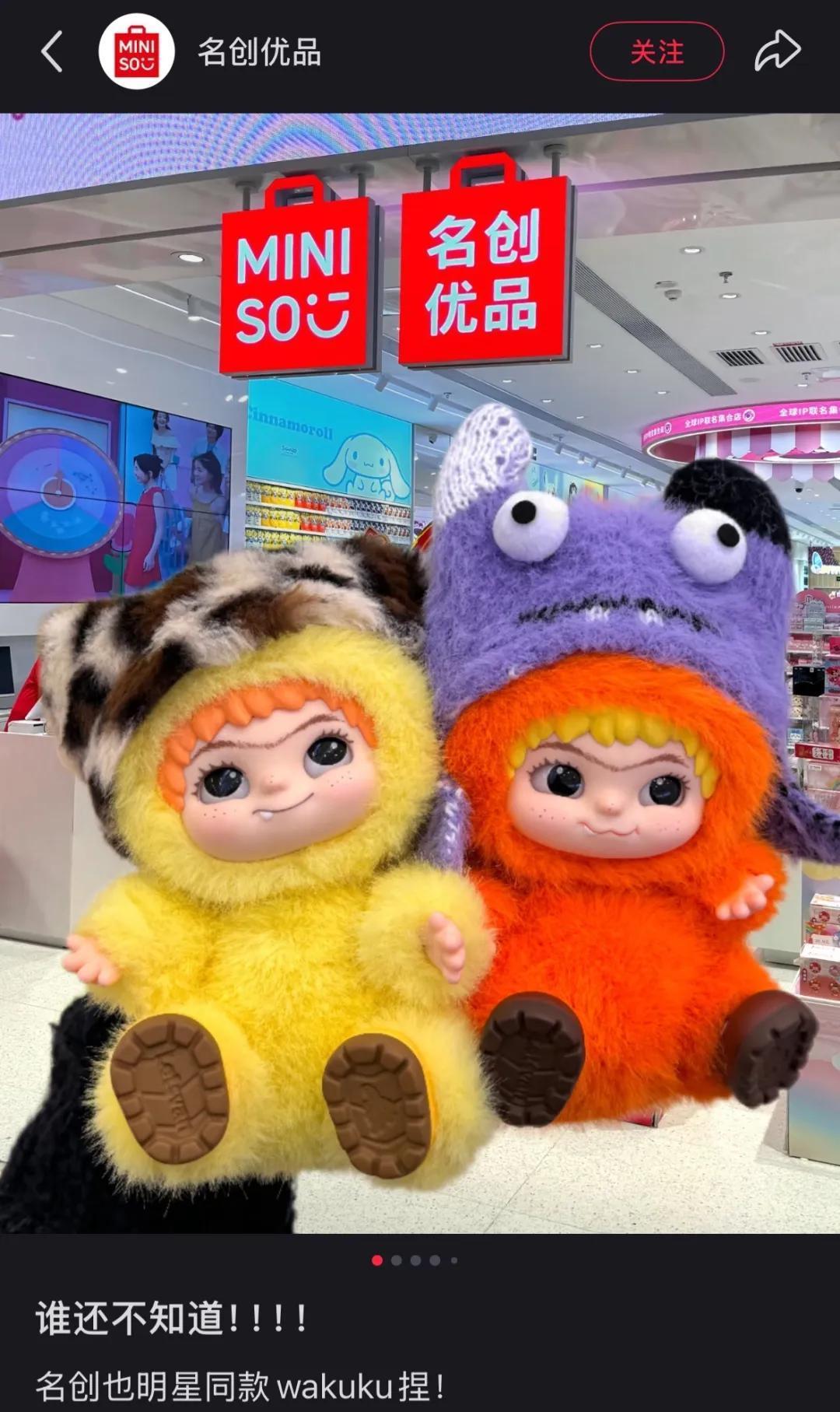
Similarly, in terms of cultivation, Lehua's understanding is to continuously let WAKUKU interact with stars. In November 2024, WAKUKU's first plush vinyl doll blind box was officially launched. Shortly after its launch, Letsvan invited domestic and foreign entertainment stars such as Tang Jiuzhou, Cheng Xiao, and Yu Shuxin to take photos with WAKUKU or appear in public with WAKUKU, attracting fans to place orders through the "star same style" label.
After gaining certain exposure through star influence, WAKUKU quickly cooperated with channels such as Miniso and Joy City to launch offline pop-up check-in stores and invited multiple stars to check in and take photos at the stores.
Entrants are still dissecting LABUBU's success model, but it is foreseeable that what everyone does not want to miss is far more than a trendy toy, but the next opportunity at the entry level. So how will the next LABUBU arrive?
Who is the next LABUBU?
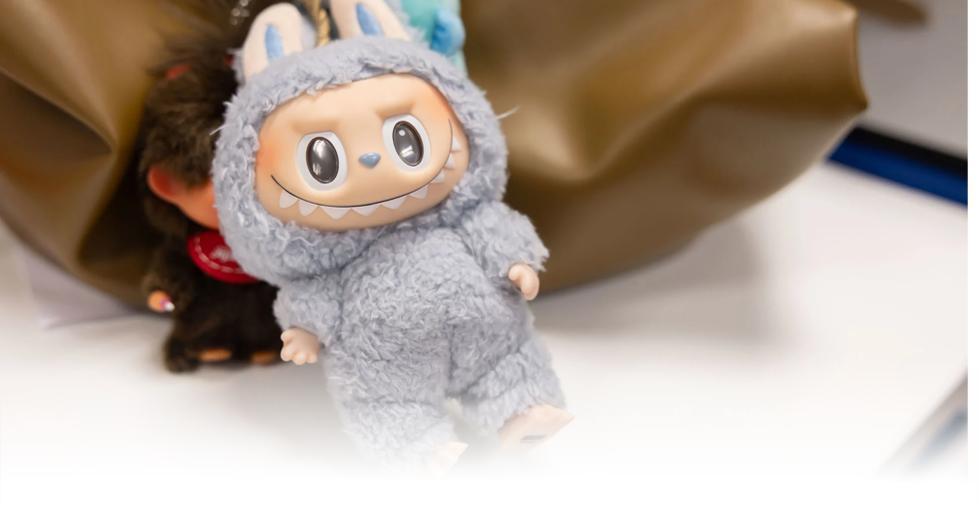
Returning to the essence of trendy toy brands, the creation of IP is still the greatest competitiveness. Pop Mart continues to verify its IP creation ability, which allows its valuation to be continuously reshaped.
For traditional players, taking 52TOYS as an example, its authorized IP income in 2024 was 406 million yuan, accounting for more than 60% of total operating income. The reliance on authorized IP, to some extent, means the gap between it and Pop Mart is gradually widening.
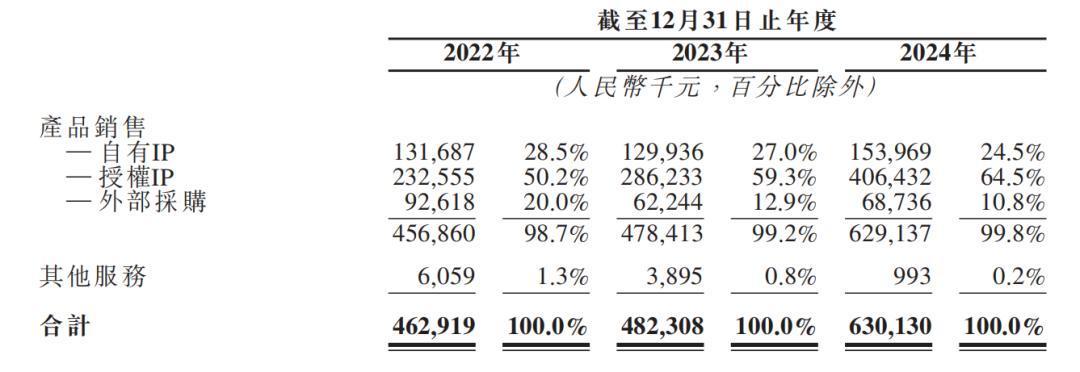
▲ Image/52TOYS Prospectus
From the perspective of new forces in trendy toys, creating IP has also become the most valued part of the market. The surge in Lehua's stock price in the secondary market, to some extent, reflects its excellent operation ability for the WAKUKU category.
The operation mode of WAKUKU is essentially the integration of the entertainment industry and trendy toys. Relying on Lehua's mature star operation ability, it quickly leverages the fan economy through "star same style," and then penetrates the mass market through offline pop-ups and channel cooperation. This logic is extremely efficient in the traffic explosion stage—the strong exposure of stars can make IP break the circle in the short term, and fans' emotional projection can also be converted into immediate consumption.
But the shortcoming of this model is also obvious: the vitality of IP is highly bound to the popularity of stars. If it lacks a storyline and emotional symbols independent of stars, once the star effect fades, the IP is likely to fall into the dilemma of "a flash in the pan." The core test is whether it can transition from "star accessory" to "independent emotional carrier," completing the leap from traffic dependence to IP recognition.
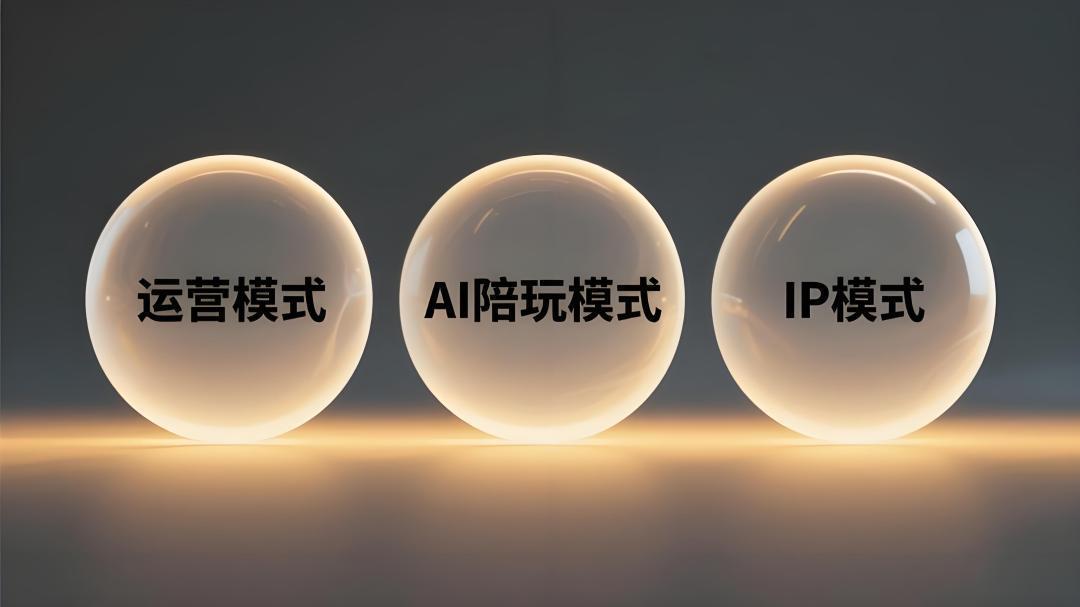
The AI companion mode (such as Luobo) targets the "dynamic evolution" possibility of trendy toys. When traditional trendy toys stay in static ornaments, AI technology endows IP with the ability of "character evolution" and "long-term memory," directly hitting the deep needs of young people today for "emotional companionship"—no longer a one-way collection, but a two-way interaction and cultivation.
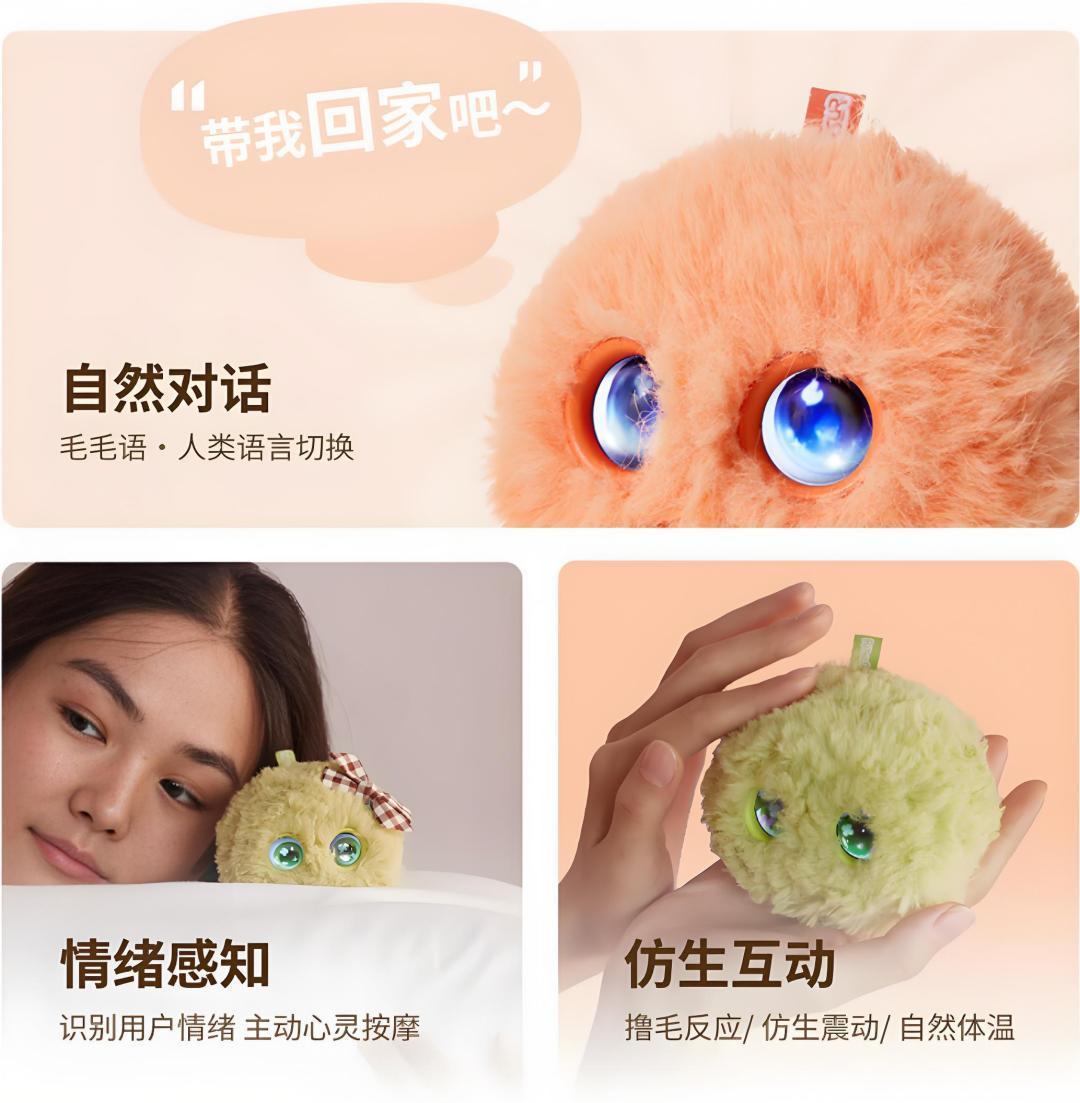
This model breaks through the physical boundaries of trendy toys, upgrading them from "items" to "digital partners," fitting the Z generation's preference for "personalized relationships." But the key to feasibility lies in technology landing: "character evolution" needs to avoid the stiffness of AI interaction, "long-term memory" needs to balance data accumulation and user freshness, and users' willingness to pay for "AI emotional companionship" still needs to be verified in continuous iteration. If the adaptation problem of technology and experience can be solved, its imagination space may surpass traditional trendy toys.
Yuewen's IP model stands on the "content foundation" of a long slope. With a large number of literary IPs (such as "Douluo Dalu"), Yuewen naturally has the "raw materials" for IP incubation, and the mature "content - film and television - game" development system can provide continuous story support for trendy toys—the fan base of literary IP is the natural traffic pool for trendy toys, and trendy toys can also feed back the influence of content IP, forming a "content nourishes IP, IP activates consumption" closed loop.
The advantage of this model is that IP has "roots": literary stories give trendy toys a unique worldview and character personality, making it easier for users to generate long-term emotional binding, in line with the characteristic of IP "crossing time." But the challenge lies in "conversion adaptation": how to convert the textual image of literary IP into a visual symbol that meets the aesthetic of trendy toys (especially the preferences of young groups), avoiding the embarrassment of "fans not buying it, passersby not interested," is the key to its success.
▲ Image/AI Production
Among the three modes, WAKUKU's traditional path is suitable for rapid volume increase, but it needs to break through traffic dependence; the AI companion mode points to future trends, but it needs to cross the gap between technology and experience; Yuewen's IP mode has a solid foundation, but it also needs to do a good job of coordination between content and trendy toys.
From the perspective of the future, the next LABUBU may not replicate a single path, but it must be an existence that can find a balance between "emotional resonance" and "long-term value"—whether it is the IP precipitation of the traditional mode, the technical empathy of the AI mode, or the story extension of the content mode, what can ultimately cross the cycle are always those symbols that truly enter the hearts of users. And who the next LABUBU is, maybe time will give the final answer.
Reference materials:
Yuanchuan Research Institute, "Small but Unbreakable"
Logical Thinking, "LABUBU, the Spiritual Substitute of Contemporary People"
Finance Magazine, "The Wealth Creation Myth of Pop Mart, Middle-aged People Don't Understand?"
Entertainment Capital Theory, "The Cross-border Capital Flocking to Trendy Toys, All Want to Replicate the Next LABUBU"
36Kr Future Consumption, "Yuewen's Exclusive Strategic Investment in Plush Trendy Toy Brand 'Super Vitality Factory'|Exclusive"
Late Point, "Late Point Exclusive 丨 Zhu Xiaohu, Who Doesn't Invest in Embodied, Invested in AI Trendy Toys Made by Former XPeng Robotics Members"
Science and Technology Innovation Board Daily, "Stock Price Doubled in a Month, These Two Listed Companies Found Their Own 'LABUBU'!"
Times Finance "Replicate the Next LABUBU? WAKUKU, Which Quan Hongchan Is Showing Off, Exploded, and the Behind-the-scenes Pusher's Stock Price Soared Over 400% This Year"
The copyright of this article belongs to the original author/organization.
The views expressed herein are solely those of the author and do not reflect the stance of the platform. The content is intended for investment reference purposes only and shall not be considered as investment advice. Please contact us if you have any questions or suggestions regarding the content services provided by the platform.
