

Are Alibaba, Meituan, and JD.com fighting over food delivery? Don't be fooled! They're battling for the life-or-death card in 'instant retail'.

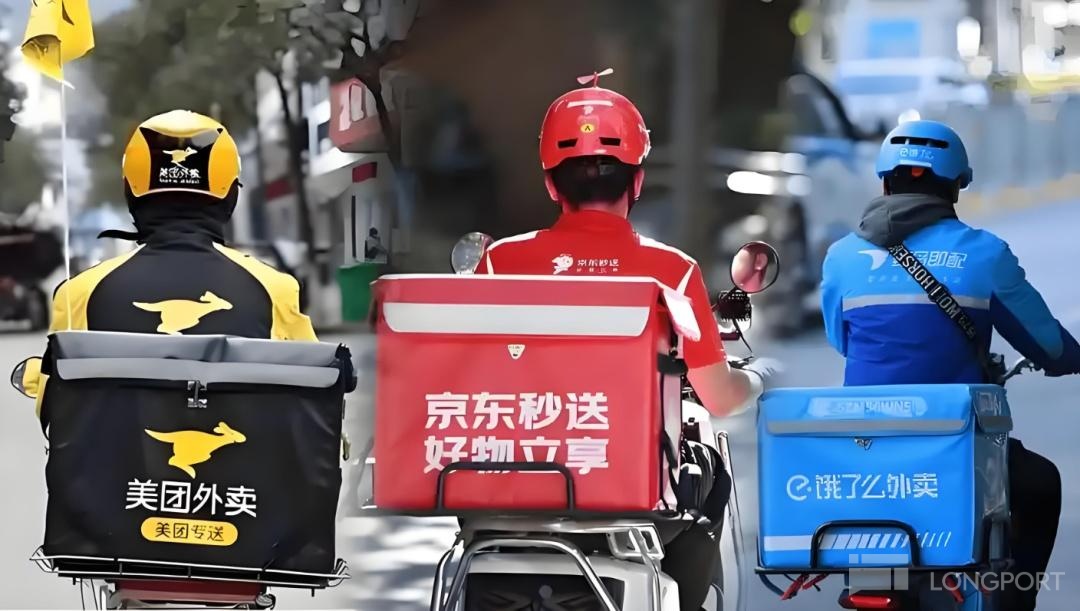
The ongoing food delivery wars show no signs of abating, with Alibaba, Meituan, JD.com, and others going all out, unwilling to leave the table. Whether through continuous subsidies or increasingly varied strategies, they are all signaling their intent to gain the upper hand in this battle. Barring any surprises, the new competition among e-commerce giants, with food delivery as the main battleground, will continue, and the outcome will not be clear in the short term.
Just this Saturday, Meituan, Taobao Flash Sale, and JD.com's food delivery platforms issued multiple discount and redemption coupons, continuing last week's "Crazy Saturday" food delivery trend. On the afternoon of July 11, JD.com's official WeChat account "JD Blackboard" posted: "One Price 16.18! 100,000 Portions Every Night! JD Food Delivery Treats National Users to Premium Crayfish." The post stated that users should look for the "Instant Delivery" channel in the JD App, where 100,000 portions of premium crayfish are available nightly for 16.18 yuan. On the evening of July 11, Meituan posted on Weibo: "Saturday, the fun continues." Early on July 12, Taobao Flash Sale's official Weibo announced the release of a "Super Saturday" 188-yuan coupon package. Faced with the continuous benefits released by the players, some netizens said they couldn't eat anymore, while others said they couldn't drink anymore.
This spectacle easily reminds us of past food delivery wars. After all, the previous food delivery wars also looked like this, only subsiding once the market leader truly emerged. So, is the current food delivery war the same as those of previous years? What kind of market scenario will e-commerce giants ultimately create? The author believes that the current food delivery war is not a traditional one; it is more like a competition over a new business model—more bluntly, it is a new battle in instant retail. Clearly, instant retail has become the new battleground for e-commerce giants.
Instant retail is the backdrop of this food delivery war
If we were to summarize past food delivery wars, they were essentially a reenactment of the "Internet +" model. Ultimately, the battles among food delivery players back then were more about the food delivery market itself. Observing the current food delivery war, we can see that it is more like an instant retail war disguised as food delivery.
For e-commerce giants like Alibaba, Meituan, and JD.com, they are more focused on using food delivery to open a new outlet for instant retail. Through this, e-commerce players are no longer just low-frequency entities with weak online-offline integration but have become high-frequency, instant presences. Therefore, if we were to summarize and define the ongoing food delivery war, the backdrop of this new battle is undoubtedly the search for a new breakthrough and growth point for e-commerce through food delivery.
At this point, the gap between e-commerce and food delivery will gradually narrow, and food delivery will eventually become an integral part of e-commerce. This is the most direct manifestation of e-commerce's evolution. For e-commerce giants, only by actively embracing this evolution and truly finding a development model that suits them can they emerge victorious in this battle. It can be said that the ongoing food delivery war is a test of e-commerce players' multidimensional capabilities—whether in logistics and delivery or user experience, it is a culmination of their past experiences.
Only when we truly see instant retail as the backdrop of this food delivery war and view it as a new stage in e-commerce's evolution can we distinguish the current food delivery war from those of the past. Similarly, only by viewing it from this perspective can we truly understand why players like Alibaba, Meituan, and JD.com are unwilling to leave the table.
Instant retail represents the new evolution of e-commerce
Traditionally, there are many differences between e-commerce and food delivery. In many ways, e-commerce's frequency, timeliness, and online-offline integration differ significantly from food delivery. However, as the e-commerce industry enters a transformative phase, especially with more players joining this evolution, the gap between e-commerce and food delivery is narrowing. For example, when Meituan and JD.com first entered the food delivery war, some argued that JD.com's motivation was partly because Meituan was encroaching on JD.com's territory. Similarly, after JD.com joined the food delivery war, others said JD.com was penetrating Meituan's stronghold.
Regardless of the interpretation, the message is clear: the gap between e-commerce and food delivery is closing, especially as food delivery takes on the connotation and significance of "instant retail." This phenomenon has become even more pronounced. Therefore, when we look at today's food delivery war, we should not see it as traditional food delivery but as a new model of instant retail. At the same time, instant retail is also a major direction for e-commerce players' evolution.
When food delivery giants and e-commerce giants clash on the new battlefield of instant retail, a new war becomes inevitable. From this perspective, instant retail is the new evolution of e-commerce. Through instant retail, e-commerce is no longer traditional but has become an omnipresent, anytime-anywhere reality. It can be said that the instant retail war, represented by food delivery, is a new manifestation of e-commerce battles in this new stage of evolution—it represents e-commerce's new upgrade.
For e-commerce players, they must better meet consumers' instant consumption needs, find more effective ways to integrate online and offline, and engage more deeply in the e-commerce industry. Only then can they remain invincible on the new battlefield of instant retail.
Instant retail is about finding new growth in a saturated market
For every e-commerce player, the goal is to continuously find new growth—not just in terms of new users but also in the industry. If we were to summarize the ongoing food delivery war, it is more like e-commerce players using instant retail to find new growth in a saturated market. In this regard, The Beijing News once bluntly stated that the reason Alibaba, Meituan, and JD.com are so enthusiastic about the "food delivery war" is that it is not a life-or-death struggle over a saturated market. Behind the "food delivery war" lies a real and huge incremental consumer market.
According to The Beijing News, traditional e-commerce is "buy online, deliver by courier," mostly for durable goods or items that can wait. Instant retail, however, addresses the immediate need for "I want it now, and it's nearby," covering a vast array of offline consumer behaviors that were previously untouched by e-commerce. At the same time, this consumer behavior is not simply moving transactions from community stores online.
The essence of business is to profit by meeting consumer needs more efficiently, and meeting these needs is tied to people's sense of gain and happiness. The rapid development of instant retail aligns with increasing overall public welfare. The clarity of the incremental market is the core reason major platforms are doubling down on the "food delivery war." On one hand, they cannot afford to lose in the future market; on the other, even if they "lose" the war, the platforms still gain. They can use the massive transactions to "educate" users about the instant retail model, accelerate the construction of delivery teams, speed up the layout of warehouse networks, and realize the localization of supply chain extensions.
But it doesn't stop there. The instant retail war sparked by the food delivery war more broadly reflects e-commerce players' trend of seeking new growth in a saturated market. We all know that after the baptism of the mobile internet era, the e-commerce market has entered a saturated phase. Even so, for every e-commerce player, continuous growth is essential. Instant retail has opened a window through which e-commerce players can find new market demands and, thus, new growth.
Beyond that, the ongoing food delivery war is more like e-commerce players consolidating past experiences and capabilities while laying the groundwork for the future. On one hand, e-commerce players can apply the various skills they accumulated during the mobile internet era to this new battlefield. On the other, they can use this instant retail war to build the "infrastructure" for the next era of commerce. Whether it's improving delivery capabilities for instant retail or building their own supply chains, these are direct manifestations of this phenomenon. This, too, is about finding new growth in a saturated market.
Final thoughts
The food delivery war rages on, with no player willing to leave the table. If we only view it as a food delivery war, we cannot truly grasp its deeper significance. In reality, instant retail is the backdrop of this food delivery war. At the same time, instant retail is the new evolution of e-commerce. In this war, we see new growth in a saturated market, and we see internet players providing new solutions to meet the evolving needs of the public. $JD.com(JD.US)
The copyright of this article belongs to the original author/organization.
The views expressed herein are solely those of the author and do not reflect the stance of the platform. The content is intended for investment reference purposes only and shall not be considered as investment advice. Please contact us if you have any questions or suggestions regarding the content services provided by the platform.
