


 Posts
PostsInterpreting the Sei Giga Upgrade: Another Public Blockchain Competition Begins

Over the past year, global financial giants have quietly entered the crypto market. Whether it's US mainstream financial institutions or national-level government platforms in Japan, India, Thailand, etc., they have gradually turned their attention to blockchain technology and crypto assets. Behind these seemingly marginal pilots and investments lies an increasingly clear trend: the traditional financial system is launching a new round of performance scrutiny on blockchain infrastructure.
Compared to the technical standards of the internet era, the operational efficiency of most existing blockchains remains relatively low. The Ethereum mainnet processes about 15 transactions per second, with confirmation times measured in seconds, while the Visa network can handle up to 65,000 transactions per second at peak, and Nasdaq's matching system even exceeds 100,000 transactions per second. Google Ads' ad bidding system needs to make quick decisions amidst millions of requests per second, all of which impose high-pressure demands on blockchain performance in the real world.
Although next-generation chains like Solana, Avalanche, and Optimism theoretically have the capacity for tens of thousands of TPS, in practice, complex contract computations, network bandwidth bottlenecks, and consensus delays still significantly reduce actual throughput. As a result, we see an increasing number of technical approaches being proposed to break through the current blockchain scaling ceiling, such as Layer2, modular chains, parallel execution, asynchronous consensus mechanisms... Various scaling solutions are emerging endlessly.
Even Solana, known for its high performance, announced a protocol transformation plan called Alpenglow at this year's Consensus Conference, aiming to replace the existing TowerBFT consensus mechanism and Proof-of-History timestamp system by introducing Votor and Rotor modules to further enhance its throughput and stability. This not only reflects Solana's re-evaluation of its own design but also confirms that a new round of competition for on-chain performance has begun across the industry.
In this competition, Sei is one of the few public chains that has made "high-throughput infrastructure" its core strategy. Compared to Ethereum's incremental scaling approach represented by Rollup or Solana's vertical breakthrough with its integrated architecture, Sei attempts to start from the underlying logic, adopting a systematic redesign to build an L1 public chain with Web2-level responsiveness. The key milestone of this strategy is the recently launched Giga upgrade.
Why is the Giga Upgrade Needed?
Recently, Sei's newly released Sei Giga whitepaper stated that Sei is currently a decentralized, permissionless, Proof-of-Stake EVM public chain that supports smart contracts written in mainstream EVM languages such as Solidity and Vyper. Its compatibility with EVM is essentially equivalent to the Ethereum mainnet, with differences only in EIP-4844, PREVRANDAO, state root, block gas limit, transaction fee mechanisms, etc.
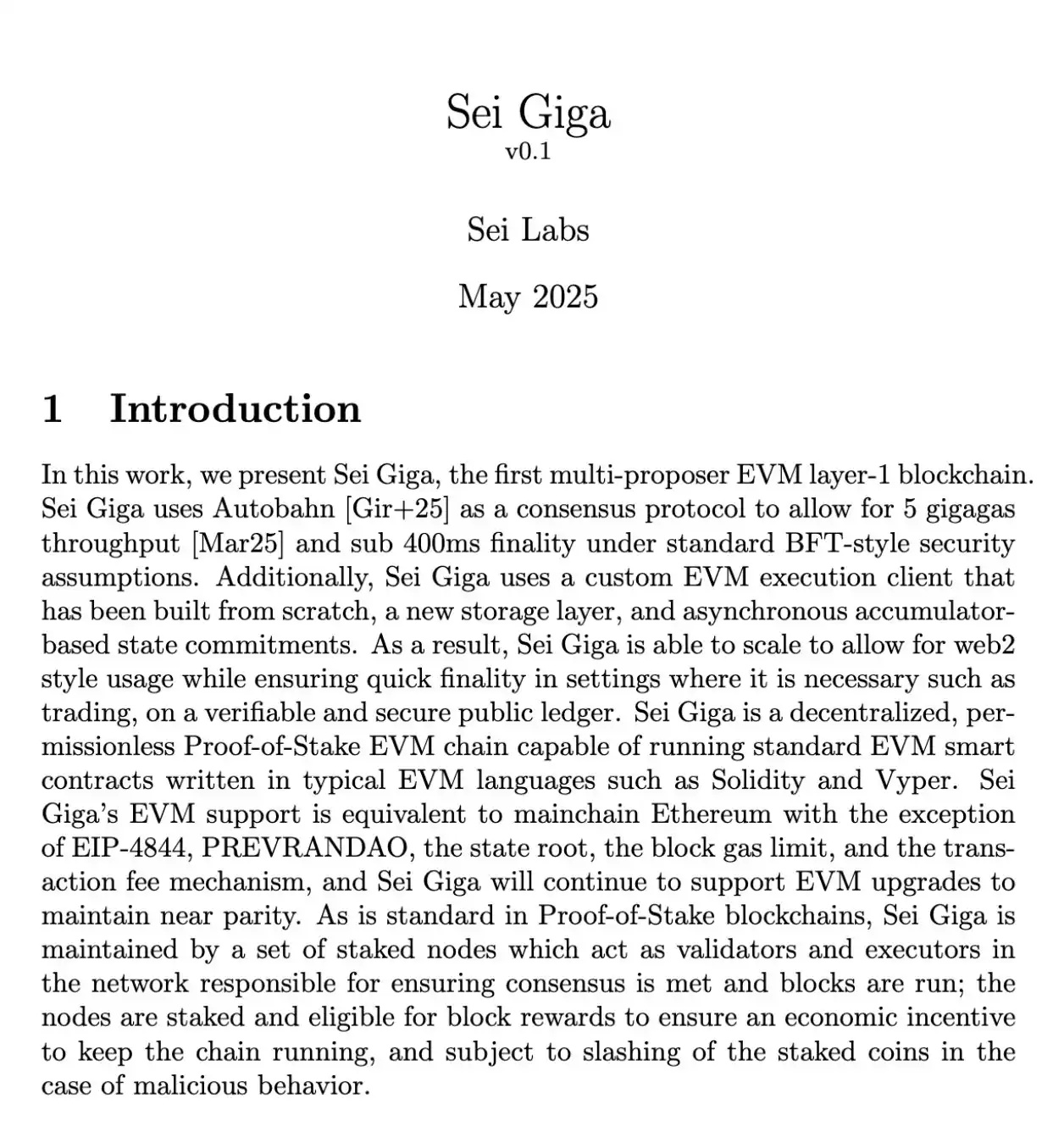
Sei Giga uses a custom EVM execution client built from scratch, a new storage layer, and a state commitment mechanism based on asynchronous accumulators. Thanks to these designs, Sei Giga can scale to Web2-level use cases, such as trading environments requiring fast confirmation (e.g., on-chain trading), while ensuring rapid finality on a verifiable, secure public ledger.
We often talk about blockchain TPS, but for smart contracts, a more accurate metric is gas/sec. Gas is a unit in Ethereum that measures computational consumption, reflecting the computational resources required to execute a piece of logic. The higher the gas/sec a chain supports, the more complex contract logic and high-concurrency calls it can handle.
In April last year, Paradigm's CTO published an article titled "Reth's path to 1 gigagas per second, and Beyond," introducing the concept of Gigagas. Giga translates to a common unit of measurement, meaning billion or giga; gas is the familiar gas fee.
The combination of the two words means a billion gas, indicating that blockchain performance improvements must aim for this target to ultimately achieve a Web2-like user experience. By this standard, Ethereum currently operates at the million gas/sec level, while Sei Giga's target is 5 Gigagas/sec, a 50-fold increase.
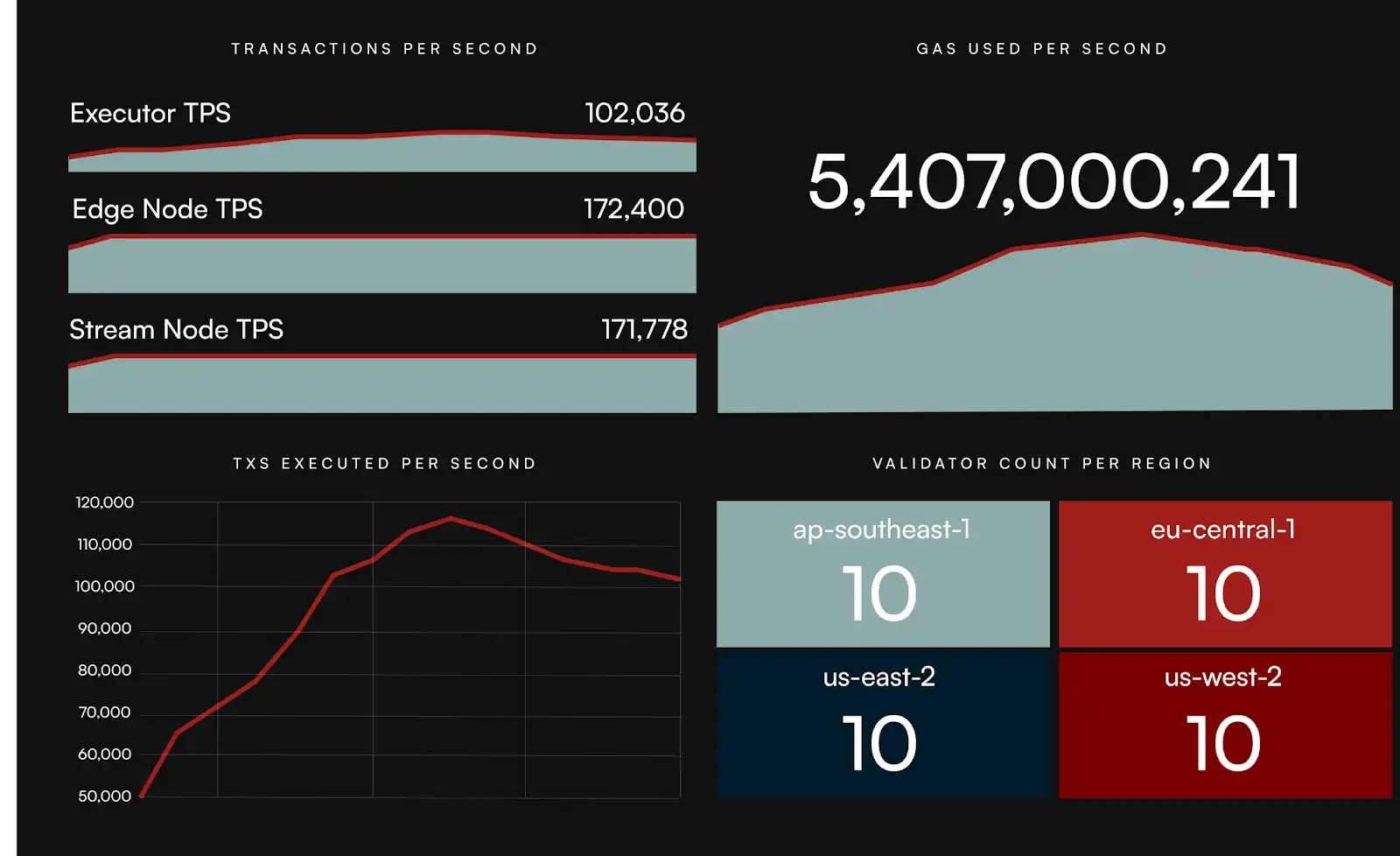
Why 5? This is a practical threshold—measured against Google's RPC request volume, Visa's transaction load, or even AI model invocation frequency, 5 Gigagas is already the basic threshold for high-load Web2 applications. The Giga upgrade is essentially a performance foundation project prepared for future mainstream scenarios.
The Giga upgrade is not a one-size-fits-all solution but marks a comprehensive redesign across the three core paths of execution, consensus, and storage, transforming the chain into a performance foundation close to traditional distributed systems.
Three Pillars of Sei's Technical Redesign
Redesigning the EVM Client to Unleash Concurrency
Over the past few years, the blockchain industry has faced an old problem: smart contracts run too slowly. It's like a road designed for bicycles trying to handle high-speed train traffic. EVM (Ethereum Virtual Machine) is the most widely used "operating system" in the crypto world, but its original design did not prioritize speed, handling at most a few hundred transactions per second. Today, real-world applications like financial trading, gaming, and ad bidding often require tens or hundreds of thousands of requests per second, which EVM clearly cannot handle.
Sei's Giga upgrade aims to solve this performance bottleneck. In simple terms, Sei wants to make EVM like a highway that allows thousands of cars to pass simultaneously, rather than queuing one by one.
Sei has developed a new EVM client optimized for throughput, introducing Ahead-of-Time Compilation, transaction dependency analysis, and a parallel execution framework. By statically analyzing contract bytecode, the system can determine which transactions are independent before execution, enabling true parallel processing.
This is like cars on a highway no longer queuing at toll booths but being identified and released in advance by AI cameras. Such predictive mechanisms greatly reduce the likelihood of on-chain traffic jams. Additionally, Sei uses a custom binary encoding format to compress block size and reduce parsing time, making network transmission and execution scheduling more efficient.
Autobahn Multi-Lane Architecture for Second-Level Confirmation
Traditional blockchains rely on a single proposer to propose a block during consensus, with other nodes voting to confirm it. This architecture limits throughput. Autobahn's core idea is "multi-lane": each validator node can propose its own block, forming independent proposal lanes, and a rotating leader periodically selects a snapshot (cut) from these lanes for consensus.
This mechanism separates transaction data propagation from final confirmation: data availability is pre-verified by PoA signatures before consensus, while the consensus process requires only minimal message passing (two-round confirmation), compressing final confirmation time to within 700 milliseconds.
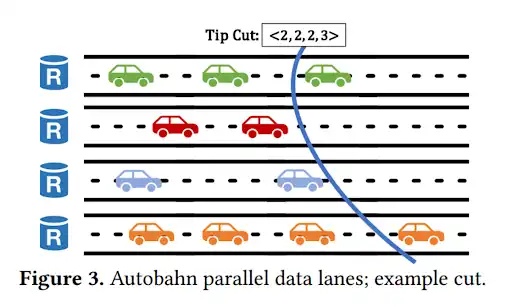
In layman's terms, most blockchains are like a highway with a single toll booth, allowing only one car to pass at a time. This approach is secure but slow and prone to congestion. Tendermint is such a "single toll booth" mechanism: each round, a "proposer" packages transactions, and others must wait for it to finish before verifying, making the entire process sequential and inefficient.
In contrast, Sei's Autobahn consensus mechanism is more like a multi-lane highway, where each lane has its own toll booth, and multiple booths can release different cars simultaneously. Multiple participants in the network can propose transactions on their own "lanes" without waiting for one to finish before the next. This "multi-proposer" architecture significantly improves transaction processing speed without sacrificing security—Sei Giga's throughput is over 50 times higher than traditional Tendermint.
Additionally, Sei has done something very clever: it decouples "consensus" and "data," which are traditionally bound together. The consensus phase no longer requires downloading all transaction content but only confirms that "the data is being held" and can be retrieved when needed. This is like holding a meeting where participants don't need to read thick documents in advance but only confirm that the materials are complete and backed up, making the meeting more efficient.
This mechanism allows Sei to not only meet ordinary transaction needs but also provide a blockchain foundation closer to traditional internet performance for high-frequency trading, on-chain gaming, AI applications, and other complex scenarios requiring rapid responses.
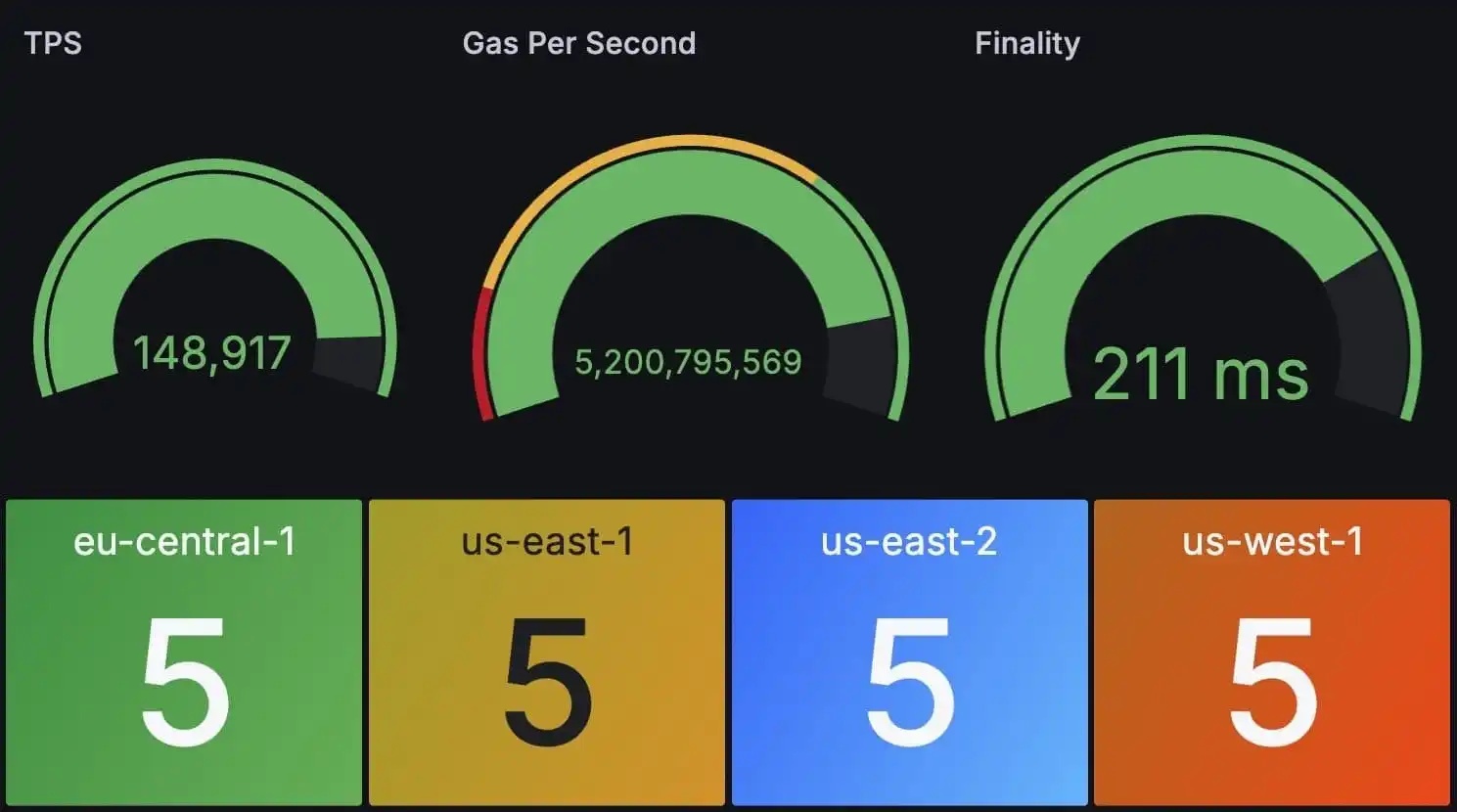
In internal tests, the Sei team deployed a network with 40 validator nodes across Singapore, Germany, Ohio, and Oregon, simulating real-world latency and bandwidth constraints. In this environment, the Giga upgrade achieved sustained processing capacity of 5 Gigagas per second, with final confirmation time kept within 700 milliseconds, and the network remained stable despite cross-regional deployment.
Asynchronous State Submission and Efficient Data Path
In the storage layer, Sei Giga introduces an asynchronous state root generation mechanism, allowing contract state updates to no longer block the main process. After transaction execution, state updates can be completed in the background, similar to the write-ahead logging and asynchronous flushing mechanisms used in large databases, ensuring data consistency while significantly reducing latency.
Additionally, Sei has optimized the read path for KV database structures and improved read-write efficiency through caching, preloading strategies, and batch writing. Overall, the storage engine is moving closer to the architecture of distributed database systems.
Beyond Technology: What is Sei's Ecosystem Outlook?
Technology is just the first step; institutional design and market strategy are equally important. The performance competition in the public chain space has already entered deep waters. The rivalry between Solana and Ethereum is well-known, and emerging public chain ecosystems like Sui and Abstract are also formidable contenders.
Since starting to build its EVM ecosystem in the middle of last year, Sei's wallet count has far exceeded its peak during the Cosmos architecture era, indicating that its user base and on-chain activity are gradually aligning with mainstream EVM networks. Therefore, the official announcement of the Sei Giga upgrade can be seen as a critical step for this new public chain to assert its technical advantages and development direction in the fiercely competitive high-performance EVM arena.
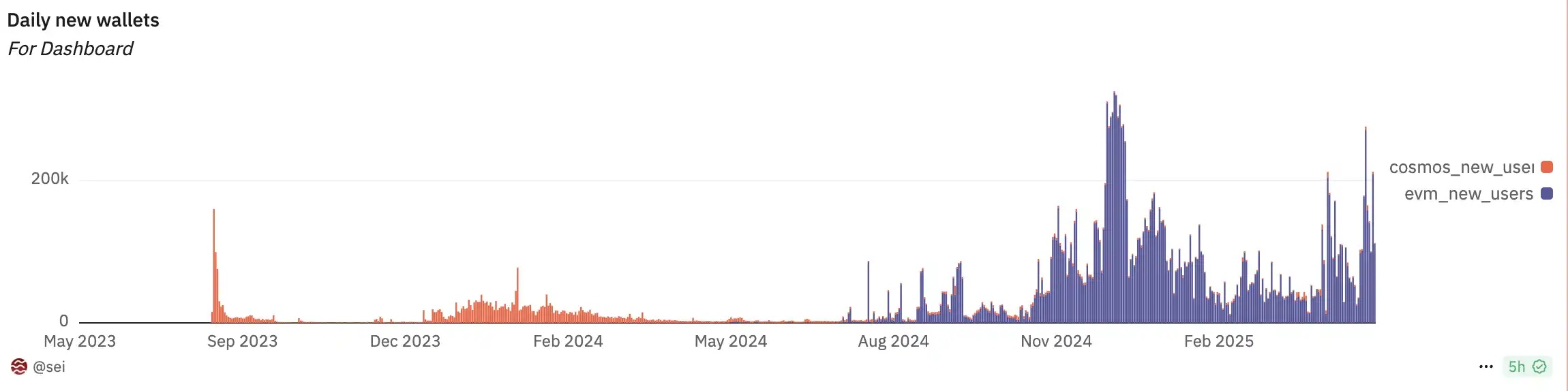
This upgrade not only represents Sei's substantive breakthroughs in throughput and finality but also marks its strategic transition from a "parallel chain" to a "high-frequency trading infrastructure." For developers looking to deploy more complex logic and lower-latency applications in Web3, Sei is attempting to provide a platform closer to Web2 performance standards.
At the same time, Sei's on-chain asset scale is steadily expanding. As of this writing, its TVL has reached $1.264 billion. As shown in the chart below, since 2025, Sei's ecosystem TVL has been on a continuous growth trajectory, reflecting sustained confidence from developers and capital markets in its technical upgrade path.
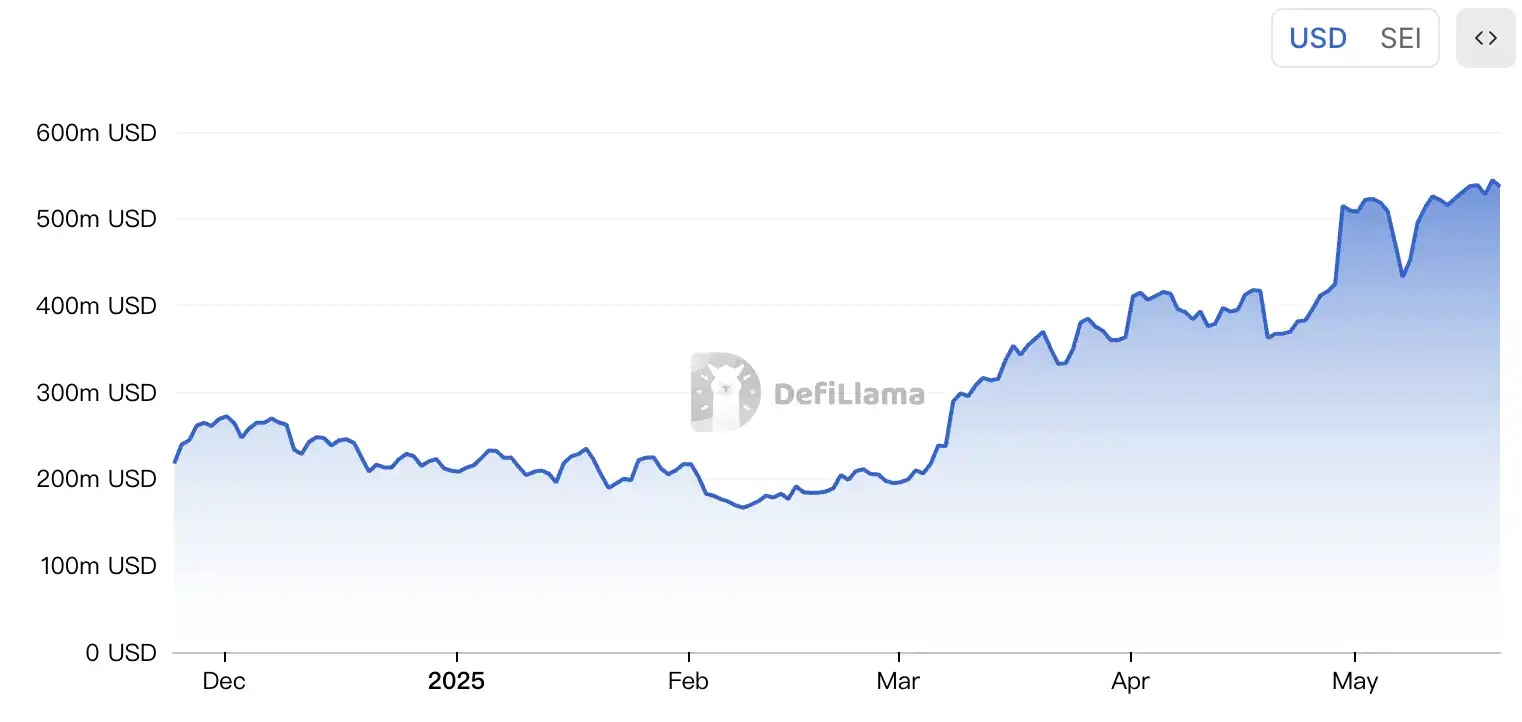
This growth is not only reflected in on-chain data but is also gradually influencing the financial system. In May 2025, Canary Capital filed an S-1 for a Staked SEI ETF, meaning Sei could become one of the few blockchains included in compliant asset portfolios. The Sei Development Foundation, based in the US, ensures governance stability in development direction, policy alignment, and compliance progress.
This positions Sei as a potential on-chain platform for traditional capital markets. Against the backdrop of emerging next-generation on-chain assets like stablecoins, RWA, and DePIN, Sei's "high-throughput + regulatory-friendly + easy integration" features give it an advantage in ecosystem evolution.
On July 10, the Sei Development Foundation announced that native USDC and Circle's Cross-Chain Transfer Protocol (CCTP V2) will soon launch on the Sei mainnet. This integration further strengthens Sei's capabilities as a high-throughput, regulatory-friendly on-chain infrastructure, particularly in providing digital dollar functionality and seamless cross-chain asset transfers for enterprises and developers, showcasing significant competitiveness.
According to Justin Barlow, Executive Director of the Sei Development Foundation, this integration will create new digital asset application opportunities for enterprises, combining the stability of native USDC with Sei's performance optimizations to provide institutional-grade financial support for DeFi, DeSci, on-chain gaming, and other on-chain products. He noted that developers are launching new services on Sei daily, and the introduction of native USDC injects critical financial infrastructure into its ecosystem.
The performance competition in the public chain space has already entered deep waters. Solana has achieved ultra-high TPS with its single-chain architecture but is limited in complex contract processing; Ethereum bets on Rollup, outsourcing complexity to Layer2, but the challenges of cross-chain communication continue to emerge.
Sei attempts to take a middle path: achieving underlying performance upgrades with a modular architecture while maintaining compatibility with Ethereum's developer ecosystem, creating a "middle-ground platform" with both performance and compatibility.
The Giga upgrade not only means Sei has the underlying capacity to support high-throughput scenarios like AI, finance, and gaming but also marks the arrival of a new leap in public chain performance. If the previous stage was about building "usability," the next phase will compete for "performance sovereignty"—whoever can support larger-scale assets and users will have the opportunity to define Web3's infrastructure standards.
From proposing the "Gigagas" concept to building the Autobahn consensus system, completing real-world testing, and preparing for mainnet launch, Sei has completed the entire performance innovation cycle in less than a year. This reform is far more than just "getting a little faster"—it opens a new dimension of imagination for the entire on-chain world. Performance is no longer an afterthought but the starting point of the underlying narrative. As on-chain applications grow more complex, data more dense, and users more Web2-like, only public chains with Giga-level throughput can truly meet the on-chain demands of the next billion users.
The copyright of this article belongs to the original author/organization.
The views expressed herein are solely those of the author and do not reflect the stance of the platform. The content is intended for investment reference purposes only and shall not be considered as investment advice. Please contact us if you have any questions or suggestions regarding the content services provided by the platform.
