

Luckin Coffee needs the next 'Coconut Latte'

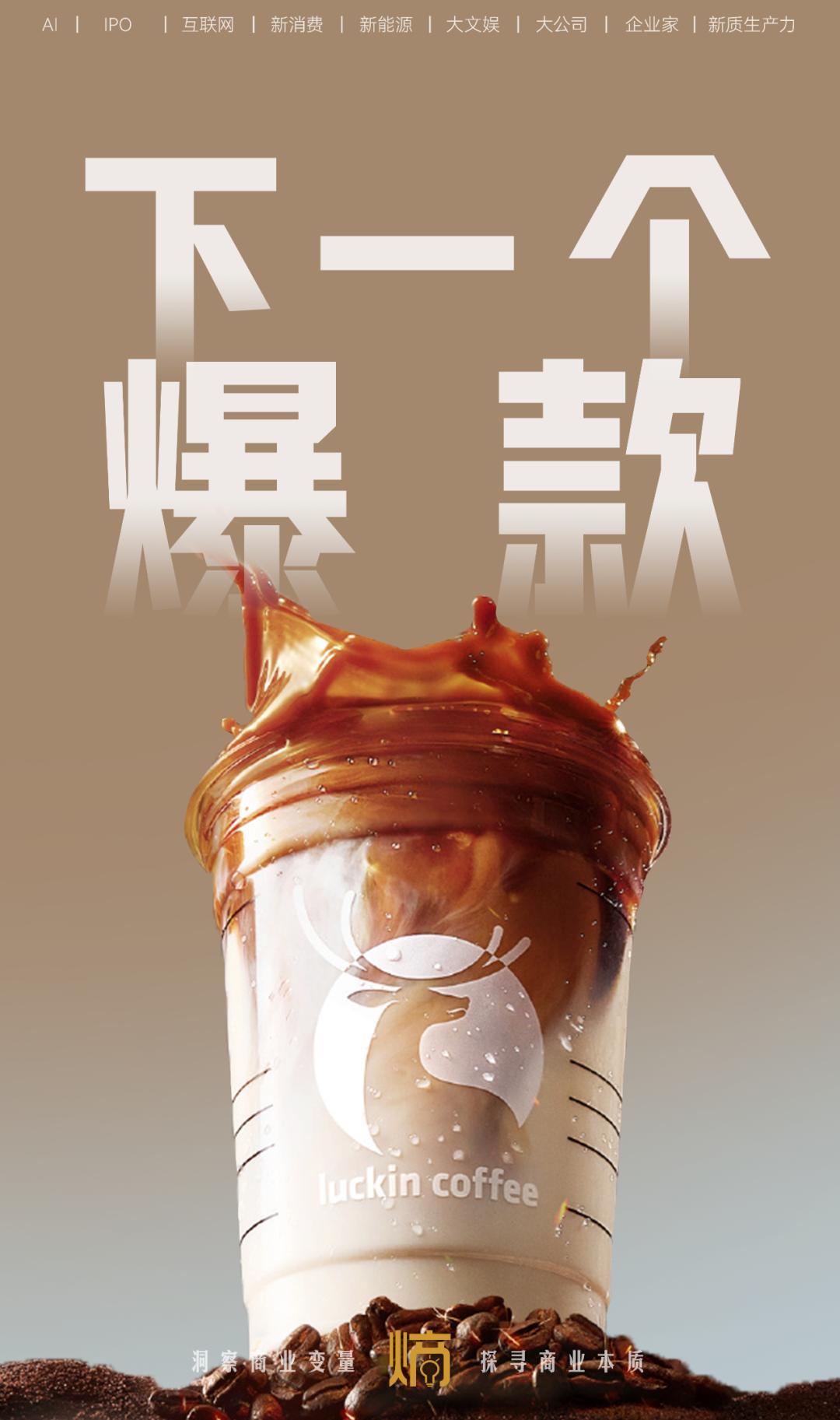
Luckin Coffee is trying to replicate the success of its coconut latte through frequent new launches and innovative strategies. However, it still needs to wait for the next big hit.
Original ⓒ New Entropy New Consumption Group
Author 丨 Mu Jin Editor 丨 Jiang Li, Jiu Li
The private equity firm that pulled Luckin Coffee out of the mire, Dazheng Capital, has recently shown a strong interest in Starbucks.
On July 11, according to the 21st Century Business Herald, several media outlets recently cited insiders saying that Starbucks has received several acquisition proposals for its China business, with most investors targeting a controlling stake. Starbucks may retain 30% of the shares, with the rest divided among several parties, each holding less than 30%.
Previously, there were rumors that Hillhouse Capital, KKR, and the well-known private equity firm Carlyle were interested in Starbucks. Recently, the market pointed out that Luckin's major shareholder, Dazheng Capital, has also joined the bidding for Starbucks shares.
Setting aside objective factors, if Dazheng Capital indeed acquires a portion of Starbucks' shares, turning from competitors to allies, the pros and cons for Luckin are unclear.
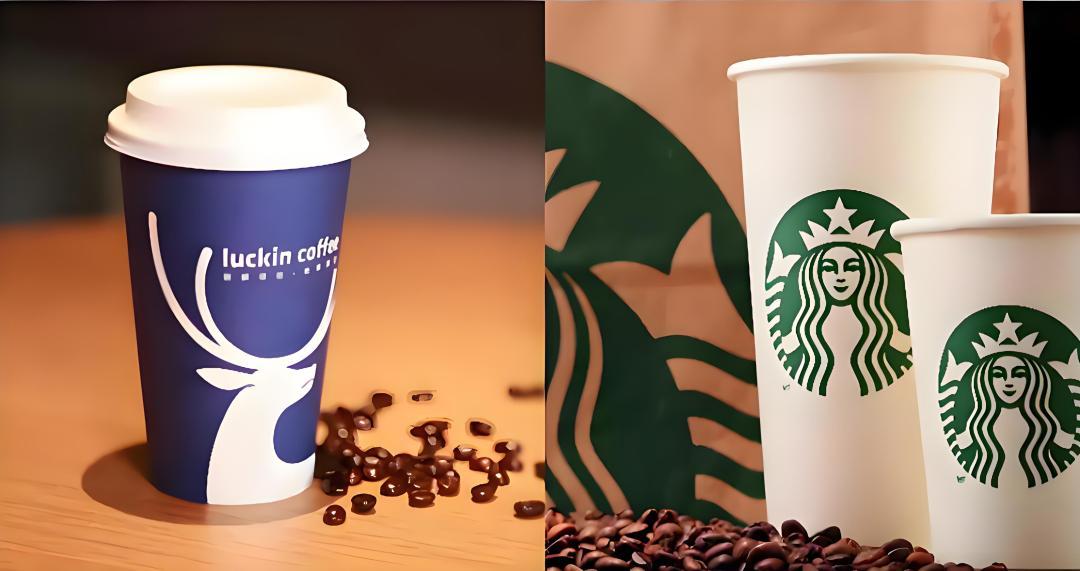
After all, Luckin only became the king of the coffee world in 2023 with the help of its major shareholder. This also means that Dazheng Capital, with its successful transformation of Luckin, may use similar tactics, such as localized operations and aggressive expansion policies, to help Starbucks quickly capture market share.
However, aside from the variables of Dazheng Capital and Starbucks, Luckin, as the leader of the domestic coffee industry, also has its own troubles. After years of close combat with peers, even as the leader, Luckin Coffee is feeling the strain.
Busy "Coffee Leader"
Over the past year, Luckin has been trying various ways to increase store visit frequency.
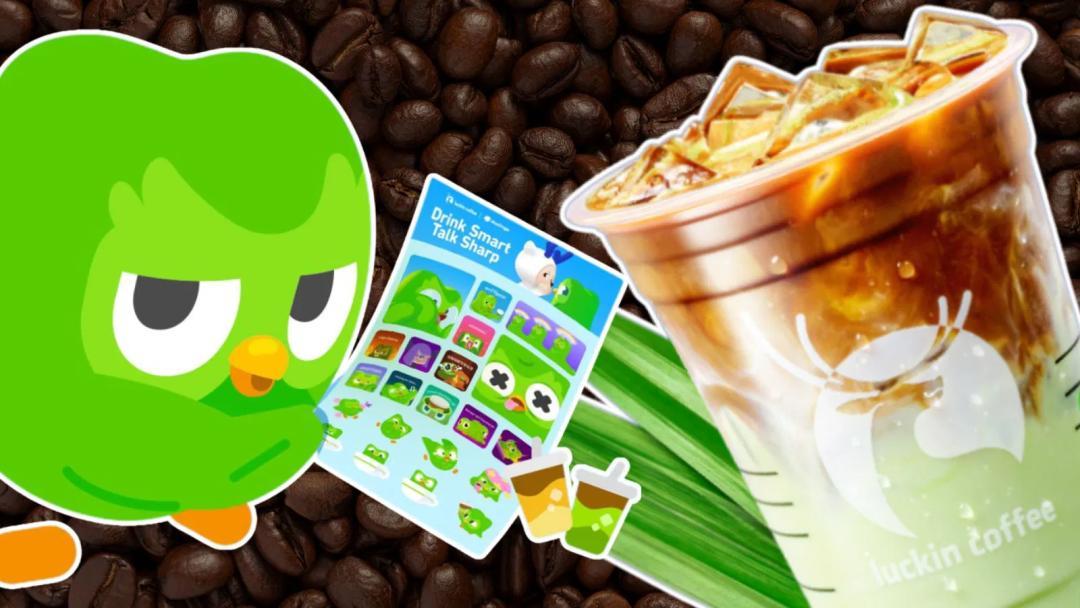
On July 6, Luckin launched the Green Shasha Latte, and by the 14th, the results were out. This product, launched in collaboration with the app "Duolingo," sold over 9 million cups in its first week; the peripheral "Butt Cup" from their collaboration sold out immediately upon release.
Looking back, in June, Luckin collaborated with the popular drama "Lychee of Chang'an" to bring new products: "Lychee Cold Brew" and "Lychee Jelly of Chang'an," with first-week sales exceeding 8.5 million cups. The "Lucky Horse" peripheral included in the collaboration package was resold for nearly 300 yuan.
According to Sight's statistics, by mid-2025, Luckin had already conducted nine collaborations, covering movies, dramas, anime, ACG, intangible cultural heritage, and cultural tourism. According to industry data, it had 37 collaborations in 2024.
The numerous marketing activities aimed at the current Generation Z, as Luckin's co-founder Yang Fei said, "is to play with young people."
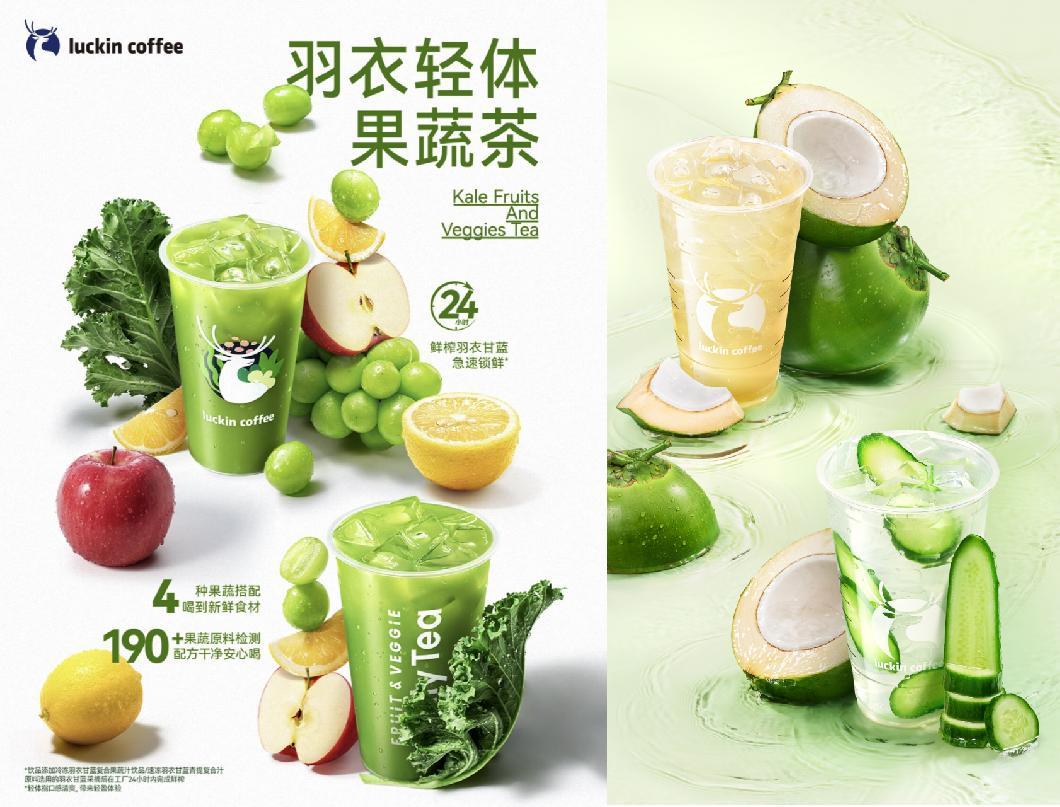
As the circle of consumption scenarios expands, Luckin has also ventured into the new tea beverage industry. At the end of May this year, it launched its first fruit and vegetable tea: Luckin Feather Light Fruit and Vegetable Tea; in early June, it launched coconut water. However, even earlier, Luckin had already launched light milk tea.
▲ Image/Luckin
According to a report disclosed by the public account Kamen, in 2024, coffee brands continued to accelerate new launches, with an average of 42.3 new products per brand among 10 coffee brands, surpassing tea brands for the first time since related statistics began. Luckin Coffee, the "model worker" in product launches, has been Top 1 almost every year, ranking first with 77 new products; the highest growth rate was Lucky Coffee, with a year-on-year increase of 184.6%.
Entering 2025, Luckin is working even harder on new launches. According to industry insiders, from January to April 21 this year, Luckin launched 22 new products (including returns) in four months, averaging 5.5 new products per month, a frequency that is astonishing.
It is worth noting that when Luckin launched the light milk tea product "Light Jasmine" last year, it also announced the "Morning Coffee, Afternoon Tea" strategy, which perfectly aligns with the current state of young people, namely "morning coffee to refresh, afternoon milk tea to sustain," aiming to capture the full-time user consumption scenario.
Whether it's collaborations with popular IPs, strategic extensions, or extending its business reach into the tea beverage track, all reveal Luckin's deep-seated anxiety. Although it has left Starbucks behind, it lacks a major product to support it, and the previous strategy of "expansion" to conquer the market is not as effective.
Based on this, some believe that Luckin's search for a second growth curve is evident, expanding consumption scenarios and increasing consumption frequency, with a cup in the morning and another in the afternoon, doubling store profitability.
Therefore, if Luckin's strategic goal before 2022 was to prove its profitability to the market, its current goal is to increase the profit margin per store on the basis of ten thousand stores.
Because having many stores also means diluted customer flow. According to Jihai Brand Monitoring, as of February 13, 2025, Luckin's dense stores (two or more within a regional range) accounted for a very high proportion, such as 79.87% within a 500-meter range in first-tier cities, and 92.71% when the range is expanded to 1000 meters.
According to Jiemian News, even with the competitive price of 9.9 yuan, by the end of 2023, with the rapid expansion of stores and high-density layout, some areas in first-tier cities have seen "less than 100 cups per store," indicating intensified competition.
According to Luckin's 2024 data, the same-store sales of self-operated stores for the whole year of 2024 fell by 16.7% year-on-year, compared to a 21% increase in the previous fiscal year.
In the four quarters of 2023, Luckin's same-store sales growth rates were 29.6%, 20.8%, 19.9%, and 13.5%, respectively. In 2024, the growth rate plummeted to -20.3%, -20.9%, -13.1%, and -3.4%, respectively. By 2025, there was a slight improvement, with a same-store sales growth rate of 8.1% for self-operated stores, but it still could not compare with 2022 and 2023.
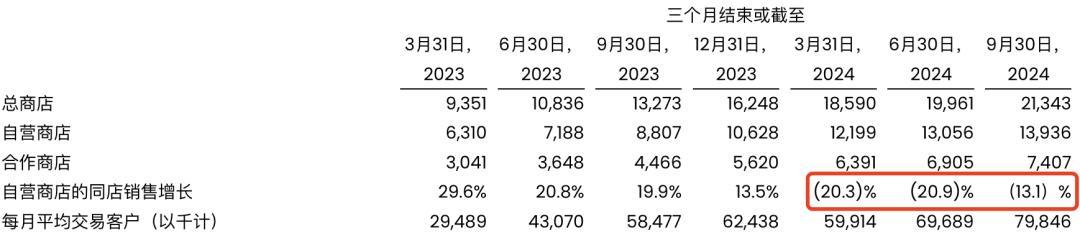
Currently, from Luckin's actions, it seems to be slowing down its land-grabbing pace. Data shows that from the first to the fourth quarter of 2024, Luckin opened 2342, 1371, 1382, and 997 new stores, respectively, showing a trend of reduction.
Whether it was the previous crazy expansion of scale or the reduction strategy started in the past year, or the dazzling IP collaborations and crazy new product launches, all are to maintain its position as the industry leader.
However, it is clear that Luckin is paying a relatively high price in its attempt to occupy the minds of Generation Z. Just in terms of marketing expenses, it has been rising all the way. From 2022 to 2024, its sales and marketing expenses were 570.1 million yuan, 1.2865 billion yuan, and 1.9203 billion yuan, respectively. According to a report by LatePost, even the "advertising everywhere" Chagee had an annual marketing budget of "only" 1 billion yuan in 2024.
Moreover, from Luckin's current products, only the coconut latte launched in 2021 can be considered a major product. Although many new products have been launched since then, no phenomenal products have appeared. Meanwhile, Cudi and Lucky Coffee are actively competing for the core category of coconut drinks.
Relentless Competitors

Founded in 2022, Cudi Coffee can be considered Luckin's biggest competitor to some extent.
Looking at Cudi's development history, it has almost consciously replicated Luckin, whether in location selection, product system, or Luckin's low-price strategy.
The core strategy of "fighting close to Luckin" allowed Cudi to open 5000 stores in just seven months with the help of franchisees, while in comparison, Luckin, founded in 2017, reached 5000 stores in 2020.
In terms of total store numbers, it has now exceeded 15,000. According to Jihai data, 7.4% of Cudi Coffee's stores nationwide are located in first-tier cities, 21.6% in new first-tier cities, and 28.8% in second-tier cities, focusing more on lower-tier markets compared to Luckin Coffee. Cudi has the most city coverage in East China. South China, Southwest China, and Central China also show a trend of spreading outward from regional core cities. In terms of functional areas, Cudi and Luckin have very similar functional area distributions for operating stores, with 28.7% of Cudi's stores located in shopping centers, 35.8% in office buildings, and 23.7% in residential areas.
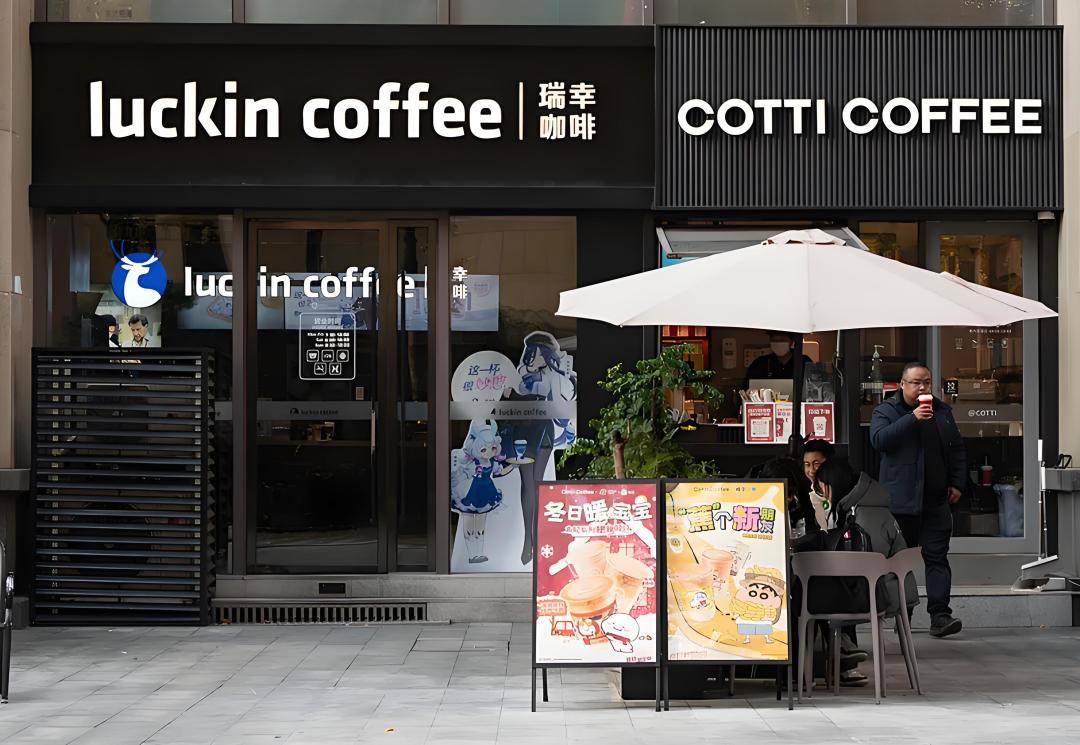
The report mentioned above pointed out that 66% of Cudi's stores are within 200 meters of Luckin, with only 19% beyond 500 meters. Opening stores near Luckin allows Cudi to almost enjoy the customer base and market that Luckin has already validated, reducing market validation and education costs and lowering the risk of store failure.
▲ Image/Finance Weekly
In terms of product system, it has launched over 70 popular products centered around six classic series, most of which, such as coconut latte and thick milk latte, target Luckin's corresponding popular single products.
In terms of price, Cudi maintains a price of 9.9 yuan across the board. Cudi also disclosed that in May, the average operating cash flow per store reached 27,000 to 28,000 yuan, the highest in history, with a year-on-year increase of 40% compared to last year.
While Luckin maintains a bottom line of 9.9 yuan, it has been continuously shrinking the range of 9.9 products in recent years.
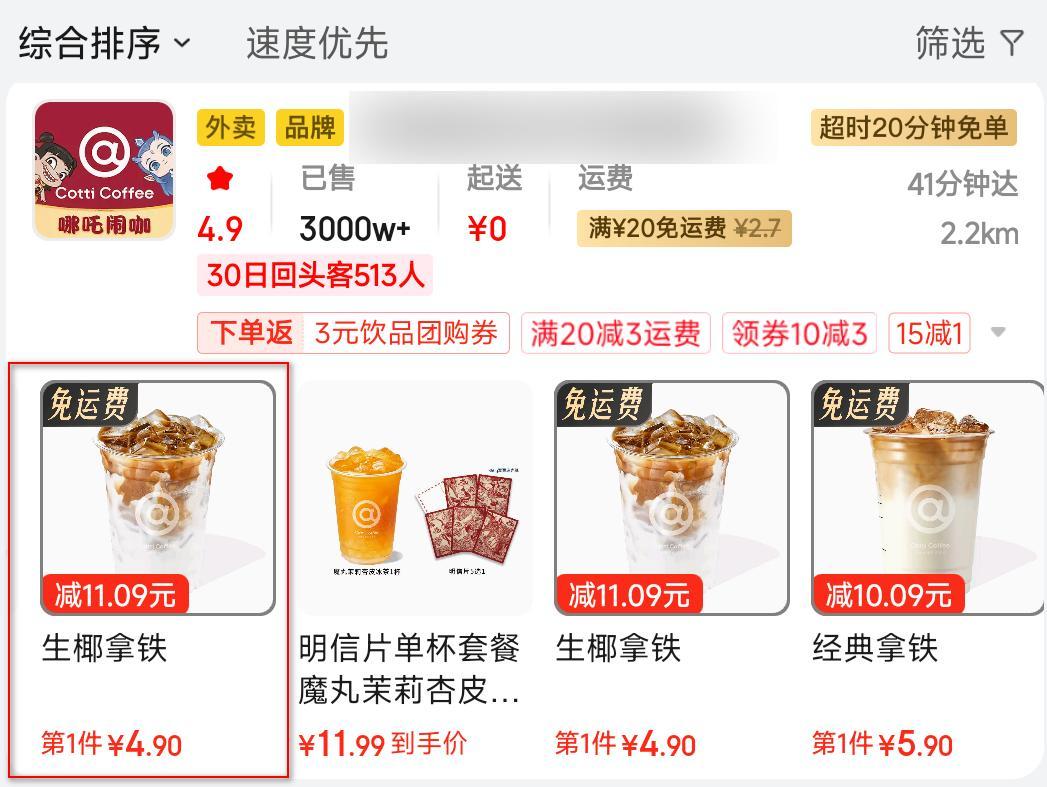
However, just as Cudi attempted to pry open the market with a low-price strategy this year, Luckin had to respond. This year, with JD.com entering the food delivery market and opening subsidies, Cudi saw a breakthrough in sales. In June, Cudi lowered the price of coffee products to 3.9 yuan/cup and 4.9 yuan/cup, and some tea brands also reduced their drink prices to single digits. Luckin had no choice but to break the 9.9 yuan bottom line, reducing the price of several products to 6.9 yuan.
▲ Image/JD Food Delivery Screenshot
Luckin's move is similar to Meituan, which occupies over 70% of the food delivery market share. However, with JD.com entering the fray, attempting to share the market through strategies such as "billion-dollar subsidies" and "free coupons," Meituan had to launch "inflation coupons" and "free delivery fees" as defensive measures, which also eroded operating profits.
Cudi's strategy of "random punches to defeat the master" has also had some effect. In October last year, Cudi Coffee's chairman and CEO Qian Zhiya revealed in an internal letter on the company's second anniversary that Cudi Coffee's store count ranked fourth globally, with operations in 28 countries and regions worldwide.
While Cudi and Luckin are engaged in fierce competition, Lucky Coffee, under the banner of Mixue Bingcheng, has directly focused on Luckin Coffee's core territory - second and third-tier cities and county-level markets.
In terms of store numbers, Lucky Coffee's numbers continue to grow. According to Mixue Bingcheng, its Lucky Coffee stores nationwide have exceeded 6000, covering over 300 cities in 30 provincial-level administrative regions nationwide. Mixue Bingcheng also mentioned that on June 21, over 100 stores in the Central China region had daily sales exceeding 10,000 yuan, and in May, many Lucky Coffee stores nationwide had sales exceeding 300,000 yuan. Previously, Mixue's general manager Zhang Hongfu even boldly stated, "We will create another Mixue in five years."
In terms of price, Lucky Coffee has copied Mixue's "low price + popular product + single-store profit model." For example, the prices of signature iced latte and classic Americano are 6.6 yuan and 5.6 yuan, respectively. Compared to Cudi and Luckin's similar products, these can be considered "bargain prices."
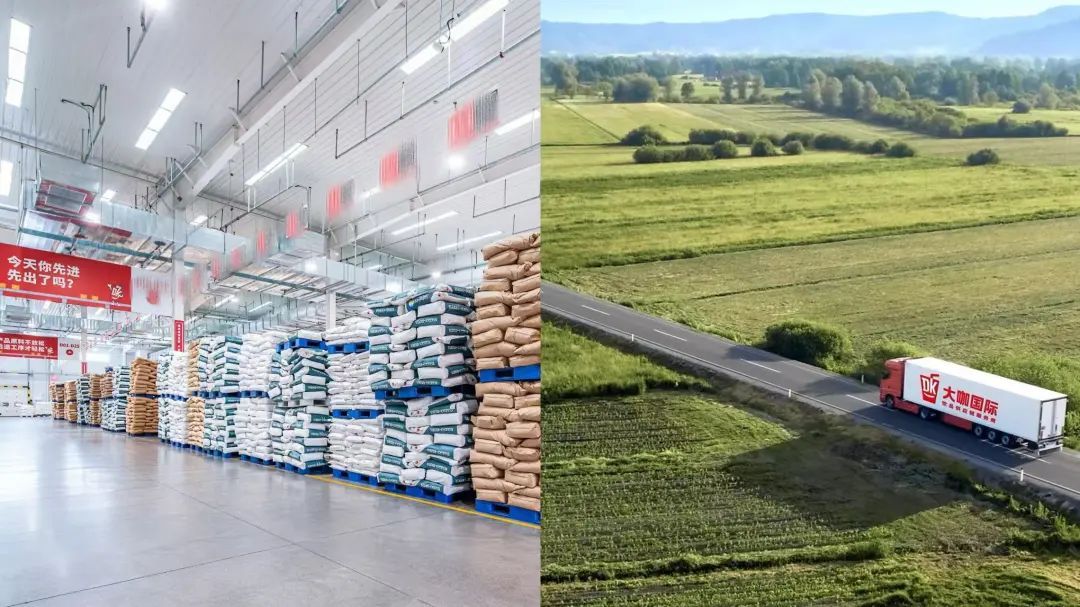
Behind this, Mixue's supply chain system is the reason why Lucky Coffee dares to play the "low price card." Last year, Bai Di, head of public affairs and vice president of Mixue Bingcheng, stated that Lucky Coffee has established five production bases nationwide, achieving 100% self-production of core raw materials. Meanwhile, Mixue Bingcheng has 27 warehouses nationwide, gradually opening them to Lucky Coffee.
▲ Image/Kamen
Outside the same tier, for Luckin, potential threats also include Manner, which focuses on "first and second-tier cities," cross-border players in the tea beverage track, and the penetration of convenience stores, all of which are gradually diverting Luckin's customer base.
Potential Battle with Convenience Stores
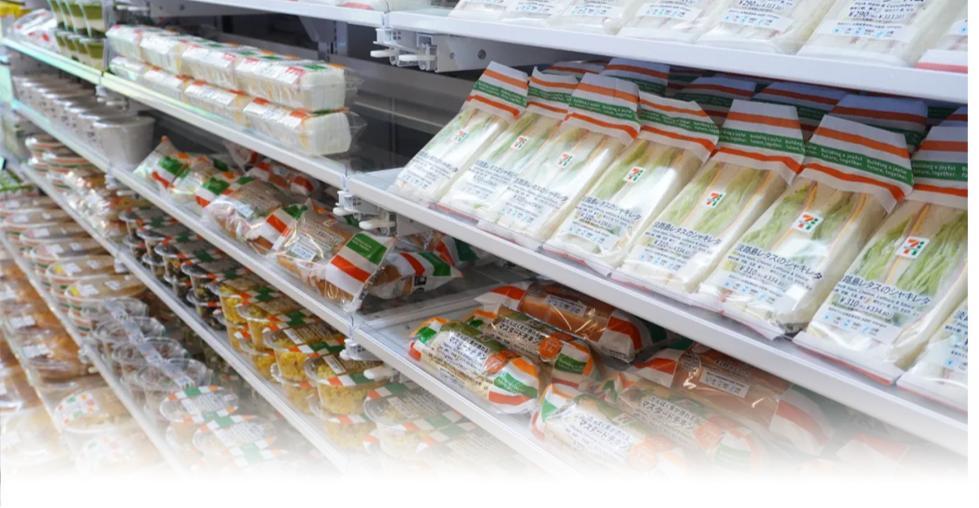
In 2019, some market opinions clearly pointed out that Luckin's real competitor is convenience stores.
This is mainly due to the latter's comprehensive advantages in channel coverage, consumption scenarios, cost structure, and user habits.
For example, convenience stores (such as 7-Eleven, FamilyMart, Lawson, etc.) are usually located in communities, office buildings, and transportation hubs, which are densely populated areas, and highly overlap with Luckin's "near-field consumption" model, with higher network density and more convenient consumer access.
From the perspective of consumer habits, coffee purchase decisions are often immediate, and convenience stores can meet the "grab and go" demand, while Luckin still requires a wait for preparation (albeit short).
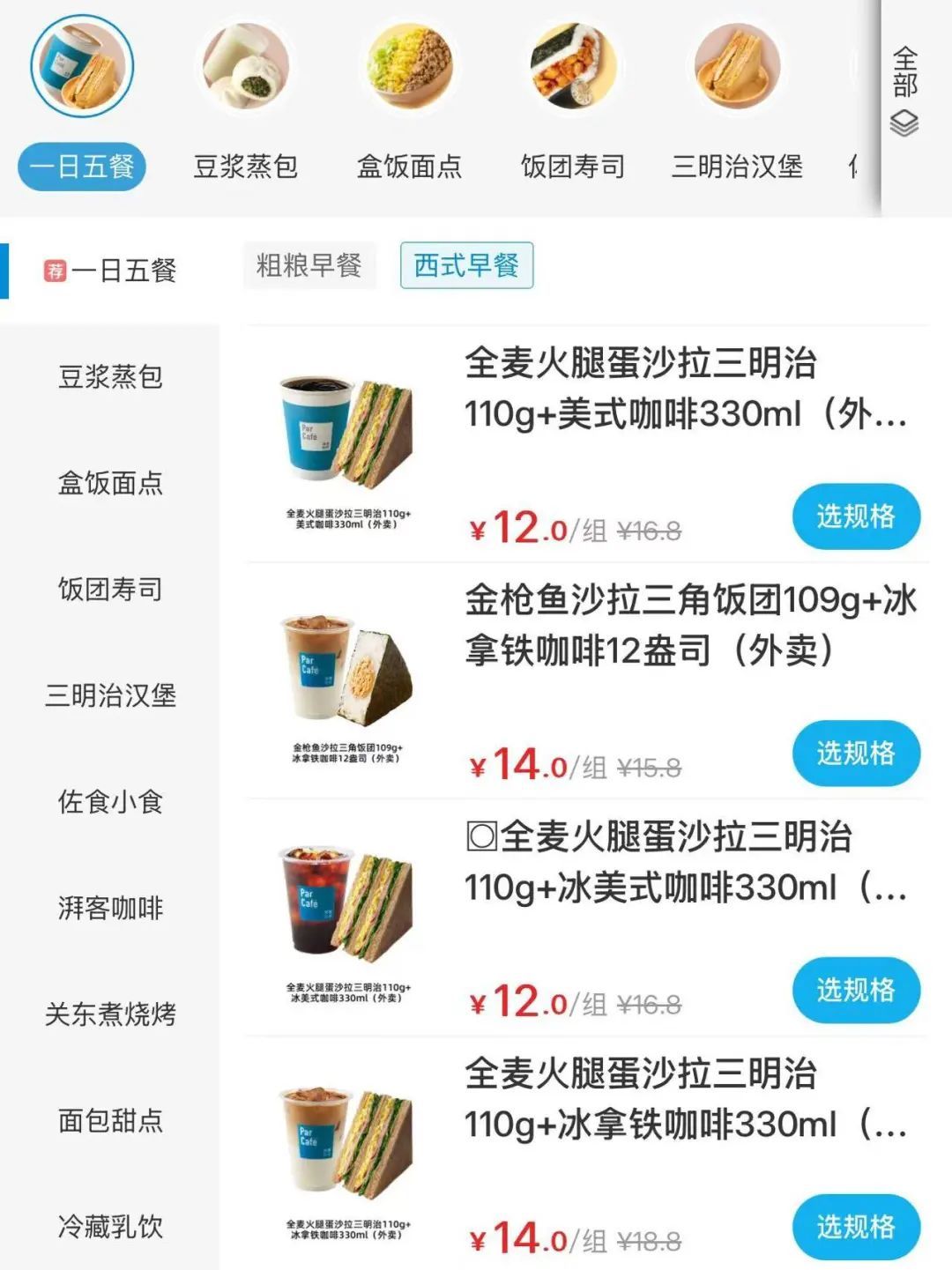
In terms of cost-effectiveness, price-sensitive users may be more interested in convenience store coffee, as convenience stores often promote "coffee + breakfast" combinations (such as coffee with a sandwich) to enhance overall cost-effectiveness, while Luckin's food SKUs are relatively limited.
▲ Image/FamilyMart Mini Program Screenshot
More specifically, some convenience stores operate 24 hours, covering nighttime coffee needs, which clearly gives them an advantage over Luckin in terms of consumer time slots.
Currently, many convenience stores have formed a new business model of convenience store + coffee. Leading chain convenience store companies such as FamilyMart, Lawson, and 7-Eleven have all set their sights on the freshly ground coffee market, launching their own brands.
According to the "2024 China Convenience Store Development Report" jointly released by the China Chain Store & Franchise Association (CCFA) and KPMG China, the national convenience store sales in 2023 were 424.8 billion yuan, with a year-on-year growth rate of 10.8%. This high growth trend is driving freshly ground coffee to become the most promising profit growth point in the convenience store business model, with the "store-in-store" model and 24-hour smart coffee service becoming trends.
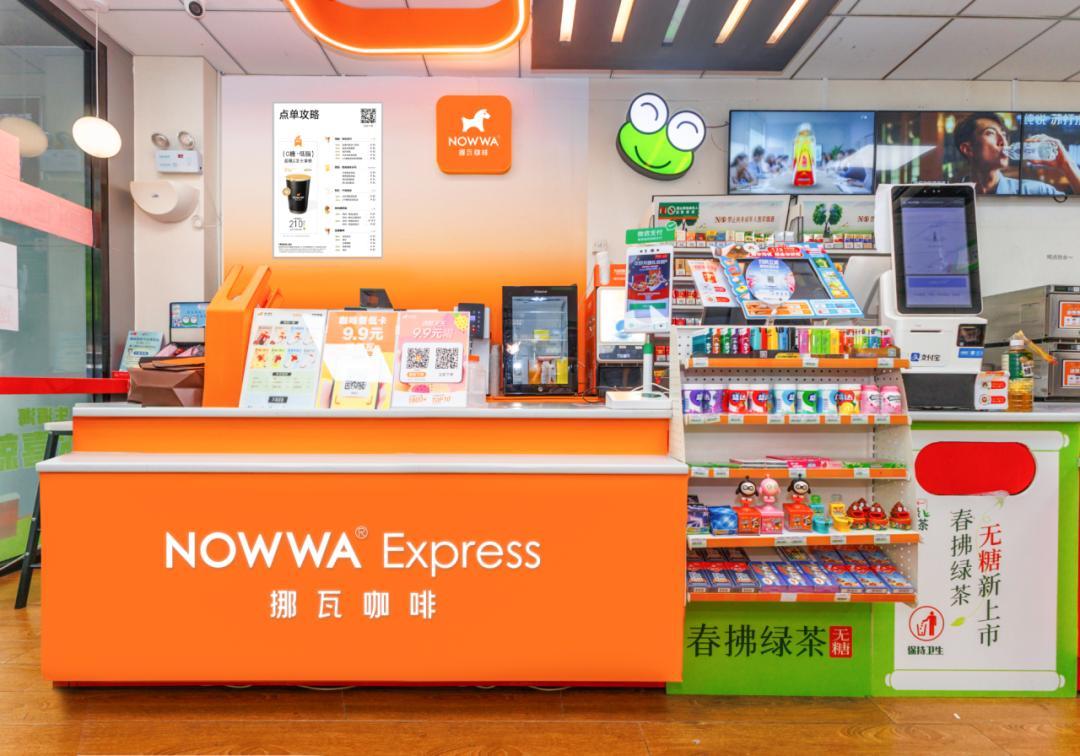
In addition to convenience stores selling coffee themselves, a new business model of convenience stores partnering with coffee brands has also emerged, with Nova being a typical example.
According to data from June, after partnering with convenience stores, Nova's store coffee daily sales reached 700-1000 cups, with an average customer flow increase of 20% and overall revenue growth of 10 times, while the daily sales of other products in the store increased by more than 20%.
▲ Image/Nova Coffee
As a major player closely competing with Luckin, Cudi announced in February this year that it would open convenience stores. In terms of numbers, Cudi has set a rather ambitious goal of achieving a total of 50,000 stores by the end of 2025.
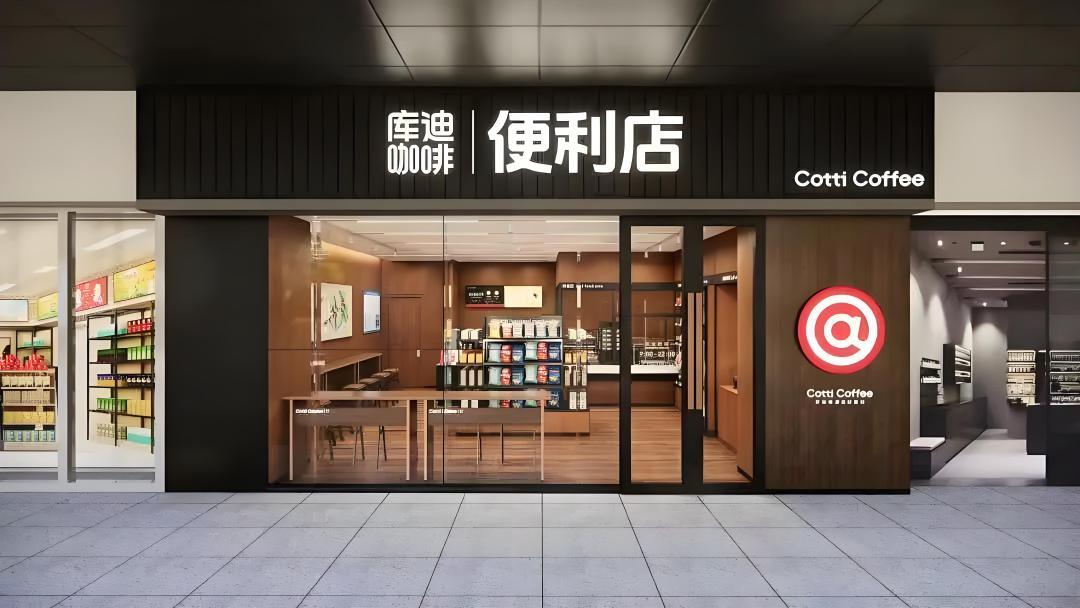
Specifically, it announced a comprehensive upgrade of the "Within Reach" plan, launching a new business model of convenience stores, and starting a new strategic model of "coffee + convenience store." This new business model features low entry barriers, with a deposit of 50,000 yuan and a down payment of 50,000 yuan, with the remaining amount payable in 36 monthly installments to open a Cudi convenience store.
It is reported that Cudi convenience stores also choose cost-effectiveness, with coffee as the core business, while also covering regular convenience store products.
Currently, convenience store coffee has created a new coffee market. Although its scale is small, it still has a certain impact on the competitive landscape of the coffee market. If the Starbucks-related equity change materializes, the competition in the coffee market will undoubtedly increase more uncertainties. From the perspective of the entire coffee industry, Luckin may need to accelerate the maximization of single-store profits on the basis of ten thousand stores to maintain its advantageous position and stand at the forefront.
References:
Li Jin, "Luckin Accelerates New Launches, The More Effort, The More Anxiety"
Source Sight, "Luckin and Duolingo Get Married, The Peripheral Sells More Expensive Than Coffee"
Gao Jian Pro, "Luckin's Major Shareholder Dazheng Capital Wants to Buy Starbucks China?"
36Kr, "Luckin Coffee's Real Competitor is Not Starbucks, But Convenience Stores"
The copyright of this article belongs to the original author/organization.
The views expressed herein are solely those of the author and do not reflect the stance of the platform. The content is intended for investment reference purposes only and shall not be considered as investment advice. Please contact us if you have any questions or suggestions regarding the content services provided by the platform.
