

Wang Puzhong steps in, Meituan bursts the 'bubble' in food delivery


Instant retail has shifted from a blitzkrieg to a war of attrition, with Wang Puzhong using a scientific mindset to first pierce the bubble of the food delivery industry, and Meituan has its own "On Protracted War."
Original ⓒ New Entropy New Consumption Group
Author | Yingmu Editor | Jiang Li, Jiuli
A few days ago, during the intense food delivery war, Meituan's core local business CEO and food delivery head Wang Puzhong suddenly stepped in and accepted a media interview. This was the first time in 8 years that a core executive of Meituan accepted an external interview.
In this information-packed conversation, the media summarized that Wang Puzhong responded to various issues such as the new high in daily order volume, JD.com's food delivery profit margin, the intensity of subsidies from giants, whether Meituan's self-pickup constitutes cheating, Meituan's latest profit margin, the background of the weekend food delivery competition, the final outcome of instant retail competition, whether incremental users are a bubble, the cancellation of JD.com's overtime free order policy, Meituan's market share, the cash reserves of each company, the low-profit business model of food delivery, Meituan's commission controversy, and the company's negative reputation. Wang Puzhong's speech was weighty, and from his attitude, Meituan tried to convey to the outside world through data disclosure and comparison that "the profit of the food delivery market is low, and increasing the intensity of competition in such a market is meaningless." As a science and engineering man in the eyes of the outside world, Wang Puzhong used various data to demonstrate his views, from which one can directly feel his stance towards Taobao Flash Sale and JD.com's call.
Subsequently, the official intervention led the food delivery war into a ceasefire period. During the following weekend, calm and covert battles became the main theme, but beneath the calm, everyone might realize that it seems everything cannot go back.

▲ Image/AI generated
But as everyone knows, the other two participants in the food delivery war, whether it is Alibaba or JD.com, do not just want to initiate a not-so-new competition across fields. From a macro perspective, what everyone values is the entry value of instant retail. E-commerce hopes to further increase user retention time on the main site through food delivery, especially when Taobao integrates with Fliggy and Ele.me. Whether it is to make incremental progress in the present or to form a new agent entry in the future AI era, the significance is far beyond what a food delivery war can express.
The entry and the future, the two most valued parts of these platforms, seem difficult to stop for any reason. At the same time as the food delivery war, there is also a race among the three in AI and embodied intelligence, such as Meituan buying half of the embodied intelligence track, and JD.com investing in three embodied intelligence companies. From a macro perspective, when all problems become one problem, it seems that no one has a reason to give up, and from the information released by Wang Puzhong this time, we see Meituan's version of "On Protracted War."
Who has the right to cease fire in the money-burning food delivery war?

From the data, it seems that food delivery is indeed not a "high-profit" industry.
This can be glimpsed from the various data listed by Wang Puzhong. "Food delivery is a fine and low-margin business model. If you deviate a little at each step, you end up losing money. Competitors have never made money.
Our OPM (operating profit margin) is only three-point-something, which is already the most successful worldwide. In the US, DoorDash charges a high fee, such as 16%-18% for merchant self-delivery, and users also pay a considerable delivery fee and tip to the rider, yet they only make a little money."
At the same time, Wang Puzhong also stated that the net profit of food delivery in 2024 will remain around 4%, with little fluctuation, and the total profit growth comes more from scale growth.
Regarding the online claim that Meituan's commission is as high as 20%, Wang Puzhong admitted that this is because the charges were not clearly explained. "The total fee seen by merchants actually includes two parts: one is the technical service fee, which is the actual commission, averaging less than 8%; the other is the delivery service fee, with an average delivery cost of nearly 7 yuan per order. We collect these two things together, so merchants feel they are being charged more than 20%."
The thin profit of the food delivery model is reflected in the very low profit per order. Wang Puzhong said, "It's just over one yuan, and this cup of coffee will be gone." Therefore, the interests of several parties in the food delivery network—merchants, riders, platforms, and users—need to find a clever balance point for everyone to be satisfied, but making all four parties satisfied is very difficult.
At the same time, Meituan is trying to prove that in such a low-profit track, if the fight continues, it may be of no benefit to multiple parties. "I want to tell everyone that with our system capabilities, if we use the other party's way to subsidize, we can do as many orders as we want. We did 150 million, and we can do 160 million or 200 million. But we don't need to do that."
Low profit, strong supply chain capability, and years of accumulated refined operation capability directly show the market that Meituan's stance on the inflated value of the food delivery war is "deflating the bubble."
But from the perspective of Taobao Flash Sale and JD.com, Meituan seems to have chosen to downplay the most important point, which is whether food delivery and even instant retail are the future.
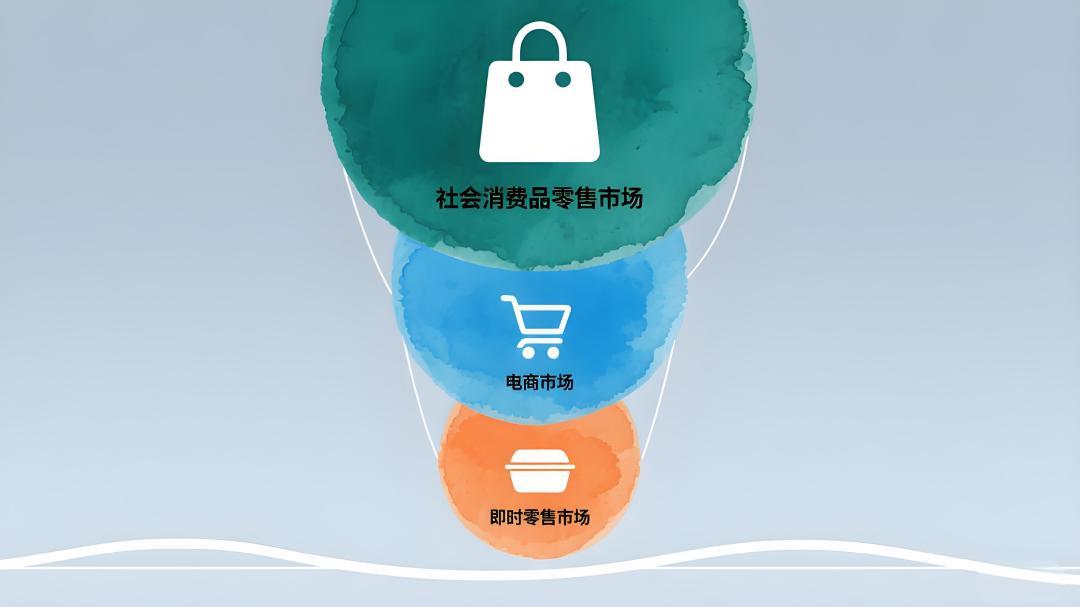
Wang Puzhong's expression is very intriguing, "They think there are too many things that are 'the future.' I have publicly said about the future of instant retail, assuming we have 100,000 lightning warehouses in three years, one warehouse may have a few hundred orders, which is not much. This is just a trillion market, but e-commerce is a 20 trillion market, and social retail is more than 50 trillion, you only account for 2%, I didn't say it's a 10 trillion market, what are they anxious about?"
▲ Image/AI generated
But the actual numbers seem to be different. On May 13, JD.com disclosed its first-quarter performance for 2025, which far exceeded market expectations, with a year-on-year growth of 15.8%, the highest year-on-year growth rate in nearly three years. In a conference call, CEO Xu Ran said that compared to financial returns, JD.com values the synergy between businesses more when laying out the food delivery business.
In Xu Ran's view, JD.com's instant retail and food delivery business are not independent businesses but a strategic layout naturally extended from the core retail business. "The food delivery business is deeply rooted in our entire ecosystem, and in the future, it may have huge synergy value with instant retail, e-commerce retail business, and even JD.com's logistics business."
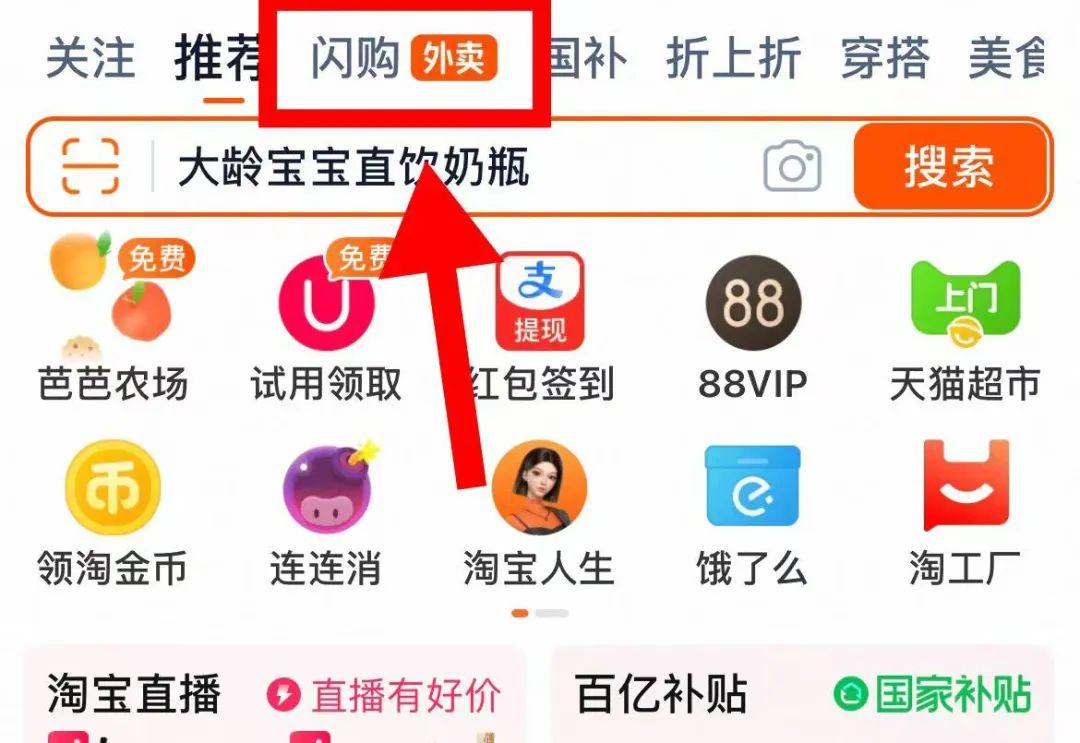
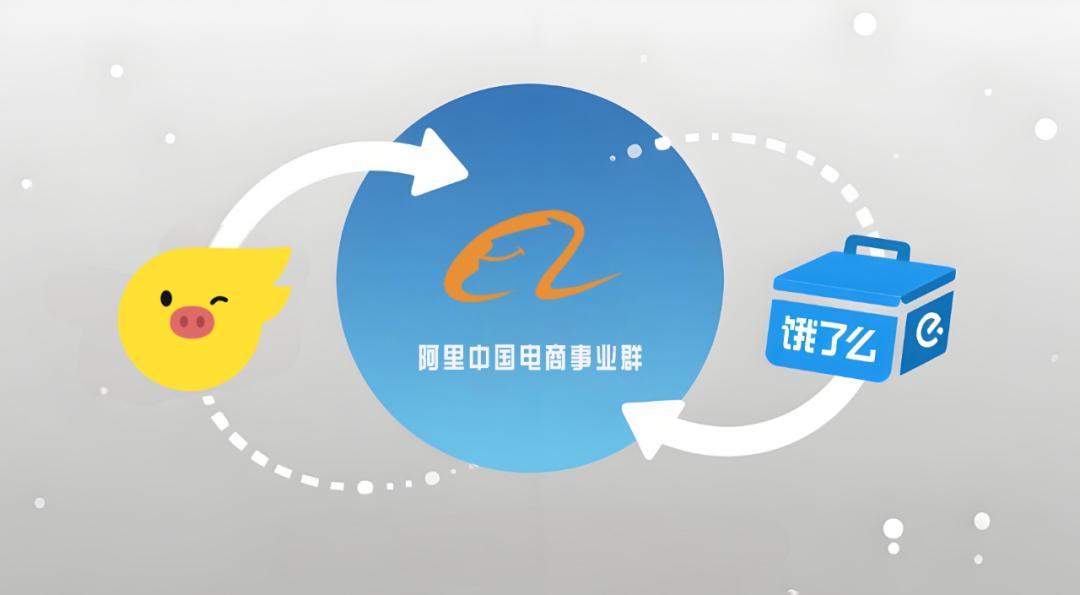
The same narrative also occurs at Alibaba. When Ele.me and Fliggy are integrated into the e-commerce business group, a Taobao, a super APP is gradually taking shape. Taobao can gain a differentiated advantage through "e-commerce + food delivery" and consolidate the mindset of "the almighty Taobao."
▲ Image/Taobao homepage screenshot
At the same time, from a future perspective, all-in AI giants will obviously not give up on making their APP or agent lack this high-frequency and rigid demand entry of food delivery.
In summary, it seems that none of the three participants has a reason to give up food delivery, which means that almost no one has the right to cease fire.
What is the protracted war betting on for the future?

From a long-term sustainable development perspective, the crazy money-burning and subsidies will indeed become history, but this competition is difficult to stop in the short term. The huge upfront investment has created a "sunk cost" trap. As reported, an Alibaba person said, "If you don't continue to invest, the money invested before is wasted." Ceasing fire at this moment means admitting the failure of hundreds of billions of investments.
So in the upcoming protracted war, what exactly do the few need to compete on, which is worth a breakdown.
First, from JD.com's actions, it seems to intend to continue adhering to the main line of quality food delivery. On July 22, JD.com announced the launch of the "Dish Partner" recruitment plan, stating that it will invest 1 billion yuan in cash to find partners for 1,000 signature dishes, planning to build 10,000 Seven Fresh Kitchens nationwide within three years.
On the previous 21st, Zhongqing Robot, Qianxun Intelligence, and Zhujidongli announced on the same day that they had received a new round of financing led by JD.com. On the 22nd, JD.com's self-operated food delivery kitchen "Seven Fresh Kitchen" using cooking robots opened in Beijing.
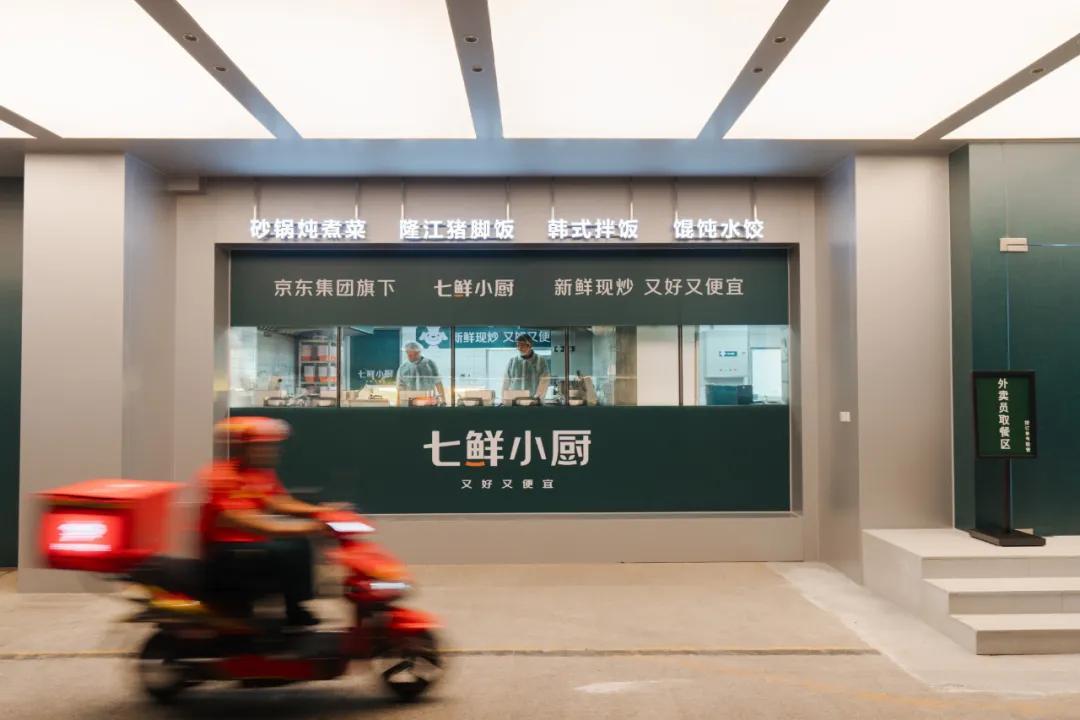
From the actions of robots + self-operated stores, according to a report by Yicai, JD.com is trying to build a path of differentiated competition with Meituan through supply chain integration, technical barriers, and ecological closed loops. Its core value lies in using "fresh cooking + transparent kitchen" to solve food safety trust issues, while lowering the threshold for small and medium-sized merchants with zero-cost franchise.
However, the sustainability of the model still needs to be verified: how to cultivate user habits, cost control capabilities, and balance with the rider ecosystem in a high-frequency consumption scenario will be challenges JD.com faces.
For Taobao Flash Sale, its advantage lies in Taobao's strong resource capabilities, full coordination of food delivery, local life, and cultural tourism with e-commerce. As the industry says, once the giant ship turns, the power is immeasurable.
According to a report by LatePost, the "Taobao Flash Sale x Ele.me" launched at the end of April this year is the first close cooperation between the two parties and also a "saturated investment" in the words of Wu Yongming—more than 400 million people open Taobao every day, directly adding a food delivery entry on the first screen; after Fliggy and Ele.me are integrated into Alibaba's China e-commerce business group, almost all businesses with consumption attributes have been gathered in the Taobao app, with Taobao as the main battlefield, commanded by the head of the e-commerce business group, Jiang Fan, rather than through group-level coordination in the past.
▲ Image/AI generated
Continuous increase and constant cross-category coordination show that Taobao wants a larger level of cohesion. Wang Puzhong also responded in the interview: If there are only three companies in the world, there will be this kind of elimination game. But in fact, everyone's battlefield is many, and each company has to consider where its main battlefield is and where the future growth point is. For example, will Double Eleven not be fought in the future? Should AI still be invested in? Should overseas be fought?
In summary, the huge traffic of e-commerce, combined with multi-sector coordination and already good infrastructure capabilities, is the confidence of Taobao's protracted war.
Finally, Meituan, in fact, from Wang Puzhong's words, you can see their strongest advantage, in short, is strong system capability and low-cost operation capability: "You want to do as many orders as you want, I tell you, you can do as many orders as you want, and do it at a lower cost."
In summary, from the perspective of a protracted war, the three parties seem to have their own advantages, and from a larger dimension, perhaps the big companies still need to answer a question.
Technology and scenario intertwining: What question do big companies solve together?

When the smoke of food delivery meets AI's code and the robotic arms of embodied intelligence on the same battlefield, what big companies really have to face is no longer the choice of "whether to do food delivery" or "whether to invest in AI," but a more fundamental proposition: In an era where technology reconstructs everything, how to make the "current chassis" and the "future engine" mesh, and maintain their ecological foundation in continuous change.
Food delivery, as the core scenario of instant retail, is the most direct "user interface" at present—tens of millions of transactions, deliveries, and interactions every day not only sediment user behavior data but also train the platform's ability to respond to demand instantly. This ability seems to be a "fine work" at the business level, but it is actually the most precious "data fuel" in the AI era: when users want to eat what, the tolerance threshold for delivery timeliness, service preferences in different scenarios, these data are the core raw materials for training AI models such as intelligent recommendation, demand prediction, and dynamic scheduling.
The significance of embodied intelligence lies in extending this "digital response" to the physical world—when cooking robots can accurately replicate the heat of signature dishes, in the future, when delivery robots and home service robots are on duty, the fulfillment cost of instant retail will be reshaped, and the way users interact will evolve from "clicking the screen" to "natural instructions." At this time, food delivery is no longer just "delivering food," but becomes the first high-frequency scenario connecting AI, embodied intelligence, and users; AI is no longer a concept in the laboratory, but the "invisible rider" that directly determines the quality of the food delivery experience.
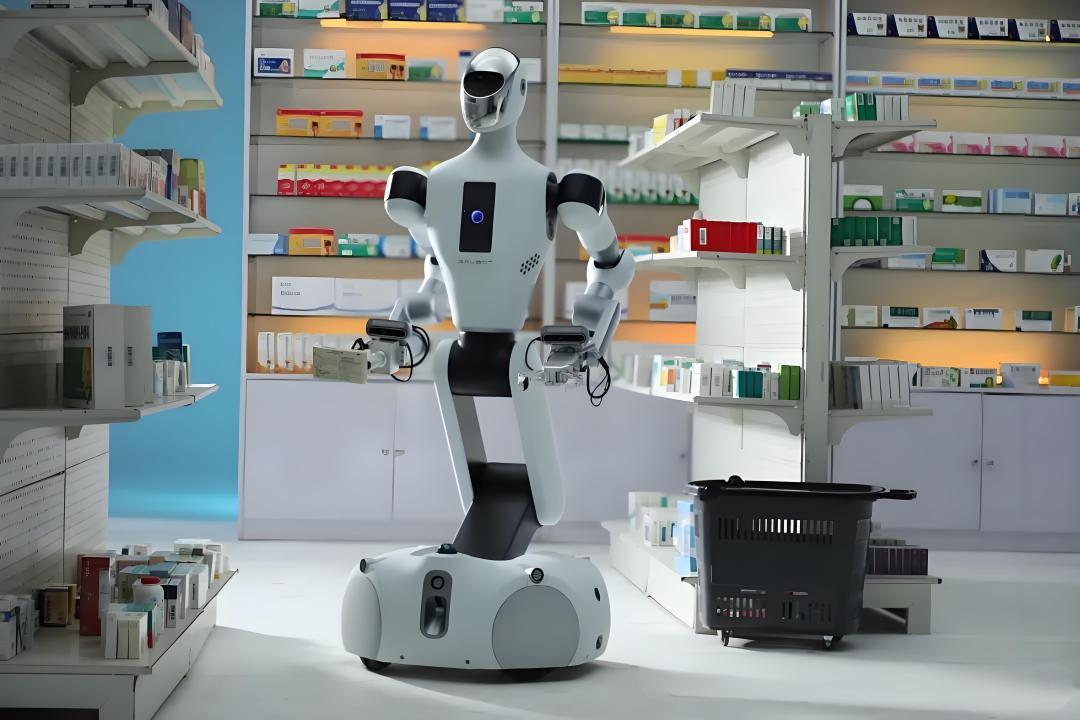
▲ Image/Meituan buys medicine with Galaxy General Robot
This is why big companies choose to exert force on two fronts simultaneously.
Meituan's acquisition of half of the embodied intelligence track is essentially to upgrade its delivery network from "labor-intensive" to "human-machine collaboration," using technology to consolidate the "low-cost and high-efficiency" moat; JD.com's investment in three embodied intelligence companies echoes with the robot kitchen of Seven Fresh Kitchen, trying to use "technology + supply chain" to reconstruct the fulfillment standards of instant retail; Alibaba's increase in embodied intelligence may be to allow Taobao's "super APP" to evolve into a "smart agent" in the future—users say "I want to eat hot pot tonight," AI can link Ele.me, Hema, local stores, and even dispatch service robots to complete the entire process from procurement to delivery.
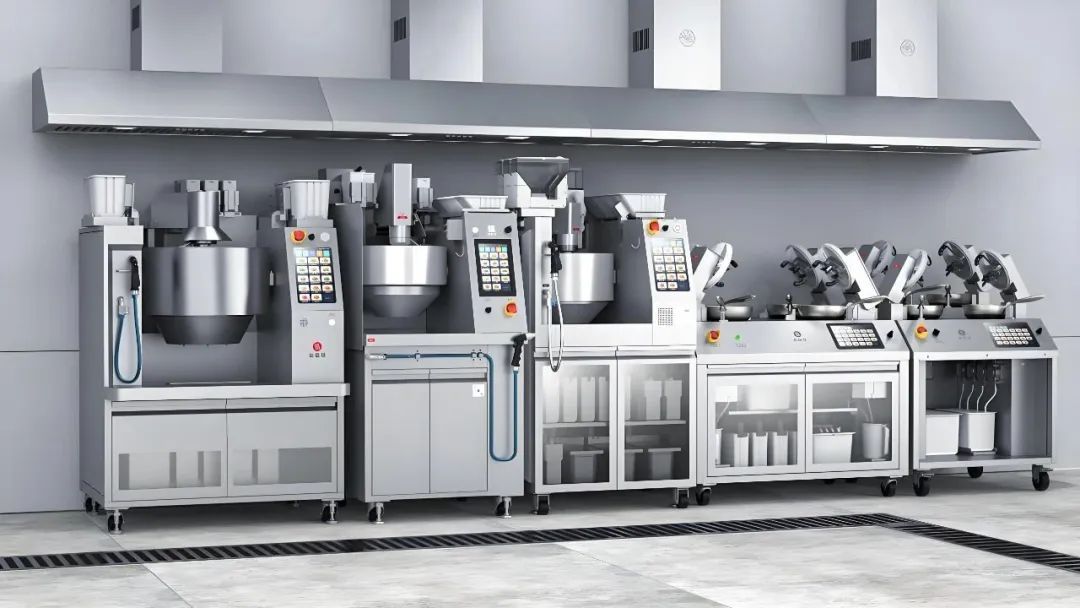
▲ Image/Robot Kitchen
Their common anxiety is that the equalizing effect of technology is accelerating. In the past, Meituan's delivery system, JD.com's logistics network, and Alibaba's traffic ecosystem were insurmountable barriers, but AI can allow latecomers to build intelligent scheduling systems in a shorter time, and embodied intelligence may replace the human advantage in the fulfillment link with machines.
For the three companies, if they only guard the current food delivery battlefield and do not lay out the future technology engine, today's advantages may become burdens tomorrow; but if they only chase the AI trend, training technology without high-frequency scenarios like food delivery, no matter how advanced the algorithm is, it will become "shooting without a target."
Therefore, the same question that big companies need to answer is: how to let "today's business soil" nourish "tomorrow's technology seeds," and let "tomorrow's technology fruits" feed back "today's business foundation"? The solution to this problem cannot be a simple resource pile-up, but a balance must be found in data closed-loop, scenario integration, and organizational collaboration.
The ultimate answer to this competition may be hidden in the "symbiosis of scenarios and technology." Whoever can first make every click and every delivery of food delivery become a sample for training future intelligence; whoever can make every evolution of AI and every breakthrough of embodied intelligence truly improve the efficiency and experience of food delivery, will be able to find their own survival coordinates in this competition that spans the present and the future.
References:
Huxiu, "Meituan has no right to cease fire"
Lin Ke, "Meituan Wang Puzhong's call shows that Taobao Flash Sale did the right thing"
LatePost, "'One Taobao': Alibaba's unannounced strategic transformation"
LatePost, "Exclusive interview with Meituan Wang Puzhong: We don't want to roll, but we can't help but fight back"
The copyright of this article belongs to the original author/organization.
The views expressed herein are solely those of the author and do not reflect the stance of the platform. The content is intended for investment reference purposes only and shall not be considered as investment advice. Please contact us if you have any questions or suggestions regarding the content services provided by the platform.
