


RWA Beginner's Guide! The new investment strategy of cutting the 'big house' into 'small slices'.

What is RWA?
RWA stands for Real World Assets, which are traditional assets (such as U.S. bonds, real estate, and green energy revenue rights) tokenized through blockchain, making them divisible and tradable quickly. Its core value lies in fragmentation and inclusive finance.
To put it simply, it's like cutting pork in a market. Ever bought meat? A whole pig is too expensive, so the vendor cuts it into smaller pieces. RWA is like cutting "big pork" like houses and treasury bonds into "digital slices" (tokens), allowing you to buy a tiny piece of ownership for as little as 10 yuan.
CC thinks it's similar to ABS, with the commonality being "cutting and selling" to facilitate investor participation. RWA is the "tech-upgraded version" of ABS, with the following differences.
| ABS (Traditional Model) | RWA (Blockchain Version) | |
| Where is the ledger? | In bank vaults | Synced across thousands of computers globally |
| How to trade? | Open an account with a broker | Tap on a mobile wallet |
| Audit difficulty | Need to ask a manager for printouts | Publicly verifiable on-chain in real-time |
Benefits include: (1) Low barrier: Invest in U.S. real estate with just $50, no need to save millions. (2) Easy trading: Trade like stocks with a tap on your phone. (3) Stable returns: More reliable than volatile assets like Bitcoin, as it's backed by tangible assets like rent or bond interest.
What is blockchain?
(1) What is blockchain?
It's like a "ledger" where every family member has a copy, and every expense (e.g., buying rice or paying utilities) is recorded simultaneously in all copies, making it impossible to secretly alter the records.
(2) Why is it called "blockchain"?
"Block": Equivalent to a page in the ledger, filled with transaction records.
"Chain": Each page is glued in order; tearing one page ruins the entire ledger.
(3) Who manages this ledger?
Thousands of computers worldwide collectively maintain it (decentralized). To alter a record, you need over half the computers to agree.
(4) What can blockchain do?
Store money: Bitcoin is "digital gold" on the blockchain, but its value fluctuates.
Store contracts: For example, buy a house without an intermediary—ownership transfers automatically on-chain.
Store assets: RWA "records" houses and treasury bonds on the blockchain.
| Internet (WeChat/Taobao) | Blockchain | |
| Who controls data? | Tencent, Alibaba decide | Managed by computers worldwide |
| Can records be altered? | Companies can change backend data | Requires network consensus to alter |
| Best for? | Chatting, shopping | Storing money, contracts, RWA |
Stablecoins
Stablecoins are cryptocurrencies designed to maintain price stability, typically pegged to assets like fiat currency, commodities, or other cryptocurrencies.
Think of them as digital food stamps. In the past, one food stamp could buy one pound of rice; now, 1 USDT stablecoin equals 1 dollar, usable anywhere.
How are stablecoins related to RWA?
Stablecoins are "digital cash," while RWA is a "digital savings account." Using stablecoins to buy RWA is like using cash to buy treasury bonds. RWA yields are often paid in stablecoins, similar to bond interest deposited into a bank account.
However, RWA still carries risks
On-chain and off-chain mismatches; lingering centralization risks (e.g., custodians absconding with funds); liquidity risks (hard to sell in emergencies); technical risks (hackers can be worse than thieves).
RWC Purchases Recommend projects backed by large companies or governments, using compliant cryptocurrencies over unregulated ones. Treasury tokenization offers more stability.
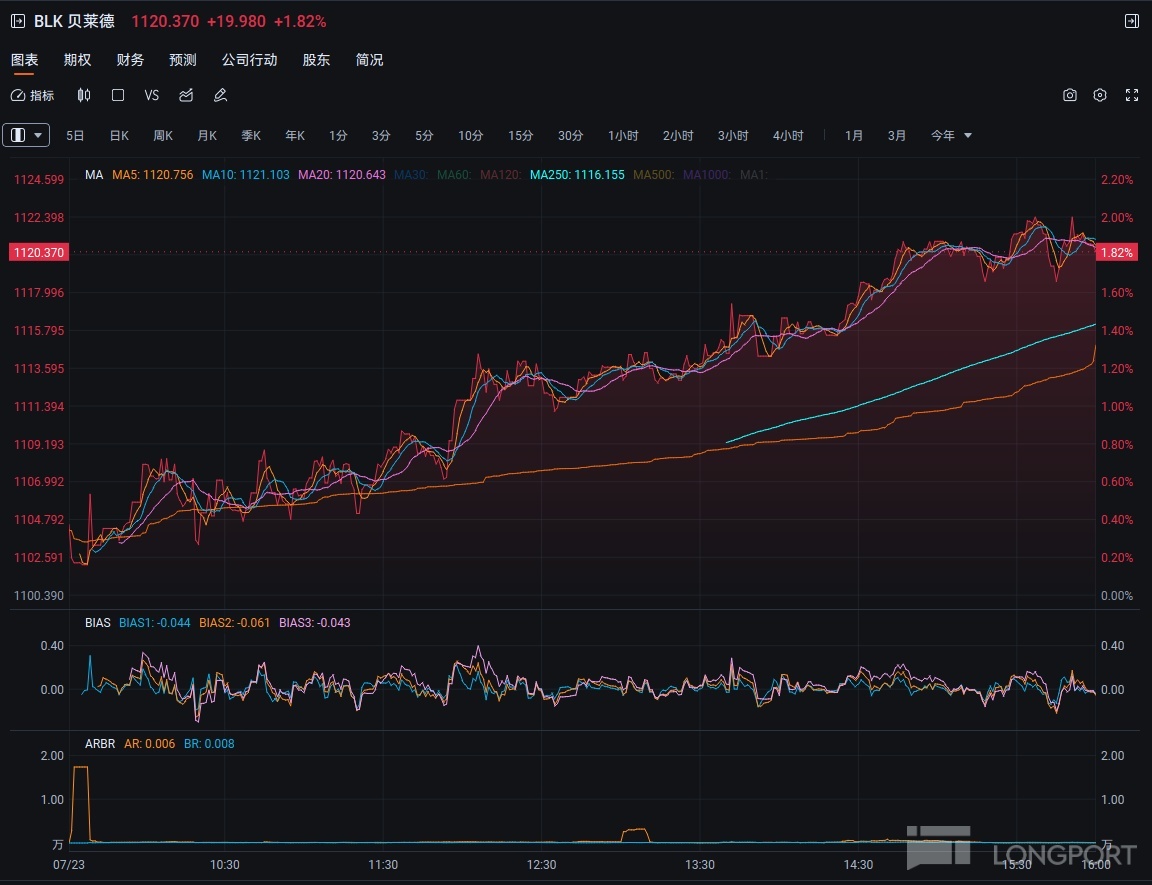
BlackRock (BLK) opened lower but climbed steadily on the 23rd, closing up 1.82%. BIAS is high and stable, suggesting further upside. Consider adding positions between 1104-1106.
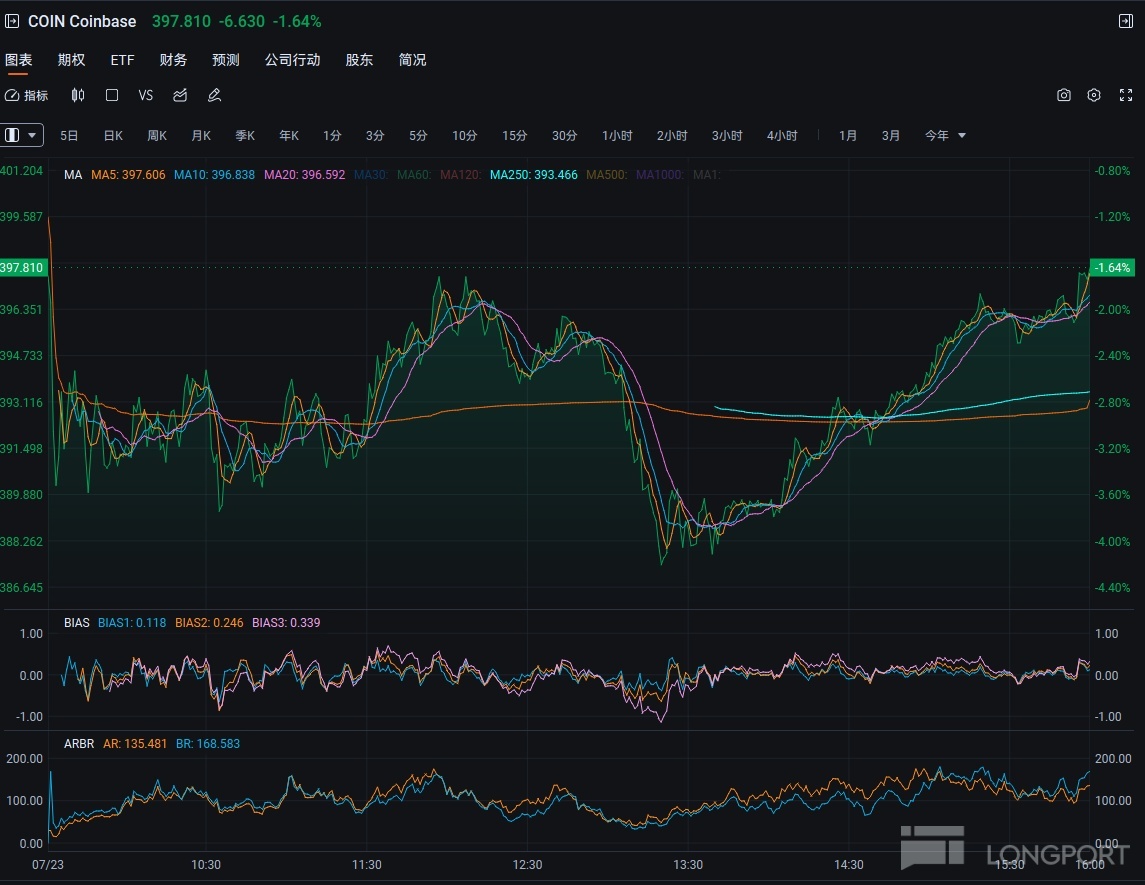
Coinbase (COIN) fluctuated at low levels in early trading on the 23rd, rebounding midday to range between 394-397 before plunging to 387 in the afternoon. Buying pressure later strengthened, closing down 1.64%.
A pullback trend is evident; watch the 385 support level.
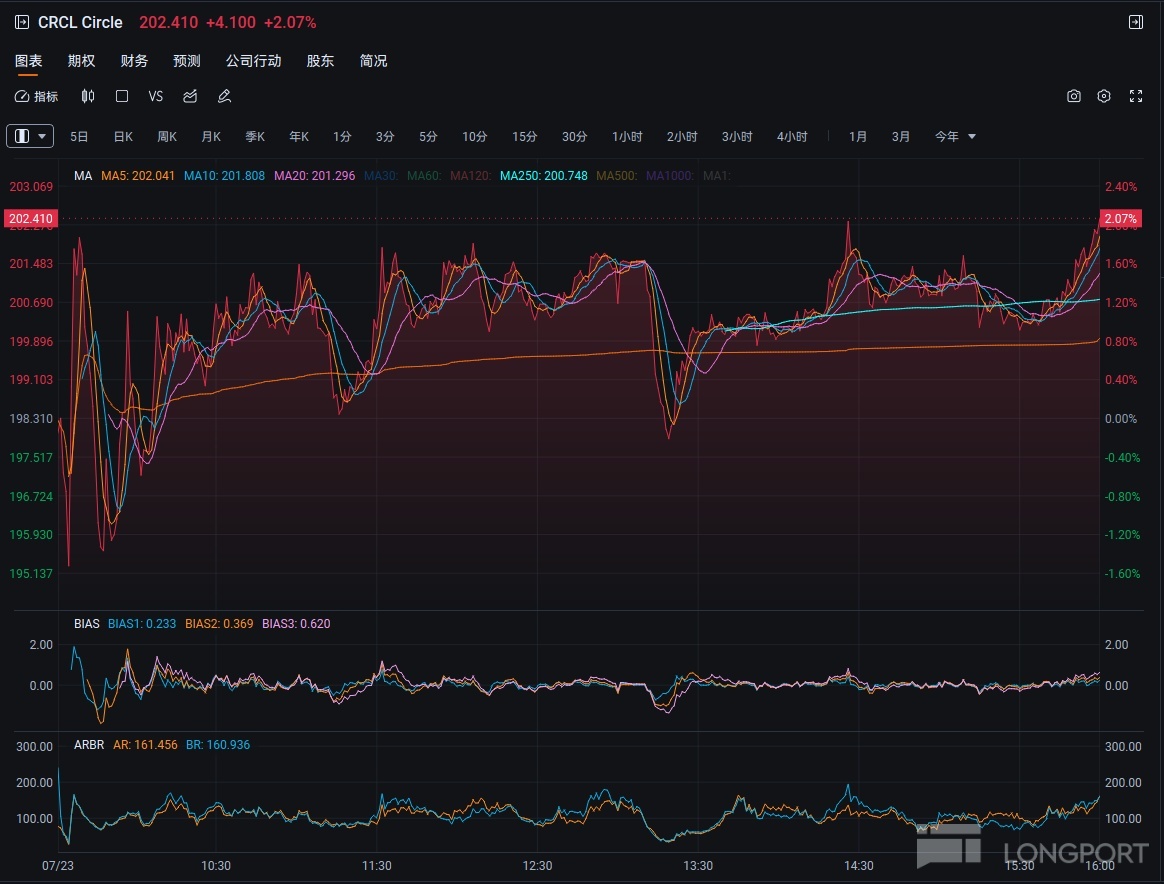
Circle (CRCL) showed overall stability on the 23rd, with a relatively strong bullish trend. Despite three sharp intraday drops, it quickly recovered above 200, closing up 2.07%.
Consider small positions if it holds above 200.
The copyright of this article belongs to the original author/organization.
The views expressed herein are solely those of the author and do not reflect the stance of the platform. The content is intended for investment reference purposes only and shall not be considered as investment advice. Please contact us if you have any questions or suggestions regarding the content services provided by the platform.
