


Angelalign has risen for three consecutive days! Overseas markets are expanding further, and there's also a 'Chinese offensive' in the invisible orthodontics industry.

Amid the increasingly fierce competition in the global consumer healthcare sector, China's leading invisible orthodontics company, Angelalign, is expanding its international footprint at an astonishing pace.
Recently, Angelalign's stock price has continued to rise. As of the morning of July 25, the company's shares have surged over 10% in the past three days. This market performance reflects the recognition of its globalization strategy in the latest research report by Guosheng Securities.
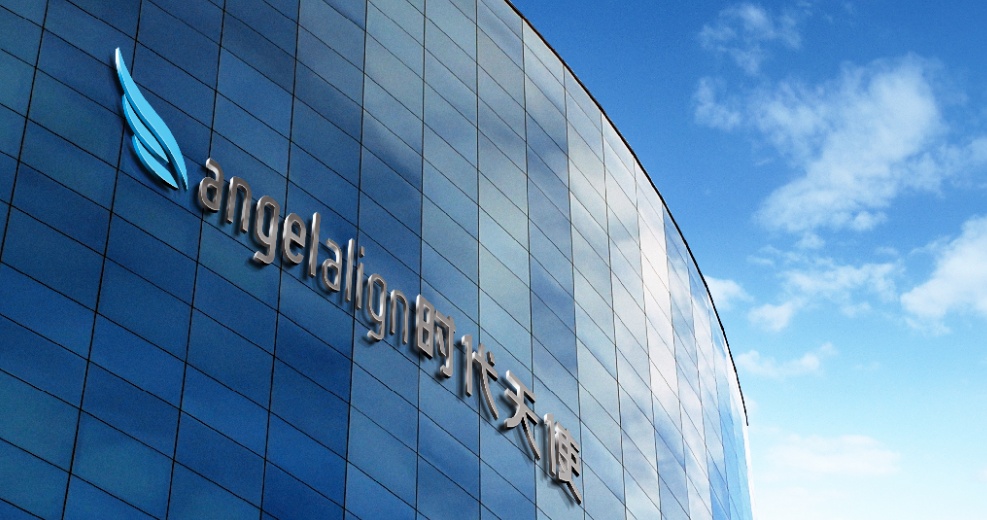
From its production base in Wuxi to its factory in Wisconsin, this Chinese leader in invisible orthodontics is making global moves, signaling the start of a battle to reshape the industry landscape.
Complex Case Handling Capability as the Cornerstone for Global Expansion
Any successful globalization strategy requires a solid domestic foundation. For Angelalign, its accumulated experience in handling complex cases and its digital orthodontics ecosystem in the Chinese market form the core competitiveness for its overseas expansion.
Guosheng Securities recently released a report stating that the domestic invisible orthodontics market is highly concentrated. In 2022, Angelalign ranked first with a market share of 41.70%, followed by Invisalign with 31.8%. The company's leading position in the domestic market is relatively stable.
The global invisible orthodontics market, however, presents a different picture, with one dominant player and several strong competitors. In 2023, Invisalign held a 64% global market share, firmly securing its position as the world leader, while Angelalign's global market share was only 4%, indicating significant growth potential in overseas markets.
This market position is not accidental but stems from the company's two decades of technological accumulation and clinical data.
Moreover, China has the world's largest population of malocclusion patients (over 1 billion), four times that of the U.S., with nearly nine times as many complex Class II/III malocclusion cases. The prevalence of complex Class II/III malocclusion in China is 45-50%, significantly higher than the 20%-40% in Europe and the Americas.
This "high-difficulty" market environment has compelled Angelalign to develop treatment plans capable of addressing various complex cases, resulting in unique technological advantages in membrane materials, 3D printing, biomechanical design, and AI technology.
Medical design capability is the key bridge transforming Angelalign's domestic advantages into global competitiveness. The company boasts the largest orthodontic medical design team in China.
All team members have professional backgrounds in dental medicine, with core design doctors holding master's or doctoral degrees from top-tier dental schools. While overseeing medical designs, they also treat patients clinically, giving them a deeper understanding of doctors' needs and enabling them to provide better medical design services.
Notably, orthodontists are relatively scarce in China. This resource constraint has driven Angelalign to develop highly standardized medical design processes and training systems, allowing it to efficiently support doctors worldwide.
The continuous evolution of the digital orthodontics platform iOrtho is another critical dimension of Angelalign's domestic and international synergy. The platform now supports seven languages, covering the entire digital management process from initial assessment and treatment planning to follow-up monitoring.
Compared to international brands like Invisalign, Angelalign's digital platform emphasizes ease of use for doctors and visual interaction for patients, a feature born from the dual demands of time-pressed doctors and highly engaged patients in China's healthcare environment.
This "digital-first" product philosophy has proven equally attractive in global markets. The international version of the iOrtho Doctor App, launched in 2025, quickly garnered positive feedback from doctors in Europe and the U.S., who praised its ability to significantly improve treatment management efficiency.
Angelalign and the "Smile Curve" of China's Consumer Healthcare Globalization
In 2022, Angelalign officially launched its overseas business, accelerating its global footprint through localized operations and strategic acquisitions. From 2023 to 2024, the company completed 33,000 and 140,700 overseas cases, respectively, with overseas cases accounting for 39.15% of its total in 2024.
In 2025, the company announced the construction of a base in Wisconsin, U.S., and expanded production capacity in Brazil, aiming to build a global supply chain system and further enhance its global service capabilities.
Moreover, the accelerated global supply chain layout lays the foundation for long-term competitiveness. In 2025, Angelalign announced two major capacity investments: a 52,000-square-foot advanced manufacturing facility in Wisconsin, equipped with proprietary 3D printing technology, and expanded treatment design and aligner production capacity in Brazil.
In a global invisible orthodontics market long dominated by Invisalign (64% market share), this Chinese company achieved a 4% global market share in just two years, a remarkable feat in terms of speed and quality.
Today, the globalization of consumer healthcare is becoming a new growth paradigm for Chinese companies. Unlike the globalization paths of consumer electronics or the internet, healthcare globalization faces higher barriers, requiring navigation of diverse regulatory systems, overcoming entrenched brand perceptions among doctors, and building service chains aligned with local practices.
Invisible orthodontics, with its dual medical and consumer attributes, presents even greater challenges. Angelalign's rapid rise in case numbers abroad reflects a globalization methodology combining Chinese experience with localized innovation.
From a broader perspective, Angelalign's "smile globalization" strategy aligns with three key industry trends: the high growth of the global invisible orthodontics market (projected to reach $46.2 billion by 2030, with a 14.2% CAGR), the technological advancement and branding awareness of Chinese medical device companies, and the rapid release of dental healthcare demand in emerging markets.
Driven by these three forces, Angelalign's globalization path not only sheds light on the company's investment value but also offers valuable insights for other Chinese consumer healthcare companies venturing abroad.
Conclusion
As the 3D printing factory in Wisconsin roars to life and 140,000 overseas cases take root in over 50 countries, Angelalign's globalization strategy has evolved from concept to tangible results.
Angelalign has built technological barriers through domestic complex scenarios, broken service boundaries with its digital ecosystem, and overcome challenges with localized supply chains.
This journey, starting from a 4% global market share, is not just about one company's growth but marks a historic shift in China's healthcare sector from "capacity export" to "technology paradigm export." As Chinese solutions begin to define global dental innovation standards, Angelalign's breakthrough is at the forefront of this transformation.
The copyright of this article belongs to the original author/organization.
The views expressed herein are solely those of the author and do not reflect the stance of the platform. The content is intended for investment reference purposes only and shall not be considered as investment advice. Please contact us if you have any questions or suggestions regarding the content services provided by the platform.
